The Secrets of CNC Machining Sequence Revealed
CNC (Computer Numerical Control) machining plays an extremely important role in modern manufacturing. It can accurately transform design blueprints into high-quality parts. The proper arrangement of machining sequences is a critical factor in ensuring part quality and improving production efficiency.
Why Machining Sequence Matters
When performing CNC machining, especially for high-precision parts, it is rarely possible to achieve the desired results in a single operation. Instead, multiple operations are required to gradually improve machining accuracy and surface quality.
Typically, the machining process is divided into four key stages:
- Rough Machining – Removing excess material quickly
- Semi-Finishing – Improving dimensional accuracy
- Finishing – Achieving final tolerances
- Fine Finishing / Polishing – Enhancing surface quality
A well-structured machining sequence ensures optimal use of machines, reduces errors, and significantly improves overall production efficiency.
Core Principles of CNC Machining Sequence
CNC machined parts often contain multiple surfaces with strict dimensional and positional requirements. Therefore, the machining sequence must follow logical and engineering-based principles rather than being arranged arbitrarily.
1. Datum First Principle
The precision datum (finish datum) should be machined first, as it will be used for positioning during subsequent operations. This ensures consistency and accuracy throughout the machining process.
2. Progressive Refinement
Surfaces with high precision requirements should follow a sequence of: rough machining → semi-finishing → finishing → fine finishing.
3. Datum Preparation
Each previous operation must create a reliable locating datum for the next step. This ensures stable positioning and minimizes cumulative errors.
4. Use of Rough Datum
When machining precision datums, rough datums are used for initial positioning. This is especially important for castings and forgings with complex shapes or dimensional variations.
Practical Applications in CNC Machining
Shaft Parts
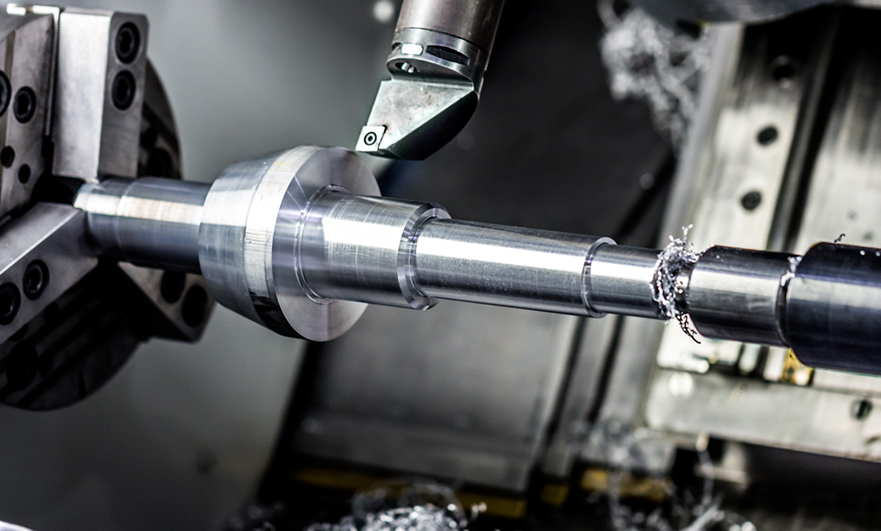
For shaft-type components, center holes are typically machined first. These are then used as precision datums for subsequent machining operations such as outer diameters and holes.
Box & Bracket Parts
For box-type and bracket-type parts, planes are machined first because they provide more stable positioning. Hole machining is then performed afterward to ensure higher accuracy.
Machining planes before holes improves stability and significantly enhances hole accuracy.
Conclusion
A reasonable CNC machining sequence is the foundation of high-quality manufacturing. By strictly following machining principles—such as datum-first strategy and progressive refinement—manufacturers can produce parts with superior precision and consistency.
As modern industries demand tighter tolerances and higher performance, optimized CNC machining sequences are no longer optional—they are essential.