

Black Oxide Finishing for CNC Machined Parts
Improve corrosion resistance, reduce glare, and achieve a uniform matte black finish — without affecting precision tolerances.
- Minimal dimensional change (0.5–2 μm)
- Ideal for high-precision metal components
- Cost-effective alternative to plating
- Suitable for steel, stainless steel, and iron
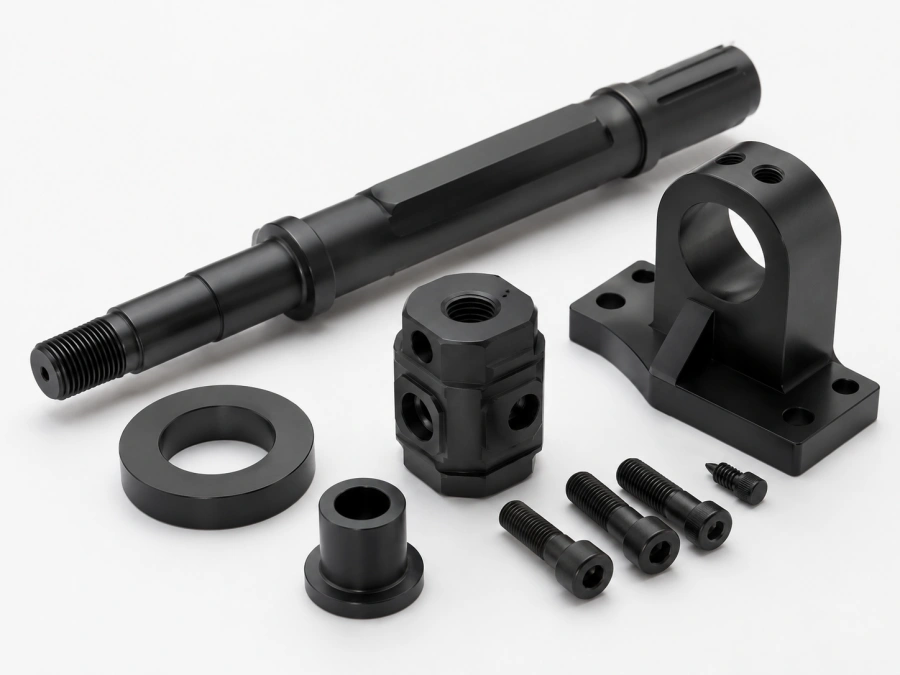
Why Choose Black Oxide for Machined Steel Parts?
Black oxide is commonly selected for steel and iron components that require a dark, low-reflective surface with minimal dimensional buildup and practical corrosion protection when combined with a suitable seal.
Final performance depends on base material, pretreatment, black oxide process type and the post-treatment oil, wax or seal.
Minimal Dimensional Buildup
Precision PartsBlack oxide converts the surface rather than adding a thick coating, making it useful for many machined parts where dimensional buildup should be kept very low.
Uniform Black Appearance
Visual FinishProduces a dark black surface commonly used on machine components, tooling, fixtures and visible industrial parts.
Reduced Light Reflection
Low-Glare SurfaceThe dark surface can help reduce glare and reflected light on selected optical, instrumentation and equipment components.
Corrosion Protection with Seal
Post-TreatmentCorrosion performance is typically improved through post-treatment with oil, wax or another suitable seal matched to the service environment.
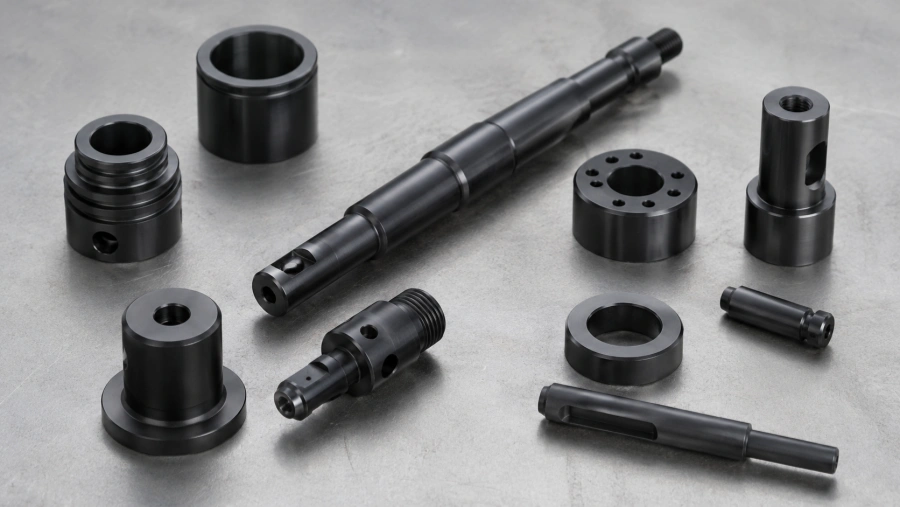
Suitable for Tight-Tolerance Machined Parts
Common applications include shafts, spacers, fixtures, tooling parts and other steel components where a dark finish is required without a heavy coating layer.
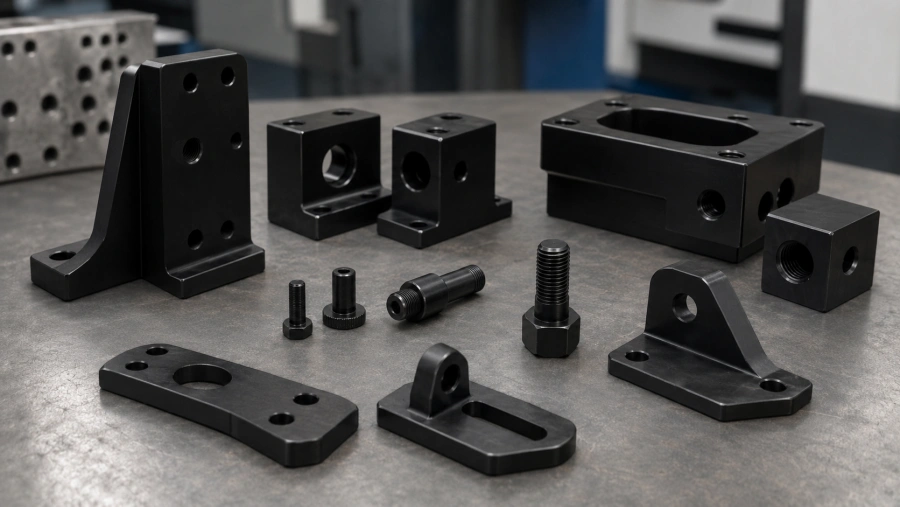
Practical Finish for Functional Steel Components
Black oxide is often used on machine parts, brackets and equipment components that need a consistent dark surface, reduced glare and practical corrosion protection.
Technical Specifications
Key technical parameters of black oxide coating for CNC machined parts, ensuring precision, consistency, and reliable performance.
| Coating Type | Conversion Coating (Chemical Reaction Process) |
| Coating Thickness | 0.5 – 2.0 μm |
| Dimensional Change | Negligible (No measurable impact) |
| Surface Finish | Matte / Smooth Black |
| Color | Deep Black |
| Corrosion Resistance | Moderate (Enhanced with oil or wax sealing) |
| Hardness Impact | No significant change to base material |
| Applicable Materials | Steel, Stainless Steel, Alloy Steel, Cast Iron |
| Typical Applications | Fasteners, Tools, Precision Components, Industrial Parts |
Compatible Materials
Black oxide finishing is primarily applied to ferrous metals, offering optimal performance on iron-based materials while maintaining precision and surface integrity.
Carbon Steel
The most common material for black oxide treatment, widely used for fasteners, machined parts, and structural components.
Alloy Steel
Suitable for high-strength applications where durability and wear resistance are critical.
Stainless Steel
Can be treated with specialized black oxide processes, commonly used in precision and corrosion-sensitive applications.
Cast Iron
Ideal for industrial components where surface protection and visual consistency are required.
Tool Steel
Commonly used in tooling and dies, benefiting from reduced glare and improved surface performance.
Limited Compatibility
Black oxide is generally not suitable for aluminum, plastics, or non-ferrous metals without alternative finishing methods.
Design Considerations for Black Oxide
To ensure optimal performance and longevity, it is important to understand when black oxide is the right finishing choice — and when alternative treatments may be more suitable.
Best Use Scenarios
- Precision CNC parts requiring tight tolerances
- Components where dimensional stability is critical
- Indoor or controlled environment applications
- Parts requiring reduced glare or matte appearance
- Mechanical assemblies needing improved lubricity
Limitations & Considerations
- Not suitable for harsh or marine environments
- Corrosion resistance is limited without sealing
- Coating may wear under heavy friction or abrasion
- Not applicable to aluminum or non-ferrous metals
- Requires post-treatment (oil/wax) for best performance
Latest Blog Posts
Black Oxide FAQ
Find answers to common questions about black oxide finishing, including corrosion resistance, material compatibility, and performance in CNC machining applications.