
Advantages and Applications of CNC Precision Machining in Robot Component Manufacturing
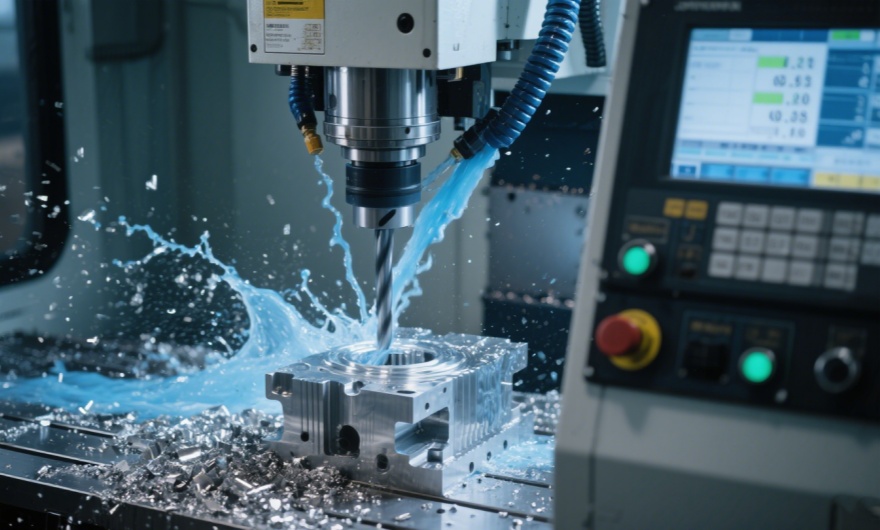
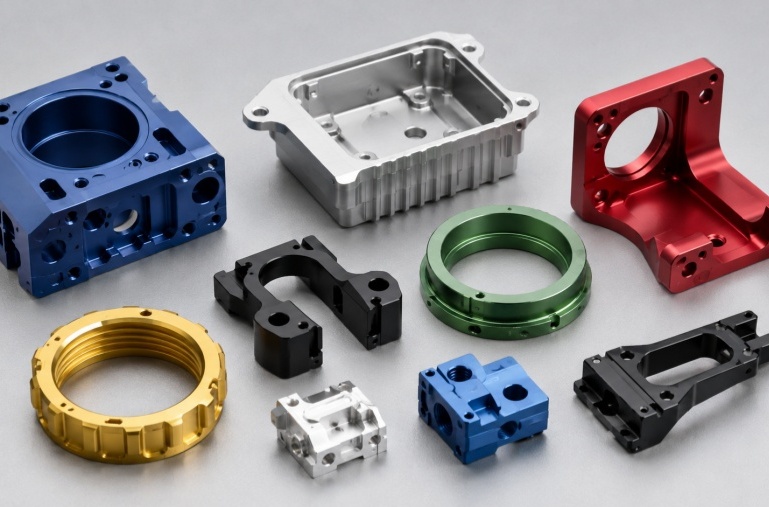
CNC precision machining plays an important role in robot component manufacturing, offering high accuracy, stable quality, material flexibility, and fast production for prototypes and low-volume robotic parts.
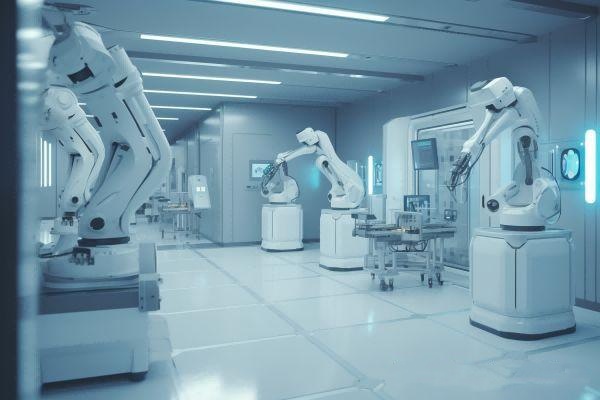
With continuous technological progress and growing market demand, the robotics industry is expected to maintain rapid growth. Rising labor costs and the increasing need for automation are driving more companies to adopt robotic systems in manufacturing, healthcare, logistics, service industries, and smart equipment.
As robots become more advanced, the demand for high-quality mechanical components continues to increase. CNC precision machining provides the accuracy, consistency, and flexibility required to manufacture critical robotic parts.
For robotics companies, CNC machining is especially valuable for custom prototypes, low-volume production, tight-tolerance parts, lightweight structures, and complex mechanical assemblies.
Key Advantages of CNC Precision Machining for Robot Parts
High Precision
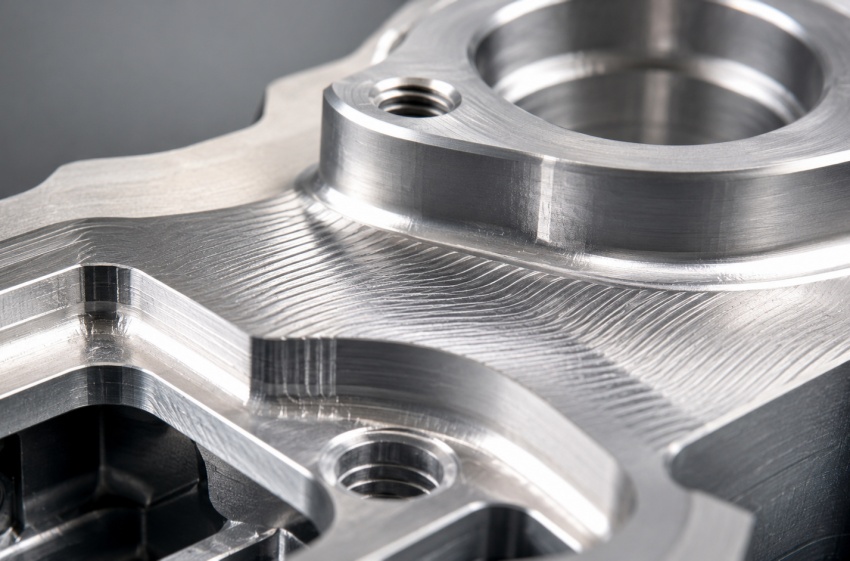
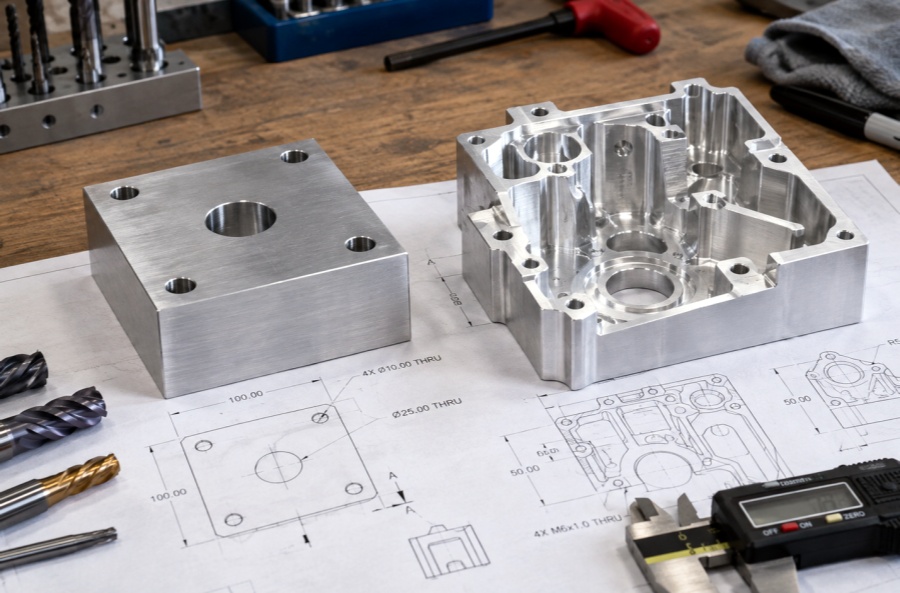
CNC machining can achieve tight tolerances and high dimensional accuracy, helping robot components meet strict design requirements.
Consistent Quality
CNC machining maintains stable quality and repeatable specifications, which is important for both prototypes and batch production.
Complex Geometry
CNC machines can produce complex shapes, holes, slots, curved surfaces, and detailed features required by modern robotic designs.
Material Flexibility
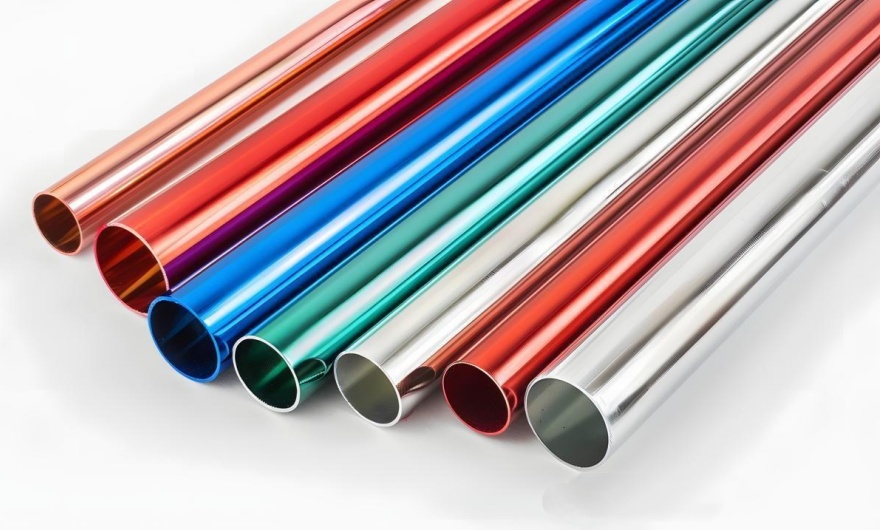
CNC machining supports aluminum, stainless steel, titanium, brass, copper, POM, nylon, PEEK, and other engineering materials.
Fast Prototyping
Without expensive tooling, CNC machining can quickly produce robot prototypes and support fast design iteration.
Low-Volume Production
CNC machining is ideal for small-batch robot components, custom parts, and early-stage product development.
Common Materials Used for CNC Machined Robot Components
Different robot parts require different material properties, including strength, weight reduction, corrosion resistance, wear resistance, and dimensional stability.
For lightweight robotic structures, aluminum CNC machining is commonly used. For high-strength or wear-resistant parts, stainless steel and titanium may be selected depending on the application.
Applications of CNC Machining in Robot Component Manufacturing
Structural Frames
CNC machining is used to manufacture robot frames, shells, housings, and support structures that require strength and precision.
Joints and Bearings
Robot joints and bearing seats require precision machining to ensure smooth motion, low friction, and accurate positioning.
Gears and Transmission Parts
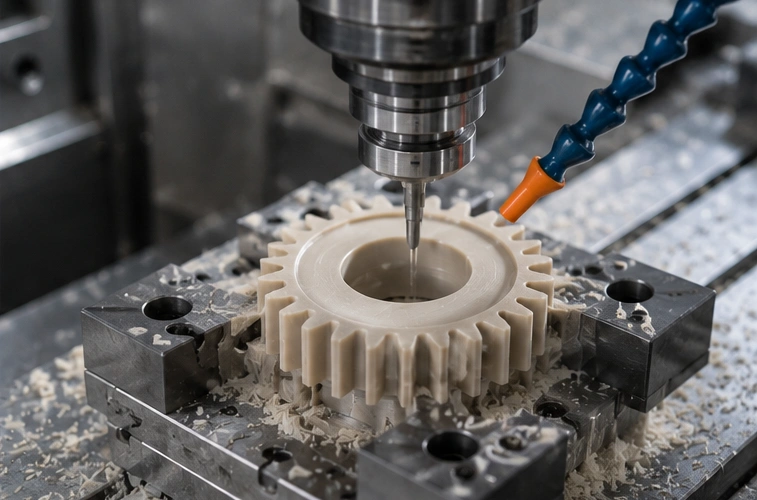
CNC machining can produce precision gears, shafts, pulleys, and transmission components for reliable power transfer.
Sensor and Actuator Parts
Custom sensor housings, actuator brackets, and mounting parts require accurate dimensions and stable assembly performance.
Connectors and Interfaces
Precision connectors and interface parts help ensure reliable mechanical connections and stable signal transmission.
Heat Sinks and Cooling Parts
CNC machining can manufacture complex heat sink structures to improve thermal performance for robotic electronics.
Appearance Parts
High-end robots often require smooth, detailed, and visually clean external parts for both function and appearance.
Custom Robot Prototypes
CNC machining supports rapid prototyping for robotics startups, engineering teams, and automation equipment manufacturers.
5-Axis Robot Components
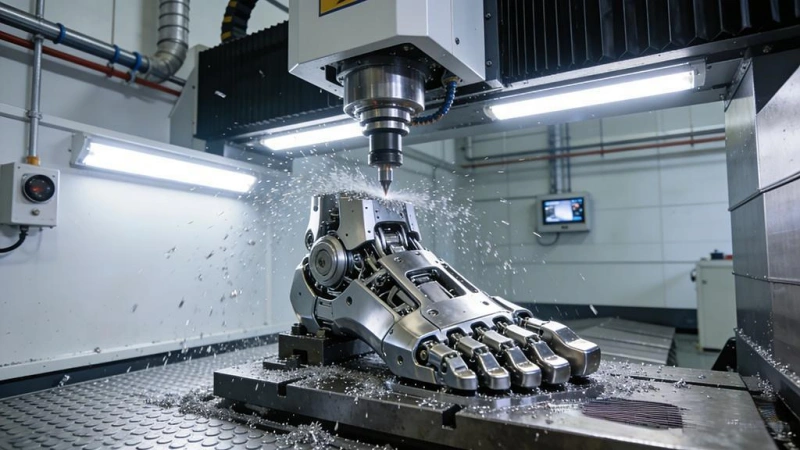
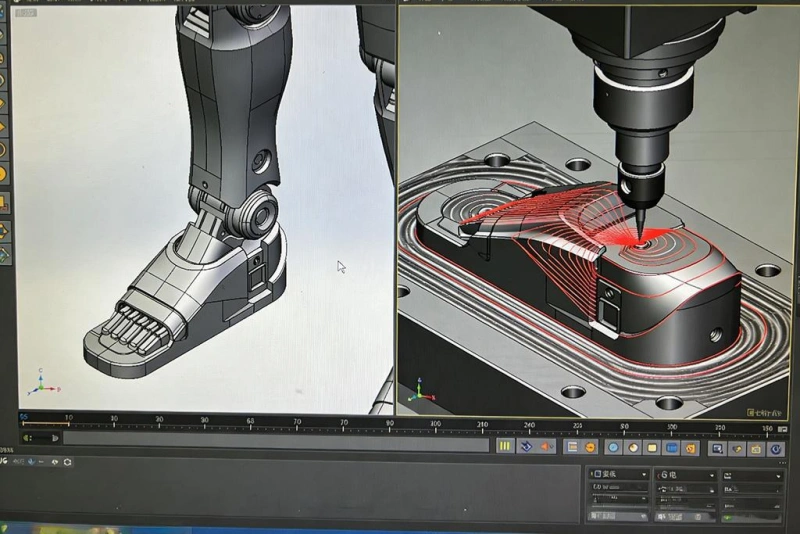
5-axis CNC machining is ideal for complex robotic parts with multi-angle features and tight tolerance requirements.
Case Examples of CNC Machined Robot Parts
Industrial Robots
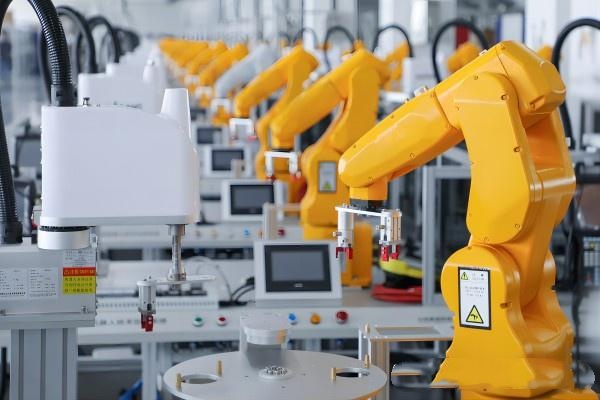
Industrial robots require precision joints, bearings, shafts, and gears to ensure stable operation on automated production lines.
Service Robots
Service robots, home robots, and commercial robots require lightweight structures, sensor brackets, and accurate motion parts.
Medical Robots
Medical robots require high precision, reliability, and excellent surface quality, especially for surgical and diagnostic equipment.
Why CNC Machining Is Suitable for Robotics Development
Robotics development usually involves many design changes, functional testing, and mechanical optimization. Compared with mold-based manufacturing, CNC machining allows engineers to produce parts quickly without long tooling lead times.
This makes CNC machining a practical solution for robot prototypes, engineering validation, pilot production, and low-volume manufacturing.
CNCTAL provides custom CNC machining services for robotics, automation equipment, industrial machinery, and precision mechanical assemblies. Our capabilities include CNC milling, CNC turning, 5-axis machining, drilling, tapping, EDM, and surface finishing.
FAQ: CNC Machining for Robot Components
What robot parts can be made by CNC machining?
CNC machining can produce robot frames, joints, bearing seats, gears, shafts, sensor brackets, housings, heat sinks, connectors, and custom prototypes.
Which materials are best for robot components?
Aluminum is commonly used for lightweight structures, while stainless steel, titanium, brass, POM, nylon, and PEEK can be selected based on strength, wear, and performance requirements.
Is CNC machining suitable for robot prototypes?
Yes. CNC machining is ideal for robot prototypes because it supports fast production, design changes, and functional testing without expensive molds.
Can CNC machining produce low-volume robot parts?
Yes. CNC machining is suitable for low-volume production, custom robotic components, and pilot production before mass manufacturing.
Why is 5-axis CNC machining useful for robotics?
5-axis machining can produce complex robotic parts with multi-angle features, curved surfaces, and fewer setups, improving accuracy and reducing production errors.
Need Custom CNC Machined Robot Components?
CNCTAL supports robotics companies, automation manufacturers, engineering teams, and product developers with precision CNC machining, 5-axis machining, tight tolerances, and prototype-to-low-volume production.