
Best Materials for Robotics CNC Parts
Robotics components require the right balance of strength, weight, wear resistance, corrosion resistance, and machining cost. Choosing the correct material can improve robot performance, reduce failure risk, and make production more efficient.
The robotics industry is developing quickly, from industrial automation and warehouse robots to medical robots, collaborative robots, and humanoid robotics projects. Behind every robot are many precision mechanical components that must work together smoothly.
For robotics CNC parts, material selection is just as important as machining accuracy. The right material affects weight, strength, rigidity, wear resistance, corrosion resistance, surface finish, and final production cost.
Why Material Selection Matters in Robotics
Different robotic components have different working conditions. A robot arm may need to be lightweight and rigid, while a shaft may need high strength and wear resistance. A sliding guide may need low friction, and a sensor mount may require dimensional stability.
Weight
Lower moving weight can improve robot speed, response, and energy efficiency.
Strength
Joints, shafts, frames, and load-bearing parts require enough mechanical strength.
Wear Resistance
Moving and sliding parts need materials that can resist wear during long-term operation.
Aluminum: The Most Common Material for Robotics CNC Parts
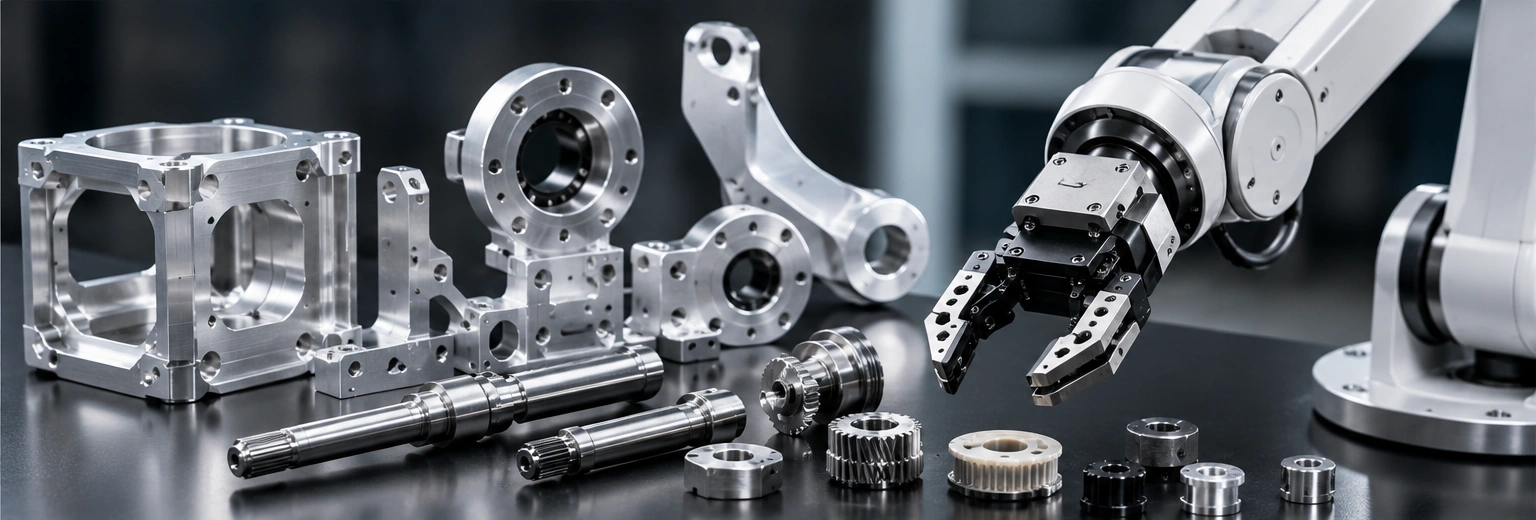
Aluminum is one of the most practical materials for robotics components. It offers a good balance of lightweight performance, machinability, corrosion resistance, and cost.
| Aluminum Grade | Main Advantages | Typical Robotics Applications |
|---|---|---|
| Aluminum 6061 | Good machinability, stable supply, good anodizing performance | Robot arms, brackets, housings, support plates, general structures |
| Aluminum 7075 | Higher strength, good strength-to-weight ratio | High-load robot structures, lightweight frames, performance components |
| Aluminum 6082 | Good strength and machinability, common in structural applications | Automation frames, mounting plates, mechanical supports |
Stainless Steel for Strength and Wear Resistance
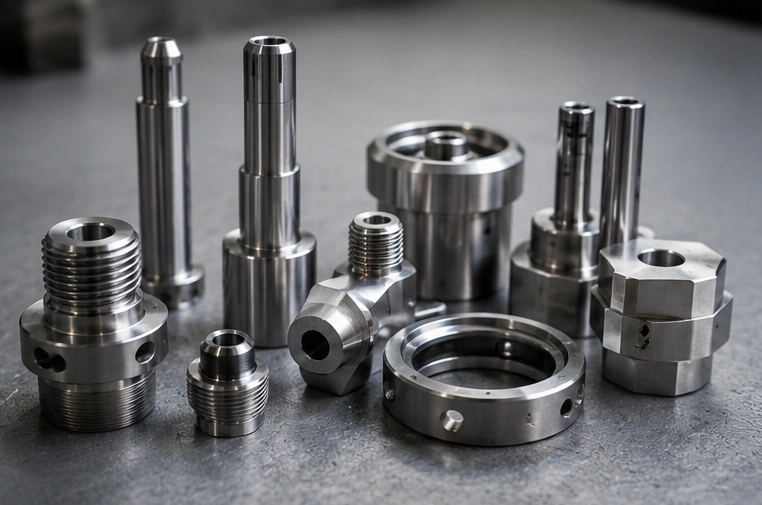
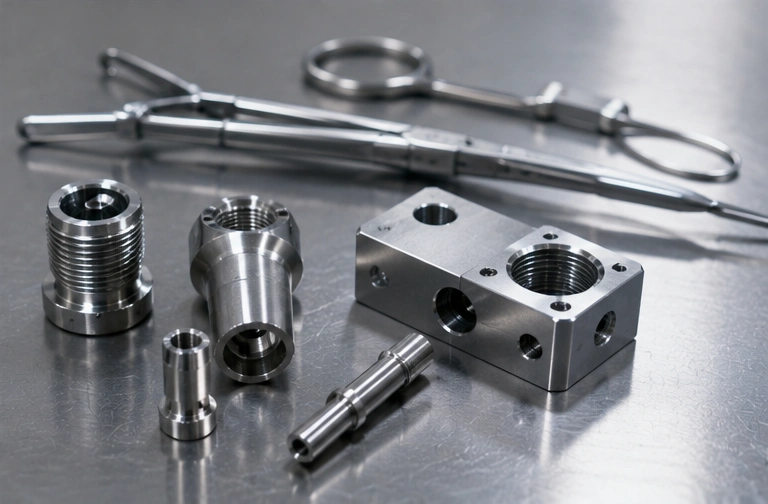
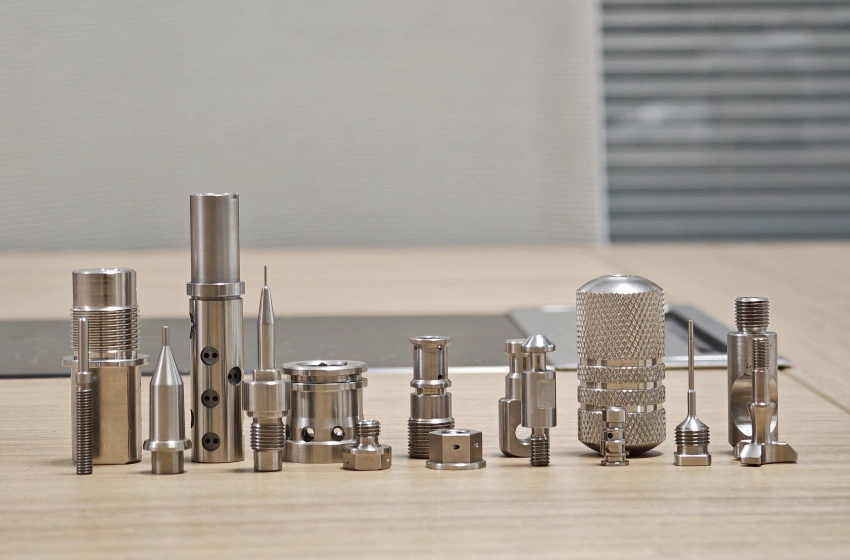
Stainless steel is often used when robotics components require higher strength, better wear resistance, or corrosion resistance. It is heavier than aluminum, but it performs well in shafts, pins, joints, and mechanical connectors.
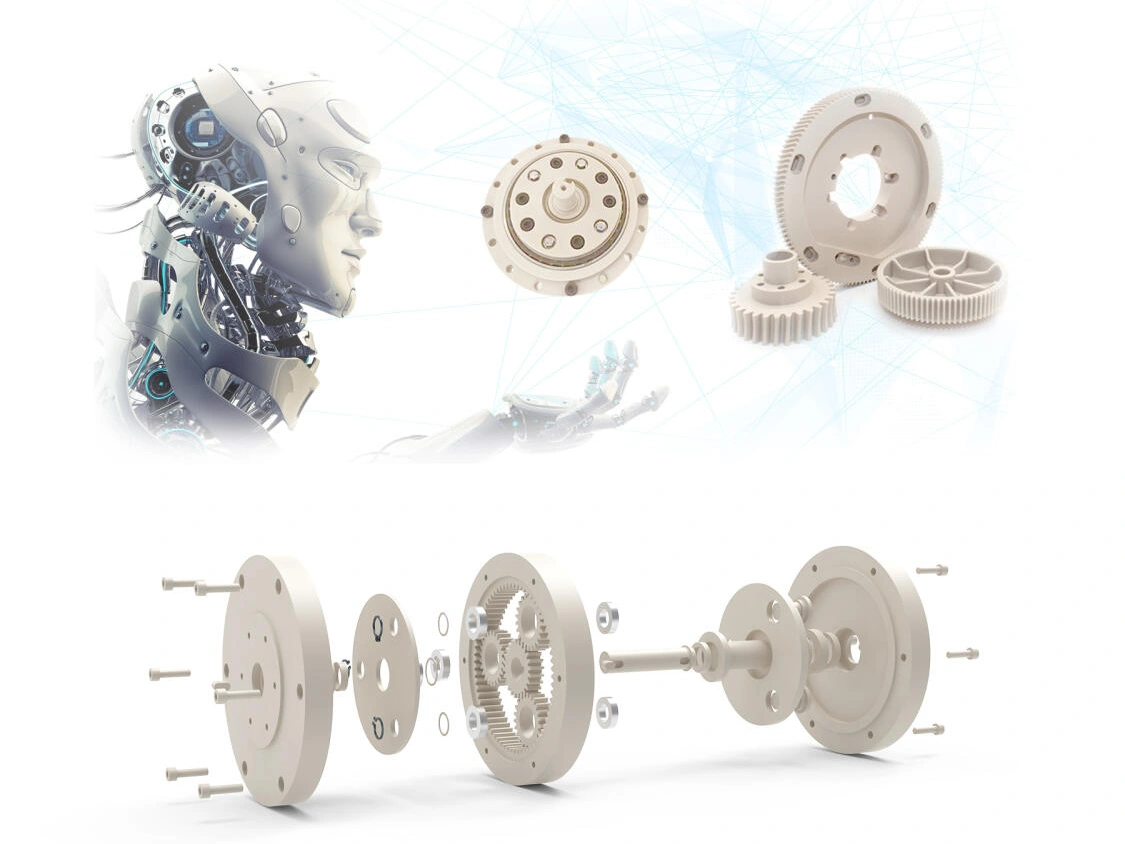
Engineering Plastics for Lightweight and Low-Friction Parts
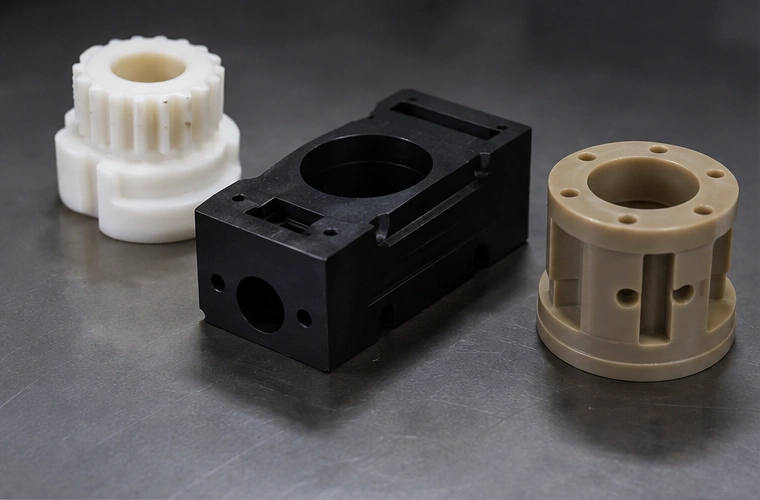
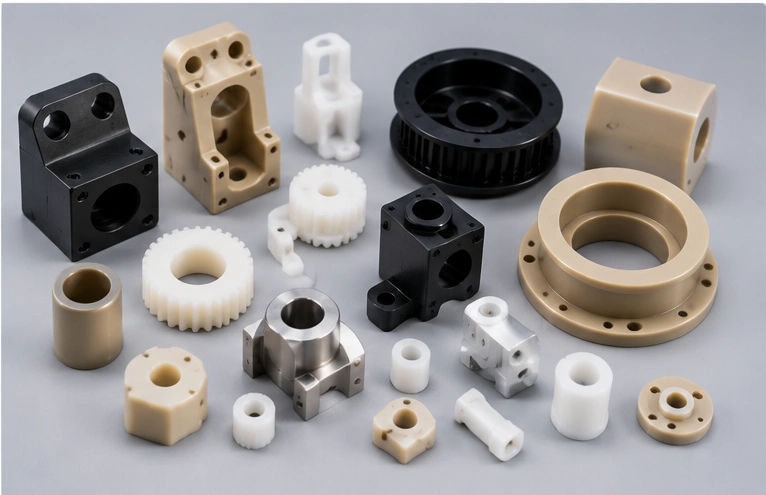
Engineering plastics are very useful in robotics because they can reduce weight, noise, friction, and sometimes electrical conductivity. They are often used for sliding components, bushings, rollers, insulation parts, covers, and lightweight mechanisms.
| Plastic Material | Main Advantages | Typical Robotics Applications |
|---|---|---|
| POM / Delrin | Low friction, good dimensional stability, easy machining | Guides, rollers, bushings, sliding parts |
| PEEK | High temperature resistance, wear resistance, chemical resistance | Medical robots, semiconductor automation, high-performance mechanisms |
| Nylon | Good toughness, impact resistance, lightweight | Spacers, gears, covers, non-structural components |
| PTFE | Very low friction, good chemical resistance | Sliding pads, seals, special low-friction components |
Titanium for Advanced Robotics Applications
Titanium is not used as often as aluminum or stainless steel because the material and machining costs are higher. However, it offers a strong strength-to-weight ratio, excellent corrosion resistance, and good durability.
Titanium may be selected for aerospace robotics, medical robotic systems, high-performance lightweight mechanisms, or special applications where both strength and weight reduction matter.
Brass and Copper in Robotic Systems
Brass and copper are not usually used for main robot structures, but they are valuable in electrical, thermal, and connector-related parts. Brass is often easier to machine and gives a clean finish, while copper is useful where conductivity or heat transfer is important.
Electrical Parts
Connectors, conductive pins, terminals, and sensor-related components.
Fittings
Pneumatic fittings, small adapters, and precision turned brass parts.
Heat Transfer
Copper parts can help with thermal management in some robotic systems.
How to Choose the Best Material for Your Robotics CNC Parts
There is no single best material for every robot part. A practical material choice should consider the part function, load, motion, environment, required finish, and target cost.
Custom Robotics CNC Machining at CNCTAL
At CNCTAL, we manufacture custom CNC machined robotics components from aluminum, stainless steel, brass, copper, POM, PEEK, nylon, titanium, and other engineering materials.
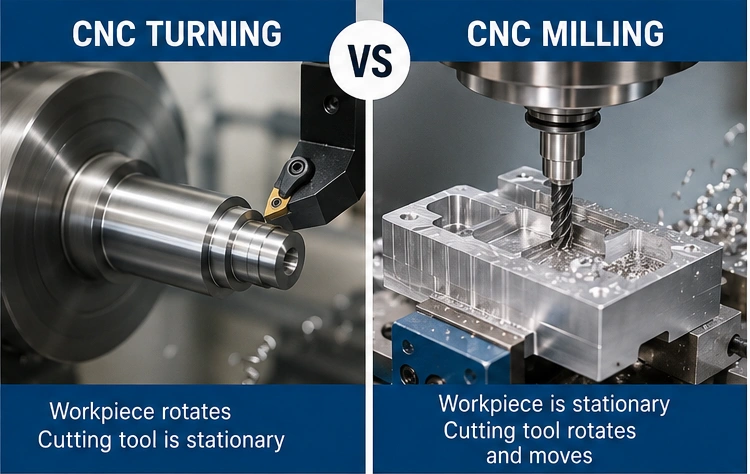
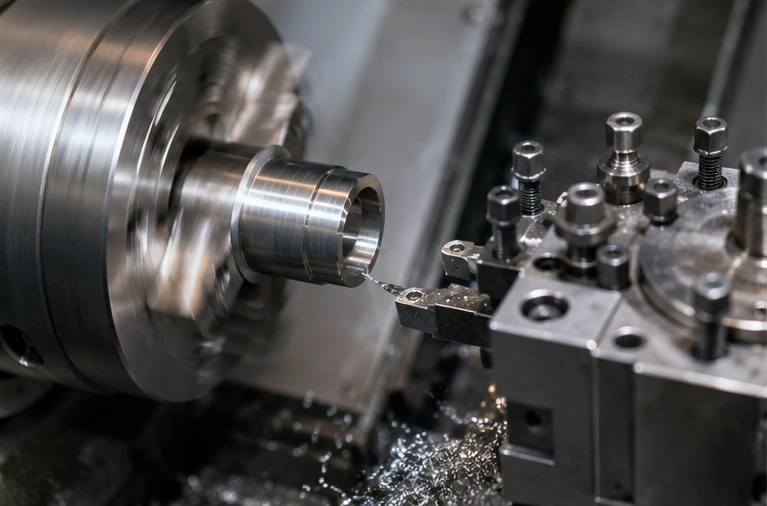
We support CNC milling, CNC turning, 5-axis machining, prototype machining, low-volume production, batch production, and surface finishing for robotics and automation projects.
Need Custom Robotics CNC Parts?
Send us your 2D/3D drawings, material requirements, tolerance details, quantity, and surface finishing needs. CNCTAL can help manufacture precision robotics CNC parts for prototype and production projects.
FAQ: Best Materials for Robotics CNC Parts
What is the most common material for robotics CNC parts?
Aluminum 6061 is one of the most common choices because it is lightweight, easy to machine, cost-effective, and suitable for anodizing.
When should stainless steel be used for robotic parts?
Stainless steel is a good choice for shafts, pins, joints, and high-load components where strength, wear resistance, or corrosion resistance is required.
Are engineering plastics suitable for robotics components?
Yes. POM, PEEK, nylon, and PTFE are often used for bushings, rollers, guides, sliding parts, insulating parts, and lightweight non-structural components.
Can CNCTAL machine custom robotics parts from different materials?
Yes. CNCTAL supports CNC machining for aluminum, stainless steel, brass, copper, titanium, POM, PEEK, nylon, and other engineering materials.