

Custom 5-Axis Machined Parts for Complex Geometry
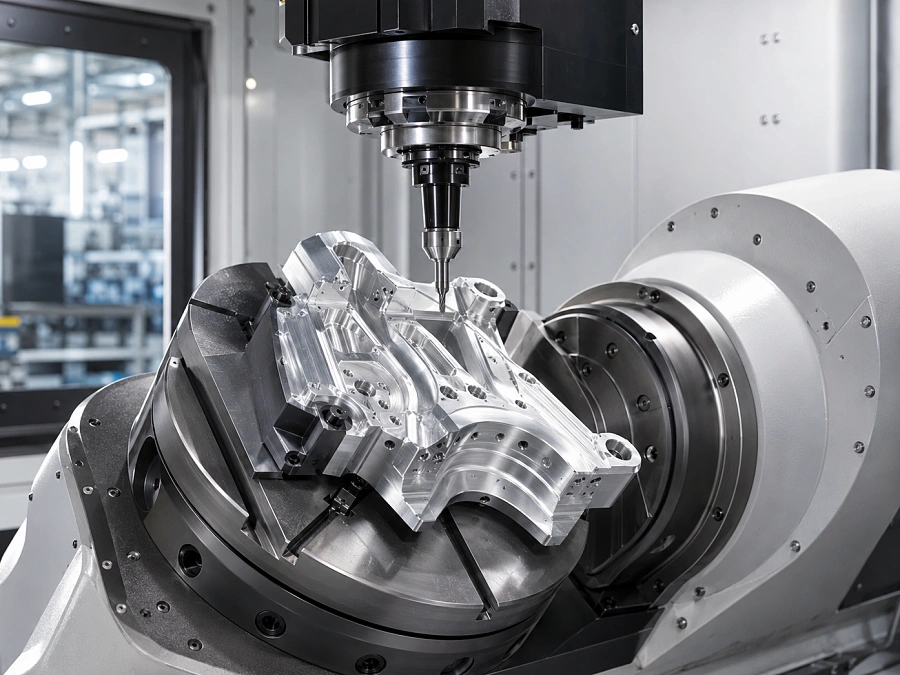
CNCTAL manufactures 5-axis machined parts for complex prototypes, multi-side components, precision brackets, robotic structures, medical equipment parts, aerospace-style components, and other parts that are difficult to machine with standard 3-axis methods. We focus on practical engineering review, stable machining, and reliable inspection.
- Multi-side machining with fewer setups
- Complex angles, curved surfaces and deep features
- Aluminum, stainless steel, titanium, copper and plastics
- Prototype and low-volume complex part production
For 5-axis parts, STEP or STP files are strongly recommended together with 2D drawings for tolerances and inspection notes.
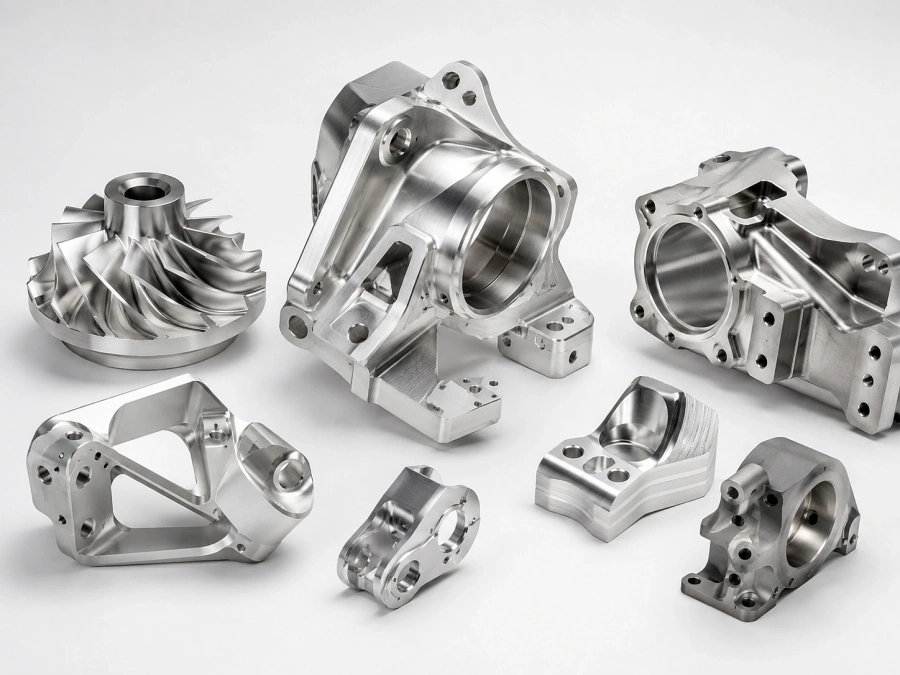
Complex CNC Parts We Commonly Manufacture with 5-Axis Machining
5-axis machining is suitable when a part has multiple angled faces, curved surfaces, deep features, tight positional relationships, or machining areas that are difficult to reach with standard 3-axis setups. These parts are often used in robotics, automation, medical equipment, aerospace-style structures, precision instruments, and product development.
Multi-Side Structural Parts
Complex blocks, frames, and support parts with features on several sides that need accurate alignment.
- Multiple faces machined in fewer setups
- Accurate hole position between surfaces
- Aluminum, stainless steel and titanium
Robotics & Automation Components
Lightweight brackets, arms, joints, sensor mounts, and compact mechanical parts for robotic systems.
- Angled mounting faces
- Weight-reduction pockets
- Precision assembly interfaces
Medical Equipment Parts
High-precision equipment components where smooth surfaces, clean edges, and consistent fit are important.
- Complex brackets and device parts
- Stainless steel, aluminum and PEEK
- Inspection reports available on request
Aerospace-Style Components
Lightweight machined parts with thin walls, curved pockets, angled holes, and complex structural shapes.
- 7075 aluminum and titanium support
- Reduced setup error
- Prototype and low-volume projects
Curved Surface Parts
Components with contoured surfaces, blended transitions, organic shapes, or surfaces that require smooth tool paths.
- Complex profiles and freeform surfaces
- Better surface continuity
- Suitable for product and equipment parts
Precision Fixture Components
Custom fixture parts, inspection tooling, and assembly components with precise locating faces and angled features.
- Datum faces and locating holes
- Angled slots and support surfaces
- Built from CAD drawings or samples
Machining Complex Parts with Fewer Setups and Better Feature Alignment
5-axis machining is useful when a part cannot be made efficiently with simple flat-face milling. It allows the tool to reach angled faces, curved profiles, deep areas, and multiple sides of the part with fewer setups. For complex components, this can improve alignment between features and reduce errors caused by repeated clamping.
Multi-Side Machining
Suitable for parts with holes, pockets, slots, and mounting faces on several sides that need accurate positional relationships.
Angled Features
Useful for angled holes, tilted faces, bevels, undercut-style access areas, and features that are difficult to reach directly.
Curved Surface Machining
Supports contoured surfaces, blended shapes, complex profiles, impeller-style surfaces, and product design components.
Prototype to Low Volume
Practical for complex prototypes, engineering samples, functional test parts, and low-volume production orders.
Materials for Complex 5-Axis Machined Components
5-axis machined parts often combine complex geometry with functional requirements such as strength, weight reduction, corrosion resistance, heat resistance, or clean assembly surfaces. We machine a range of metals and engineering plastics for prototypes, precision equipment parts, and low-volume complex components.
Common Materials for 5-Axis CNC Parts
Surface Finishes We Support
Send your 3D model, 2D drawing, material request, finish requirement and target quantity. We can review the part and suggest a practical 5-axis machining route before quotation.
Inspection for Complex Geometry, Multi-Side Features and Assembly Fit
5-axis machined parts usually have more than one critical surface. A hole on one angled face may need to align with a pocket on another side, or a curved profile may need to match a functional assembly surface. Our inspection process focuses on the features that affect fit, function, and repeatability.
DFM and Drawing Review
We review complex geometry, datum references, tolerance callouts, thin walls, deep pockets, surface finish notes, and inspection requirements before machining.
Setup and Process Control
For complex 5-axis parts, stable clamping and correct machining sequence are important to control distortion, alignment, and surface quality.
Final Inspection Before Shipment
Finished parts are checked for critical dimensions, hole position, mating surfaces, burrs, finish requirements, and packaging protection.
Key Inspection Points
Inspection methods are selected based on the drawing, part geometry, tolerance level, quantity, and final application.
For complex machined components, we can provide dimensional inspection reports, material certificates, production photos, surface finish notes, and packaging photos based on your project requirements.
Questions About Custom 5-Axis Machined Parts
These are common questions from customers who need complex CNC machined parts, multi-side components, precision prototypes, and low-volume 5-axis machining support.
What types of parts are suitable for 5-axis machining?
5-axis machining is suitable for parts with complex geometry, angled faces, curved surfaces, deep pockets, multi-side holes, tight positional relationships, or features that are difficult to reach with standard 3-axis milling. Typical parts include complex brackets, robotic components, medical equipment parts, aerospace-style components, precision fixtures, and lightweight structural parts.
Is 5-axis machining always better than 3-axis machining?
Not always. If the part can be made efficiently with 3-axis or 4-axis machining, that may be more cost-effective. 5-axis machining is most useful when the part needs fewer setups, better feature alignment, angled access, or smoother machining of complex surfaces. We review each CAD model before quotation and suggest the most practical process.
Can you make one 5-axis machined prototype?
Yes. CNCTAL supports one-off prototypes, engineering samples, small batches, and low-volume production for custom 5-axis machined parts. This is useful for product development, functional testing, design verification, and early-stage production before larger orders.
What tolerance can you hold for 5-axis machined parts?
For suitable part designs and stable materials, we can support tight tolerances around ±0.01 mm on critical dimensions. The achievable tolerance depends on material, part size, wall thickness, feature depth, geometry complexity, setup method, and inspection requirements.
What materials can be used for 5-axis CNC parts?
Common materials include aluminum 6061, 6082 and 7075, stainless steel 304 and 316, titanium Grade 2 and Grade 5, brass, copper, POM, PEEK, Nylon, PTFE, ABS, and other engineering plastics. Material selection depends on strength, weight, corrosion resistance, thermal performance, wear resistance, and cost.
Can you provide surface finishing for 5-axis machined components?
Yes. We can support as-machined finish, anodizing, bead blasting, brushing, polishing, passivation, nickel plating, black oxide, powder coating, and other common finishes. For complex 5-axis parts, we also review edges, holes, and hard-to-reach surfaces before finishing.
What files do you need for a 5-axis machining quote?
A STEP or STP 3D file is strongly recommended for 5-axis machined parts. A 2D PDF drawing is also important for tolerances, threads, datum references, surface finish, material, quantity, and inspection requirements. If the part has complex surfaces, the 3D model is usually necessary for accurate review.
Need a quote for complex 5-axis machined parts?
Upload your 3D model and drawing. Our engineering team will review the geometry, machining process, material, tolerance, surface finish, inspection requirements, quantity, and lead time before quotation.