

Custom Stainless Steel Shaft CNC Machining
Precision stainless steel shafts machined for automation equipment, motors, robotics, medical devices, pumps, instruments, and industrial assemblies. CNCTAL supports prototypes, small batches, and repeat production based on your 2D drawings or 3D CAD files.
Upload your shaft drawing with material grade, tolerance, finish, and quantity requirements. Our engineering team will review manufacturability before quotation.
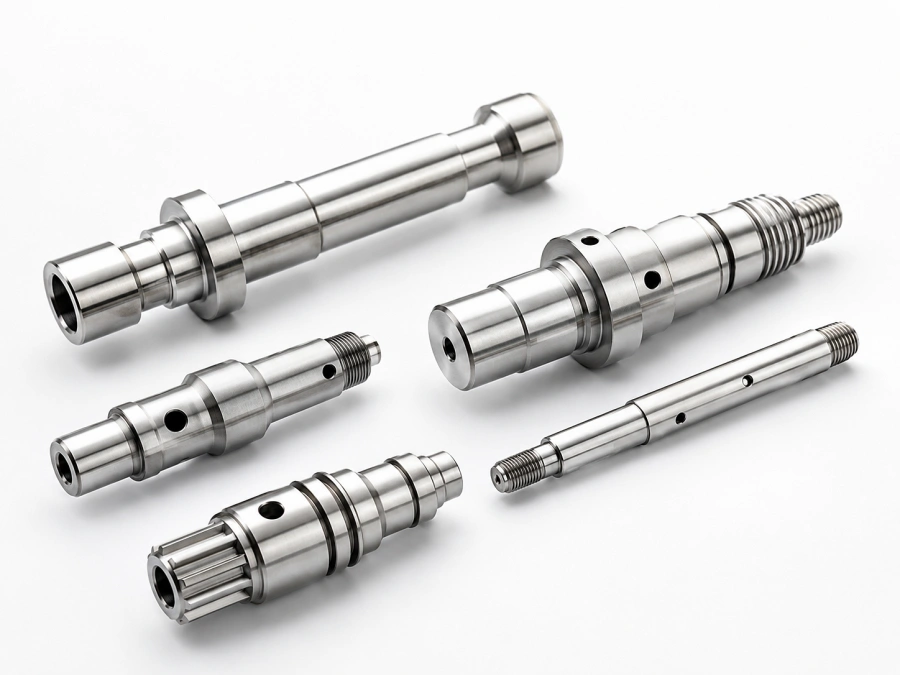
Stainless Steel Shaft Parts We Commonly Machine
Stainless steel shafts are usually small but critical components. Their dimensions, surface finish, thread quality, and runout can directly affect assembly performance. CNCTAL machines custom shaft parts according to drawings, samples, or 3D CAD files.
Stepped Shafts
Multi-diameter shaft parts used in motors, drive systems, fixtures, and precision equipment where different bearing, sleeve, or mounting positions are required.
Threaded Shafts
Stainless steel shafts with external threads, internal threads, or end threads for fastening, adjustment, positioning, and mechanical connection.
Grooved Shafts
Shaft components with circlip grooves, O-ring grooves, relief grooves, or positioning slots for sealing, retaining, or assembly functions.
Guide Shafts
Precision guide shafts for linear movement, sliding assemblies, automation modules, measuring equipment, and clean mechanical structures.
Drive Shafts
Custom drive shafts for small motors, rotating mechanisms, transmission assemblies, robotics parts, and industrial equipment modules.
Cross-Hole Shaft Parts
Turned shaft components with cross holes, flats, milled slots, pin holes, or special features that require both CNC turning and secondary milling.
Engineering note: For shaft parts, please mark critical dimensions clearly on the drawing, such as bearing seat diameter, thread specification, groove width, concentricity, runout, and required surface roughness. These details help us choose the correct turning process, inspection method, and quotation basis.
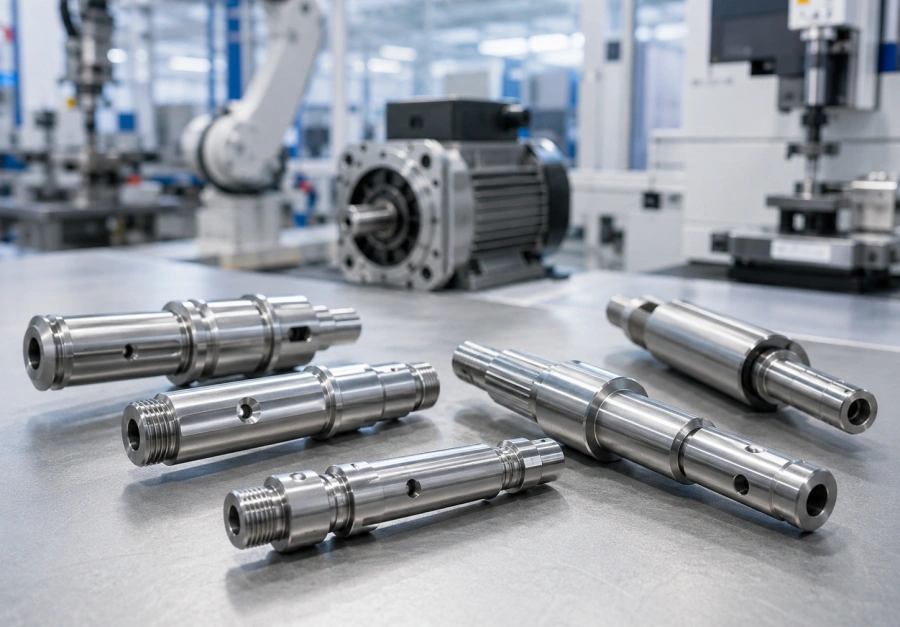
Where Custom Stainless Steel Shafts Are Used
Stainless steel shaft components are widely used in assemblies that need corrosion resistance, stable rotation, accurate location, or clean surface performance. For many projects, the shaft is not a large part, but it is often one of the parts that decides whether the assembly runs smoothly.
Industrial Automation
Guide shafts, positioning shafts, drive shafts, and small turned components for motion modules, fixtures, and automated equipment.
Motors & Drive Systems
Stepped shafts, rotor shafts, threaded shafts, and coupling shafts where runout, concentricity, and bearing fits need careful control.
Medical Devices
Stainless steel shaft parts for clean assemblies, test equipment, handheld devices, and precision medical instrument components.
Robotics
Compact shaft parts for joints, grippers, drive modules, sensor mounts, positioning mechanisms, and prototype robotic assemblies.
Pumps & Fluid Equipment
Corrosion-resistant shafts, pins, sleeves, and rotating components used in fluid control systems and wet working environments.
Precision Instruments
Small stainless steel shafts for measuring tools, optical equipment, laboratory devices, and assemblies requiring smooth movement.
Case study value: CNCTAL does not only quote the outside shape. We review the shaft function, material grade, critical fits, thread details, surface finish, and inspection points before production.
Why Stainless Steel Is Used for Shaft Components
Stainless steel is often selected for shaft parts when the component needs more than basic strength. In many real projects, the shaft may work near moisture, cleaning chemicals, hand contact, fluid systems, or clean equipment assemblies. The right stainless grade helps reduce corrosion risk while keeping the shaft stable in use.
Corrosion Resistance
Stainless steel shafts are suitable for equipment exposed to moisture, coolant, cleaning environments, fluid systems, or outdoor working conditions.
Good Mechanical Strength
Compared with many plastics or soft metals, stainless steel provides better load capacity for rotating, guiding, supporting, or positioning parts.
Stable Surface Finish
Turned stainless steel shafts can achieve a clean machined surface, and can also be polished or passivated when smoother finish or cleaner appearance is needed.
Suitable for Precision Assemblies
Stainless steel is commonly used for bearing seats, guide positions, threaded sections, grooves, and shaft areas where fit and repeatable assembly are important.
Common Stainless Steel Grades for Shaft Machining
Different stainless grades behave differently during machining. Choosing the right grade helps balance corrosion resistance, strength, cost, and machinability.
Key Challenges in Stainless Steel Shaft Machining
A stainless steel shaft may look simple, but the machining process is often sensitive. Long length, small diameter, tight bearing fits, threads, grooves, and surface finish requirements can all affect the final assembly. This is why shaft parts need more attention than ordinary turned components.
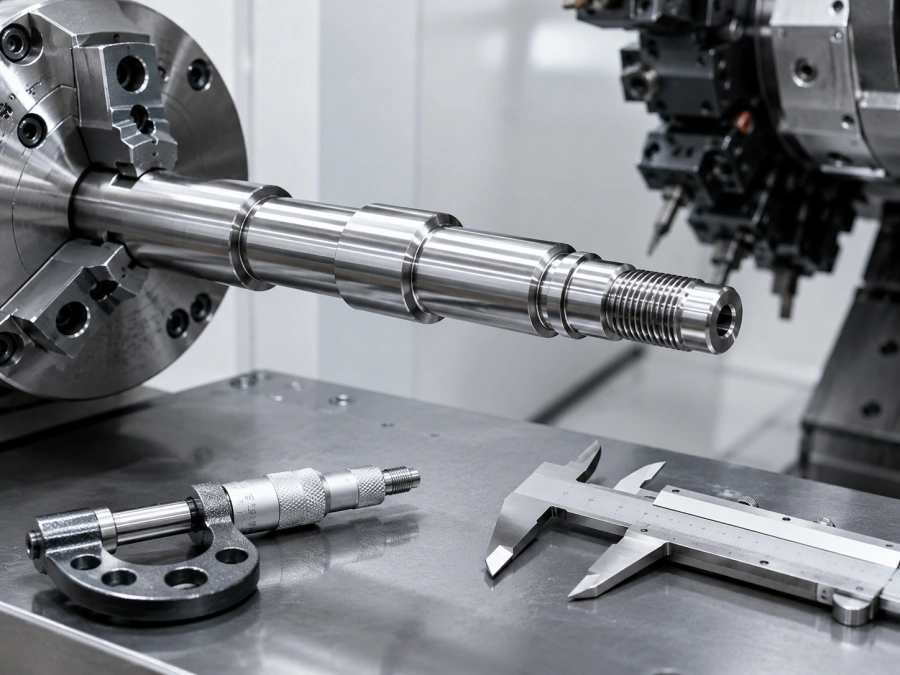
For shaft components, we also review straightness, runout, concentricity, groove position, thread quality, and surface roughness before production.
Runout and Concentricity Control
Drive shafts, motor shafts, and bearing shafts often need stable rotation. The machining process must control clamping, turning sequence, and inspection points to reduce runout problems.
Long or Thin Shaft Deformation
Slender stainless steel shafts can bend or vibrate during machining. Proper support, cutting parameters, and tool selection are important to keep the part straight and stable.
Work Hardening During Cutting
Grades such as 304 and 316 stainless steel can harden during machining if cutting conditions are not suitable. This may affect tool life, surface finish, and dimensional consistency.
Threads, Grooves, and Bearing Seats
Small features on shaft parts are often critical. Thread size, groove width, shoulder position, and bearing seat diameter must match the drawing for smooth assembly.
Surface Finish Requirements
Some shaft areas need a smoother machined finish for sliding, sealing, or rotation. Depending on the application, polishing, passivation, or additional finishing may be required.
Review Critical Features
We check bearing fits, thread callouts, groove dimensions, tolerance notes, and surface finish requirements before quoting and production.
Control Turning Sequence
For shaft parts, machining order, clamping method, and support strategy are selected based on material, length, diameter, and tolerance needs.
Inspect Fit and Function Areas
Diameter, thread, groove, runout, surface finish, and key assembly dimensions are checked according to the drawing requirements.
How CNCTAL Machines Custom Stainless Steel Shafts
Shaft components often require more than simple CNC turning. Depending on the drawing, a stainless steel shaft may need turning, thread cutting, grooving, cross drilling, milling flats, polishing, and final dimensional inspection. CNCTAL supports these processes from prototype samples to repeat batch orders.
CNC Turning
Turning for stepped shafts, straight shafts, threaded shafts, pins, sleeves, and round stainless steel components with accurate outside diameters.
Thread Cutting
External threads, internal threads, end threads, fine threads, and custom thread features checked according to drawing requirements.
Grooving & Relief Features
Circlip grooves, O-ring grooves, tool reliefs, undercuts, shoulders, and small shaft features for sealing, retaining, or assembly clearance.
Secondary Milling
Milled flats, wrench flats, slots, keyway-style features, cross holes, and pin holes added after turning when the shaft drawing requires them.
Surface Finishing
As-machined finish, polishing, passivation, black oxide, nickel plating, and laser marking can be arranged based on the application.
Prototype to Batch Production
We support one-off samples, engineering test parts, small batches, and repeat production for stainless steel shaft components.
From Drawing Review to Delivery
For shaft projects, we focus on the features that affect assembly first. This helps reduce unnecessary machining risk and makes the quotation clearer for both sides.
We check material grade, dimensions, tolerance notes, thread callouts, surface finish, and critical assembly features.
We decide the turning sequence, clamping method, milling steps, and inspection points based on shaft length, diameter, and required accuracy.
CNC turning is combined with drilling, milling, grooving, threading, polishing, or passivation when needed.
Critical diameters, threads, grooves, runout, surface finish, and drawing dimensions are checked before packing.
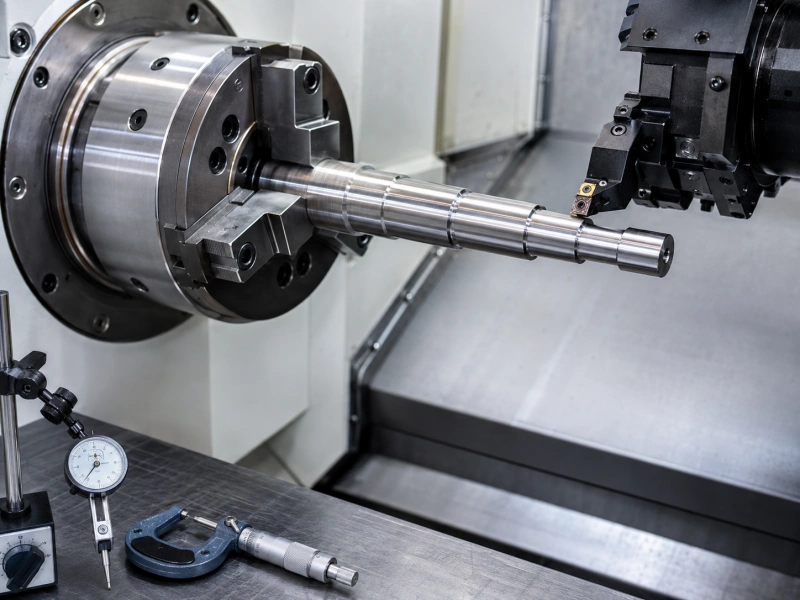
Stainless Steel Grades and Finishes for Shaft Parts
Material grade and surface finish should match the shaft’s working condition. A motor shaft, guide shaft, fluid equipment shaft, and medical device shaft may all look similar, but their corrosion resistance, surface roughness, and strength requirements can be very different.
Common Stainless Steel Grades
CNCTAL can machine different stainless steel shaft materials according to your drawing requirements. If the grade is not fixed, we can review the application and suggest a practical option for machining and use.
Surface Finishing Options
Shaft finishing is not only about appearance. For some parts, finish affects sliding, sealing, corrosion resistance, marking, cleaning, and final assembly performance.
As Machined
Suitable for most functional shaft parts when drawing requirements can be met directly after CNC turning and milling.
Polishing
Used for guide shafts, visible parts, sliding surfaces, or applications requiring a smoother and cleaner surface.
Passivation
Helps improve corrosion resistance and cleanliness for stainless steel components used in medical, fluid, or clean equipment.
Black Oxide
Applied when a dark appearance, lower reflection, or specific assembly requirement is needed.
Nickel Plating
Can be considered for selected shaft projects requiring additional surface protection or appearance control.
Laser Marking
Used for part numbers, batch codes, orientation marks, or traceability requirements when the drawing requires marking.
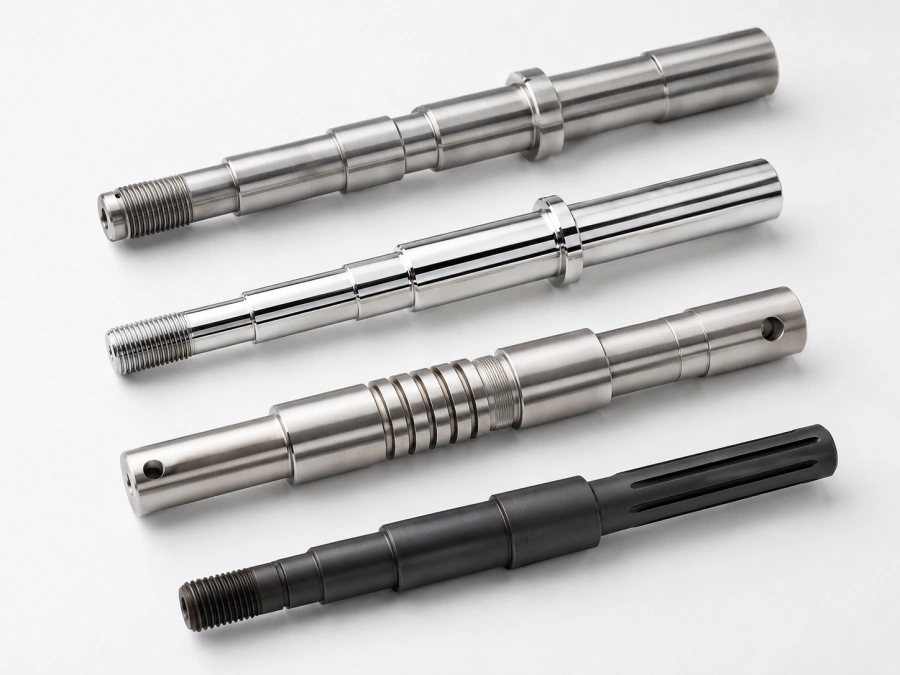
How to Choose the Right Shaft Finish
The best finish depends on how the shaft is used. For example, a hidden positioning shaft may only need an as-machined surface, while a guide shaft or medical device shaft may need polishing and passivation.
- Use polishing when smoother sliding surfaces or better appearance are required.
- Use passivation when corrosion resistance and clean stainless steel surface are important.
- Keep as-machined finish when the shaft is functional and no extra finish is needed.
- Mark critical finished areas on the drawing to avoid polishing or plating the wrong surface.
What We Check Before Shipping Stainless Steel Shafts
For stainless steel shaft components, inspection is not only about measuring the overall length and outside diameter. Critical features such as bearing fits, runout, thread quality, groove position, and surface finish must match the drawing so the shaft can work correctly inside the final assembly.
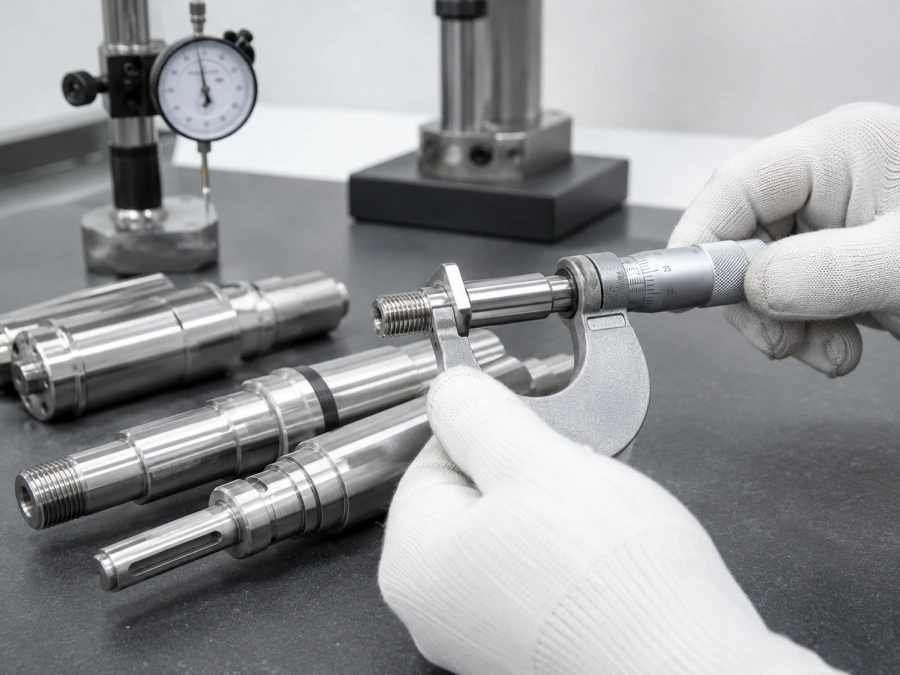
Inspection Focus for Shaft Parts
Shaft parts usually have several functional areas. We pay special attention to dimensions that affect rotation, sliding, locking, sealing, and final assembly.
Diameter Tolerance
Bearing seats, guide areas, and fitting sections are checked carefully according to the drawing tolerance.
Runout & Concentricity
Rotating shafts and drive shafts need stable alignment to reduce vibration and assembly issues.
Thread Accuracy
External and internal threads are checked by thread gauges or mating requirements where needed.
Groove Dimensions
Circlip grooves, O-ring grooves, relief grooves, and locating slots are checked for width, depth, and position.
Surface Roughness
Sliding surfaces, polished areas, and sealing zones can be inspected based on the required Ra value.
Cross Holes & Flats
Cross holes, pin holes, wrench flats, and milled features are checked for position and assembly direction.
Inspection Tools We Commonly Use
Different shaft features need different inspection methods. For normal shaft projects, we use practical inspection tools during production and final checking. For tighter requirements, additional inspection reports can be arranged according to the drawing.
- Micrometer for critical outside diameters
- Caliper for general dimensions and lengths
- Thread gauge for internal and external threads
- Height gauge for shoulder and feature positions
- Surface roughness check when required
- CMM or 2D inspection for selected critical parts
Drawing tip: If your stainless steel shaft has bearing seats, sliding areas, threaded sections, grooves, or polished surfaces, please mark these as critical features on the drawing. This helps us prepare the correct machining and inspection plan before production.
What to Send for a Stainless Steel Shaft Quotation
A clear RFQ helps us quote stainless steel shaft parts faster and more accurately. For shaft components, small details such as bearing fits, runout, thread type, surface finish, and quantity can change the machining process and final cost.
Typical Shaft Projects We Support
CNCTAL works with engineers, equipment builders, and purchasing teams on different stainless steel shaft projects, from prototype verification to repeat batch orders.
Recommended RFQ Information
Please send as much information as possible. If some details are not confirmed, our team can review the drawing and ask only the necessary questions.
- 2D drawing with tolerances, thread callouts, and surface finish notes
- 3D CAD file such as STEP, STP, IGS, IGES, or STL
- Stainless steel grade: 304, 316, 303, 17-4PH, or other material
- Quantity for prototype, small batch, or repeat production
- Critical features such as bearing seats, runout, grooves, and polished areas
- Required surface finish: as machined, polishing, passivation, plating, or marking
Critical Dimensions Marked Clearly
If a shaft has bearing seats, sliding sections, or mating thread areas, mark them clearly so we can plan machining and inspection correctly.
Quote Multiple Quantities Together
Sending quantities such as 5 pcs, 50 pcs, and 200 pcs helps compare prototype and batch production pricing more efficiently.
Confirm Finish Before Machining
Polishing, passivation, plating, or laser marking can affect lead time and cost. Confirming the finish early helps avoid delays later.
Stainless Steel Shaft Machining FAQs
Common questions about custom stainless steel shafts, material selection, machining accuracy, finishing options, and RFQ preparation.
Can you machine custom stainless steel shafts from drawings?
Yes. CNCTAL machines custom stainless steel shafts based on 2D drawings, 3D CAD files, or samples. Typical parts include stepped shafts, threaded shafts, guide shafts, drive shafts, grooved shafts, and shaft parts with cross holes or milled flats.
What stainless steel grades are commonly used for shaft machining?
Common grades include 304, 316, 303, and 17-4PH stainless steel. 304 is often used for general equipment shafts, 316 is better for wet or clean environments, 303 improves machinability, and 17-4PH is suitable for higher-strength shaft applications.
Can you control runout and concentricity on stainless steel shafts?
Yes. For rotating shafts, motor shafts, and bearing seat areas, we review runout and concentricity requirements before machining. Please mark these requirements clearly on the drawing so we can plan the correct process and inspection method.
Can you make threaded or grooved stainless steel shafts?
Yes. We can machine external threads, internal threads, end threads, circlip grooves, O-ring grooves, relief grooves, shoulders, undercuts, and other small shaft features according to your drawing.
Do stainless steel shafts need polishing or passivation?
Not always. Many functional shaft parts can be supplied as machined. Polishing is useful for smoother sliding surfaces or visible parts, while passivation is often selected for clean, wet, medical, or fluid-related applications.
Can you support both prototypes and batch production?
Yes. CNCTAL supports one-off prototype shafts, small batch testing parts, and repeat production orders. You can send multiple quantity levels in one RFQ to compare sample and batch production pricing.
What files should I send for a stainless steel shaft quote?
Please send a 2D drawing with tolerances and a 3D CAD file such as STEP, STP, IGS, IGES, STL, or other common formats. Also include material grade, quantity, surface finish, critical dimensions, and inspection requirements.
Need a Quote for Stainless Steel Shaft Parts?
Send your shaft drawing, material grade, quantity, and finish requirements. Our engineering team will review the machining details and provide a practical quotation.