

Brass Fittings CNC Machining Case Study
Custom CNC machined brass fittings for liquid cooling systems, threaded connections, instrument assemblies and precision fluid control applications requiring clean threads, stable sealing surfaces and reliable batch consistency.
- Brass threaded fittings, hose adapters and custom connectors
- Liquid cooling connectors for electronics and thermal systems
- Internal threads, external threads, cross holes and sealing faces
- CNC turning, milling, deburring and inspection support
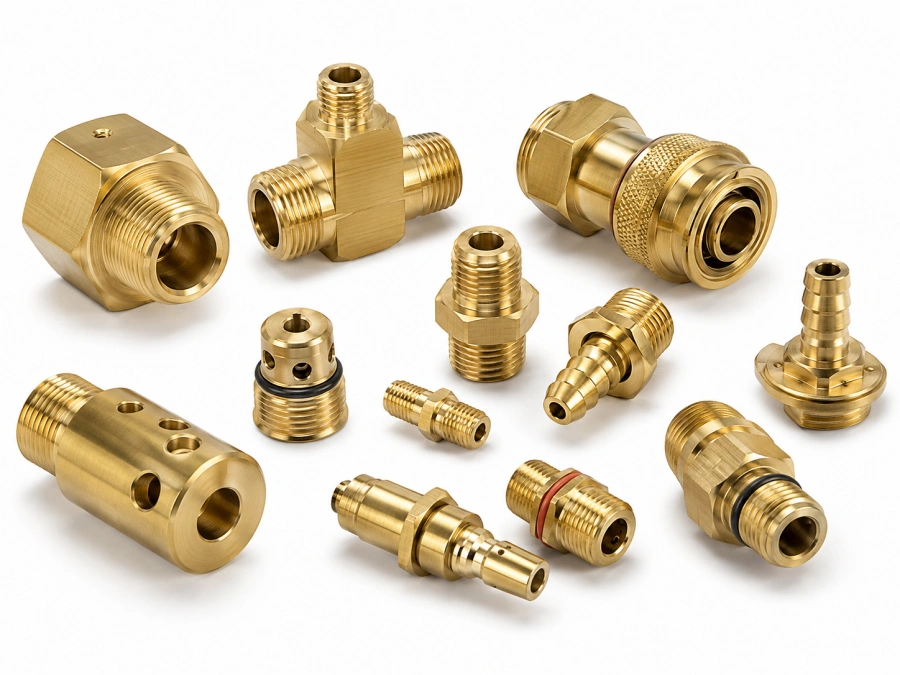
CNC Machined Brass Fittings for Functional Assemblies
This case study focuses on custom brass fittings produced by CNC turning and milling, including threaded connectors, hose adapters, liquid cooling fittings, instrument fittings and small fluid control components. These parts require accurate threads, clean sealing faces, burr control and stable repeatability from prototype to batch production.
Custom brass connectors, threaded fittings, hose adapters, compression-style parts and small fluid connection components.
Parts used in liquid cooling systems, instrument assemblies, electronics cooling, testing equipment and industrial fluid control devices.
Turning for round connector bodies and threads, milling for flats, cross holes, slots, wrench surfaces and custom mounting features.
Internal and external threads, small holes, stepped diameters, sealing faces, O-ring grooves and appearance surfaces.
Metric, BSP, G, NPT or custom threads can be reviewed according to drawing requirements and assembly needs.
Sealing faces, O-ring grooves and contact surfaces are checked carefully because they affect assembly fit and leakage risk.
CNC machining is suitable for prototype brass fittings, design changes, low-volume orders and repeat production without dedicated tooling.
Typical Brass Fittings We Machine
CNCTAL manufactures custom CNC machined brass fittings for threaded connections, liquid cooling systems, instrument assemblies, hose connections and precision fluid control components.
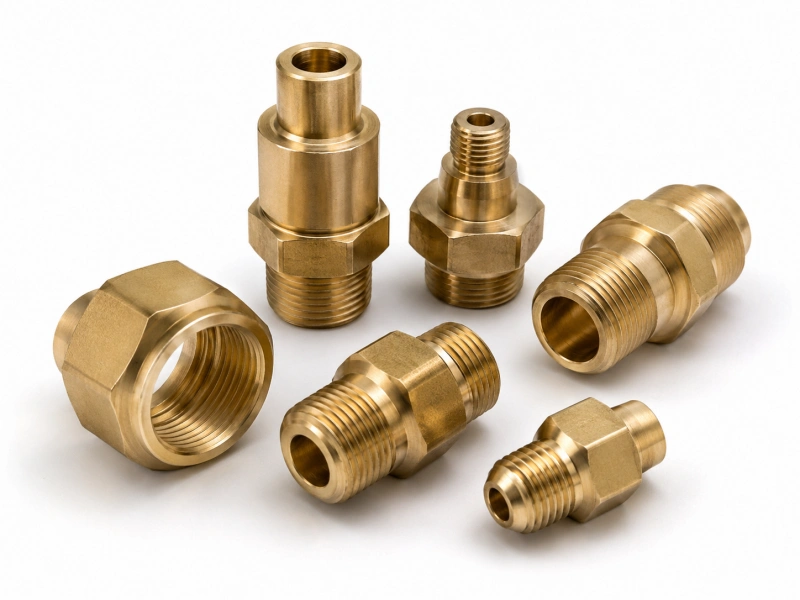
Brass Threaded Fittings
CNC machined brass fittings with internal threads, external threads, stepped diameters, wrench flats and connection features for mechanical assemblies.
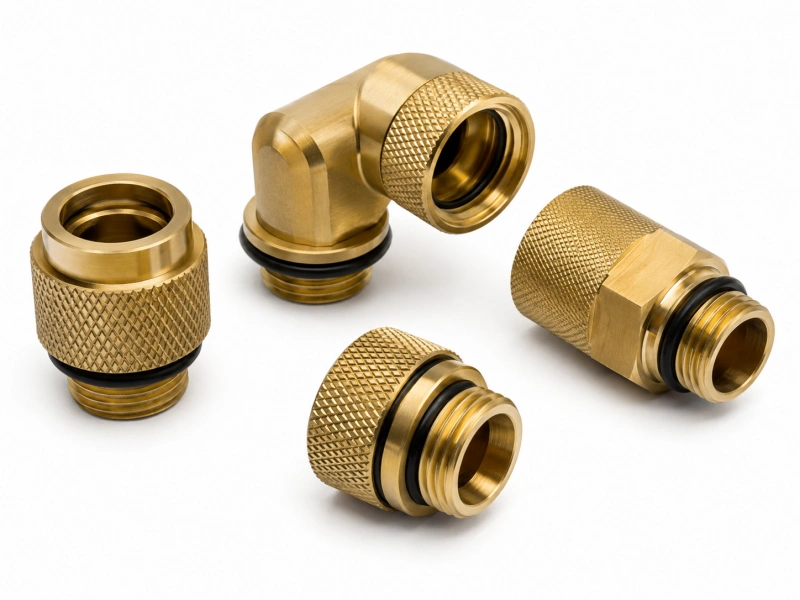
Liquid Cooling Brass Connectors
Custom brass connectors used in liquid cooling systems, electronics cooling, thermal management assemblies and fluid circulation modules.
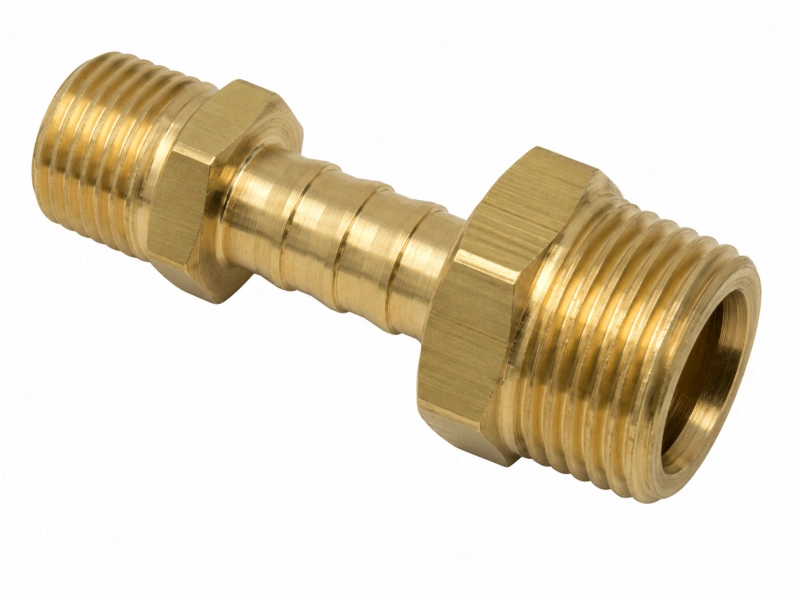
Brass Hose Adapters
Hose adapters, barbed fittings, transition connectors and small brass connection parts for tubes, pipes, cooling lines and equipment assemblies.
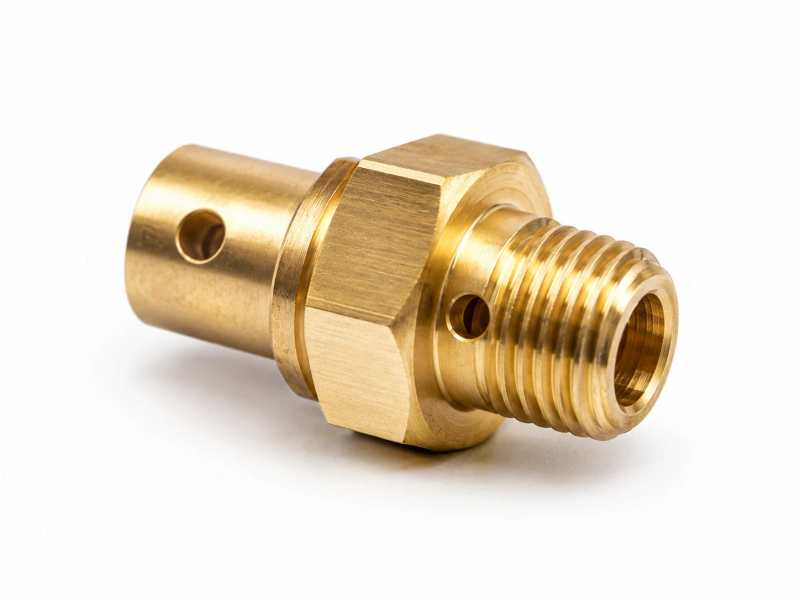
Instrument Brass Fittings
Small precision brass fittings for instruments, testing equipment, sensors, measuring devices and laboratory or industrial control assemblies.
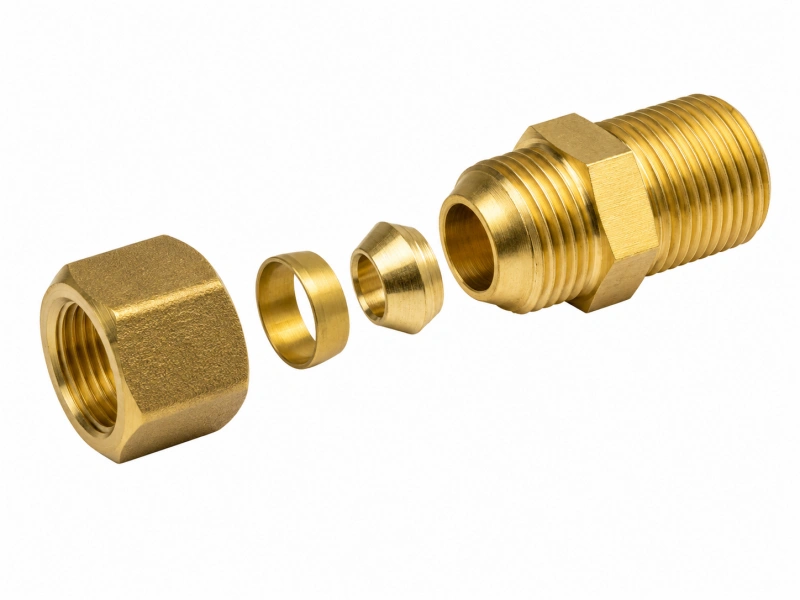
Brass Compression Fittings
Compression-style brass components, sleeves, nuts, sealing seats and connector bodies requiring clean contact surfaces and accurate thread fit.
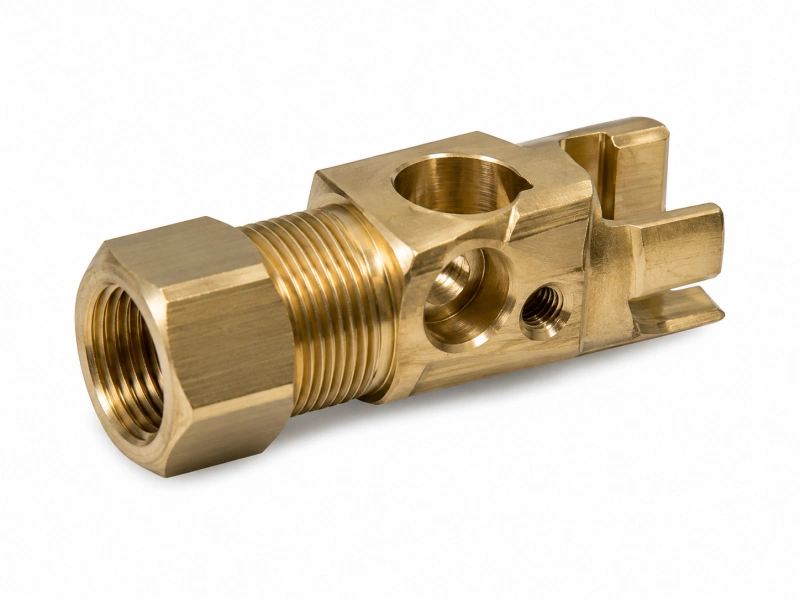
Custom Brass Connectors
Non-standard brass connectors with cross holes, slots, flats, grooves, threaded ports and custom geometry based on customer drawings.
Challenges in Machining Brass Fittings
Brass is generally easier to machine than stainless steel, but brass fittings still require careful control around threads, sealing faces, small holes and surface appearance. For fluid connection parts, small burrs or poor thread fit can affect assembly quality.
- Accurate Thread Machining Internal threads, external threads, fine threads and pipe threads need stable fit with mating parts, gauges or customer assembly requirements.
- Clean Sealing Surfaces Sealing faces, O-ring grooves, cone seats and contact surfaces must be machined cleanly because they may affect leakage risk and assembly reliability.
- Burr Control Around Holes Cross holes, small ports, thread entrances and intersecting features can create burrs that need careful removal without damaging the brass surface.
- Consistent Appearance in Batch Production Brass fittings often have visible surfaces. Tool marks, scratches, stains and handling marks should be controlled, especially for instrument and connector applications.
What We Review Before Machining Brass Fittings
Metric, BSP, G, NPT or custom thread requirements based on drawing notes.
Flat sealing faces, tapered seats, O-ring grooves and contact surfaces.
Small side holes, intersecting holes, flow ports and deburring difficulty.
Alignment between threaded sections, bore diameters and turned features.
Visible brass appearance, machining marks, polishing, plating or coating needs.
Repeatability of thread fit, sealing surface quality and critical dimensions.
CNC Turning and Milling Solutions for Brass Fittings
Brass fittings usually combine round turned features, accurate threads, cross holes, wrench flats, sealing surfaces and deburring requirements. CNCTAL uses CNC turning, CNC milling, thread machining and inspection to support custom brass connector projects.
From Connector Body Machining to Final Thread Inspection
Most brass fittings start from CNC turning to create the main body, stepped diameters, bores, sealing faces and external profiles. Milling operations are then used for wrench flats, side holes, slots, ports and custom connection features.
For threaded brass fittings, machining quality is not only about dimension. Thread entrance, burr removal, sealing surface finish and batch consistency are also reviewed before shipment.
CNC Turning
Used for round brass connector bodies, stepped diameters, bores, chamfers, sealing faces, external threads and internal thread preparation.
CNC Milling
Supports wrench flats, side holes, slots, mounting faces, anti-rotation features and non-round geometry on custom brass fittings.
Thread Machining
Internal threads, external threads, metric threads, pipe threads and custom thread features can be machined according to drawing requirements.
Cross Holes and Flow Ports
Small holes, intersecting ports and flow channels are machined with attention to burr control and clean internal edges.
Deburring and Surface Care
Thread entrances, hole edges, sealing areas and visible brass surfaces are deburred and handled carefully to reduce scratches and assembly issues.
Inspection Before Shipment
Threads, key diameters, hole positions, sealing faces, concentricity and surface appearance are checked based on drawing and customer requirements.
Brass Materials for Custom Fittings
Brass fittings are commonly selected for good machinability, corrosion resistance, clean appearance and reliable use in threaded connection parts. CNCTAL can review brass material options according to drawing standards, application environment and order quantity.
A common free-machining brass option for precision turned fittings, threaded connectors and small brass components.
- Excellent CNC turning performance
- Good for threaded brass fittings
- Suitable for connector bodies
- Clean machined brass appearance
Frequently used for custom brass parts, fittings, adapters and precision connectors requiring stable machining and clean details.
- Suitable for CNC turning and milling
- Good for small threaded parts
- Used for adapters and connectors
- Supports repeat batch production
Common brass grades used for fittings, sleeves, nuts, connector parts and general CNC machined brass components.
- Suitable for general brass fittings
- Good mechanical performance
- Used for sleeves and connector parts
- Can be reviewed by drawing standard
Lead-free brass can be reviewed when the application requires specific environmental, water-contact or customer compliance requirements.
- Available based on project needs
- Suitable for selected fluid applications
- Material standard should be specified
- Quotation depends on availability
Copper may be considered for specific thermal or electrical applications, especially when conductivity is more important than standard fitting performance.
- Useful for thermal applications
- Good electrical conductivity
- Suitable for selected cooling parts
- Requires separate machining review
Bronze materials can be reviewed for wear-resistant sleeves, bushings, connector hardware or special mechanical applications.
- Good wear resistance
- Suitable for bushings and sleeves
- Useful for mechanical connector parts
- Material availability reviewed by project
Material Availability Depends on Standard and Quantity
For custom brass fittings, material grade should be confirmed before quotation. Availability can depend on drawing standard, diameter, bar size, order quantity and whether special compliance or certification is required.
Information That Helps Material Review
- Required brass grade or equivalent material standard
- Thread standard, fitting function and working environment
- Whether the part contacts water, coolant, gas or oil
- Surface finish requirements such as plating, polishing or coating
- Prototype quantity, batch quantity and expected repeat production volume
Thread and Sealing Surface Inspection for Brass Fittings
Brass fittings are small parts, but the inspection work is important. Thread fit, sealing faces, cross holes, burrs and visible brass surfaces are checked carefully before shipment to support reliable assembly.
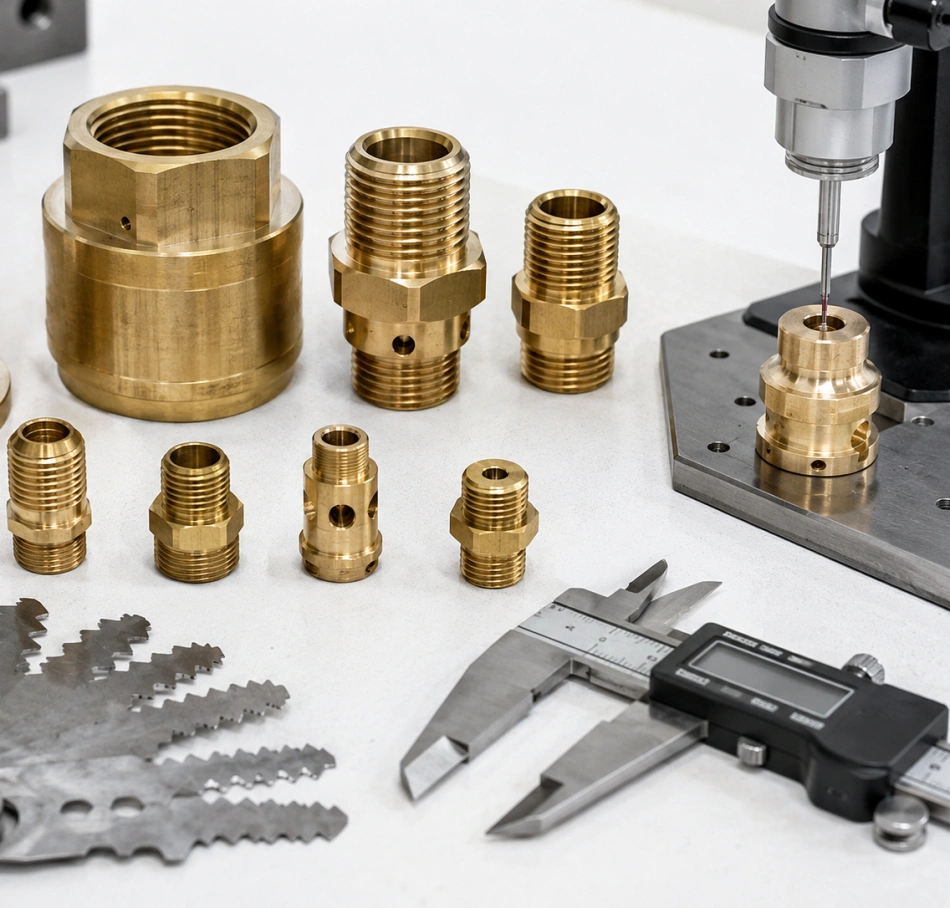
Inspection Points That Affect Assembly Quality
For brass threaded fittings, dimensional accuracy alone is not enough. Thread entrance, small port edges, sealing faces and visible machined surfaces also need to be reviewed, especially for liquid cooling, instrument and fluid control applications.
- Internal and External Thread Fit Metric, BSP, G, NPT or custom thread requirements are checked according to drawings, gauges or mating part requirements.
- Sealing Face and O-Ring Groove Review Flat sealing areas, cone seats, O-ring grooves and contact surfaces are checked for clean machining and stable assembly contact.
- Cross Hole and Flow Port Deburring Intersecting holes and small flow ports are inspected for burrs, sharp edges and blocked internal passages.
- Concentricity and Critical Diameter Check Bores, stepped diameters, sleeve areas and threaded sections are reviewed when they affect fit, alignment or fluid path stability.
Thread Quality
Thread profile, thread depth, entrance chamfer and thread engagement are checked for smooth assembly.
Sealing Control
Sealing faces and O-ring areas are reviewed to reduce fitting problems during final installation.
Burr Removal
Small holes, thread entrances and cross ports are deburred carefully without damaging brass surfaces.
Appearance Check
Visible brass areas are checked for scratches, stains, tool marks and handling marks before packing.
Applications for CNC Machined Brass Fittings
CNC machined brass fittings are used in liquid cooling systems, threaded connection assemblies, instruments, testing equipment and industrial fluid control applications where thread quality, sealing surfaces and repeatable fit are important.
Custom Brass Connection Parts for Functional Equipment
Brass fittings are often small parts, but they connect important systems. Threads, ports, sealing faces, hose connections and visible brass surfaces all need to be controlled during machining and inspection.
CNCTAL supports brass fittings for prototype validation, small batch production and repeat orders used in cooling, instrumentation and industrial assemblies.
Liquid Cooling Systems
Brass liquid cooling connectors, threaded fittings, hose adapters and flow connection parts for cooling loops and thermal management assemblies.
Instrumentation
Precision brass fittings for instruments, sensors, measuring devices, pressure modules and compact mechanical connection assemblies.
Electronics Cooling
Custom brass connectors, manifolds, adapters and threaded parts used in electronics cooling, server cooling and equipment thermal control systems.
Fluid Control Equipment
Machined brass connector bodies, compression fittings, ports, sleeves and sealing components for small fluid control devices and assemblies.
Testing & Laboratory Equipment
Small brass fittings, adapters, sensor connectors and precision threaded parts for test fixtures, laboratory equipment and measurement systems.
Industrial Machinery Assemblies
Custom brass threaded connectors, bushings, sleeves, pipe adapters and hose fittings used in industrial equipment and mechanical assemblies.
Brass Fittings CNC Machining FAQs
Common questions about CNC machined brass fittings, threaded connectors, liquid cooling fittings, hose adapters, instrument fittings and custom brass components.