

Aluminum Manifold CNC Machining Case Study
Custom CNC machined aluminum manifolds for fluid control, pneumatic systems, cooling circuits and industrial equipment requiring accurate ports, threaded holes, sealing surfaces and multi-side machining.
- Aluminum manifold blocks for fluid, air and cooling systems
- Threaded ports, cross holes, flow channels and mounting holes
- O-ring grooves, sealing faces and flat mounting surfaces
- CNC milling, drilling, tapping, deburring and inspection support
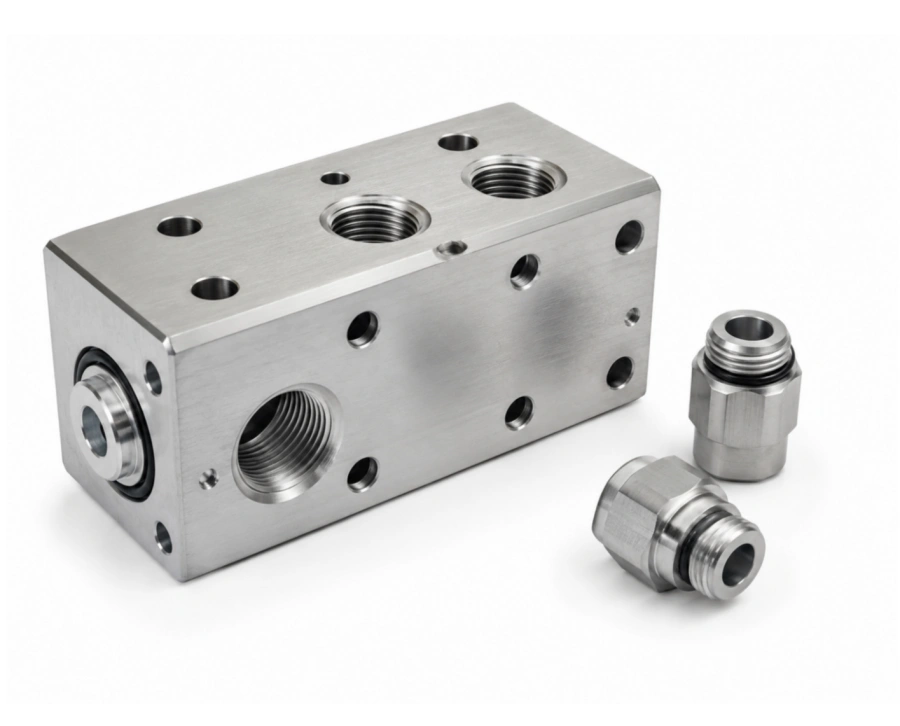
CNC Machined Aluminum Manifolds for Functional Assemblies
This case study focuses on custom aluminum manifolds produced by CNC milling, drilling and tapping. These parts are used to route fluid, air or coolant through multiple ports, threaded holes and internal channels. The key requirements are accurate port alignment, clean sealing faces, reliable threaded connections and careful burr control inside intersecting holes.
Custom manifold blocks, distribution blocks, valve blocks and multi-port aluminum components for functional equipment assemblies.
Parts used in fluid control equipment, pneumatic systems, cooling circuits, testing equipment and industrial automation assemblies.
CNC milling for block shape and sealing faces, drilling for flow channels, and tapping for threaded ports and mounting holes.
Threaded ports, cross holes, internal channels, mounting holes, O-ring grooves, flat faces and custom connection features.
Port positions, flow holes and threaded connections need controlled alignment to support assembly and fluid path stability.
O-ring grooves, flat sealing faces and mounting surfaces are reviewed carefully because they can affect leakage risk.
CNC machining is suitable for prototype manifold blocks, design changes, low-volume orders and repeat production without mold tooling.
Typical Aluminum Manifolds We Machine
CNCTAL manufactures custom CNC machined aluminum manifolds for fluid control, pneumatic systems, cooling circuits, valve assemblies and industrial equipment requiring accurate ports, threaded holes, flow channels and sealing surfaces.
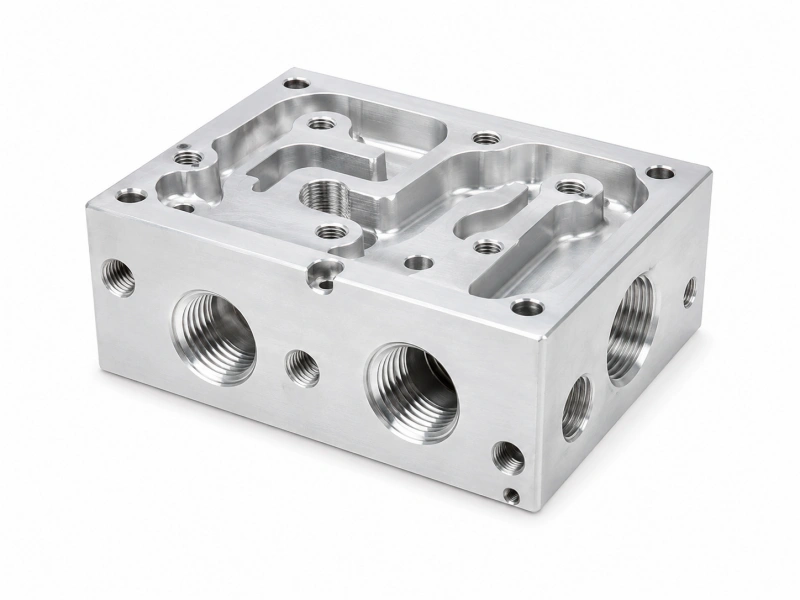
Aluminum Fluid Manifolds
CNC machined aluminum manifold blocks for fluid distribution, inlet and outlet connections, internal channels and multi-port connection layouts.
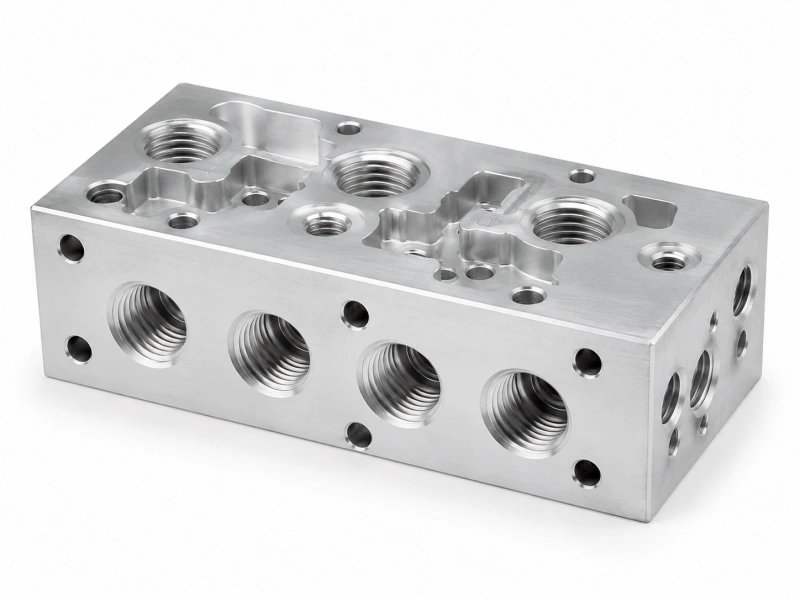
Aluminum Pneumatic Manifolds
Air distribution blocks, pneumatic valve connection blocks and compact manifold parts with threaded ports, mounting holes and cross channels.
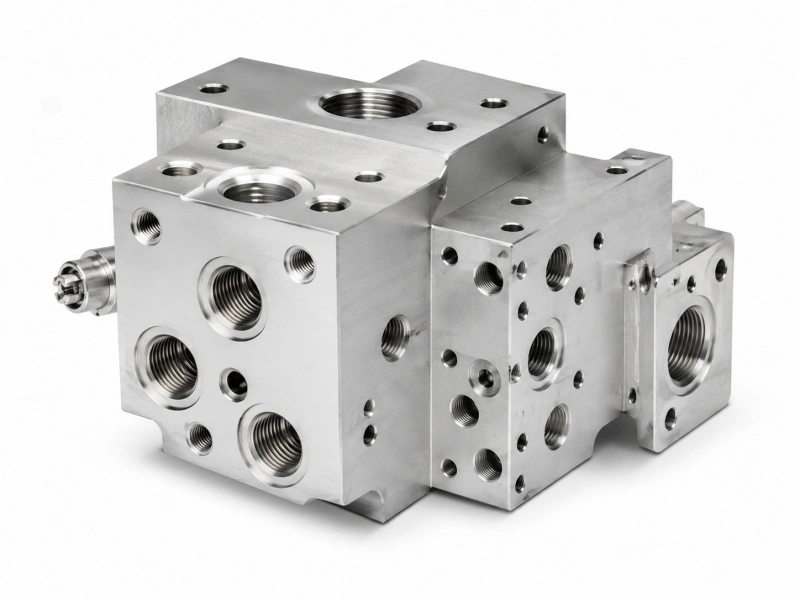
Aluminum Hydraulic Manifolds
Custom aluminum manifold blocks for selected hydraulic or oil control assemblies, reviewed by drawing, pressure requirement, material and inspection needs.
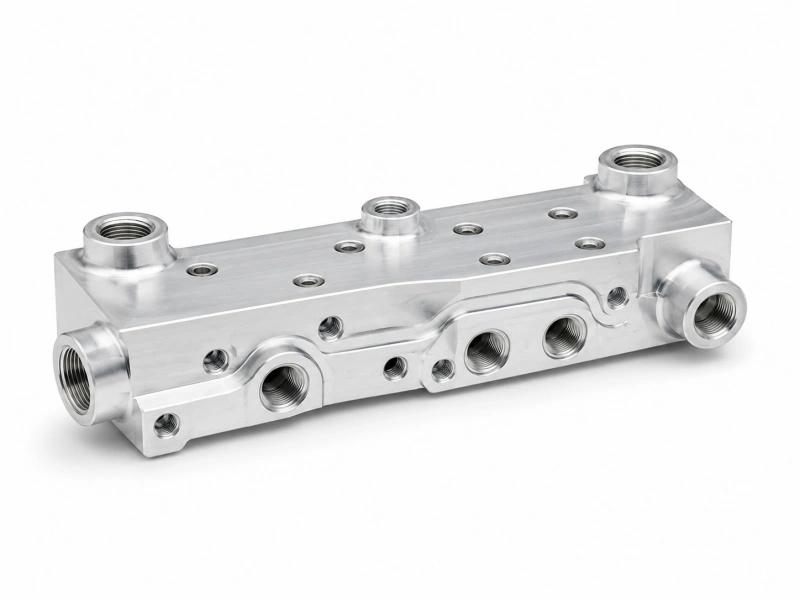
Aluminum Cooling Manifolds
Cooling manifold blocks, liquid cooling distribution parts and thermal system connectors with threaded ports, flow channels and sealing features.
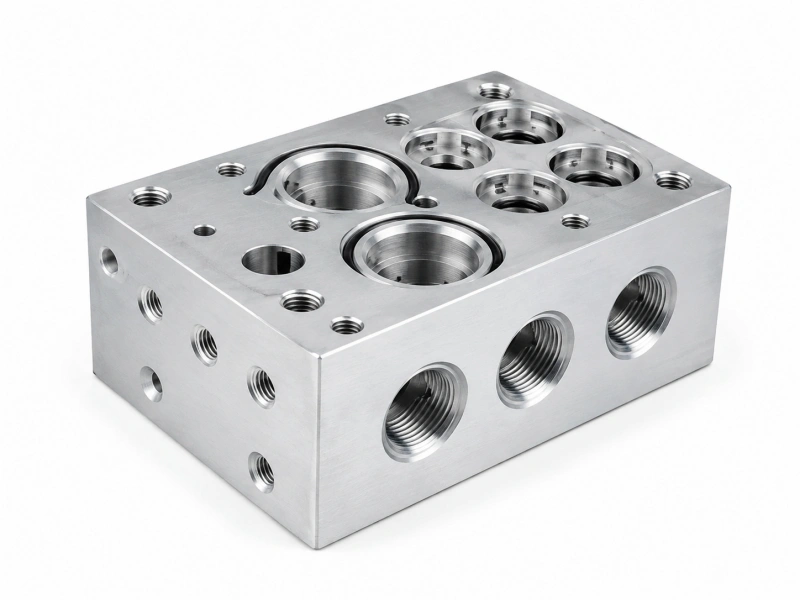
Aluminum Valve Manifold Blocks
Valve mounting blocks, O-ring groove features, flat sealing faces, threaded ports and accurate mounting hole patterns for functional assemblies.
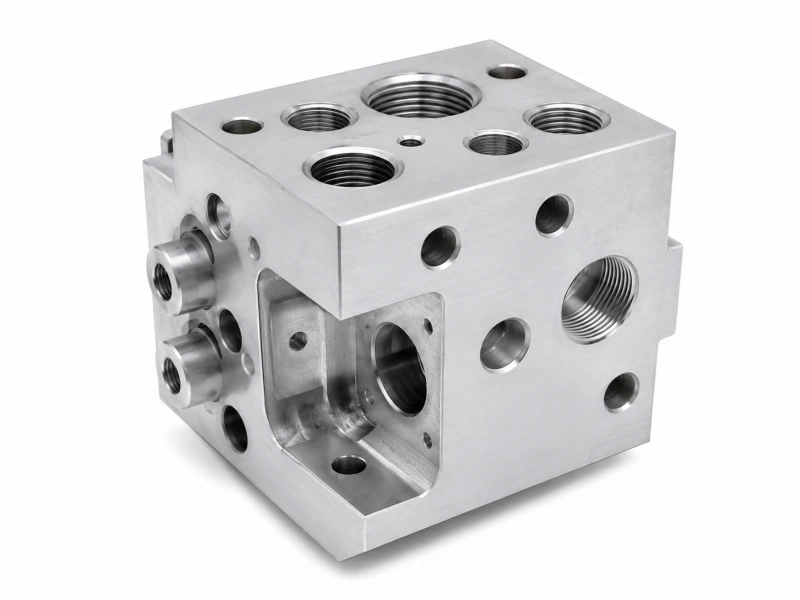
Custom Aluminum Distribution Blocks
Non-standard aluminum manifold and distribution blocks with multiple sides, threaded ports, cross holes, slots, locating holes and custom mounting features.
Challenges in Machining Aluminum Manifold Blocks
Aluminum manifold blocks look simple from the outside, but the internal port layout, intersecting holes, threaded connections and sealing surfaces make them more demanding than standard aluminum plates or brackets.
- Multi-Side Machining Accuracy Manifold blocks often require machining from several directions. Port positions, mounting holes and sealing faces must stay aligned after multiple setups.
- Deep Holes and Cross Channels Flow channels, intersecting holes and side ports need careful drilling strategy to avoid position errors, tool marks and internal burrs.
- Threaded Port Quality Threaded ports must fit connectors, plugs, valves or sensors smoothly. Poor thread quality can affect assembly and sealing performance.
- Sealing Faces and O-Ring Grooves Flat sealing surfaces, O-ring grooves and valve mounting areas require clean machining, controlled depth and careful surface protection.
What We Review Before Machining Aluminum Manifolds
Hole direction, port spacing, flow path, intersecting holes and datum references.
Metric, NPT, BSP, G or customer-specified thread requirements for each port.
O-ring grooves, flat contact faces, gasket areas and valve mounting surfaces.
Intersecting holes, deep drilled channels and hidden internal edges.
As-machined finish, bead blasting, clear anodizing, black anodizing or hard anodizing.
Port positions, threads, flatness, groove depth, surface condition and critical dimensions.
CNC Milling, Drilling and Tapping Solutions for Aluminum Manifolds
Aluminum manifold blocks require more than basic CNC milling. Accurate port positions, intersecting channels, threaded holes, O-ring grooves, sealing faces and internal burr control must be managed through a clear machining process.
From Manifold Block Machining to Final Port Inspection
Most aluminum manifolds start with CNC milling to create the outside shape, mounting faces, datum surfaces and sealing areas. Drilling and tapping operations are then used to create flow channels, threaded ports, mounting holes and cross holes.
For functional manifold parts, machining quality is not only about outside dimensions. Internal burrs, thread quality, port alignment, O-ring groove depth and surface protection are also reviewed before shipment.
CNC Milling
Used for manifold block profiles, mounting surfaces, sealing faces, valve seats, pockets, steps, slots and custom external geometry.
Drilling Flow Channels
Straight holes, deep holes, cross holes and internal flow paths are drilled according to port layout and drawing requirements.
Tapping Threaded Ports
Metric, NPT, BSP, G or custom threaded ports can be machined when thread standards and engagement depth are clearly specified.
O-Ring Grooves
O-ring grooves, gasket pockets and sealing features are machined with attention to groove depth, width, corner condition and surface finish.
Deburring Internal Channels
Intersecting holes, port entrances and internal edges are reviewed carefully because burrs can affect flow, assembly and sealing reliability.
Surface Finishing
As-machined finish, bead blasting, clear anodizing, black anodizing or hard anodizing can be reviewed according to application and appearance needs.
Aluminum Materials and Surface Finishes for Manifolds
Aluminum manifold blocks need a practical balance of machinability, strength, corrosion resistance, sealing performance and surface protection. CNCTAL can review material and finishing options according to drawing requirements and working environment.
A widely used material for aluminum manifold blocks, fluid distribution parts, pneumatic blocks and general CNC machined aluminum components.
- Good machinability
- Good strength-to-weight balance
- Suitable for clear or black anodizing
- Practical for prototype and batch production
Often used for European projects and industrial aluminum parts requiring reliable mechanical performance and stable CNC machining.
- Suitable for manifold blocks
- Good corrosion resistance
- Common for industrial equipment
- Can be reviewed as a 6061 alternative
Selected when higher strength is required, but material cost, corrosion behavior and anodizing appearance should be reviewed before production.
- Higher strength than 6061
- Useful for compact high-load blocks
- Requires project-based review
- Not always necessary for standard manifolds
Can be considered for selected low-load manifold or connector parts where appearance, corrosion resistance or extrusion-based material availability matters.
- Good anodizing appearance
- Suitable for selected low-load parts
- Good corrosion resistance
- Reviewed based on drawing function
Suitable for prototypes, internal functional parts and early validation where appearance or surface protection is not the main requirement.
- Shorter lead time
- Good for functional testing
- No additional coating process
- Useful for prototype manifold blocks
Clear anodizing, black anodizing or hard anodizing can be reviewed for manifold blocks requiring corrosion resistance, wear resistance or clean appearance.
- Clear anodizing
- Black anodizing
- Hard anodizing when required
- Surface preparation reviewed by part design
Surface Finish Should Match the Working Environment
Aluminum manifolds used in fluid control, pneumatic systems or cooling circuits may need surface protection depending on coolant, air, oil, water, cleaning method and operating environment. Sealing faces and threaded ports should also be considered before selecting anodizing or coating.
Common Finishing Options
- As-machined finish
- Bead blasting
- Clear anodizing
- Black anodizing
- Hard anodizing
- Laser marking
- Surface cleaning
- Protective packaging
Ports, Tolerances and Inspection for Aluminum Manifolds
Aluminum manifold inspection focuses on port positions, threaded holes, cross channels, O-ring grooves, sealing faces, flatness and burr control. These details affect assembly, flow path reliability and leakage-related risks.
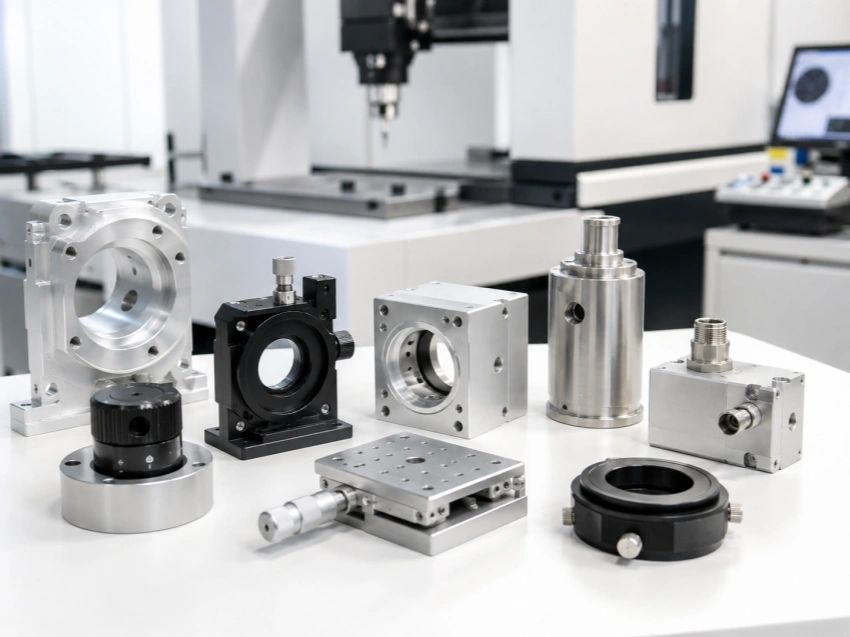
Typical Inspection Points for Aluminum Manifold Blocks
| Threaded Ports | Metric, NPT, BSP, G or custom ports are checked according to drawing notes, thread depth, entrance condition and mating part requirements. |
|---|---|
| Port Position | Inlet ports, outlet ports, valve ports and sensor ports are checked for location accuracy to support correct assembly alignment. |
| Flow Channels | Internal channels, drilled holes and flow paths are reviewed according to the CAD model and drawing layout. |
| Cross Holes | Intersecting holes and side-drilled channels are checked for size, position, breakthrough condition and internal burr risk. |
| O-Ring Grooves | Groove width, depth, corner condition and surface quality are checked when O-ring sealing is required. |
| Sealing Faces | Flat contact faces, gasket areas and valve mounting surfaces are reviewed for machining marks, scratches, flatness and finish requirements. |
| Mounting Holes | Mounting hole positions, counterbores, countersinks and threaded mounting features are inspected for assembly fit. |
| Burr Control | Port entrances, drilled intersections, threaded holes and visible edges are checked carefully before cleaning, finishing and packing. |
Port Alignment Review
Port positions, thread directions and internal flow paths are checked against the drawing to support stable assembly.
Sealing Feature Control
O-ring grooves, gasket areas and flat sealing faces are reviewed because they may affect leakage-related performance.
Internal Burr Check
Cross holes and intersecting channels are reviewed carefully to reduce hidden burrs inside the manifold block.
Applications for CNC Machined Aluminum Manifolds
CNC machined aluminum manifolds are used in fluid control equipment, pneumatic systems, cooling circuits, testing devices and industrial machinery where ports, threads, sealing surfaces and internal channels must work together accurately.
Custom Aluminum Manifold Blocks for Functional Equipment
Aluminum manifold blocks are compact connection parts that route air, liquid, coolant or oil through multiple ports. They often combine threaded holes, flow channels, O-ring grooves, valve mounting faces and inspection-critical features.
CNCTAL supports aluminum manifold machining for prototype validation, small batch production and repeat orders used in industrial, cooling and control systems.
Fluid Control Equipment
Aluminum fluid manifolds, distribution blocks and connection blocks for routing water, coolant, oil or other working media through controlled channels.
Pneumatic Systems
CNC machined pneumatic manifold blocks, valve connection plates, air distribution blocks and threaded port components for compact air control assemblies.
Liquid Cooling Systems
Aluminum cooling manifolds, coolant distribution blocks and thermal management connection parts for electronics cooling and industrial cooling circuits.
Industrial Automation
Manifold blocks used in automated equipment, valve control systems, fixtures, production machinery and compact mechanical assemblies.
Testing & Laboratory Equipment
Custom aluminum manifold blocks for test benches, laboratory instruments, measurement equipment and controlled fluid or air distribution modules.
Energy & Mechanical Equipment
Aluminum valve blocks, distribution manifolds and custom ported components used in energy equipment, mechanical systems and industrial assemblies.
Project Results and Manufacturing Benefits
CNC machining helps aluminum manifold customers produce accurate, functional and assembly-ready manifold blocks for prototype testing, design validation and small batch production. The main value is stable port alignment, clean sealing features, reliable threaded connections and controlled internal channel quality.
- Accurate threaded ports, flow holes and mounting features for fluid, pneumatic and cooling assemblies.
- Clean sealing faces, O-ring grooves and flat mounting surfaces to support reliable assembly fit.
- Multi-side CNC machining support for manifold blocks with complex port layouts and cross channels.
- Deburring review around intersecting holes, port entrances, threaded holes and internal flow paths.
- Flexible support for prototype aluminum manifolds, design changes, low-volume orders and repeat production.
Available depending on material, geometry, part size and machining setup.
Ports, threads, sealing faces, grooves and mounting holes checked before shipment.
Suitable for aluminum manifold blocks with ports on several faces.
Supports engineering samples, design revisions and repeat manifold production.
Aluminum Manifold CNC Machining FAQs
Common questions about CNC machined aluminum manifolds, manifold blocks, threaded ports, O-ring grooves, sealing surfaces, flow channels and inspection requirements.