

5-Axis CNC Machining Services for Complex Precision Parts
CNCTAL provides 5-axis CNC machining services for complex precision parts with angled features, curved surfaces, deep cavities and multi-sided geometry. We support prototypes, production parts and repeat manufacturing in aluminum, stainless steel, titanium, brass, copper, steel and engineering plastics ,with tolerances up to ±0.01mm.
- 5-axis machining for complex, curved and multi-sided parts
- Fewer setups for improved accuracy and part consistency
- Aluminum, titanium, stainless steel and plastic components
- Prototype, batch and production machining support
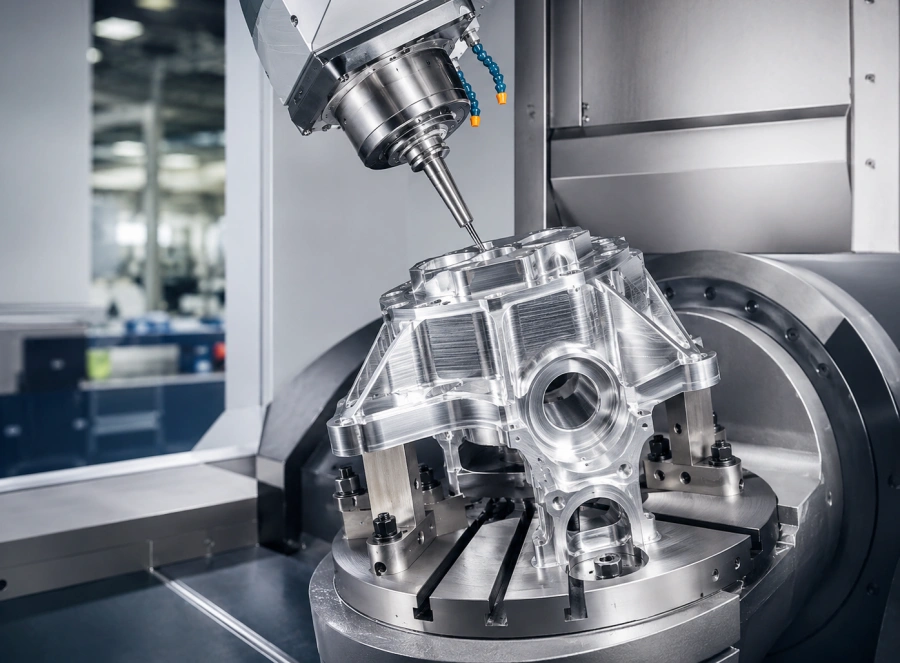
5-Axis CNC Machining Capabilities for Complex Parts
CNCTAL provides 5-axis CNC machining services for parts that are difficult to produce with standard 3-axis machining. Our capabilities support angled features, curved surfaces, deep cavities, complex contours and multi-sided geometry with fewer setups and improved part consistency.
When Complex Geometry Needs Better Tool Access
5-axis CNC machining is useful when a part has features on several sides, angled surfaces, tight tool access or shapes that require the cutting tool to approach from different directions. It can reduce multiple setups, improve alignment and help maintain accuracy across complex features.
- Complex aluminum, stainless steel, titanium and plastic parts
- Multi-sided machining with fewer fixture changes
- Angled holes, compound angles and difficult-to-reach features
- Curved surfaces, deep cavities and complex contour machining
- Support from prototype development to repeat production
Simultaneous 5-Axis Machining
Suitable for complex curved surfaces, flowing profiles, impeller-like geometry and parts where tool orientation changes during cutting.
3+2 Axis Machining
Useful for positioning the workpiece at fixed angles, then machining features with better access and improved setup efficiency.
Multi-Sided Machining
Helps machine several faces in fewer setups, reducing alignment errors for housings, brackets, fixtures and complex blocks.
Angled Features
Supports angled holes, sloped faces, compound angles and features that are hard to reach with conventional 3-axis machining.
Curved Surface Machining
Suitable for smooth contours, ergonomic surfaces, optical parts, turbine-like shapes and complex external profiles.
Deep Cavities & Tool Access
Better tool angles can help reduce long-tool vibration and improve machining access for cavities, pockets and internal features.
Not Every Part Needs 5-Axis Machining
For simple plates, brackets or basic milled blocks, 3-axis CNC milling may be more cost-effective. We review your CAD model and drawing first, then recommend 3-axis, 3+2 axis or full 5-axis machining based on geometry, tolerance, surface finish and cost.
Custom 5-Axis Machined Parts We Manufacture
CNCTAL manufactures custom 5-axis machined parts for product development, engineering testing, complex assemblies and production applications. This process is suitable for parts with multi-sided geometry, angled features, curved surfaces, deep cavities and difficult tool access.
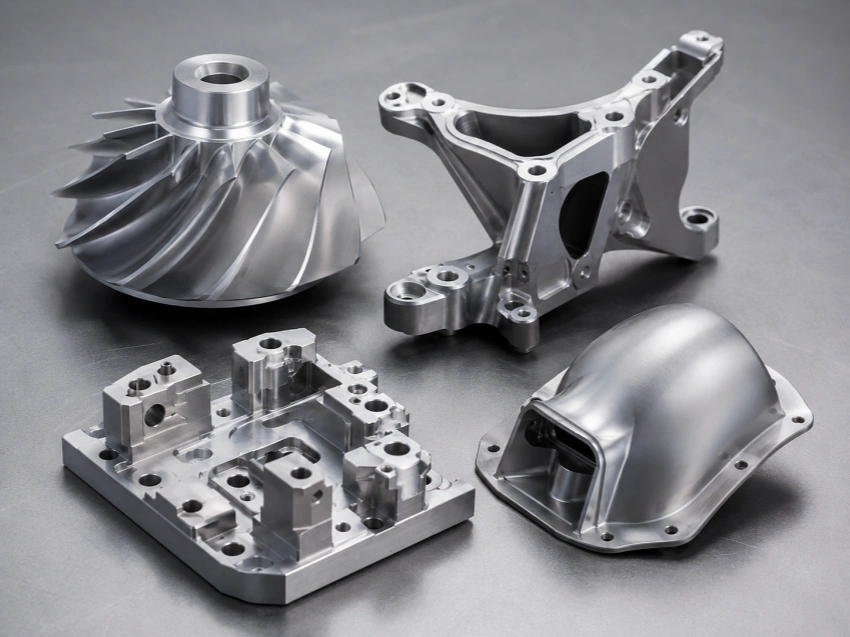
For Parts That Are Difficult With Standard 3-Axis Machining
5-axis CNC machining is valuable when a part requires accurate features from multiple directions, better tool angles or fewer setups. It is often used for complex aluminum, titanium, stainless steel and engineering plastic components.
- Complex parts with angled holes, sloped faces and multi-side features
- Curved surface parts, impeller-like shapes and smooth contour machining
- Precision brackets, housings, fixtures and functional prototypes
- Reduced setup changes for better alignment and dimensional consistency
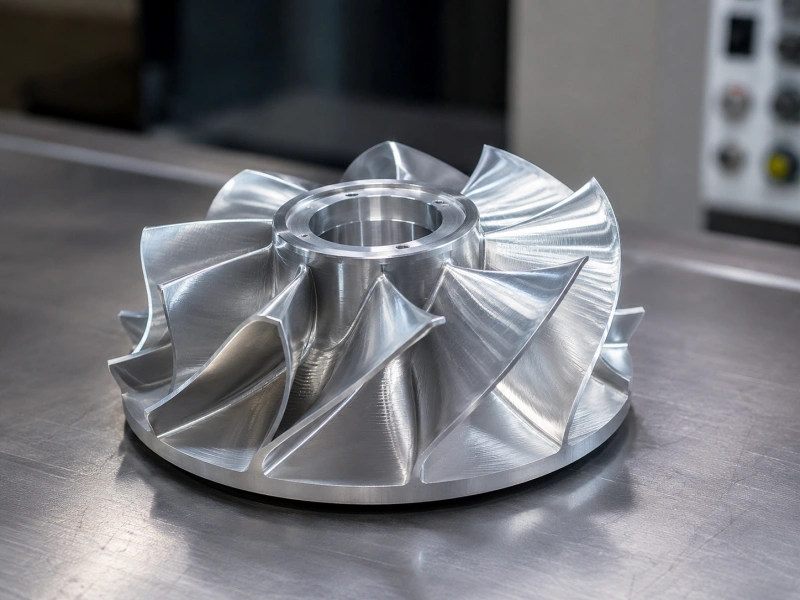
Impellers & Blade-Like Parts
5-axis machining for impellers, blade-like geometry, flowing surfaces and complex profiles requiring smooth tool paths.
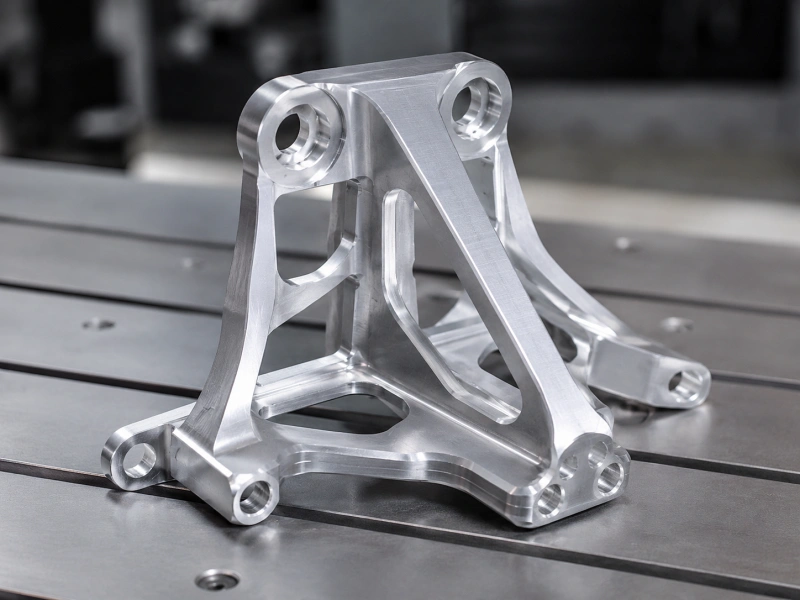
Aerospace Brackets
Lightweight brackets, structural supports and multi-sided aluminum or titanium components with tight positioning requirements.
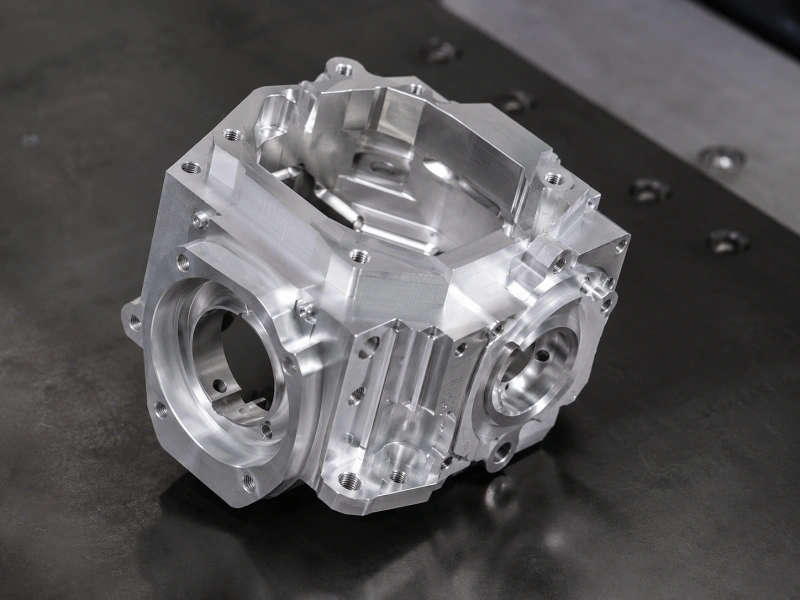
Medical Equipment Components
Complex non-implant medical device parts, fixtures and precision components requiring smooth surfaces and accurate features.
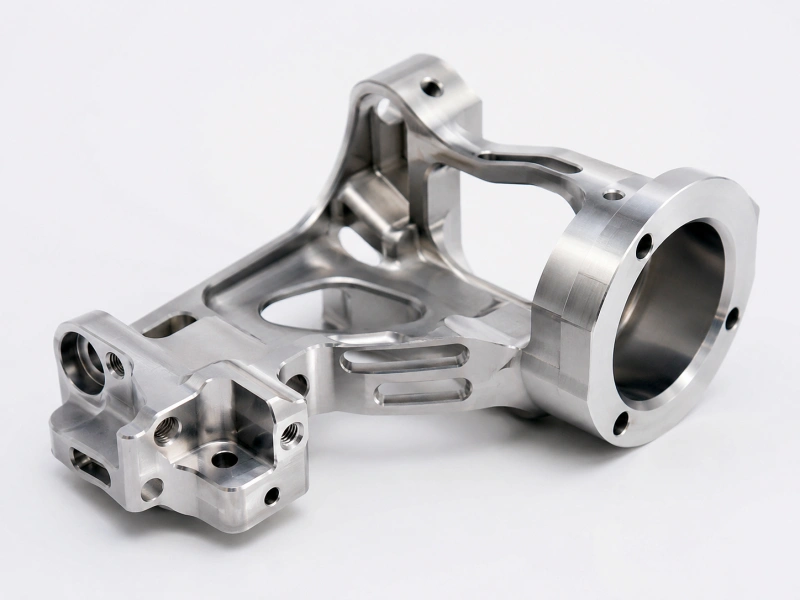
Robotics Housings
Robot joint housings, sensor mounts, complex covers and compact mechanical parts with multiple angled features.
Need Custom 5-Axis Machined Parts for Your Project?
Send your 3D CAD files, 2D drawings, material, quantity, tolerance and surface finish requirements. Our engineers will review whether 5-axis machining, 3+2 machining or standard CNC milling is the best solution.
When Should You Choose 5-Axis CNC Machining?
Not every part needs 5-axis CNC machining. For simple plates, brackets or basic milled parts, 3-axis machining may be more cost-effective. 5-axis machining becomes more valuable when the part has complex geometry, angled features, curved surfaces, deep cavities or accurate features on multiple sides.
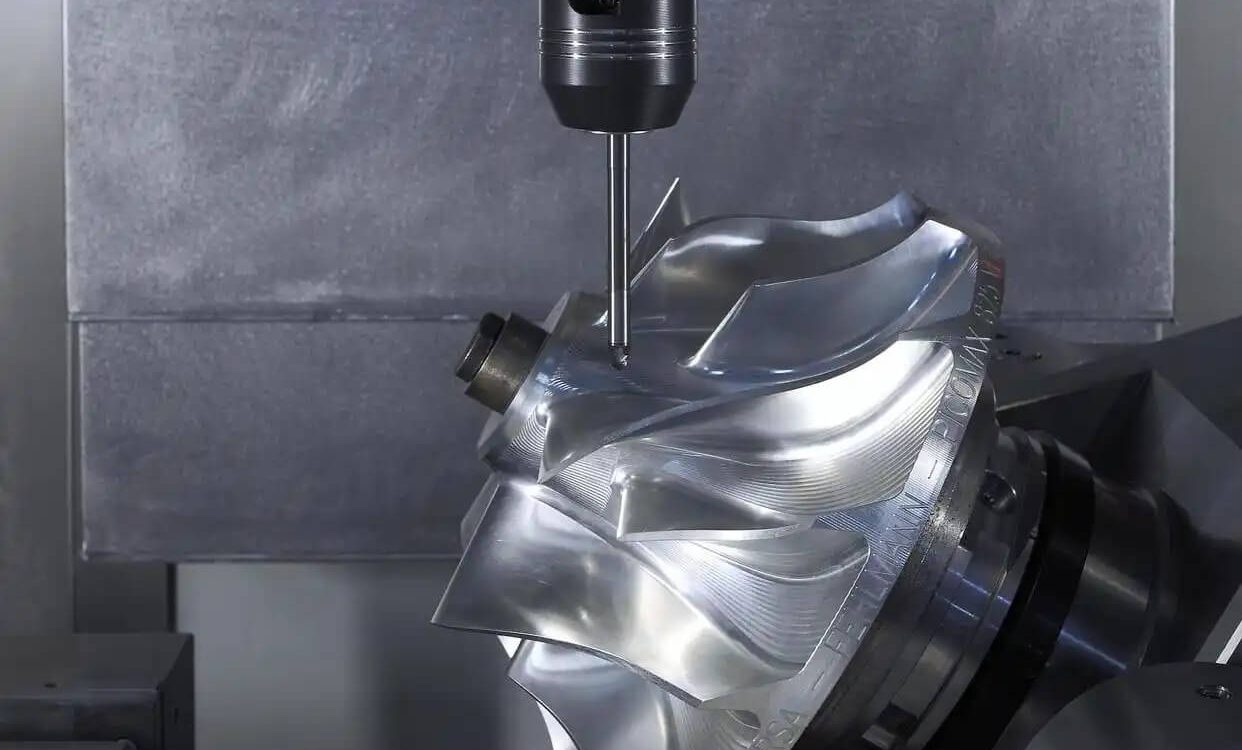
Choosing the Right Machining Strategy
Our engineers review your CAD model, 2D drawing, tolerance requirements and surface finish needs before recommending 3-axis, 3+2 axis or full 5-axis CNC machining.
When 3-Axis CNC Milling Is Usually Enough
3-axis CNC milling is often the best choice for simpler parts where most features can be reached from the top or a few standard setups.
- Flat plates, simple brackets and basic blocks
- Pockets, holes and slots from standard directions
- Parts without complex undercuts or compound angles
- Lower cost projects where 5-axis access is not necessary
When 5-Axis CNC Machining Is Better
5-axis machining is useful when tool access, part alignment or complex surface quality becomes difficult with standard 3-axis machining.
- Angled holes, sloped faces and compound angle features
- Curved surfaces, blades, impellers and complex contours
- Multi-sided parts that need fewer setup changes
- Deep cavities where better tool angle can reduce vibration
3-Axis, 3+2 Axis and 5-Axis Machining Comparison
The best machining method depends on part geometry, tolerance, surface finish, material and production quantity. This comparison helps customers understand why some parts require 5-axis machining while others do not.
| Machining Method | Best For | Typical Benefits | Cost Consideration |
|---|---|---|---|
| 3-Axis CNC Milling | Simple plates, brackets, pockets, holes and standard milled parts | Cost-effective, fast setup, suitable for many common machined parts | Usually lower cost when part geometry is simple |
| 3+2 Axis Machining | Multi-sided parts, angled faces and features that need fixed-angle positioning | Improved access, fewer setups, better alignment than repeated manual repositioning | Moderate cost depending on setup complexity |
| Full 5-Axis CNC Machining | Complex contours, curved surfaces, impellers, blades and difficult tool access | Better tool orientation, smoother surfaces, fewer setups and improved consistency | Higher machine cost, but often better for complex parts |
Not Sure Whether Your Part Needs 5-Axis Machining?
Send your 3D CAD file and 2D drawing. CNCTAL can review the geometry and recommend the most practical machining method before quotation.
Materials for 5-Axis CNC Machining
Material selection affects machining difficulty, tool wear, surface finish, tolerance stability and final part performance. CNCTAL supports 5-axis CNC machining for aluminum, stainless steel, titanium, brass, copper, steel and engineering plastics for complex precision parts.
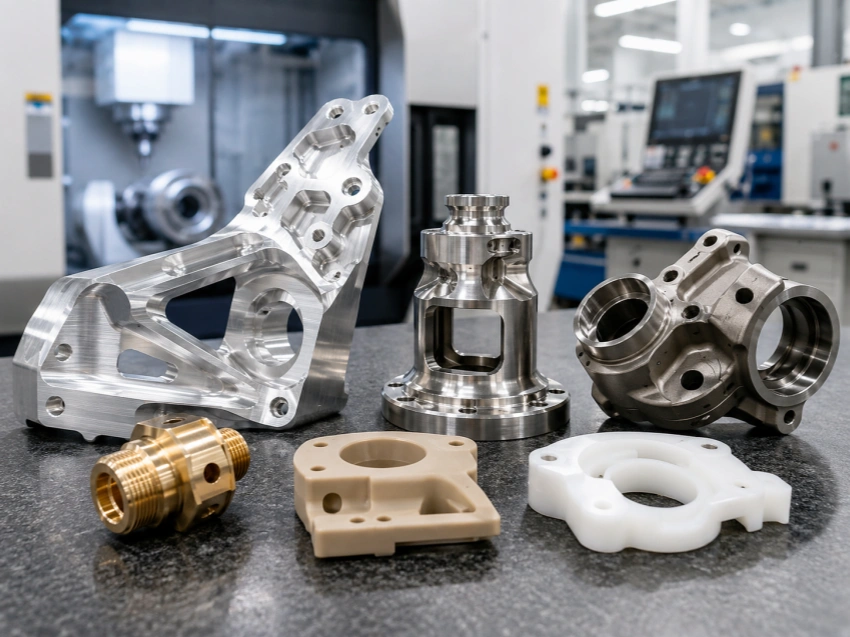
Material Choice Matters for Complex 5-Axis Parts
For complex geometries, material behavior can directly affect clamping, tool access, burr control, surface quality and dimensional consistency. We review your part geometry and material requirements before machining.
Metal Materials for 5-Axis Machining
Engineering Plastics for 5-Axis Machining
Common Grades We Machine
Common material grades include aluminum 6061, 7075 and 6082; stainless steel 303, 304, 316 and 17-4PH; titanium Grade 2 and Grade 5; brass C360; copper C110; carbon steel and alloy steel; POM, PEEK, nylon, PTFE, ABS and polycarbonate.
Not Sure Which Material Is Best for Your 5-Axis Part?
Send your CAD file, application, strength requirement, surface finish and quantity. CNCTAL can review material selection and machining feasibility before quotation.
5-Axis CNC Machining Tolerances and Inspection
Complex 5-axis machined parts often require more than simple size inspection. Critical features may include profile accuracy, true position, flatness, perpendicularity, concentricity, surface finish and assembly fit. CNCTAL reviews your 2D drawings and inspection requirements before production.
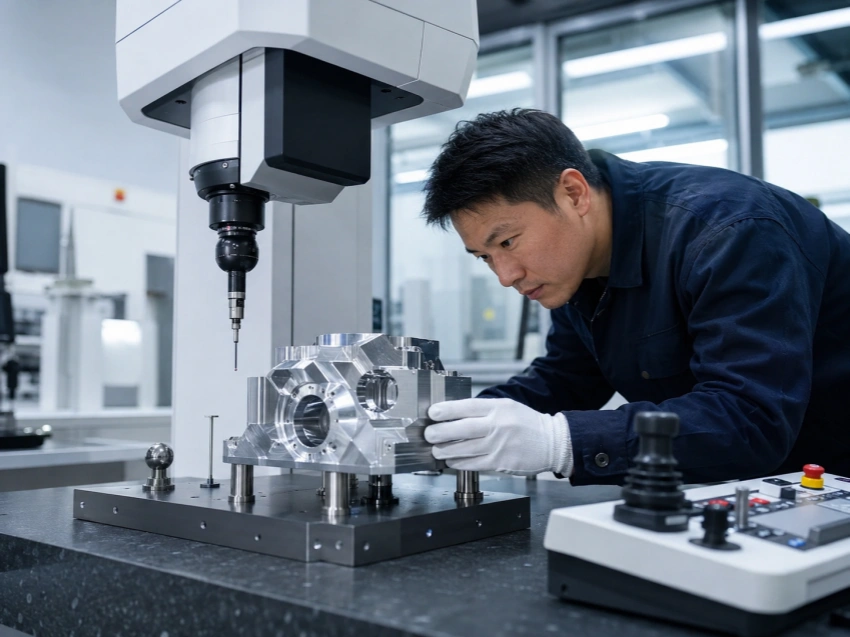
Drawing-Based Inspection for Complex Parts
For 5-axis CNC machined parts, the 3D model defines the geometry, but the 2D drawing defines what must be controlled and inspected. Clear drawings help us quote accurately and reduce production risk.
- Critical dimensions and tolerance notes
- Profile, flatness and true position requirements
- Thread, hole, bore and angled feature inspection
- Surface finish and cosmetic requirements
Tight Tolerance Support for Selected Features
We can support tight tolerance 5-axis CNC machining for selected features depending on part geometry, material, wall thickness, tool access, fixture method and inspection requirements.
CMM Inspection
Used for complex geometry, multi-sided features, true position, profile checks and critical dimensional verification.
2D Drawing Review
We review tolerance, datum, GD&T, surface finish and functional requirements before production whenever drawings are provided.
Geometric Control
Support for profile, flatness, perpendicularity, parallelism, concentricity and position requirements when specified.
Final Quality Check
Final inspection can include dimensional checks, visual review, thread checks, surface finish review and packing verification.
Typical 5-Axis CNC Machining Inspection Points
The exact inspection method depends on the drawing, material, tolerance level and application. For high-precision or complex parts, please provide 2D drawings with clear datum and tolerance requirements.
| Inspection Area | Common Requirement | Typical Inspection Method |
|---|---|---|
| Critical dimensions | Length, width, height, hole diameter, pocket depth and feature size | Caliper, micrometer, height gauge, pin gauge or CMM depending on tolerance |
| Multi-sided features | Position accuracy between features machined from different directions | CMM inspection, datum-based measurement or fixture-assisted checking |
| Curved surfaces | Profile accuracy, contour shape and smooth transition areas | CMM scanning, point measurement or visual/surface review depending on drawing |
| Flatness and perpendicularity | Assembly faces, mounting surfaces and functional contact areas | CMM, surface plate, height gauge or dial indicator inspection |
| Angled holes and threaded features | Angle, position, depth, thread standard and assembly fit | Thread gauge, pin gauge, CMM, visual inspection and functional checking |
| Surface finish | As-machined finish, polished surfaces, sealing areas or cosmetic surfaces | Visual inspection, roughness tester when required, finishing review before packing |
Surface Finishing for 5-Axis CNC Machined Parts
Complex 5-axis CNC machined parts often require finishing for appearance, corrosion resistance, wear resistance, smoother touch surfaces or assembly performance. CNCTAL supports multiple finishing options for aluminum, stainless steel, titanium, steel, brass, copper and engineering plastic components.
Finishing Must Be Reviewed With Part Geometry
For 5-axis machined parts, surface finishing is not only a cosmetic step. Deep pockets, curved surfaces, thin walls, threaded holes, sharp edges and masking areas can affect finishing quality, cost and dimensional stability.
- Confirm which surfaces are cosmetic and which are functional
- Mark masking areas, threads and critical tolerance surfaces
- Choose finish based on material, application and environment
- Review burr control, edge break and surface roughness before production
- Consider finishing thickness for tight tolerance features
Anodizing
Common for aluminum 5-axis machined parts. It improves corrosion resistance, appearance and surface protection. Color and cosmetic requirements should be confirmed before production.
Bead Blasting
Creates a uniform matte surface and reduces visible machining marks. Often used before anodizing for clean cosmetic aluminum components.
Polishing
Suitable for visible surfaces, smooth touch areas, stainless steel components and selected complex parts that need improved appearance.
Passivation
Used for stainless steel 5-axis machined parts to improve corrosion resistance after machining, especially for equipment and functional components.
Black Oxide
Applied to selected steel parts for dark appearance and mild corrosion protection. It is often used for functional mechanical components.
Nickel / Zinc Plating
Plating can improve wear resistance, corrosion resistance and appearance for selected metal parts. Masking and thickness should be reviewed for precision features.
Common Finishing Options for 5-Axis Machined Parts
The best finish depends on material, geometry, application, tolerance and cosmetic requirements. The table below can help customers choose a practical finishing direction before quotation.
| Surface Finish | Common Materials | Best For | Important Notes |
|---|---|---|---|
| Anodizing | Aluminum 6061, 7075, 6082 | Corrosion resistance, color, appearance, surface protection | Color consistency and masking areas should be confirmed before production |
| Bead Blasting | Aluminum, stainless steel, titanium | Uniform matte surface, reduced visible tool marks | Can slightly change edge appearance and cosmetic surface texture |
| Polishing | Stainless steel, aluminum, brass, selected plastics | Visible surfaces, smooth touch areas, improved cosmetic appearance | Complex corners, deep pockets and internal surfaces may be difficult to polish evenly |
| Passivation | Stainless steel 304, 316, 17-4PH | Improved corrosion resistance for stainless steel components | Usually applied after machining and cleaning |
| Black Oxide | Carbon steel, alloy steel | Dark appearance, mild corrosion protection, reduced reflection | Not suitable for every environment; oiling may be required for protection |
| As Machined | Most metals and plastics | Functional prototypes, internal parts, cost control | Tool marks may remain visible unless additional finishing is requested |
Need a Specific Finish for Your 5-Axis Machined Parts?
Please include finishing type, color, surface roughness, masking areas, cosmetic requirements and any surfaces that must remain unfinished. This helps us review feasibility and quote more accurately.
Industries Using 5-Axis CNC Machined Parts
5-axis CNC machined parts are used in industries where complex geometry, accurate multi-sided features, curved surfaces, lightweight structures and stable assembly performance are required. CNCTAL supports custom 5-axis machining for prototypes, testing parts and volume production.
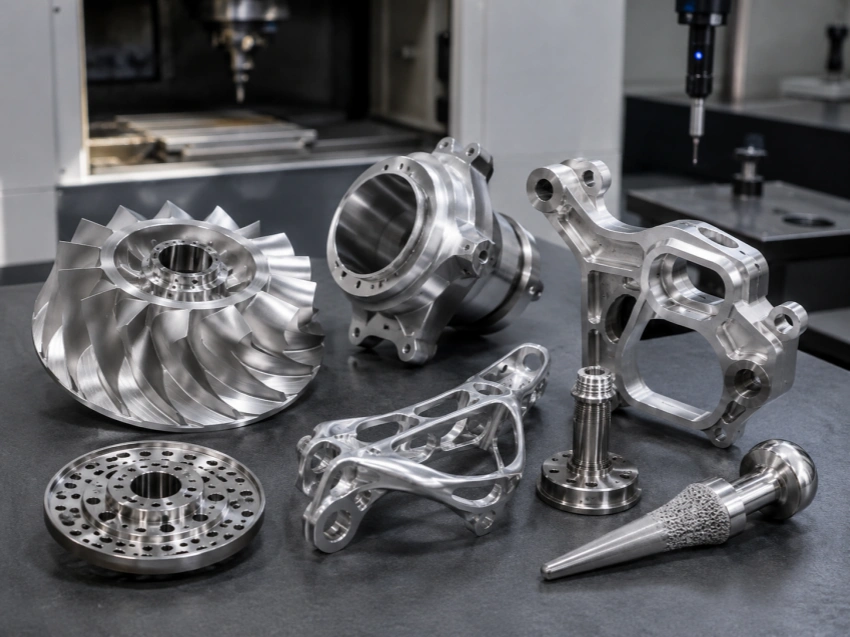
Complex Parts for Demanding Applications
Many 5-axis projects are not simple blocks or plates. They often include angled holes, thin walls, curved profiles, deep pockets, multiple datums and functional surfaces that must align correctly during assembly.
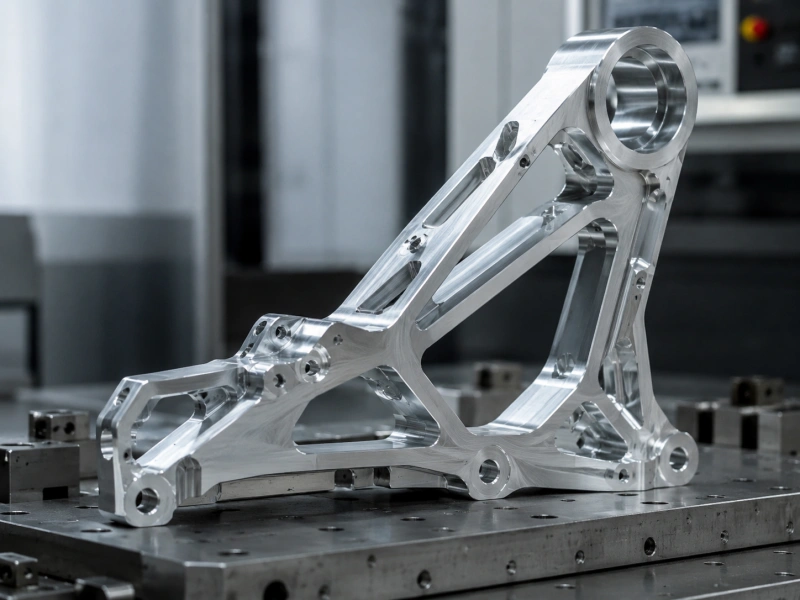
Aerospace & UAV
Lightweight brackets, structural supports, housings and complex aluminum or titanium components with multi-sided features.
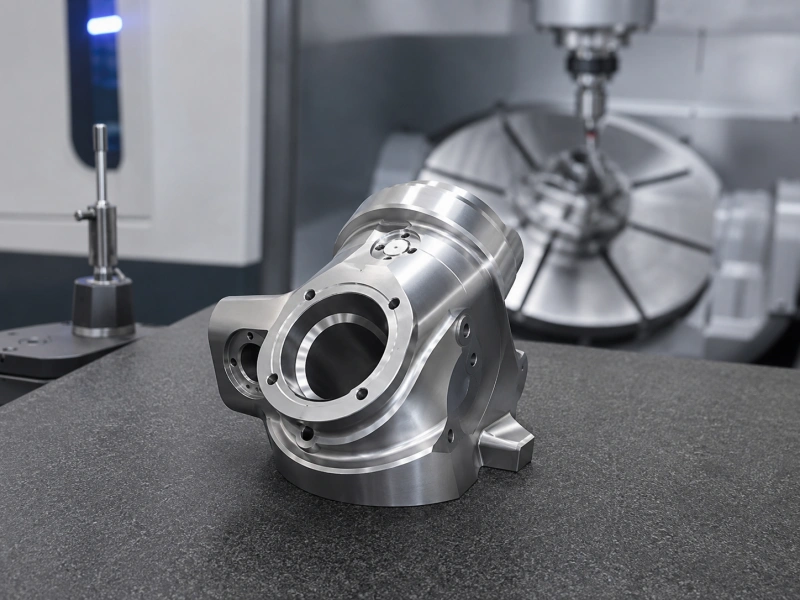
Medical Equipment
Non-implant medical equipment components, test fixtures, housings and precision parts requiring smooth surfaces and accurate geometry.
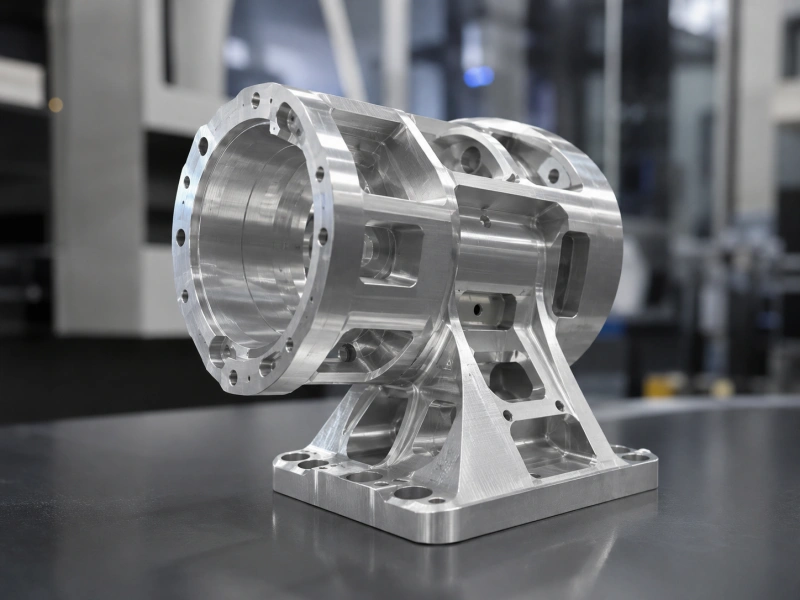
Robotics & Automation
Robot joint housings, sensor mounts, gripper components, automation fixtures and compact parts with multiple angled features.
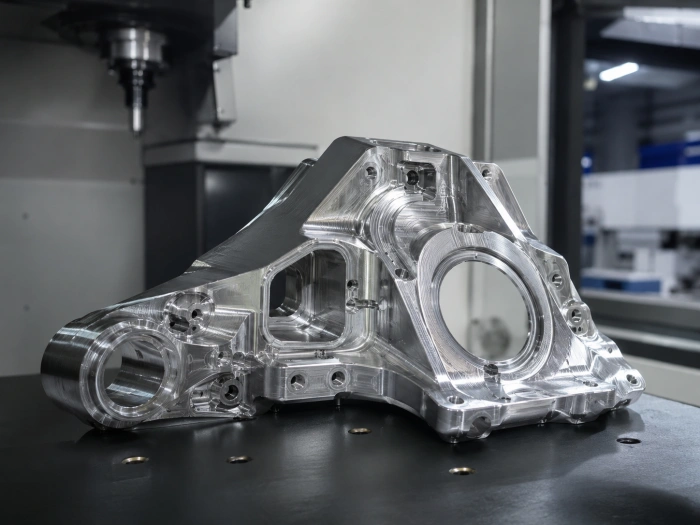
Automotive Components
Complex test parts, lightweight brackets, housings and precision components for automotive development and production applications.
Need 5-Axis CNC Machined Parts for Your Industry?
Send your CAD files, drawings, application, material and quantity. CNCTAL can review whether 5-axis machining is the right method for your part geometry and production requirements.
How Our 5-Axis CNC Machining Order Process Works
Complex 5-axis CNC machining projects need clear communication before production. CNCTAL reviews CAD files, drawings, materials, tolerances and finishing requirements before quotation, then controls machining, inspection and shipping step by step.
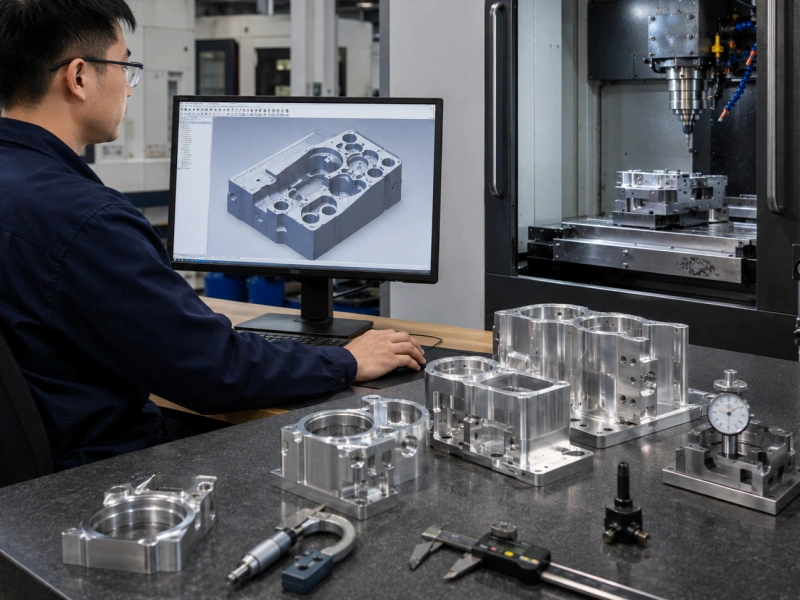
From CAD Review to Finished 5-Axis Machined Parts
A good process helps reduce mistakes, especially for complex parts with angled features, curved surfaces, tight tolerances, multiple datums and special surface finishing requirements.
Send CAD Files and Requirements
Please send STEP, STP, IGS, X_T, STL or PDF drawings, along with material, quantity, tolerance, surface finish and lead time requirements.
Engineering and DFM Review
Our engineers check geometry, tool access, tolerance risk, material choice, fixture method and whether 5-axis machining is the right solution.
Quotation and Lead Time Confirmation
We provide a quotation based on machining complexity, material, quantity, finishing, inspection needs and estimated production lead time.
5-Axis CNC Machining Production
Parts are machined using the suitable strategy, such as 3+2 axis machining or full 5-axis machining, depending on geometry and tolerance needs.
Inspection and Surface Finishing
We inspect critical features according to your drawing, then arrange finishing such as anodizing, bead blasting, polishing or passivation if required.
Packing and Global Shipping
Finished 5-axis machined parts are packed carefully and shipped by DHL, UPS, FedEx, air freight or other agreed shipping methods.
Files We Prefer
STEP / STP files are preferred for 3D geometry. PDF or DWG drawings are important for tolerance, datum, thread and surface finish requirements.
DFM Before Quotation
For complex parts, we check whether 5-axis, 3+2 axis or standard CNC milling is the most practical and cost-effective machining method.
Inspection Before Shipping
Critical dimensions, surface finish, threads, holes, multi-sided features and visual quality can be checked before packing and shipment.
Frequently Asked Questions About 5-Axis CNC Machining Services
Below are common questions about 5-axis CNC machining services, custom 5-axis machined parts, tolerances, materials, surface finishing, quotation files and production lead time.
What is 5-axis CNC machining?
5-axis CNC machining is a precision machining process where the cutting tool or workpiece can move across five axes. This allows better tool access for complex parts with angled features, curved surfaces, deep cavities and multi-sided geometry. It is often used when standard 3-axis machining cannot reach all required features efficiently.
When should I use 5-axis CNC machining instead of 3-axis machining?
5-axis CNC machining is recommended when the part has complex geometry, angled holes, curved surfaces, deep pockets, difficult tool access or accurate features on multiple sides. For simple plates, basic brackets or standard milled blocks, 3-axis CNC milling may be more cost-effective.
What types of parts are suitable for 5-axis CNC machining?
5-axis CNC machining is suitable for impellers, blade-like parts, aerospace brackets, medical equipment components, robotics housings, mold inserts, complex fixtures, curved surface parts and multi-sided precision components. It is useful for parts that require fewer setups and better tool angles.
What tolerances can you achieve for 5-axis machined parts?
CNCTAL can support tight tolerances up to ±0.01mm for selected features depending on material, part geometry, wall thickness, tool access, fixture method and inspection requirements. For critical dimensions, profile tolerances, flatness, true position or GD&T requirements, please provide 2D drawings.
Is 5-axis CNC machining more expensive?
5-axis CNC machining usually has a higher machine and programming cost than simple 3-axis machining. However, for complex parts, it can reduce fixture changes, secondary operations and alignment errors. For some parts, 5-axis machining may be more practical and stable than multiple 3-axis setups.
What materials can be used for 5-axis CNC machining?
CNCTAL supports 5-axis CNC machining for metals and engineering plastics, including aluminum, stainless steel, titanium, brass, copper, steel, POM / Delrin, PEEK, nylon, PTFE, ABS and polycarbonate. Common grades include aluminum 6061 / 7075, stainless steel 304 / 316, titanium Grade 5, brass C360 and copper C110.
Can you machine impellers, blades and curved surface parts?
Yes. 5-axis CNC machining is suitable for impeller-like parts, blade-like geometry, curved surfaces, flowing contours and complex profiles. Please send the 3D CAD file and any surface finish or profile tolerance requirements so we can review machining feasibility.
Do you support prototype and low-volume 5-axis machining?
Yes. CNCTAL supports one-piece prototypes, small batch orders and low-volume production for custom 5-axis machined parts. This is suitable for product development, engineering testing, functional prototypes, pilot builds and repeat production.
Do you provide surface finishing for 5-axis machined parts?
Yes. We provide surface finishing options for 5-axis CNC machined parts, including as-machined finish, anodizing, bead blasting, polishing, passivation, black oxide, nickel plating, zinc plating and other finishing options depending on the material and application.
What files do you need for a 5-axis CNC machining quote?
For accurate quotation, please send 3D CAD files and 2D drawings if available. STEP / STP files are preferred for 3D geometry, and PDF or DWG drawings are helpful for tolerance, datum, GD&T, thread, surface finish and inspection requirements.
- STEP / STP
- IGS / IGES
- X_T
- STL
- DWG / DXF
- PDF drawings
Can you review manufacturability before machining?
Yes. Our engineers can review tool access, fixture method, tolerance risk, material choice, surface finishing and whether 5-axis machining, 3+2 machining or standard 3-axis milling is the most practical option for your part.
How long does 5-axis CNC machining usually take?
Lead time depends on part complexity, material, quantity, tolerance, programming time, inspection requirements and surface finishing. Simple prototypes may be completed faster, while complex geometry, tight tolerances, special finishing or larger batches require more production time. We confirm lead time after reviewing your CAD files and drawings.
Have a Complex 5-Axis CNC Machining Project?
Send your CAD files, 2D drawings, material, quantity, tolerance and finishing requirements. CNCTAL will review your part geometry and provide a practical 5-axis CNC machining quotation.