

PP / Polypropylene CNC Machining Services
Lightweight, Chemical-Resistant Plastic Parts
CNCTAL provides precision CNC machining for PP and polypropylene components used in chemical-resistant, lightweight, and low-cost applications. Ideal for custom gaskets, spacers, sleeves, fixtures, laboratory parts, and components exposed to corrosive environments.
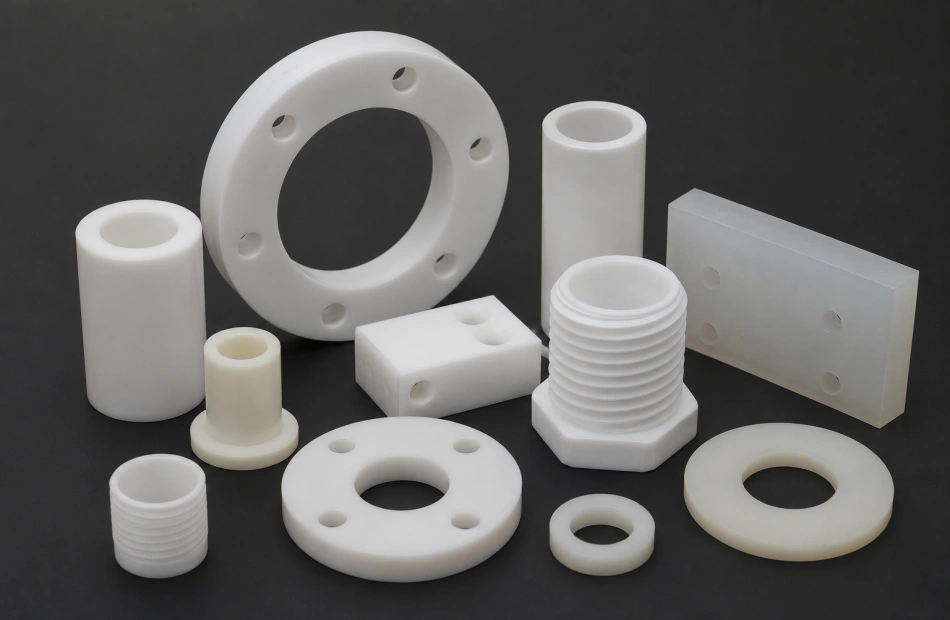
What Is PP / Polypropylene?
Polypropylene, also known as PP, is a lightweight thermoplastic material with good chemical resistance, low moisture absorption, and cost-effective performance.
In CNC machining, PP is commonly used for custom plastic parts such as gaskets, spacers, sleeves, laboratory components, pump parts, valve parts, and low-cost fixtures.
Why Choose PP for CNC Machining?
Polypropylene is a practical choice for lightweight, chemical-resistant, and cost-effective CNC machined plastic parts used in industrial and corrosive environments.
Chemical Resistance
PP resists many acids, alkalis, and chemical media, making it suitable for tanks, valves, pump parts, and fluid handling components.
Lightweight Material
With low density, polypropylene helps reduce component weight while maintaining practical performance for many plastic applications.
Low Moisture Absorption
PP absorbs very little water, making it useful for parts exposed to humidity, water, or wet operating environments.
Cost-Effective Choice
Compared with higher-performance plastics, PP provides an economical solution for custom components and low-cost production parts.
Good Fatigue Resistance
Polypropylene performs well in applications requiring repeated movement, light flexing, or simple mechanical function.
Custom CNC Components
PP can be machined into spacers, sleeves, fixtures, laboratory parts, gaskets, and custom plastic components from your drawings.
PP / Polypropylene Material Properties
Polypropylene combines lightweight performance, chemical resistance, and affordability, making it a popular material for custom CNC machined plastic parts used in industrial environments.
Key Performance Characteristics
PP is often selected for applications requiring corrosion resistance, low moisture absorption, and cost-effective production rather than high mechanical strength.
| Property | Typical Value |
|---|---|
| Material Type | Thermoplastic Polymer |
| Density | Approx. 0.90 g/cm³ |
| Tensile Strength | 30 – 40 MPa |
| Hardness | Rockwell R80 – R100 |
| Moisture Absorption | Very Low |
| Continuous Service Temperature | Up to 100°C |
| Chemical Resistance | Excellent |
| Electrical Insulation | Good |
| Machining Tolerance | Up to ±0.01 mm |
Typical PP CNC Machined Parts
Polypropylene is commonly CNC machined into lightweight, chemical-resistant, and low-cost plastic components for industrial, laboratory, and fluid-handling applications.
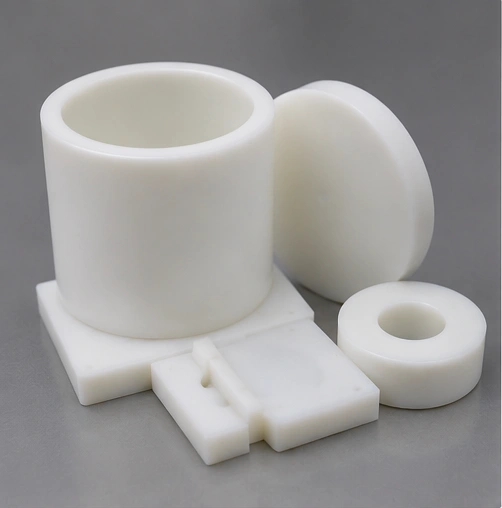
Chemical Tank Components
Custom PP parts for chemical tanks, containers, covers, liners, and corrosion-resistant assemblies.
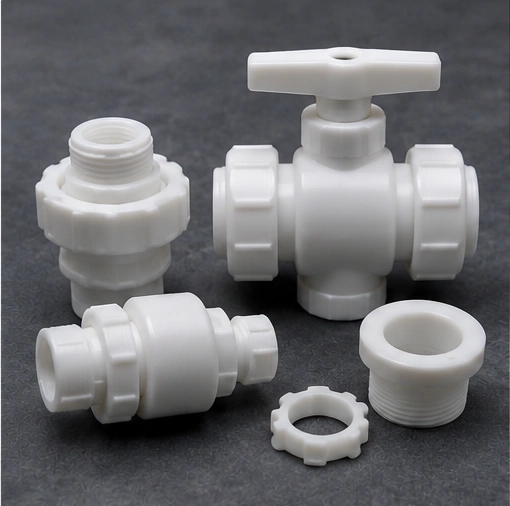
Pump & Valve Parts
Polypropylene valve bodies, pump components, fluid-control blocks, and custom flow-related parts.
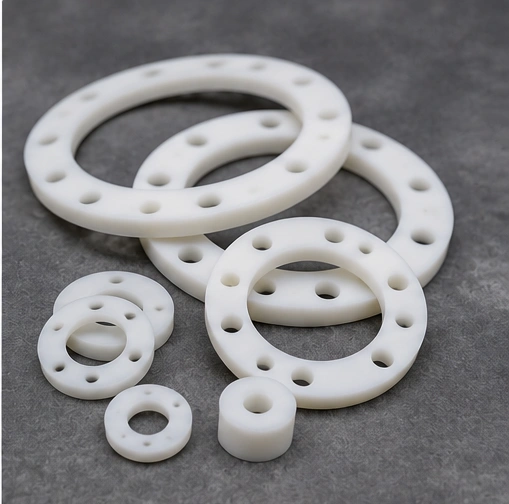
Gaskets & Spacers
CNC machined PP gaskets, washers, spacers, and simple flat parts for sealing or assembly use.
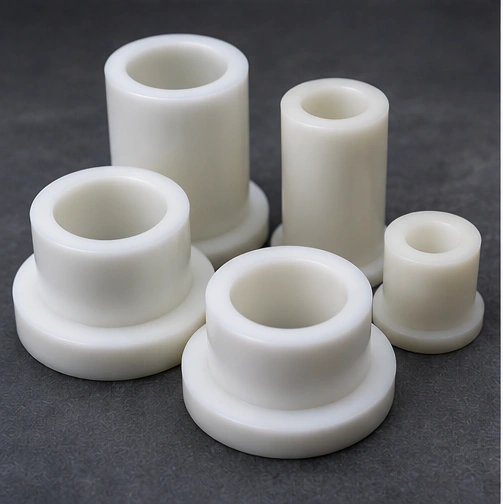
Bushings & Sleeves
Lightweight sleeves, guide bushings, simple support parts, and low-load plastic components.
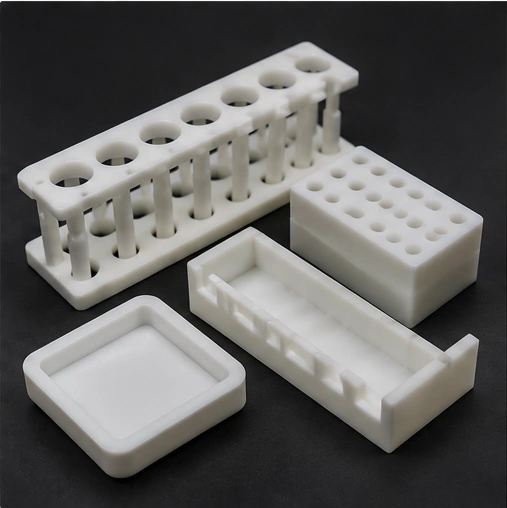
Laboratory Components
Custom PP parts for lab fixtures, holders, trays, fluid containers, and testing equipment components.
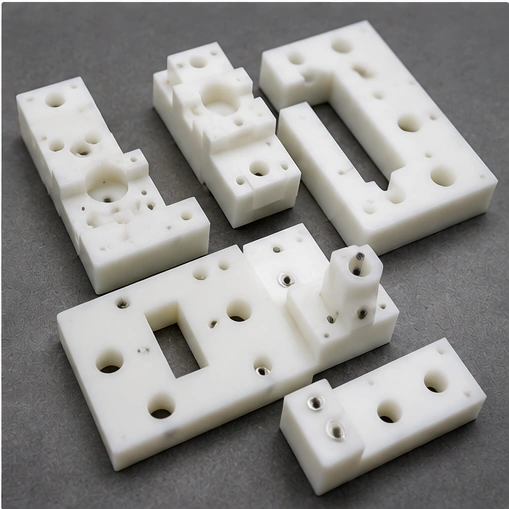
Custom Plastic Fixtures
Cost-effective polypropylene fixtures, brackets, plates, and custom machined plastic components.
CNC Machining Considerations for PP
Polypropylene is lightweight, flexible, and chemically resistant, but it is softer than many engineering plastics. Proper clamping, sharp tooling, and reasonable tolerance planning are important for stable CNC machining results.
CNCTAL reviews each PP part drawing before production to confirm wall thickness, hole features, flatness, tolerance requirements, and the best machining method.
Flexible Material Behavior
PP can flex during machining or clamping, so fixture support and cutting sequence are important for dimensional stability.
Sharp Tools Required
Sharp cutting tools help reduce burrs, improve edge quality, and produce cleaner holes and profiles.
Thin-Wall Control
Thin walls, long slots, and large flat areas may require adjusted tolerances or special machining support.
Reasonable Tolerance Planning
Tight tolerances are possible in many cases, but final capability depends on part size, geometry, wall thickness, and inspection method.
Industries Using PP CNC Machined Parts
Polypropylene is widely used in industries that require lightweight, corrosion-resistant, and cost-effective plastic components for fluid handling, chemical processing, and industrial equipment.
Chemical Processing
PP components are commonly used in chemical storage systems, tanks, valves, piping equipment, and corrosion-resistant assemblies.
Water Treatment
Custom polypropylene parts are used in filtration equipment, treatment systems, fluid-control devices, and water-handling applications.
Laboratory Equipment
PP offers excellent chemical resistance for laboratory trays, holders, containers, testing fixtures, and analytical equipment.
Food Processing
Lightweight and moisture-resistant PP components are widely used in food processing, packaging, and handling equipment.
Packaging Machinery
Polypropylene parts are suitable for guides, spacers, wear components, and lightweight machine fixtures.
Industrial Equipment
Custom PP bushings, covers, guards, plates, and support components are used across a wide range of industrial machinery.
PP / Polypropylene CNC Machining FAQs
Common questions about polypropylene CNC machining, custom PP parts, material properties, and manufacturing requirements.
Is polypropylene suitable for CNC machining?
Yes. PP can be CNC machined into custom plastic parts such as gaskets, spacers, sleeves, bushings, fixtures, laboratory components, and chemical-resistant parts.
What are the main advantages of PP machined parts?
PP is lightweight, cost-effective, chemically resistant, and has very low moisture absorption. It is suitable for many industrial, laboratory, water treatment, and chemical processing applications.
Can PP be used in corrosive environments?
Yes. Polypropylene has good resistance to many acids, alkalis, and chemical media, making it a practical choice for corrosive or wet environments.
Can CNCTAL machine tight-tolerance PP parts?
Yes, but final tolerance depends on part size, wall thickness, geometry, and inspection requirements. Because PP is flexible, thin-wall and large flat parts should be reviewed before machining.
What files are needed for a PP machining quote?
Please send 2D drawings with dimensions and tolerances, plus 3D files such as STEP or STP if available. Quantity, material grade, and surface requirements will help us quote faster.