

PTFE CNC Machining Services
Low-Friction, Chemical-Resistant Plastic Parts
CNCTAL provides precision CNC machining for PTFE components used in seals, insulators, bushings, sliding parts, and chemical-resistant applications. Ideal for parts requiring low friction, excellent insulation, and resistance to harsh environments.
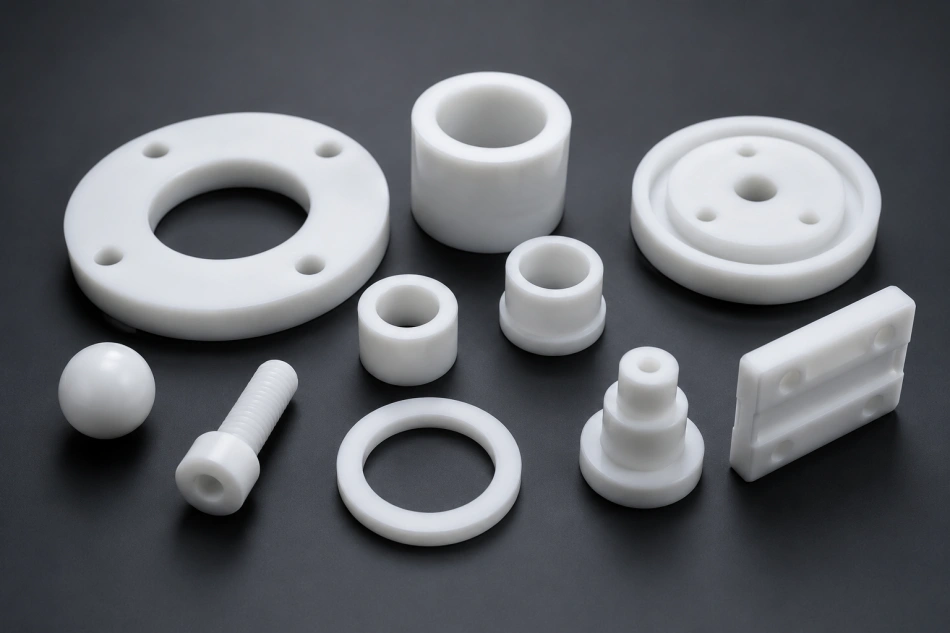
What Is PTFE?
PTFE is a high-performance fluoropolymer plastic known for its excellent chemical resistance, very low friction coefficient, and strong electrical insulation properties.
In CNC machining, PTFE is commonly used for custom seals, gaskets, bushings, sleeves, insulators, valve components, and sliding parts that work in corrosive or low-friction environments.
Why Choose PTFE for CNC Machining?
PTFE is selected for CNC machined parts when low friction, chemical resistance, insulation, and sealing performance are more important than high structural strength.
Ideal for low-friction and chemical-resistant parts
PTFE performs well in harsh working environments where many plastics or metals may not be suitable. It is widely used for custom seals, valve parts, sliding components, and electrical insulation parts.
Excellent Chemical Resistance
PTFE resists many acids, solvents, and corrosive media, making it suitable for chemical equipment and fluid control parts.
Very Low Friction
Its low friction surface helps reduce wear in bushings, sleeves, sliding pads, guide parts, and moving assemblies.
Electrical Insulation
PTFE is often used for insulating sleeves, spacers, washers, and electrical components requiring stable insulation.
Temperature Resistance
PTFE can work in higher temperature environments than many common plastics, depending on load and part design.
Good Sealing Performance
PTFE is commonly machined into seals, gaskets, valve seats, and other parts used in fluid or gas control systems.
Non-Stick Surface
Its non-stick characteristics make PTFE useful for parts that need clean release, reduced adhesion, or easy maintenance.
PTFE Material Properties
PTFE offers exceptional chemical resistance, low friction, and excellent electrical insulation. These characteristics make it one of the most widely used engineering plastics for sealing, insulation, and wear-resistant applications.
Key Performance Characteristics
PTFE is not typically selected for high-load structural applications. Instead, it excels where chemical resistance, non-stick behavior, low friction, and electrical insulation are critical.
| Property | Typical Value |
|---|---|
| Material Type | Fluoropolymer Thermoplastic |
| Density | Approx. 2.15 – 2.20 g/cm³ |
| Tensile Strength | 20 – 35 MPa |
| Elongation at Break | 200% – 400% |
| Coefficient of Friction | 0.05 – 0.10 |
| Continuous Service Temperature | -200°C to +260°C |
| Electrical Insulation | Excellent |
| Chemical Resistance | Excellent |
| Machining Tolerance | Up to ±0.01 mm |
Typical PTFE CNC Machined Parts
PTFE is commonly CNC machined into custom parts that require chemical resistance, low friction, sealing performance, and electrical insulation.
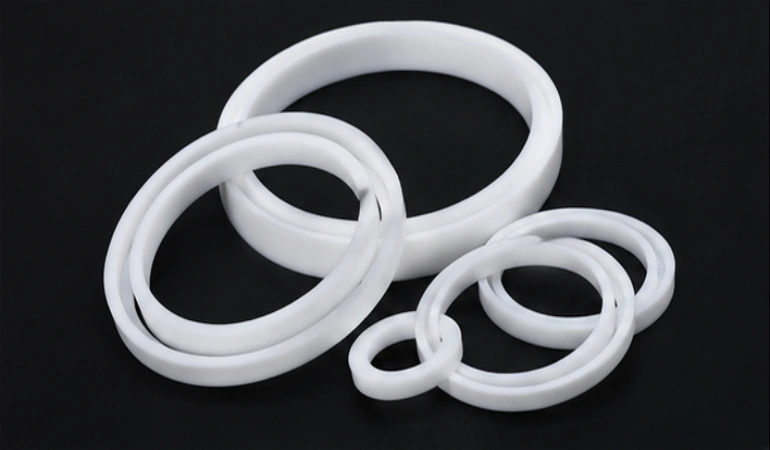
PTFE Seals
Custom PTFE seals for fluid systems, valves, pumps, and chemical-resistant sealing applications.
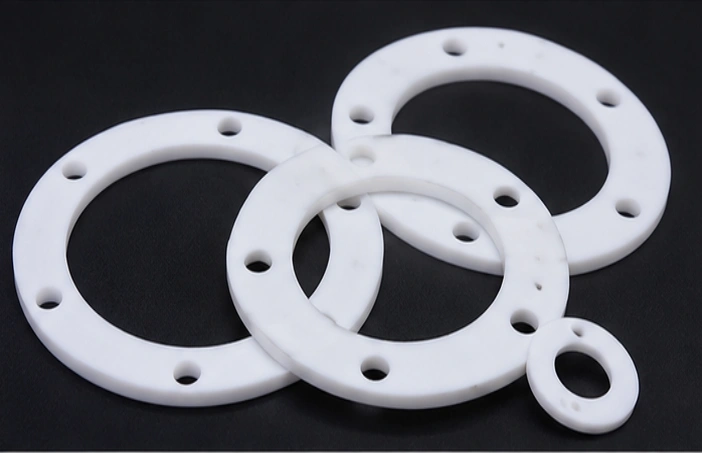
PTFE Gaskets
Flat or custom-profile PTFE gaskets used where corrosion resistance and reliable sealing are required.
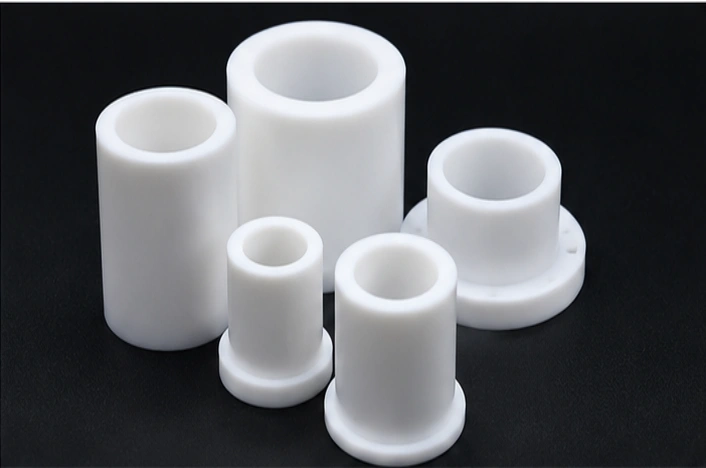
PTFE Bushings
Low-friction bushings, sleeves, and guide components for sliding or rotating assemblies.
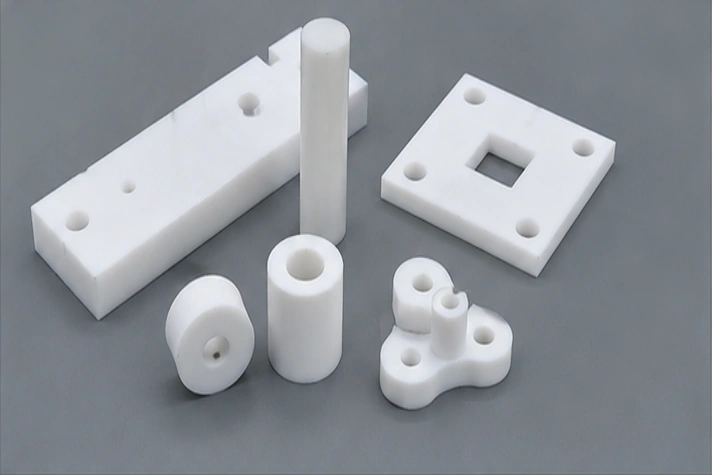
PTFE Insulators
Electrical insulation parts including spacers, washers, sleeves, and custom insulating components.
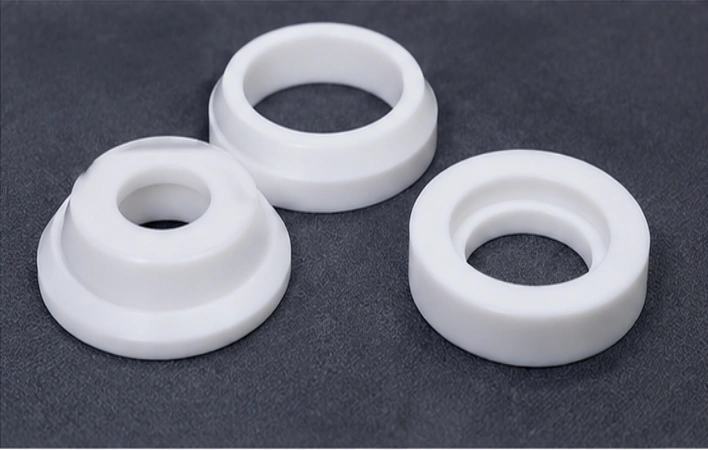
PTFE Valve Seats
Precision-machined valve seats and fluid control parts for chemical, gas, and industrial systems.
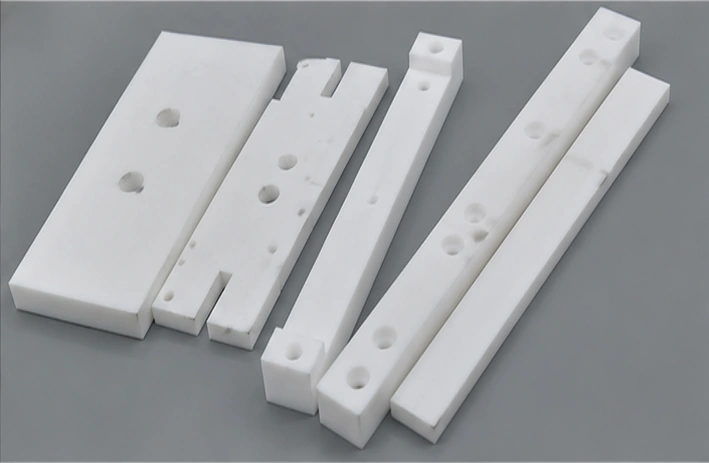
PTFE Sliding Pads
Low-friction pads, guides, and wear components for equipment requiring smooth movement.
CNC Machining Considerations for PTFE
PTFE is soft, flexible, and has a relatively high thermal expansion compared with metals. For this reason, CNC machining PTFE requires careful clamping, sharp tooling, and reasonable tolerance planning.
At CNCTAL, we review each PTFE drawing before machining to confirm wall thickness, hole features, flatness, tolerance requirements, and the best machining process for stable results.
Soft Material Deformation
PTFE can deform under clamping pressure, so fixture design and machining sequence are important for stable dimensions.
Sharp Cutting Tools
Sharp tools and proper cutting parameters help achieve cleaner edges, better surfaces, and less burr formation.
Thin-Wall Part Control
Thin walls, long sleeves, and small sealing lips may need relaxed tolerances or special machining support.
Tolerance Planning
Tight tolerance is possible in many cases, but final capability depends on part size, geometry, wall thickness, and inspection method.
Industries Using PTFE CNC Machined Parts
PTFE components are widely used across industries that require chemical resistance, electrical insulation, low friction, and reliable sealing performance.
Chemical Processing
Seals, valve seats, gaskets, and corrosion-resistant components used in chemical handling systems.
Electronics
PTFE insulators, spacers, sleeves, and electrical isolation components for sensitive equipment.
Medical Equipment
Custom PTFE components used in diagnostic, laboratory, and fluid management devices.
Food Processing
Non-stick and chemically stable PTFE parts used in food handling and packaging equipment.
Semiconductor
High-purity PTFE components used in chemical delivery systems and cleanroom environments.
Industrial Machinery
Bushings, wear strips, guides, and low-friction machine components for demanding applications.
Frequently Asked Questions
Answers to common questions about PTFE CNC machining, tolerances, applications, and custom manufacturing services.
Is PTFE suitable for CNC machining?
Yes. PTFE can be CNC machined into seals, gaskets, bushings, insulators, sleeves, and many custom plastic components.
What industries commonly use PTFE parts?
PTFE is widely used in chemical processing, semiconductor equipment, electronics, food processing, medical devices, and industrial machinery.
Can PTFE be used for sealing applications?
Yes. PTFE is one of the most common materials for seals, gaskets, valve seats, and fluid-handling components because of its chemical resistance and low friction.
Can you machine custom PTFE parts from drawings?
Absolutely. We manufacture custom PTFE components according to customer-supplied 2D drawings, STEP files, or samples.
What file formats do you accept?
STEP, STP, IGS, IGES, X_T, STL, DWG, DXF, PDF, and image files can all be used for quotation review.