
CNC Surface Finishing Guide for Aluminum Parts
When people think about CNC aluminum machining, they often focus on material grades, tolerances, machining accuracy, or production cost. But for many aluminum parts, machining is only one part of the final result.
The surface finish can affect how the part looks, how long it lasts, how well it resists corrosion, and whether it is suitable for real working conditions.
This guide explains the most common surface finishing options for CNC aluminum parts and how to choose the right finish for your application.
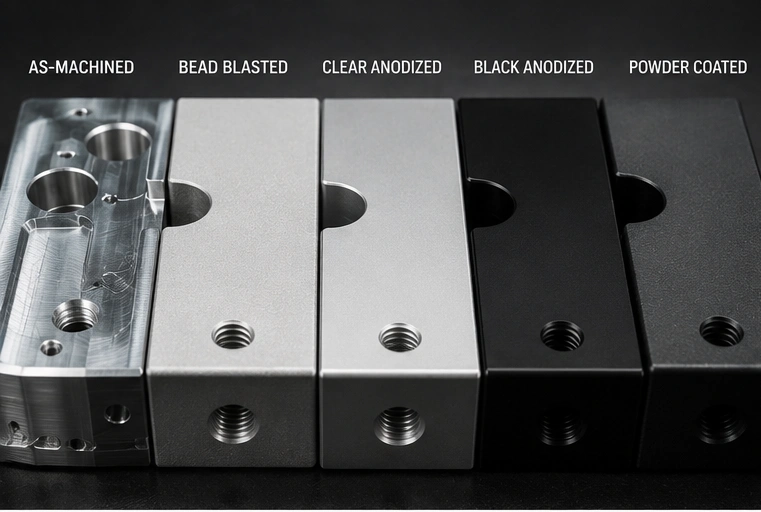
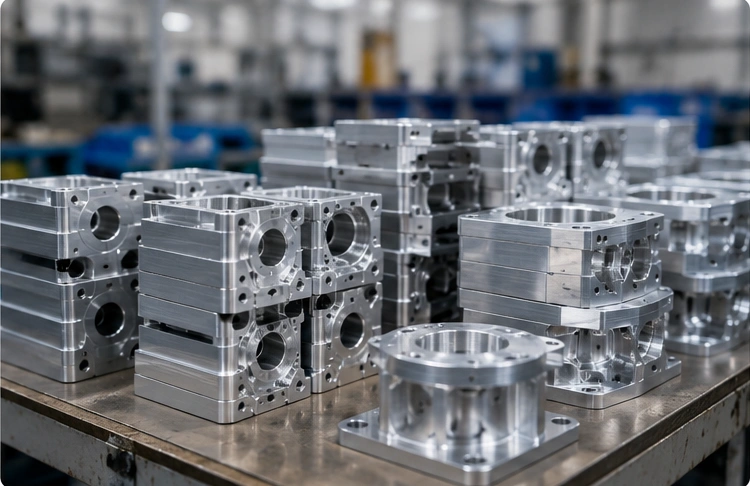
Image suggestion: CNC aluminum parts with different surface finishes on an industrial workbench.
Why Surface Finishing Matters for CNC Aluminum Parts
Aluminum naturally forms a thin oxide layer, but this is often not enough for demanding industrial applications. In real projects, aluminum parts may need better corrosion resistance, improved wear resistance, a cleaner appearance, or a specific color.
Surface finishing can help improve:
- Corrosion resistance
- Wear resistance
- Surface hardness
- Cosmetic appearance
- Scratch resistance
- Color consistency
- Product branding
For aerospace, electronics, robotics, medical devices, and industrial equipment, the surface finish is often an important engineering requirement, not just a visual choice.
1. As-Machined Finish
An as-machined finish means the aluminum part is delivered directly after CNC machining, without additional surface treatment.
This is the simplest and most cost-effective option. The part may show visible tool marks, machining lines, and a natural metallic surface.
Best used for:
- Functional prototypes
- Internal mechanical parts
- Test fixtures
- Non-cosmetic industrial components
- Parts where appearance is not critical
As-machined aluminum is a good choice when speed and cost are more important than appearance. However, it does not provide the same corrosion or wear protection as anodizing or coating.
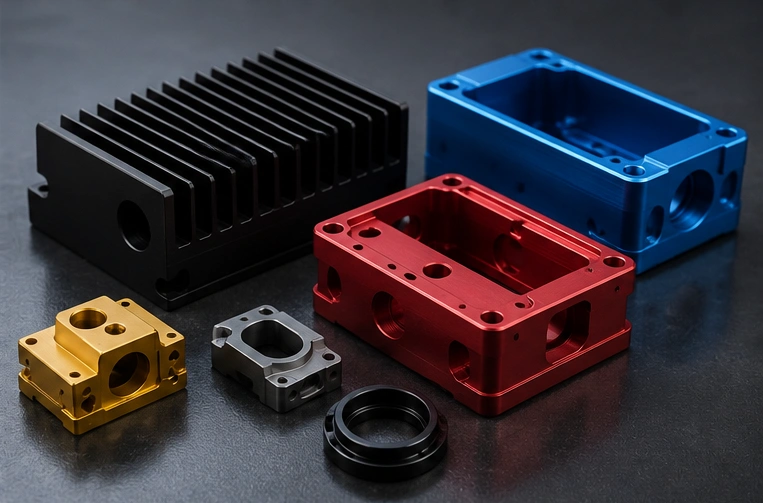
Image suggestion: Freshly machined aluminum parts showing clean tool paths and sharp edges.
2. Bead Blasting
Bead blasting is widely used when aluminum parts need a cleaner and more uniform surface. Fine blasting media is used to reduce visible machining marks and create a matte texture.
This finish gives aluminum parts a professional industrial look and is often used before anodizing.
Advantages of bead blasting:
- Uniform matte appearance
- Reduced visible machining lines
- Clean industrial texture
- Good preparation before anodizing
Common applications:
- Electronics housings
- Robotics components
- Precision instrument parts
- Consumer product enclosures
- Industrial equipment covers
Many high-quality aluminum parts use bead blasting combined with anodizing to create a smooth, premium appearance.
3. Anodizing
Anodizing is one of the most popular surface finishes for CNC aluminum parts. It is an electrochemical process that increases the thickness of the natural oxide layer on the aluminum surface.
Anodizing improves corrosion resistance, surface hardness, and appearance. It also allows different color options, such as clear, black, red, blue, gold, and custom colors.
Clear Anodizing
Clear anodizing keeps the natural aluminum look while adding protection. It is commonly used for industrial and mechanical parts where a clean metallic appearance is preferred.
Black Anodizing
Black anodizing is very common in CNC machining. It gives parts a professional and technical appearance, especially for electronics, cameras, drones, robotics, and aerospace components.
Hard Anodizing
Hard anodizing, also known as Type III anodizing, creates a thicker and harder surface layer. It is used when better wear resistance and durability are required.
Best used for:
- Aluminum housings
- Aerospace components
- Drone and robotics parts
- Camera and optical equipment
- Wear-resistant mechanical components
- Industrial aluminum parts
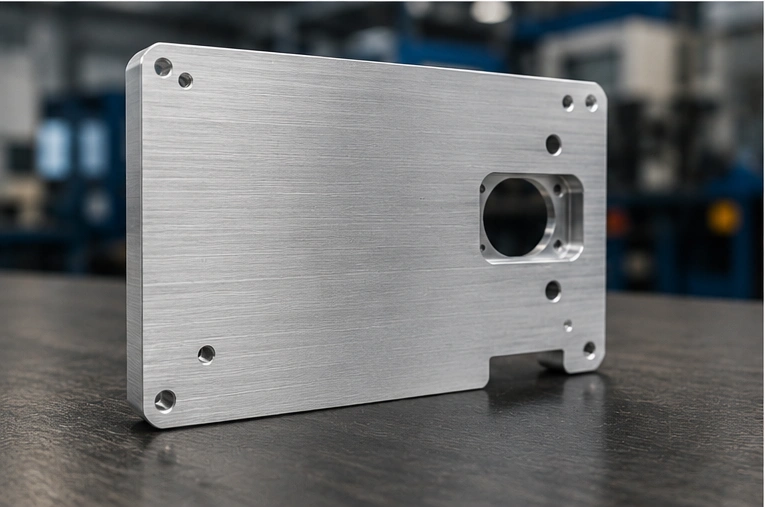
Image suggestion: Black anodized aluminum CNC parts with clean edges and precision details.
4. Powder Coating
Powder coating is a durable finish that applies a protective colored layer to aluminum parts. It is often used when parts need strong color coverage, outdoor durability, or a thicker protective coating.
Advantages of powder coating:
- Good corrosion protection
- Wide color options
- Durable surface layer
- Suitable for outdoor use
- Good scratch resistance
Common applications:
- Outdoor equipment parts
- Machine covers
- Industrial enclosures
- Automotive accessories
- Consumer product parts
One important point is coating thickness. Powder coating adds material to the surface, so threads, holes, sealing areas, and tight-tolerance surfaces may need masking before coating.
5. Polishing
Polishing is used when aluminum parts require a smoother, brighter, or more decorative surface. Depending on the process, polishing can create anything from a smooth satin surface to a mirror-like appearance.
Best used for:
- Decorative aluminum parts
- Premium consumer products
- Automotive trim components
- Display parts
- Custom appearance components
Polished aluminum looks attractive, but it may show fingerprints and scratches more easily. For this reason, polishing is often selected for appearance parts rather than heavy-duty industrial components.
6. Brushed Finish
A brushed finish creates a directional line texture on the aluminum surface. This finish is common in modern electronics, control panels, instruments, and industrial design products.
Advantages of brushing:
- Clean linear texture
- Modern industrial appearance
- Reduced visibility of small scratches
- Good cosmetic consistency
Common applications:
- Electronic panels
- Audio equipment parts
- Control plates
- Consumer product housings
- Visible aluminum covers
Brushing can also be combined with anodizing to improve protection while keeping a clean textured appearance.
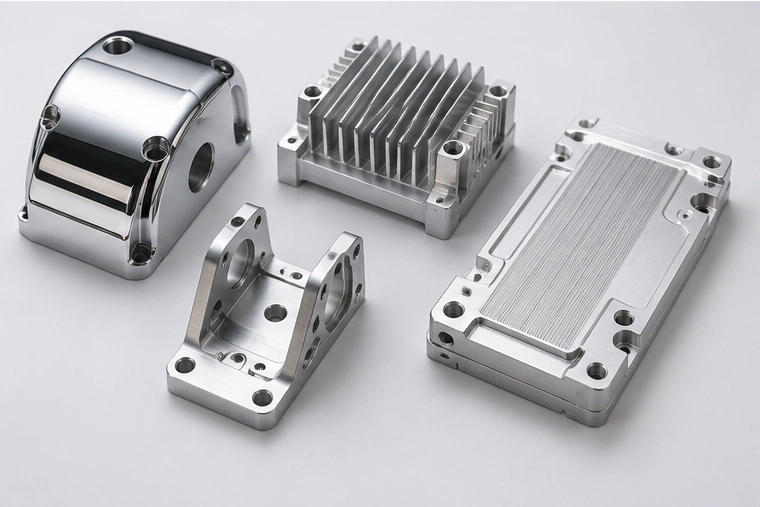
Image suggestion: Brushed and anodized aluminum CNC components for electronics or industrial products.
Comparison of Aluminum Surface Finishes
| Surface Finish | Main Advantage | Best Application |
|---|---|---|
| As-Machined | Fast and cost-effective | Prototypes, internal parts, fixtures |
| Bead Blasting | Uniform matte appearance | Housings, enclosures, visible parts |
| Anodizing | Corrosion resistance and color options | Industrial, electronics, robotics, aerospace parts |
| Hard Anodizing | Wear resistance and surface hardness | High-friction or heavy-duty aluminum parts |
| Powder Coating | Durable color protection | Outdoor equipment and enclosures |
| Polishing | Premium cosmetic appearance | Decorative and consumer product parts |
| Brushing | Modern linear texture | Panels, covers, electronics parts |
How to Choose the Right Finish
The right surface finish depends on the part’s function, environment, tolerance requirements, and appearance expectations.
Before selecting a finish, consider these questions:
- Will the part be used indoors or outdoors?
- Does it need corrosion resistance?
- Will it experience friction or wear?
- Is appearance important to the final product?
- Are there tight tolerance holes, threads, or mating surfaces?
- Does the part require a specific color?
- Is the part a prototype or production component?
For many aluminum CNC parts, clear anodizing or black anodizing is a practical choice. For cost-sensitive internal parts, as-machined may be enough. For outdoor parts, powder coating or anodizing may be more suitable. For wear-resistant applications, hard anodizing is often preferred.
Material and Finish Should Be Considered Together
Different aluminum grades may behave differently during finishing. For example, 6061 aluminum usually anodizes well and gives stable results. 7075 aluminum can also be anodized, but color consistency may vary depending on processing conditions.
This is why material selection and surface finishing should be reviewed together at the beginning of a CNC machining project.
Good planning can help avoid problems such as color variation, unexpected coating thickness, poor surface appearance, or tolerance issues after finishing.
Final Thoughts
Surface finishing is an important part of CNC aluminum machining. It affects not only how a part looks, but also how it performs in real applications.
As a simple guide:
- As-machined is best for fast and low-cost functional parts.
- Bead blasting creates a clean industrial appearance.
- Anodizing improves corrosion resistance and appearance.
- Hard anodizing improves wear resistance.
- Powder coating is suitable for durable colored protection.
- Polishing is used for premium cosmetic parts.
- Brushing gives a modern industrial texture.
At CNCTAL, we provide custom CNC aluminum machining with a range of surface finishing options, including anodizing, bead blasting, polishing, brushing, powder coating, and other finishing solutions.
Whether your project requires prototypes, low-volume production, or precision aluminum components for industrial applications, our team can help recommend a suitable surface finish based on your part design and working environment.
Need CNC Aluminum Parts with the Right Surface Finish?
Send us your 2D drawings, 3D files, material requirements, quantity, and surface finish needs. Our engineering team can review your project and provide a practical manufacturing solution.
Send Your RFQ