
Custom CNC Turning Services for Precision Turned Parts
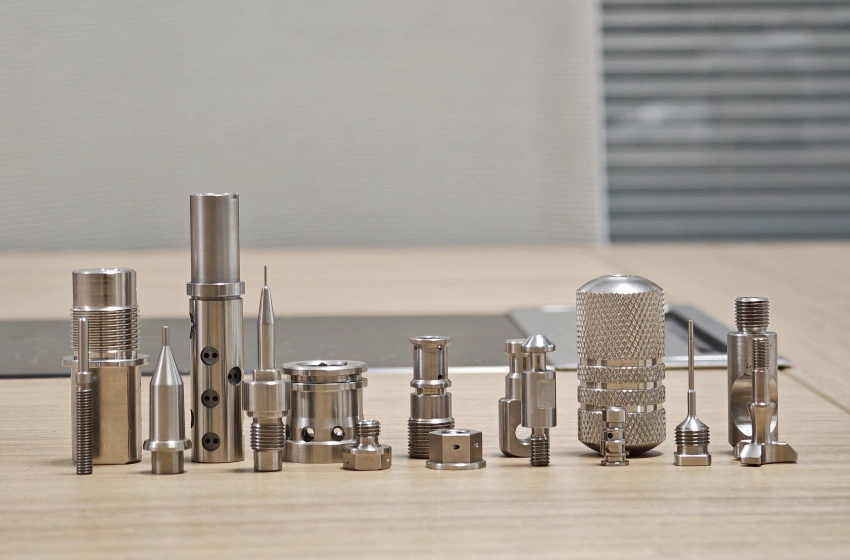
CNCTAL provides custom CNC turning services for precision shafts, bushings, sleeves, pins, spacers, threaded parts and other cylindrical components. We support one-piece prototypes, small-batch orders and repeat production with metal and plastic materials, surface finishing and tolerances up to ±0.01mm.
- Precision CNC turned shafts, bushings, sleeves and pins
- OD turning, ID boring, drilling, tapping and thread turning
- Aluminum, stainless steel, brass, copper, steel and plastics
- Flexible support from one-off prototypes to production orders
Precision CNC Turning Capabilities for Custom Cylindrical Parts
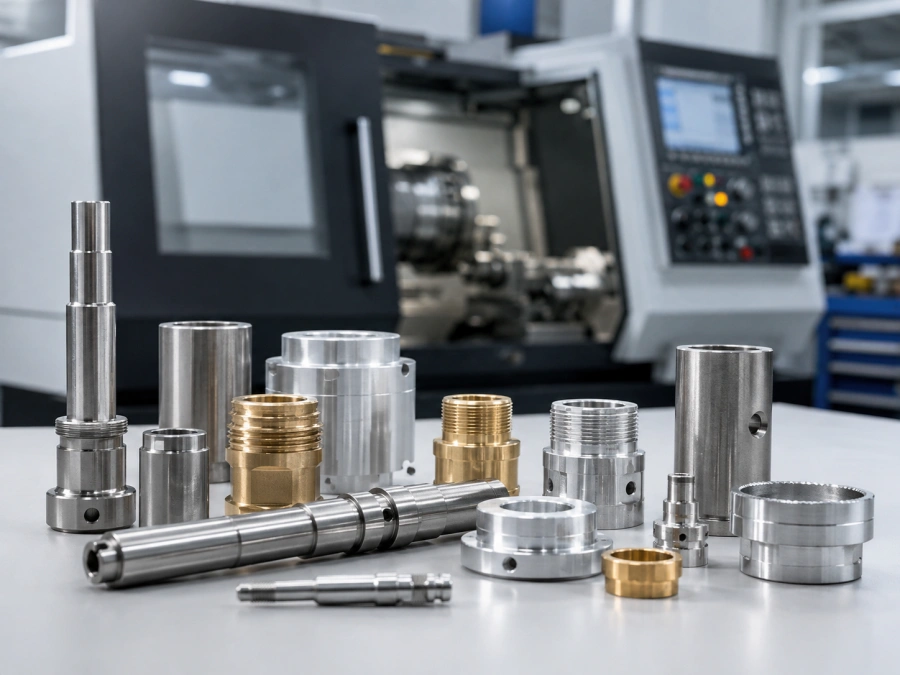
CNCTAL provides CNC turning services for shafts, bushings, sleeves, pins, spacers, threaded fittings and other round components. Our turning capabilities cover external diameters, internal bores, threads, grooves, shoulders, chamfers and precision end faces.
Built for Round Parts With Accurate Diameters, Threads and Fits
CNC turning is especially suitable for cylindrical components that require stable diameter control, concentricity, thread accuracy and smooth surface finish. Before production, our engineers review the drawing, material, tolerance and machining sequence.
- Precision shafts, pins, rollers and cylindrical machine parts
- Bushings, sleeves, spacers, collars and bearing-related parts
- Internal and external threaded parts, fittings and connectors
- Metal and plastic turned parts for prototypes and low-volume production
- Deburring, polishing, plating, anodizing and inspection support
OD Turning
External diameter turning for shafts, pins, spacers, sleeves and rollers that require accurate size, roundness and surface finish.
ID Boring
Internal boring for bushings, sleeves, bearing seats, tube-like parts and precision holes with controlled diameter requirements.
Thread Turning
Internal and external thread machining for custom threaded parts, fittings, connectors, shafts and adjustment components.
Grooving & Parting
Grooves, relief cuts, retaining ring features, shoulders and parting operations for precision turned components.
Drilling & Tapping
Center drilling, axial holes, tapped holes and secondary hole features for functional turned parts and assemblies.
Facing & Chamfering
Clean end faces, chamfers, shoulders and edge breaks to improve assembly fit, handling safety and finished appearance.
Custom CNC Turned Parts We Manufacture
CNCTAL manufactures custom CNC turned parts for prototypes, functional testing, equipment assembly and low-volume production. We focus on round components that require accurate diameters, threads, bores, grooves, shoulders, chamfers and consistent surface finish.
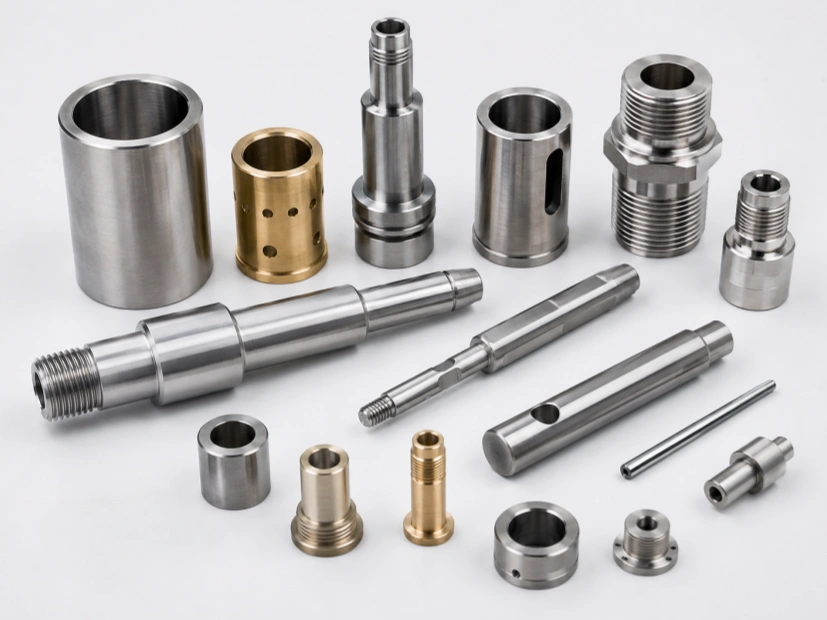
For Parts Where Diameter, Fit and Thread Accuracy Matter
CNC turned parts often look simple, but the machining risk can come from tight shaft diameters, concentricity, long slender geometry, internal bores, thread fit, burr control or surface roughness requirements.
- Small diameter shafts, pins and precision cylindrical components
- Bushings, sleeves and spacers with controlled inner and outer diameters
- Threaded fittings, connectors, collars, nozzles and valve components
- Deburring, polishing, plating, anodizing and final inspection support
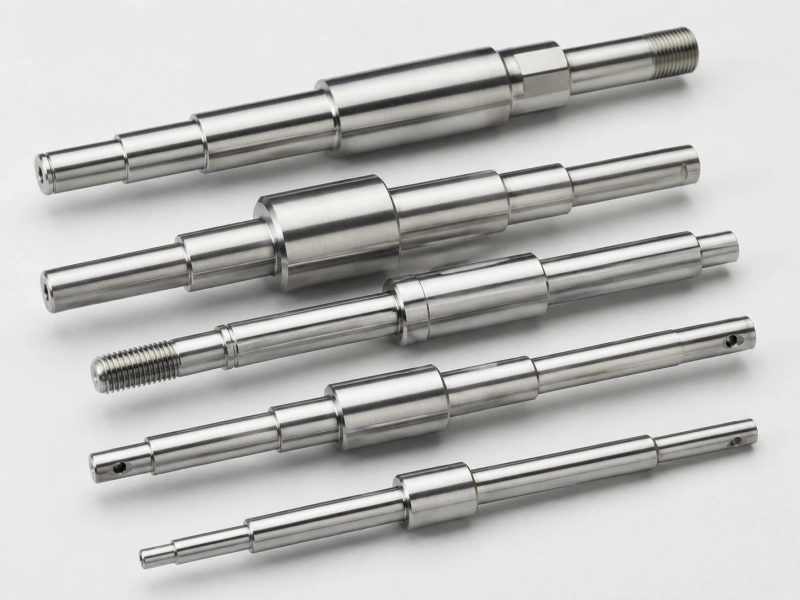
CNC Turned Shafts
Custom shafts for machinery, motors, robotics, instruments and mechanical assemblies requiring accurate diameter and fit.
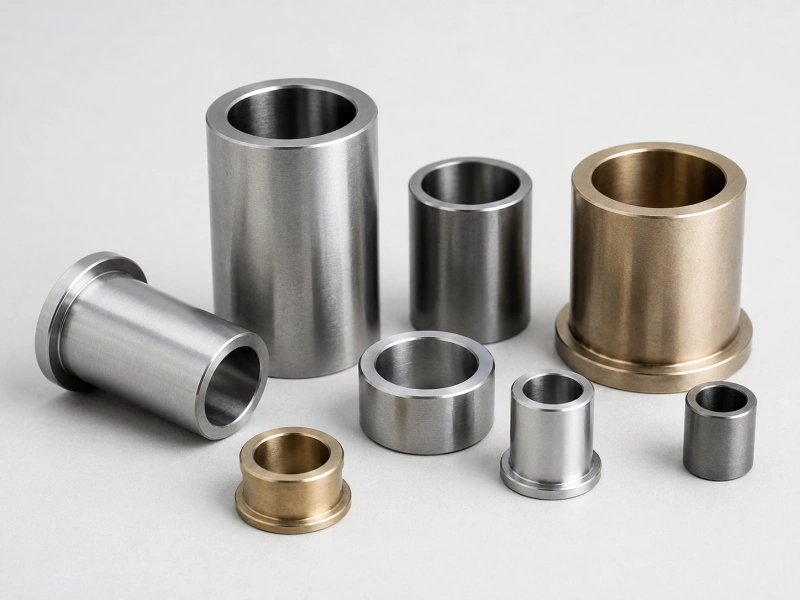
Bushings & Sleeves
Turned bushings and sleeves with controlled ID, OD, wall thickness, chamfers and surface finish requirements.
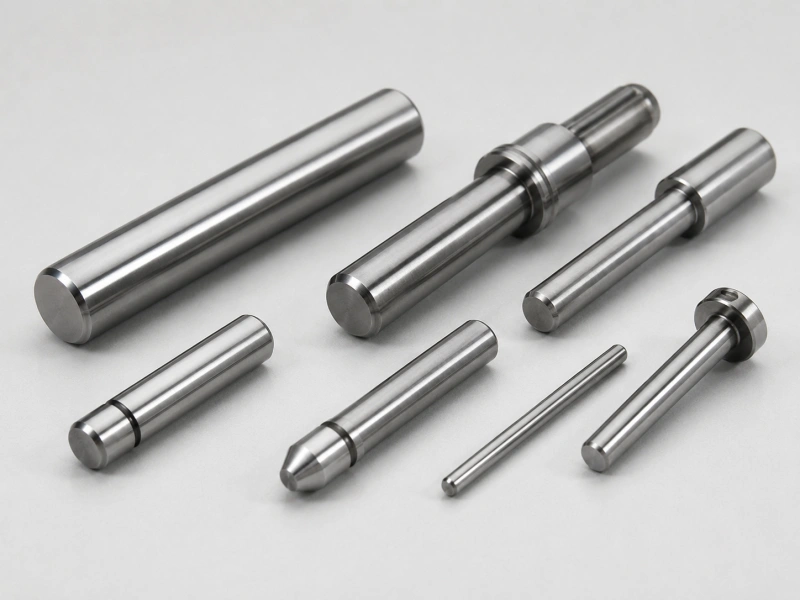
Turned Pins
Precision pins, dowel pins, locating pins and stepped pins for fixtures, assemblies and positioning applications.
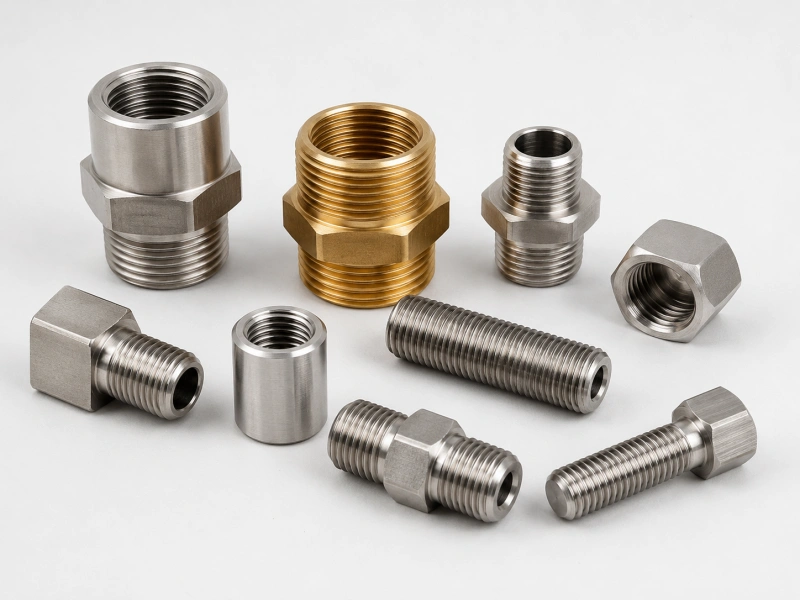
Threaded Parts
Internal and external threaded fittings, connectors, studs, adapters and adjustment parts based on drawing requirements.
Need Custom CNC Turned Parts for Your Project?
Send your 3D CAD files, 2D drawings, material, quantity, tolerance, thread details and surface finish requirements. Our engineers will review manufacturability before quotation.
Materials for CNC Turning
CNCTAL provides CNC turning for a wide range of metals and engineering plastics. The right material affects cutting performance, surface finish, tolerance stability, thread quality, corrosion resistance, strength and final part cost.
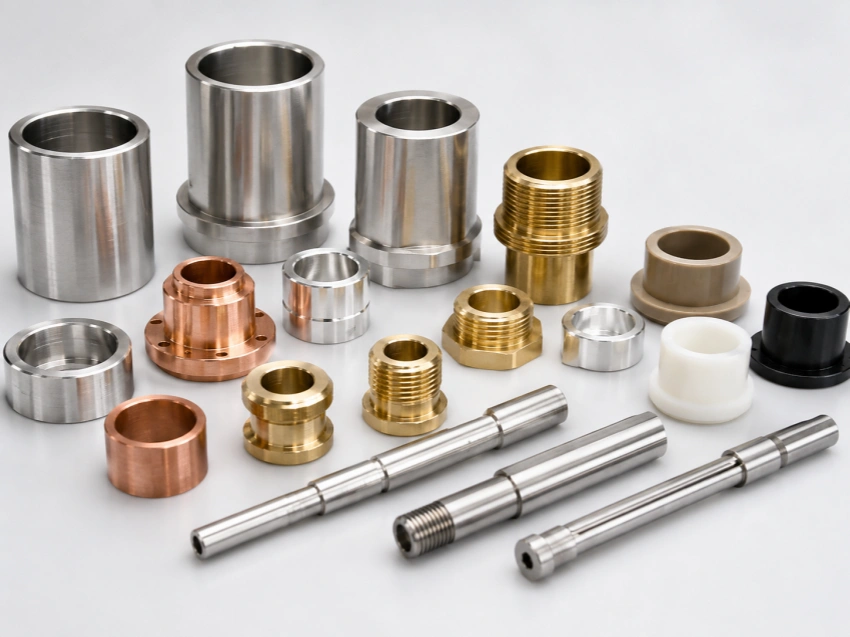
Material Choice Affects Turning Accuracy and Cost
For CNC turned parts, material selection is not only about strength. It also affects diameter stability, surface roughness, burr formation, thread quality, tool wear and whether tight tolerance can be held consistently.
- Aluminum for lightweight shafts, spacers, fittings and prototype parts
- Stainless steel for corrosion-resistant turned components
- Brass and copper for fittings, connectors and electrical parts
- Engineering plastics for low-friction, insulation or lightweight applications
Metal CNC Turning
Metal CNC turning is widely used for shafts, threaded fittings, bushings, pins, spacers, sleeves, rollers, valve parts and custom cylindrical components.
Plastic CNC Turning
Plastic CNC turning is suitable for bushings, rollers, spacers, insulating parts, lightweight sleeves and functional prototypes where friction, weight or electrical insulation matters.
Common Grades We Turn
Not Sure Which Material Is Best?
Send your drawing, application, quantity and finish requirements. Our engineers can review whether your CNC turned part is better suited for aluminum, stainless steel, brass, copper, steel, titanium or engineering plastic.
CNC Turning Tolerances and Inspection for Precision Parts
Precision CNC turning requires more than accurate machine movement. Diameter control, concentricity, bore accuracy, thread fit, surface roughness and burr control all affect the final performance of shafts, bushings, sleeves, pins and threaded parts.
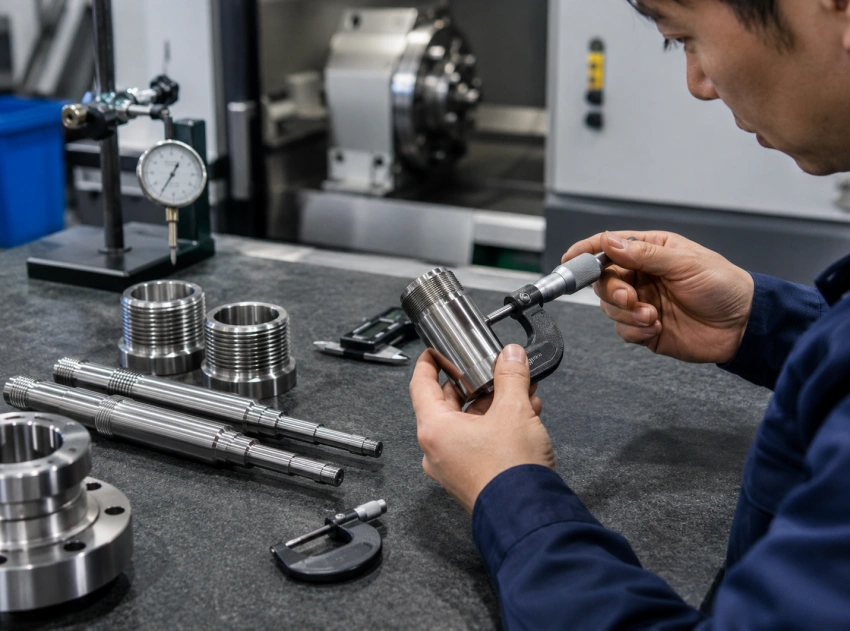
Why Turning Tolerances Need Clear Drawings
A 3D model shows the shape, but a 2D drawing defines which diameters, threads, bores, shoulders or fits are critical. For tight tolerance CNC turned parts, clear drawing notes help us quote and inspect correctly.
- Critical OD / ID dimensions and tolerance notes
- Thread standards, thread depth and fit requirements
- Surface roughness and cosmetic surface requirements
- Concentricity, runout, chamfer and edge break notes
Tight Tolerance CNC Turning Support
CNCTAL can support tight tolerance CNC turning for selected shaft diameters, bores, shoulders and precision cylindrical features. Actual achievable tolerance depends on material, part length, diameter, wall thickness, tool access and inspection method.
Diameter Inspection
Shaft diameters, sleeves, spacers and stepped features can be checked with micrometers, calipers and gauges.
Bore & Hole Checks
Internal bores, bushings and sleeve holes can be inspected for diameter, depth, fit and surface condition.
Thread Inspection
Internal and external threads are checked by thread gauges according to drawing standards and fit requirements.
CMM & Final QC
For complex turned parts or critical features, CMM and final inspection can help verify drawing requirements before shipment.
Typical CNC Turning Tolerance Guidelines
The table below is for quotation discussion. Final tolerance depends on part design, material, length-to-diameter ratio, wall thickness, surface finish and inspection requirements.
| Feature Type | Typical Requirement | Common Inspection Method |
|---|---|---|
| External shaft diameter | Tight tolerance possible when diameter, length and material are suitable | Micrometer, caliper, ring gauge |
| Internal bore / sleeve ID | Controlled according to drawing tolerance, bore depth and tool access | Bore gauge, pin gauge, caliper |
| Threaded features | Internal and external threads checked according to thread standard and fit | Thread gauge, visual inspection |
| Concentricity / runout | Reviewed based on datum, setup method, part length and critical assembly function | CMM, dial indicator, V-block setup |
| Surface finish | Controlled based on material, cutting process, polishing or finishing requirement | Visual check, roughness tester when required |
For Tight Tolerance CNC Turning, Please Send 2D Drawings
Please mark shaft diameters, bore tolerances, thread standards, surface roughness, concentricity and finishing requirements clearly. This helps us quote accurately and avoid misunderstanding during production.
Surface Finishing for CNC Turned Parts
CNC turned parts often require more than accurate diameters and threads. Surface finishing can improve appearance, corrosion resistance, wear resistance, smoothness and final assembly performance for shafts, bushings, sleeves, pins, fittings and threaded components.
From Machined Surface to Functional Finish
Turning marks, burrs, sharp edges and raw material surfaces may be acceptable for some functional parts, but many turned components need extra finishing to meet cosmetic, corrosion, wear or assembly requirements.
- Deburring and edge break after CNC turning
- Surface roughness control for shafts, pins and sleeves
- Protective finishes for aluminum, steel and stainless steel parts
- Cosmetic finishes for visible cylindrical components
- Thread protection, masking and special handling when required
Polishing
Suitable for turned shafts, pins, sleeves and visible cylindrical surfaces that require smoother finish or improved appearance.
Anodizing
Common for aluminum turned parts, improving corrosion resistance, surface hardness and appearance. Colors can be selected based on requirement.
Passivation
Used for stainless steel turned parts to improve corrosion resistance and remove free iron from the surface.
Black Oxide
Applied to steel shafts, collars, pins and threaded components for dark appearance and mild corrosion resistance.
Nickel Plating
Used for turned fittings, connectors and mechanical parts that require improved wear resistance and corrosion protection.
As Machined
Suitable for functional turned parts where standard machining marks are acceptable and cost control is more important than appearance.
How to Choose a Finish for CNC Turned Parts
The best finish depends on material, working environment, appearance requirements, thread fit and whether the part has sliding or contact surfaces.
| Finish Option | Common Materials | Typical Use on Turned Parts |
|---|---|---|
| Polishing | Stainless steel, aluminum, brass, steel | Shafts, pins, sleeves, visible cylindrical surfaces and smoother contact areas |
| Anodizing | Aluminum | Aluminum spacers, fittings, sleeves, knobs, covers and visible turned parts |
| Passivation | Stainless steel | Stainless steel shafts, bushings, pins, sleeves and corrosion-resistant components |
| Black Oxide | Steel | Steel shafts, collars, pins, fastener-like turned parts and dark appearance components |
| Nickel Plating | Steel, brass, copper | Fittings, connectors, valve parts and turned components needing corrosion protection |
| As Machined | Most machinable metals and plastics | Functional prototypes, internal parts and cost-sensitive turned components |
Need a Specific Finish for CNC Turned Parts?
Please include finish type, color, surface roughness, masking areas, thread protection and cosmetic requirements in your drawing or RFQ notes.
Flexible CNC Turning From Prototypes to Production
CNCTAL supports CNC turning projects from one-piece prototypes and engineering samples to production batches and repeat manufacturing. Whether you need precision shafts, threaded fittings, bushings or other turned components, we can review your drawings and provide practical machining support.
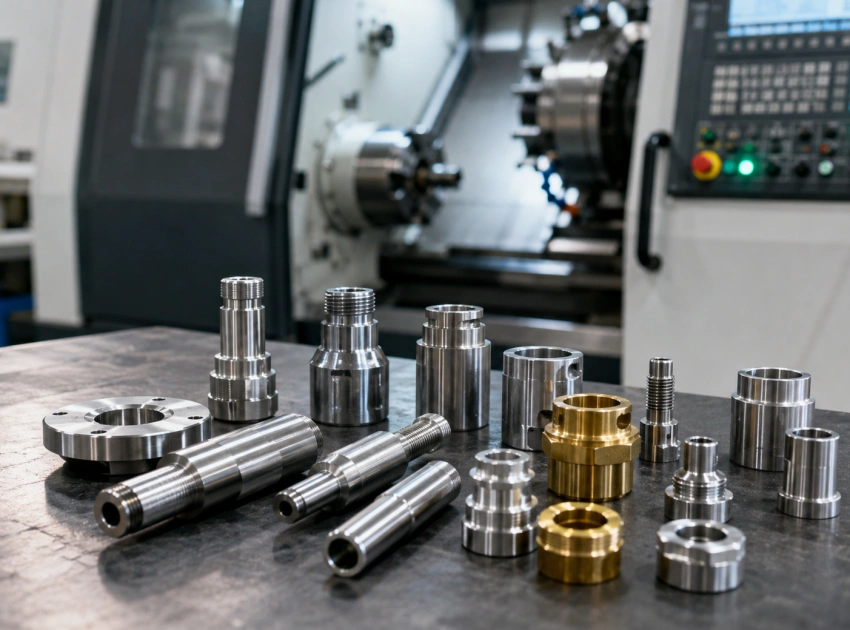
Start With a Prototype, Then Scale When the Part Is Ready
Many turned parts need testing before production, including shaft fit, thread assembly, surface finish, material behavior, bore tolerance and concentricity. We can support the initial validation stage and continue with production and repeat orders once the design is confirmed.
- One-piece CNC turning prototypes for design verification
- Pilot and batch production for shafts, bushings, sleeves, pins and spacers
- Production CNC turning for threaded fittings, connectors and machine parts
- Repeat-order support with stable machining details and inspection records
- Engineering review before production to reduce tolerance and assembly risks
Prototype CNC Turning
Suitable for product development, functional testing, shaft fit checks, thread verification and engineering validation before production.
Pilot & Batch Production
For initial production runs, assembly testing and batch manufacturing when consistent dimensions and repeatability are required.
Production CNC Turning
Supports shafts, sleeves, spacers, fittings, pins, rollers and other precision cylindrical parts for end-use applications.
Repeat Manufacturing
For recurring orders, we can reference established machining details, inspection requirements and process records to maintain consistency.
Common CNC Turned Parts We Manufacture
CNC turning is widely used for functional components that require accurate diameters, reliable threads, controlled concentricity, smooth surfaces and consistent assembly performance.
What We Need for Quotation
Please send 3D CAD files, 2D drawings, material grade, quantity, tolerance notes, thread standards, surface finish requirements and expected lead time. Clear drawings help us quote faster and reduce production risk.
Have a CNC Turning Project?
Send your drawing, material, quantity and surface finish requirements. CNCTAL will review manufacturability and provide a practical CNC turning quotation.
Industries Using CNC Turned Parts
CNC turned parts are used in many industries where round geometry, accurate diameters, threads, bores, grooves and smooth surfaces are required. CNCTAL supports custom CNC turning for prototypes, small batches and repeat production across industrial, automotive, electronic, hydraulic, medical and robotics applications.
Why CNC Turning Fits Many Industry Applications
Many mechanical assemblies rely on cylindrical parts. A small shaft, sleeve, bushing, pin or threaded fitting can affect alignment, movement, sealing, spacing and assembly reliability.
- Accurate OD / ID control for shafts, bushings and sleeves
- Internal and external threads for fittings, adapters and connectors
- Concentricity and runout control for rotating or locating parts
- Surface finish options for wear, corrosion resistance and appearance
Common Requirements Across Industries
Industrial Equipment
CNC turned components are used in machines, fixtures, drive systems, guide systems and mechanical assemblies.
Automotive
Prototype and low-volume turned parts are used for testing, fixtures, mechanical development and vehicle assemblies.
Hydraulic & Pneumatic
Turned fittings, nozzles, adapters and valve-related parts are often used in fluid and air control systems.
Electronics
Small turned components are used in connectors, terminals, inserts, spacers and device assemblies.
Medical Equipment
CNC turned parts can be used in non-implant medical devices, diagnostic equipment and mechanical assemblies.
Robotics
Robotics assemblies often require shafts, spacers, rollers, pins and collars for movement and positioning.
Aerospace & UAV
Lightweight turned components are used in prototypes, UAV assemblies and precision mechanical structures.
Marine Parts
Turned parts for marine applications often require corrosion-resistant materials and protective finishes.
Design Tips for CNC Turned Parts
Good design can reduce CNC turning cost, improve tolerance stability and avoid unnecessary machining risks. For shafts, bushings, sleeves, pins, spacers and threaded parts, small design details can affect tool access, surface finish, burr control and final assembly fit.
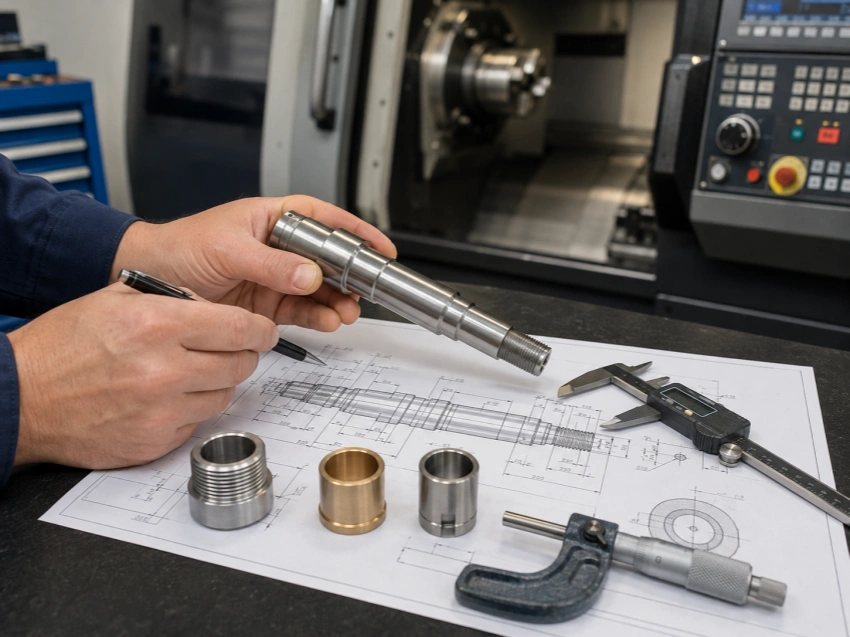
Send Both 3D CAD and 2D Drawings
A 3D model helps us understand geometry, but a 2D drawing tells us what matters most: critical diameters, thread standards, fits, surface roughness, concentricity, runout and finishing notes.
- Mark critical OD / ID dimensions clearly
- Define thread standard, thread depth and fit
- Specify surface roughness only where needed
- Confirm material grade and finish requirements
Avoid Unnecessary Tight Tolerances
Tight tolerances increase inspection time, machining risk and cost. Apply tight tolerance only to critical shaft diameters, bores, bearing fits or assembly features.
Use Standard Thread Specifications
Clearly define metric, UNC, UNF, NPT or other thread standards. Include thread length, depth, class of fit and whether thread gauges are required.
Control Long Slender Parts
Long shafts and small-diameter pins may bend, vibrate or deform during machining. Consider length-to-diameter ratio and tolerance expectations carefully.
Avoid Very Thin Walls When Possible
Thin-wall sleeves and bushings can deform during clamping, boring or finishing. If thin walls are required, mark the critical areas on the drawing.
Add Practical Chamfers and Edge Breaks
Chamfers reduce sharp edges, improve assembly and help avoid burr problems. Define important chamfers clearly, especially near threads or sealing areas.
Define Surface Finish Only Where Needed
Shaft contact areas, sealing surfaces and visible surfaces may need better roughness. Non-critical areas can stay as-machined to reduce cost.
Common CNC Turning Design Issues We Review
These are typical points our engineers check before quotation. Clear requirements help reduce misunderstanding and improve production stability.
| Design Area | Common Risk | Recommended Drawing Note |
|---|---|---|
| Shaft diameters | Too many tight tolerances increase cost and inspection time | Mark only critical fits, bearing seats and assembly diameters |
| Internal bores | Deep or small bores may affect tool access and surface finish | Define bore diameter, depth, tolerance and whether gauge inspection is required |
| Threads | Unclear thread standard can cause assembly mismatch | Specify thread type, pitch, depth, fit and thread gauge requirement |
| Grooves and relief cuts | Very narrow or deep grooves may require special tools | Provide groove width, depth, corner radius and function if critical |
| Surface roughness | Over-specifying roughness increases machining and finishing cost | Apply roughness only to sealing, sliding, bearing or visible surfaces |
Need Help Reviewing a CNC Turned Part Design?
Send your CAD files and drawings. CNCTAL can review material, tolerance, thread details, wall thickness, surface finish and manufacturability before quotation.
Frequently Asked Questions About CNC Turning Services
Below are common questions about custom CNC turning services, CNC turned parts, tolerances, materials, surface finishing, quotation files and production lead time.
What is CNC turning used for?
CNC turning is used to manufacture round, cylindrical and rotational parts such as shafts, bushings, sleeves, pins, spacers, rollers, collars, threaded fittings, connectors, nozzles and valve components. It is suitable for parts that require accurate diameters, bores, threads, grooves and smooth turned surfaces.
What types of CNC turned parts can CNCTAL manufacture?
CNCTAL manufactures custom CNC turned shafts, bushings, sleeves, pins, spacers, collars, rollers, threaded parts, fittings, connectors, nozzles, valve components and other precision cylindrical parts for prototypes, small batches and low-volume production.
What tolerances can you achieve for CNC turned parts?
CNCTAL can support tight tolerances up to ±0.01mm for selected turned features depending on material, part length, diameter, wall thickness, geometry, surface finish and inspection requirements. For critical dimensions, please provide a 2D drawing with clear tolerance notes.
Can you machine precision shafts, bushings and sleeves?
Yes. We machine precision shafts, bushings and sleeves with controlled OD, ID, shoulder dimensions, chamfers, grooves, surface finish and assembly fit requirements. For shaft fits, bearing seats or sleeve bores, please mark critical tolerances on your drawing.
Can you make internal and external threaded parts?
Yes. We support internal and external thread turning, tapping and thread inspection for custom threaded fittings, adapters, connectors, studs and adjustment components. Please specify the thread standard, pitch, thread depth, class of fit and gauge requirements if needed.
What materials are suitable for CNC turning?
CNC turning can be used for many metals and engineering plastics, including aluminum, stainless steel, carbon steel, alloy steel, brass, copper, bronze, titanium, POM / Delrin, PEEK, nylon, PTFE, ABS and polycarbonate. Material selection depends on strength, corrosion resistance, wear resistance, friction, insulation and cost.
Can you make one-piece CNC turning prototypes?
Yes. CNCTAL supports one-piece CNC turning prototypes, sample parts, small batch orders and repeat production. This is suitable for product development, functional testing, shaft fit checks, thread verification and low-volume manufacturing.
Do you provide surface finishing for CNC turned parts?
Yes. We provide surface finishing options for CNC turned parts, including as-machined finish, polishing, anodizing, passivation, black oxide, nickel plating, zinc plating, bead blasting and other finishes depending on the material and application.
What files do you need for a CNC turning quote?
For accurate quotation, please send 3D CAD files and 2D drawings if available. Useful file formats include:
- STEP / STP
- IGS / IGES
- X_T
- STL
- DWG / DXF
- PDF drawings
What information should I include in a CNC turning RFQ?
Please include material grade, quantity, tolerance requirements, thread standard, surface finish, heat treatment if needed, inspection requirements and expected lead time. For shafts, bushings and threaded parts, 2D drawings are especially helpful because they define critical diameters, bores, threads and surface roughness.
What is the difference between CNC turning and CNC milling?
CNC turning is mainly used for round or cylindrical parts where the material rotates while cutting tools remove material. CNC milling is usually used for prismatic parts, plates, housings, brackets, pockets, slots and complex flat or multi-face features. Some parts may require both turning and milling operations.
How long does CNC turning production usually take?
Lead time depends on material, quantity, part complexity, tolerance, thread requirements, surface finishing and inspection needs. Simple prototypes may be completed faster, while tight tolerance, plating, heat treatment or larger batches require more time. We confirm lead time after reviewing your CAD files and drawings.
Have a CNC Turning Project to Quote?
Send your CAD files, drawings, material, quantity, tolerance, thread details and surface finish requirements. Our engineering team will review your project and provide a practical CNC turning quotation.