

Low-Volume CNC Machining & Small Batch Production
Custom CNC machined parts for prototypes, pilot runs, bridge production, and repeat small batches — without the commitment of high-volume manufacturing.
CNCTAL supports low-volume production of custom metal and engineering plastic parts using CNC milling, CNC turning, and multi-axis machining. Start with a few parts, refine the design when needed, and scale production as demand grows.
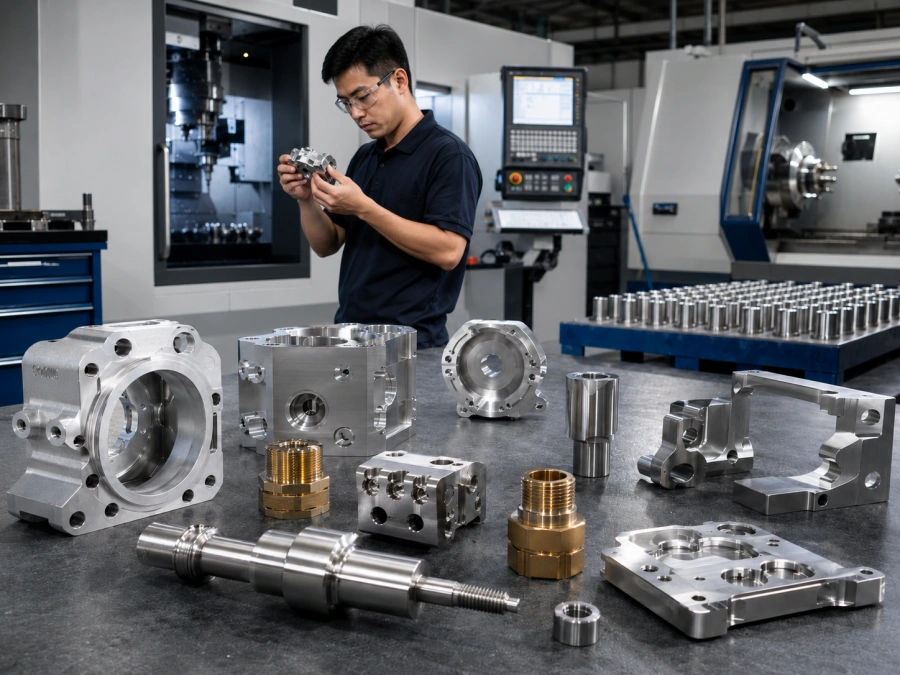

Custom CNC parts for product development, pilot builds, market launch quantities, and recurring small batches.
CNC Manufacturing Support for Startups, Product Teams & Small Batches
Not every project begins with stable demand or a large production forecast. New products often need several machining stages before quantities increase — from functional prototypes and engineering test parts to pilot runs and repeat low-volume production.
CNCTAL supports custom metal and engineering plastic parts without requiring a large initial order. Start with the quantity your project actually needs, update the design when necessary, and scale production as the product, customer demand, or project schedule develops.
Start from 1 Part
Suitable for one-off prototypes, replacement components, engineering trials, and initial design validation.
Support Design Iteration
CAD models and drawings can be updated between batches as fit, function, assembly, or customer requirements change.
Reduce Inventory Pressure
Produce according to actual project demand instead of committing to unnecessary stock before sales or requirements are stable.
Scale into Repeat Batches
Move from prototypes to pilot production and scheduled repeat orders when the design and demand become more predictable.
Test geometry, fit and function
Validate assembly and real use
Produce controlled quantities
Reorder based on actual demand
Machining Capabilities for Low-Volume Production
From simple turned parts to complex multi-axis components, CNCTAL supports low-volume production with flexible machining processes selected around part geometry, material, tolerance, and batch requirements.
CNC Milling
Custom housings, brackets, plates, fixtures, manifolds, and precision prismatic components.
Explore CNC MillingCNC Turning
Shafts, sleeves, pins, connectors, bushings, threaded parts, and cylindrical components.
Explore CNC Turning5-Axis CNC Machining
Complex multi-face parts, angled features, contoured surfaces, and difficult geometries.
Explore 5-Axis MachiningEDM Machining
Fine slots, deep features, hard materials, intricate profiles, and precision-cut geometries.
Explore EDM MachiningGear Machining
Custom gears, splines, gear shafts, toothed components, and low-volume transmission parts.
Explore Gear MachiningSurface Finishing
Anodizing, plating, blasting, polishing, coating, passivation, and other finish options.
Explore Surface FinishingMultiple processes can be combined when a low-volume project requires milling, turning, EDM, gear features, inspection, and finishing in one supply chain.
Prototype vs Low-Volume vs Mass Production
The right production approach depends on more than quantity alone. Design maturity, expected demand, tolerance requirements, inventory risk, and the likelihood of future changes all affect whether a project should stay in prototyping, move into low-volume CNC production, or scale toward mass production.
Rapid Prototyping
Best when geometry, fit, function, or assembly still needs to be tested. Quantities are usually small, and design changes may happen frequently.
Low-Volume Production
Best when the design is mostly validated but demand is not yet high or stable enough for full-scale production. Suitable for pilot runs, launches, custom equipment, and repeat small batches.
Mass Production
Best when demand is predictable, specifications are stable, and the project benefits from optimized cycle times, repeat scheduling, and larger production quantities.
Which production route fits your project?
Quantity is only one part of the decision.
A 20-piece order may be a prototype batch, while a recurring 200-piece order may already require stable production planning. We can review your CAD files, material, tolerance, expected annual demand, and reorder requirements before suggesting a practical machining approach.
Current order quantity
Expected repeat demand
Design maturity
Tolerance and inspection needs
Typical Quantities & Lead Times for Low-Volume CNC Production
Low-volume CNC projects can range from a few validation parts to recurring production batches. Actual lead time depends on geometry, material, tolerance, inspection requirements, surface finishing, machine availability, and whether the part has been produced before.
1–5 Parts
Suitable for fit checks, functional testing, design validation, first article review, and urgent engineering trials.
10–100 Parts
Common for engineering test batches, pilot builds, product launches, custom assemblies, and initial customer demand.
100–1,000 Parts
Suitable for established small-batch demand, repeat orders, machinery components, robotics parts, and scheduled production runs.
1,000–10,000 Parts
Higher quantities may be supported depending on geometry, cycle time, material supply, inspection requirements, finishing capacity, and delivery schedule.
Recurring orders can be scheduled around actual demand.
For parts that are reordered monthly, quarterly, or by project, production can be planned in separate batches instead of manufacturing the full annual requirement at once. This can reduce inventory pressure while keeping specifications tied to approved drawings and revision levels.
Monthly or quarterly batch scheduling
Production against approved drawing revisions
Demand-based reorder quantities
Inspection requirements retained for repeat orders
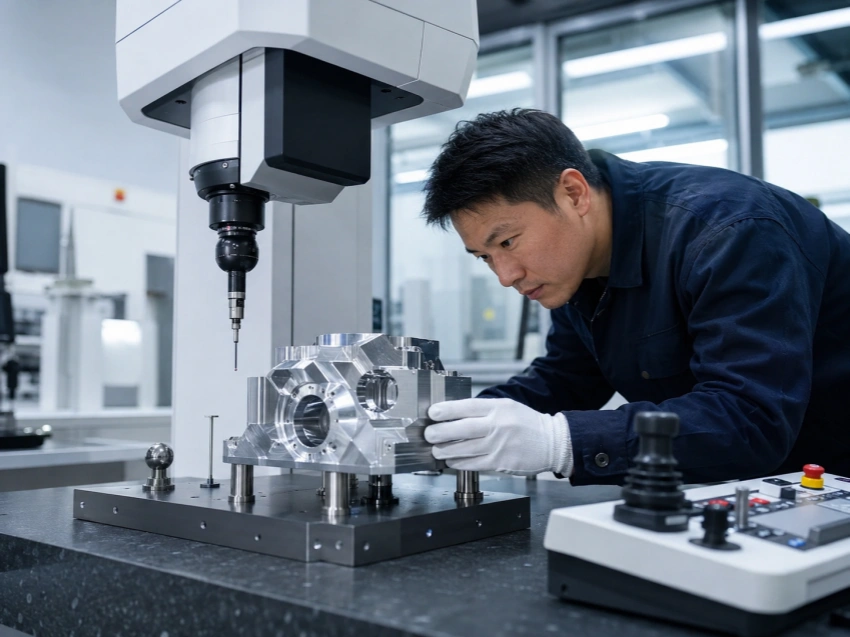
Inspection planning can be adjusted according to drawing tolerances, critical features, batch size, and customer documentation requirements.
Quality Control for Repeatable Small-Batch Production
Low-volume production is not only about making a small quantity. When parts are reordered, dimensions, finishes, and approved specifications need to remain consistent from one batch to the next.
CNCTAL combines first article verification, in-process checks, and final inspection according to the requirements of each CNC machining project. Critical features can be reviewed before full batch production, helping reduce the risk of repeating dimensional problems across multiple parts.
Inspection focuses on specified dimensions, tolerances, threads, surface requirements, and critical interfaces.
Repeat orders can be produced against approved drawings, revision levels, and established inspection requirements.
Measurement and inspection documentation can be reviewed according to project and customer requirements.
A Practical Quality Control Sequence
The inspection route depends on part complexity and risk. For repeat small-batch CNC production, quality checks can be introduced before, during, and after machining rather than relying only on final inspection.
Drawing & Requirement Review
Critical dimensions, tolerances, materials, finishes, inspection needs, and drawing revisions are reviewed before production.
First Article Verification
Initial parts can be checked before continuing with the full batch, especially when critical dimensions or new setups are involved.
In-Process Inspection
Key dimensions can be monitored during machining to identify tool wear, setup movement, or process drift before the batch is complete.
Final Inspection & Release
Finished parts are checked for relevant dimensions, appearance, quantity, finish, and shipment requirements before release.
Repeat batches should follow the latest approved specification.
When a part is reordered, the production team should not rely only on memory from the previous batch. Drawing revisions, material requirements, surface finishes, and inspection expectations need to be checked again, especially when a product continues to evolve over time.
Approved drawing and revision level reviewed
Critical dimensions retained in inspection planning
Material and finish requirements reconfirmed
Changes between batches identified before production
Custom Parts Commonly Produced in Small Batches
Low-volume CNC machining is widely used for custom components that require production-level materials and tolerances but do not justify large inventory commitments. Typical projects range from machined housings and shafts to robotics components, fixtures, manifolds, and specialized equipment parts.
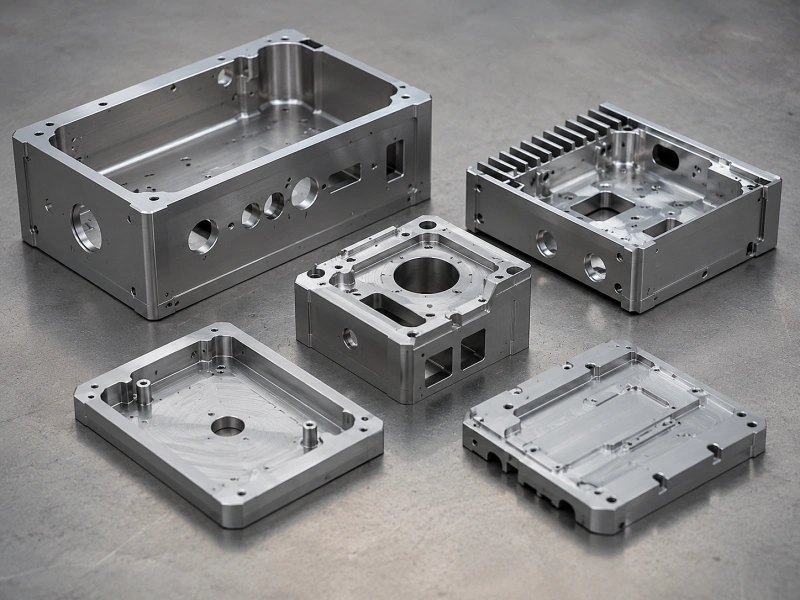
Housings & Enclosures
CNC machined housings for electronics, sensors, cameras, instruments, automation systems, and specialized equipment.
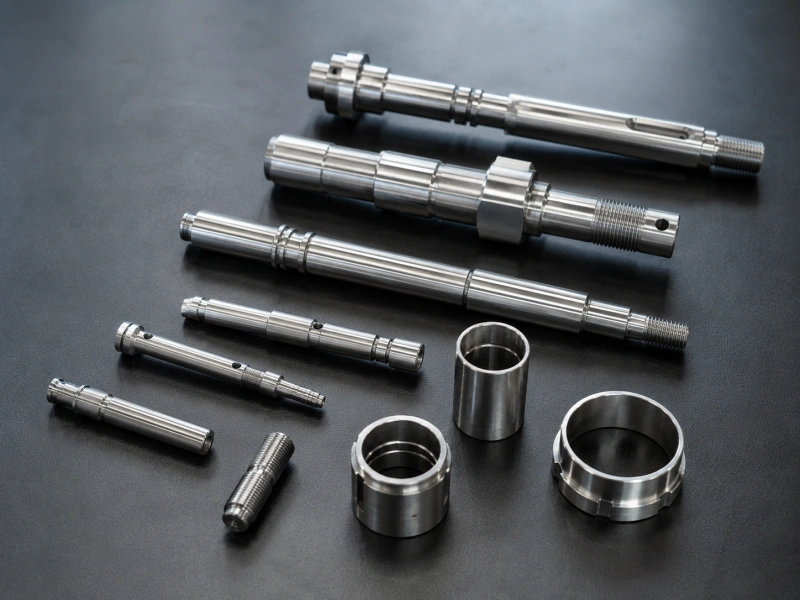
Precision Shafts
Custom shafts, pins, sleeves, and cylindrical components for machinery, motion systems, assemblies, and replacement applications.
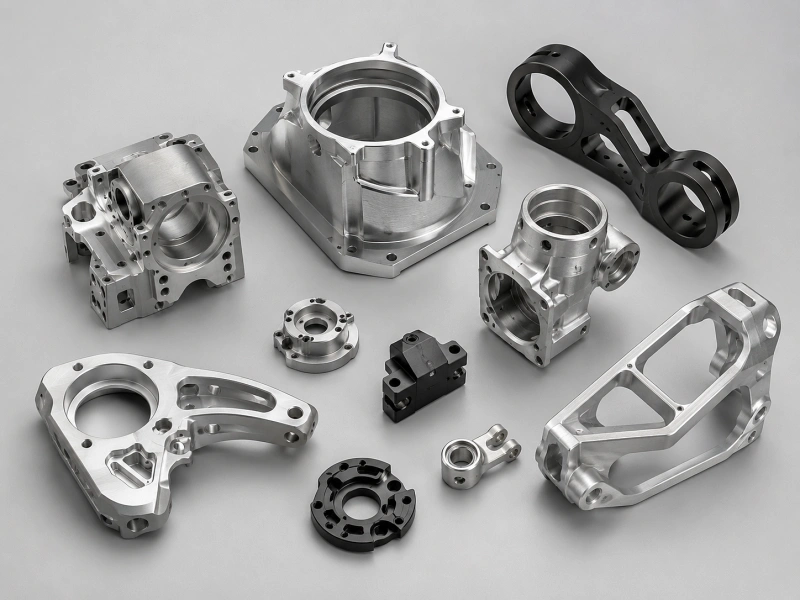
Robotics Components
Custom robot joints, mounting parts, arm components, structural interfaces, brackets, and precision mechanical elements.
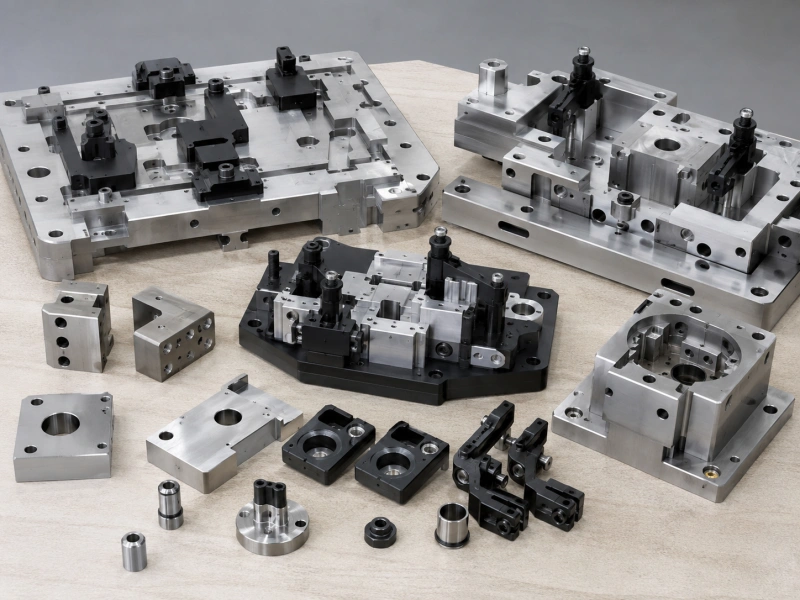
Automation Fixtures
Fixture plates, locating blocks, clamps, nests, mounting components, and custom tooling for automated production equipment.
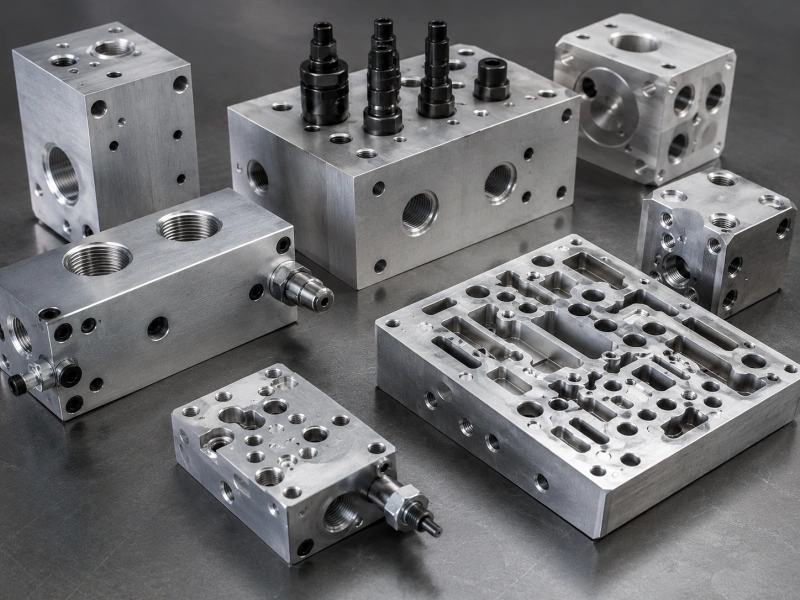
Manifolds & Valve Bodies
Machined manifolds, valve blocks, fluid distribution components, and custom bodies with ports, threads, bores, and internal flow features.
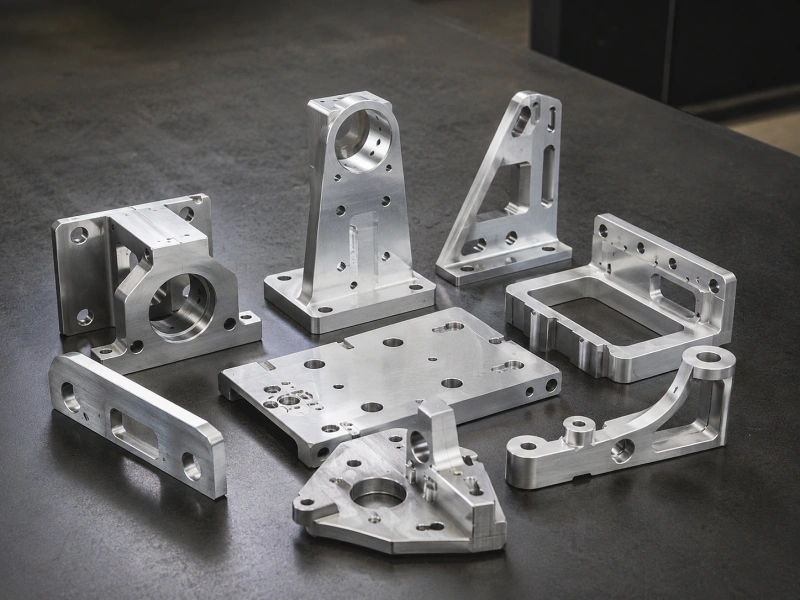
Brackets & Structural Parts
Custom brackets, mounts, support plates, machine interfaces, structural components, and project-specific mechanical parts.
The same quantity can require very different machining strategies.
A batch of 50 simple turned pins may be straightforward, while 50 complex multi-face housings may require multiple setups, custom workholding, longer inspection time, and more detailed process planning. For this reason, low-volume production is reviewed according to the part itself, not quantity alone.
Part geometry and machining time
Material and raw stock availability
Tolerance and inspection requirements
Likelihood of repeat production
Industries Using Low-Volume CNC Production
Small-batch CNC machining is widely used in industries where product designs evolve, annual demand is limited, or specialized parts are ordered by project. Low-volume production can support early product launches, custom equipment, replacement components, engineering changes, and recurring demand without requiring large inventory commitments.
Robotics
Custom robot joints, structural parts, actuator components, brackets, interfaces, precision housings, and prototype mechanisms are often produced in controlled batches as designs evolve.
Industrial Automation
Automation builders regularly require low-volume fixtures, machine components, gripper parts, locating blocks, custom mounts, and mechanical interfaces designed for specific production lines.
Electronics
CNC machining is used for custom housings, heat sinks, sensor enclosures, connector bodies, test fixtures, and low-volume hardware for specialized electronic products.
Medical Equipment
Low-volume CNC production can support precision components for diagnostic equipment, laboratory systems, device housings, fixtures, instruments, and specialized mechanical assemblies.
Automotive
Prototype and low-volume CNC machining can support test vehicles, motorsport projects, specialty equipment, engineering validation, custom brackets, housings, and mechanical components.
Startups & Product Teams
Early-stage companies and engineering teams often need small quantities for prototypes, investor samples, pilot launches, design revisions, customer testing, and initial market demand.
Low volume is often driven by how the product is used, not by company size.
A large automation company may only need 20 custom fixture components, while a startup may require several hundred launch parts. The production route should reflect actual demand, design maturity, part complexity, inspection needs, and the likelihood of future revisions.
Custom quantities tied to a specific machine, system, or installation.
Parts reordered only when equipment, customers, or projects require them.
Components may be revised between batches as products continue to evolve.
How Our Low-Volume CNC Production Process Works
A clear manufacturing process is especially important for low-volume orders, where design revisions, small batch quantities, inspection requirements, and repeat-order planning may all affect the production route. We review each project from the drawing stage through machining, inspection, finishing, and shipment.
Upload CAD Files & Requirements
Send your 3D model, 2D drawing, material, quantity, tolerance, surface finish, inspection needs, and delivery destination.
Manufacturing Review & Quotation
Our team reviews geometry, machining method, material, setup requirements, tolerances, inspection scope, and any secondary finishing before preparing the quotation.
Order Confirmation & Process Planning
After order confirmation, the project moves into material preparation, programming, setup planning, fixture review, inspection preparation, and production scheduling.
CNC Production & Inspection
Parts are machined according to the planned process. First article checks, in-process measurements, and final inspection can be applied based on drawing requirements and project risk.
Finishing, Packing & Shipment
Where required, parts move through surface finishing, final verification, protective packing, and shipment preparation according to the agreed delivery method.
Reorders still require revision control.
A repeat order should not automatically assume that every requirement is unchanged. Before production, the latest CAD files, drawing revision, quantity, material, finish, and inspection expectations should be confirmed so that an older specification is not used by mistake.
Latest drawing revision checked
Quantity and delivery schedule reconfirmed
Material and surface finish reviewed again
Inspection requirements retained or updated
Get a Faster & More Accurate CNC Quote
A complete RFQ helps us review machining strategy, material cost, setup requirements, inspection needs, finishing processes, and delivery options more accurately. For low-volume CNC production, even a small amount of missing information can significantly affect price and lead time.
2D & 3D Files
Send available CAD models and technical drawings so geometry, dimensions, threads, tolerances, and critical features can be reviewed.
Material & Grade
Specify the exact material where possible, including alloy, temper, hardness, or customer-approved equivalents.
Required Quantity
Tell us the immediate quantity and, where relevant, expected annual or repeat demand so production planning can be reviewed properly.
Tolerances & Critical Features
Identify tight tolerances, fits, bores, thread requirements, datum relationships, and features that are important to assembly or function.
Surface Finish
Specify anodizing, plating, passivation, blasting, polishing, marking, coating, or as-machined requirements.
Delivery Destination
Country, city, postal code, and required delivery date help us review practical shipping options and estimated freight cost.