
Common Materials Used for Precision Mechanical Parts
Precision mechanical parts are used in automation systems, industrial machinery, robotics, medical devices, aerospace equipment, and electronic assemblies. For engineers and purchasing teams, material selection is often just as important as dimensional accuracy.
A well-designed part made from the wrong material can lead to premature wear, corrosion, deformation, assembly problems, or unnecessary manufacturing costs.
In this article, we look at the most widely used metals and engineering plastics in precision machining, along with their advantages, typical applications, and key considerations during CNC manufacturing.
Why Material Selection Matters in Precision Manufacturing
Precision mechanical parts are not selected based on strength alone. Engineers usually evaluate a combination of mechanical performance, operating environment, manufacturability, and cost.
- Mechanical strength
- Corrosion resistance
- Weight
- Wear resistance
- Thermal performance
- Electrical conductivity
- Machinability
- Surface finishing compatibility
- Cost efficiency
Different industries may prioritize different properties. Industrial automation often focuses on durability and dimensional stability, while aerospace applications usually require lightweight strength. Medical and food-related equipment may need clean surfaces and corrosion resistance.
Aluminum: Lightweight and Highly Machinable
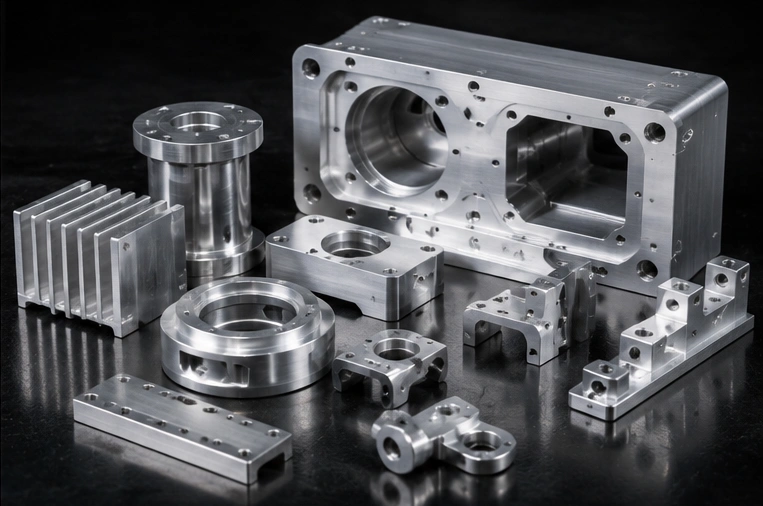
Aluminum is one of the most commonly used materials for precision mechanical parts. It offers low weight, good strength-to-weight ratio, excellent machinability, and strong compatibility with surface finishing processes such as anodizing.
Aluminum 6061
Aluminum 6061 is widely used for mechanical housings, mounting plates, robotics components, automation equipment, and prototype parts. It offers balanced mechanical properties and is suitable for both prototype and production machining.
Aluminum 7075
Aluminum 7075 provides higher strength than 6061 and is often selected for aerospace components, high-load fixtures, and structural precision parts. However, it can be more expensive and slightly less corrosion resistant than 6061.
For CNC machining, aluminum generally allows faster cutting speeds and shorter cycle times compared with stainless steel, titanium, or hardened steel.
Stainless Steel: Strength and Corrosion Resistance
Stainless steel is commonly used for precision parts exposed to moisture, chemicals, food processing environments, medical equipment, or long-term industrial service.
Key benefits include high mechanical strength, corrosion resistance, good temperature stability, and long-term durability.
Stainless Steel 303
Stainless steel 303 is known for improved machinability. It is suitable for precision shafts, turned parts, fittings, threaded components, and small mechanical parts where efficient machining is important.
Stainless Steel 304
Stainless steel 304 is one of the most widely used stainless steels for general industrial applications. It is commonly used for brackets, machine parts, frames, housings, and structural assemblies.
Stainless Steel 316
Stainless steel 316 offers stronger corrosion resistance in aggressive environments. It is often selected for marine systems, chemical processing equipment, food machinery, and medical-related applications.
Although stainless steel offers excellent performance, CNC machining usually requires lower cutting speeds, strong tooling, proper coolant control, and careful heat management.
Carbon Steel and Alloy Steel: Cost-Effective Strength
Carbon steel and alloy steel are commonly used when high strength is required but stainless steel corrosion resistance is not necessary.
45 Steel / C45
C45 steel is often used for mechanical shafts, machine bases, structural components, and general industrial hardware. It offers good strength and cost efficiency for many mechanical applications.
42CrMo4 Alloy Steel
42CrMo4 is known for high strength, good toughness, and heat treatment compatibility. It is often used for gear components, heavy-duty machine parts, and high-load mechanical assemblies.
Steel parts may require secondary processes such as black oxide, nickel plating, hardening, or heat treatment to improve wear resistance or corrosion performance.
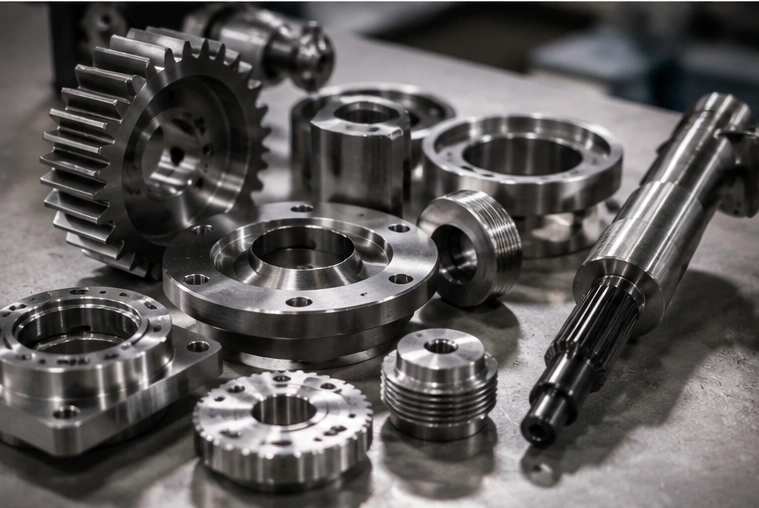
Brass and Copper: Conductivity and Precision Machining
Brass and copper alloys are widely used in electrical, fluid control, and precision mechanical applications.
Brass
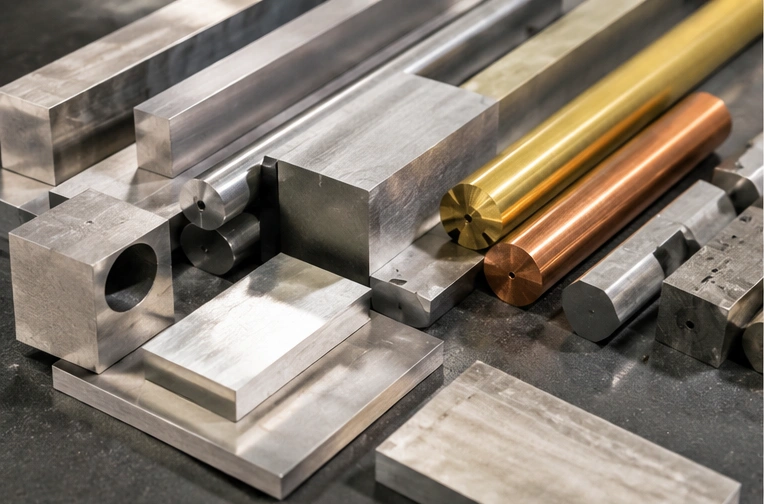
Brass offers excellent machinability, good corrosion resistance, attractive appearance, and stable dimensional behavior. It is commonly used for connectors, valve fittings, pneumatic components, bushings, and precision threaded parts.
Copper
Copper provides excellent electrical and thermal conductivity. It is often used for electrical contacts, heat transfer components, busbars, terminals, and power system components.
Copper can be more challenging to machine than brass due to its softness and chip behavior, so tooling and cutting parameters must be selected carefully.
Titanium: High Performance for Critical Applications
Titanium is often selected for applications where strength, corrosion resistance, and low weight are essential. It is commonly used in aerospace, medical devices, high-performance engineering, and energy equipment.
Popular titanium grades include Grade 2 Titanium and Grade 5 Titanium, also known as Ti-6Al-4V.
- High strength-to-weight ratio
- Excellent corrosion resistance
- Good temperature resistance
- Biocompatibility for medical applications
Titanium is more expensive and significantly more difficult to machine than aluminum or stainless steel. It requires stable machining conditions, suitable tooling, and strong process control.
Engineering Plastics for Precision Mechanical Parts
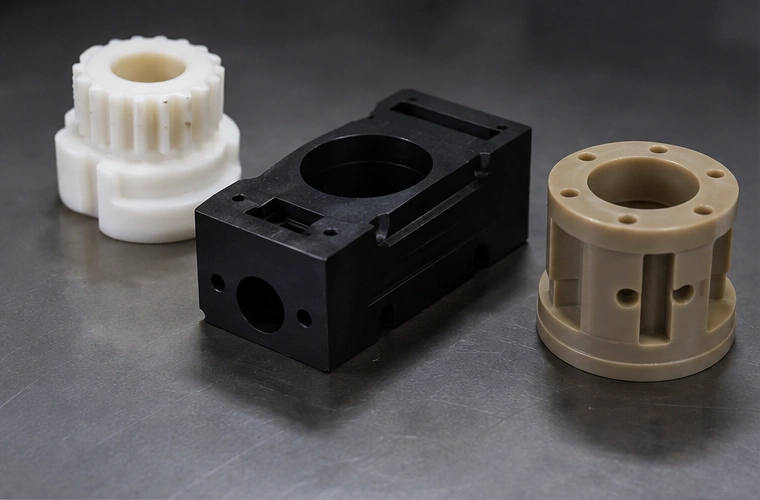
Not all precision components are made from metal. Engineering plastics are widely used where lightweight performance, insulation, chemical resistance, low friction, or noise reduction is required.
PEEK
PEEK is a high-performance engineering plastic used for medical components, aerospace insulation parts, precision wear components, and high-temperature applications. It provides excellent chemical resistance and dimensional stability.
Delrin / POM
Delrin, also known as POM, is commonly used for gears, bushings, sliding components, and low-friction mechanical assemblies. It machines well and offers stable performance in many mechanical systems.
Nylon / PA
Nylon is often used for wear components, rollers, guides, lightweight machine elements, and mechanical parts requiring impact resistance or friction reduction.
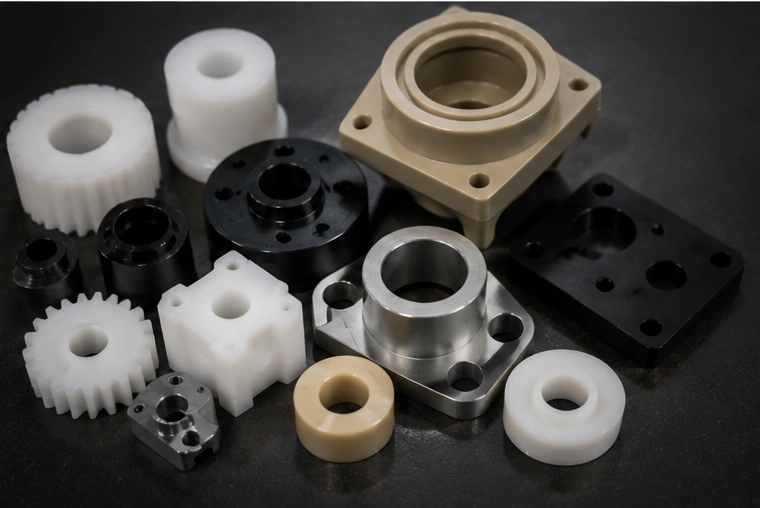
Material Comparison for CNC Machined Precision Parts
| Material | Main Advantage | Typical Applications | Machining Difficulty |
|---|---|---|---|
| Aluminum | Lightweight and easy to machine | Housings, brackets, prototypes, automation parts | Low |
| Stainless Steel | Strength and corrosion resistance | Shafts, fittings, food equipment, industrial parts | Medium |
| Carbon / Alloy Steel | High strength and cost efficiency | Machine parts, shafts, gears, structural components | Medium |
| Brass | Excellent machinability | Connectors, fittings, threaded parts, valve parts | Low |
| Copper | Electrical and thermal conductivity | Contacts, busbars, heat transfer components | Medium |
| Titanium | High strength-to-weight ratio | Aerospace, medical, high-performance components | High |
| Engineering Plastics | Lightweight and low friction | Bushings, gears, rollers, insulation parts | Low–Medium |
How CNC Machining Influences Material Selection
Material selection is closely connected to manufacturability. A material that performs well in service may also increase machining time, tooling cost, or lead time.
For example, aluminum and brass are generally efficient to machine, while stainless steel and titanium require more careful process control. Engineering plastics may appear simple, but some plastics can deform if clamping, heat, or cutting forces are not properly controlled.
Early communication between engineers and CNC manufacturers can help improve part design, reduce production risk, and control cost before manufacturing begins.
Surface Finishing Considerations
Many precision mechanical parts require surface finishing after CNC machining. The selected material often determines which finishing options are available.
| Finish | Common Material | Purpose |
|---|---|---|
| Anodizing | Aluminum | Improves corrosion resistance and appearance |
| Passivation | Stainless Steel | Improves corrosion resistance |
| Black Oxide | Steel / Stainless Steel | Provides dark surface and mild corrosion protection |
| Nickel Plating | Steel, Brass, Copper | Improves corrosion resistance and wear performance |
| Bead Blasting | Aluminum / Stainless Steel | Creates a uniform matte surface |
Final Thoughts
There is no universal best material for precision mechanical parts. The ideal choice depends on application requirements, operating environment, budget, and manufacturing priorities.
Aluminum, stainless steel, alloy steel, brass, copper, titanium, and engineering plastics all serve important roles in modern precision manufacturing. Understanding their strengths, limitations, and machining behavior helps engineers make smarter design and sourcing decisions.
Need Custom Precision Mechanical Parts?
CNCTAL manufactures custom precision mechanical parts using a wide range of metals and engineering plastics, supporting prototype development, low-volume production, and repeat manufacturing projects.
Send us your STEP file, 2D drawing, material requirements, quantity, and surface finish needs. Our engineering team will review your project and provide machining feedback.
Request a CNC Machining QuoteFAQ: Materials for Precision Mechanical Parts
What are the most common materials used for precision mechanical parts?
Common materials include aluminum, stainless steel, carbon steel, alloy steel, brass, copper, titanium, and engineering plastics such as PEEK, Delrin/POM, and nylon. The best choice depends on strength, weight, corrosion resistance, wear performance, and machining requirements.
Which material is best for lightweight precision mechanical parts?
Aluminum is one of the best choices for lightweight precision parts because it has a good strength-to-weight ratio, excellent machinability, and strong compatibility with surface finishes such as anodizing. Aluminum 6061 is commonly used for general parts, while 7075 is selected for higher-strength applications.
When should stainless steel be used for precision CNC parts?
Stainless steel is suitable when parts need corrosion resistance, strength, durability, and clean surface performance. It is often used for food equipment, medical devices, industrial machinery, fluid systems, shafts, brackets, fittings, and structural components.
Are engineering plastics suitable for precision mechanical parts?
Yes. Engineering plastics such as PEEK, POM, and nylon are suitable for lightweight parts, low-friction components, insulating parts, gears, bushings, rollers, and sliding assemblies. They are often used when metal is too heavy or when electrical insulation is required.
How does material selection affect CNC machining cost?
Material selection directly affects machining time, tool wear, surface finish, and production cost. Aluminum and brass are generally easier to machine, while stainless steel, titanium, and some engineering plastics may require more careful process control and longer machining time.
What information is needed to choose the right material for a machined part?
It is helpful to know the application, load requirements, working environment, corrosion exposure, temperature range, weight limits, surface finish needs, tolerance requirements, and production quantity. A STEP file and 2D drawing can also help the manufacturer provide better material and machining suggestions.