

Custom Aluminum Heat Sink CNC Machining
Precision CNC machined aluminum heat sinks, cooling plates, finned housings, and thermal management components for electronics, power modules, LED lighting, communication equipment, industrial automation, and energy equipment applications.
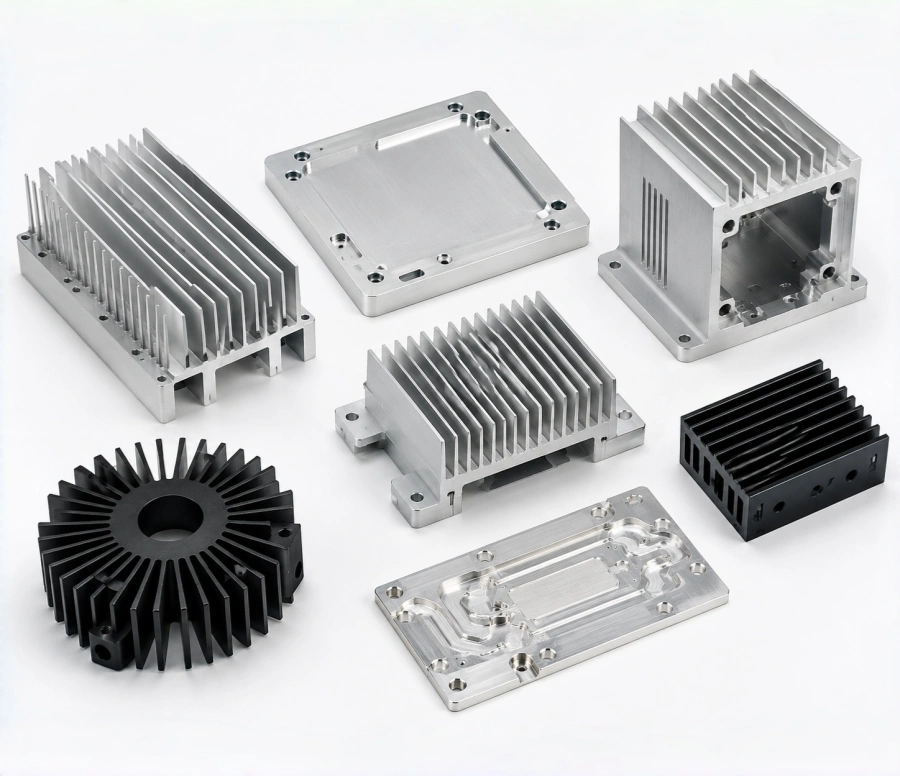
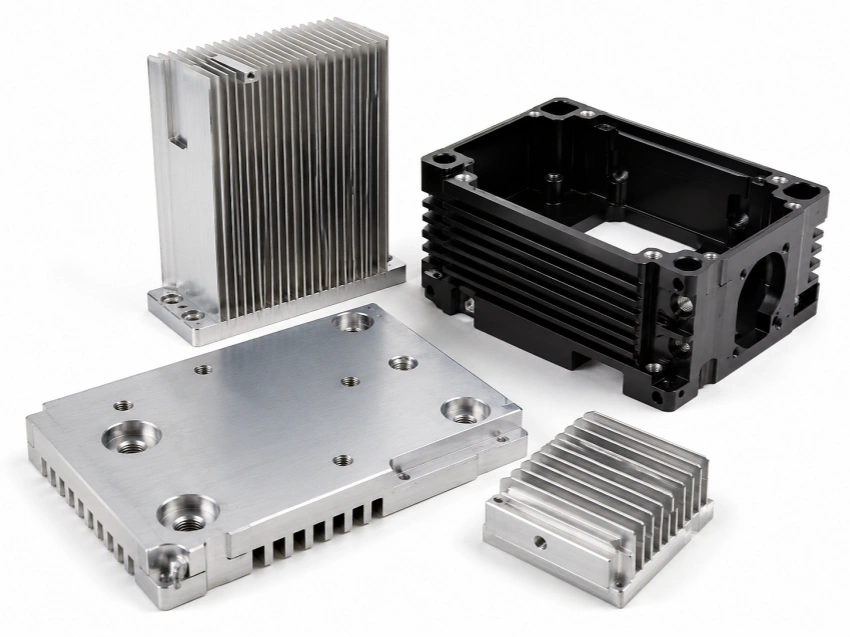
Aluminum Heat Sink Components We Commonly Machine
Aluminum heat sink parts are usually designed around thermal contact, mounting accuracy, airflow, surface treatment, and assembly space. CNCTAL machines custom heat sink components from drawings, CAD files, samples, or early-stage engineering concepts.
Finned Heat Sinks
CNC machined aluminum heat sinks with straight fins, stepped fins, thin-wall fins, and slot structures for natural cooling or forced-air cooling applications.
Heat Sink Housings
Aluminum housings that combine mechanical protection and heat dissipation, commonly used for controllers, power modules, drivers, and compact electronic assemblies.
Cooling Plates
Flat aluminum cooling plates, module mounting plates, and heat transfer bases used to move heat away from electronic modules or mechanical assemblies.
LED Heat Sinks
Custom aluminum heat sinks and lamp body cooling parts for LED lighting, optical equipment, inspection lights, and industrial illumination systems.
Power Electronics Heat Sinks
Machined heat sink bases, finned blocks, mounting plates, and cooling structures for power supplies, inverters, converters, drivers, and charging equipment.
Thermal Management Parts
Custom aluminum thermal parts with grooves, slots, pockets, mounting bosses, side holes, threaded features, and special assembly surfaces based on application needs.
Not Only a Heat Sink Shape
A custom heat sink must fit the real device. The thermal contact surface, mounting holes, threaded features, cable clearance, fin direction, and surface treatment all affect how the part performs during assembly and operation.
Engineering Review Before Quotation
For heat sink projects, CNCTAL reviews fin geometry, base flatness, material grade, surface finish, quantity, and critical mounting areas before confirming the machining method and cost.
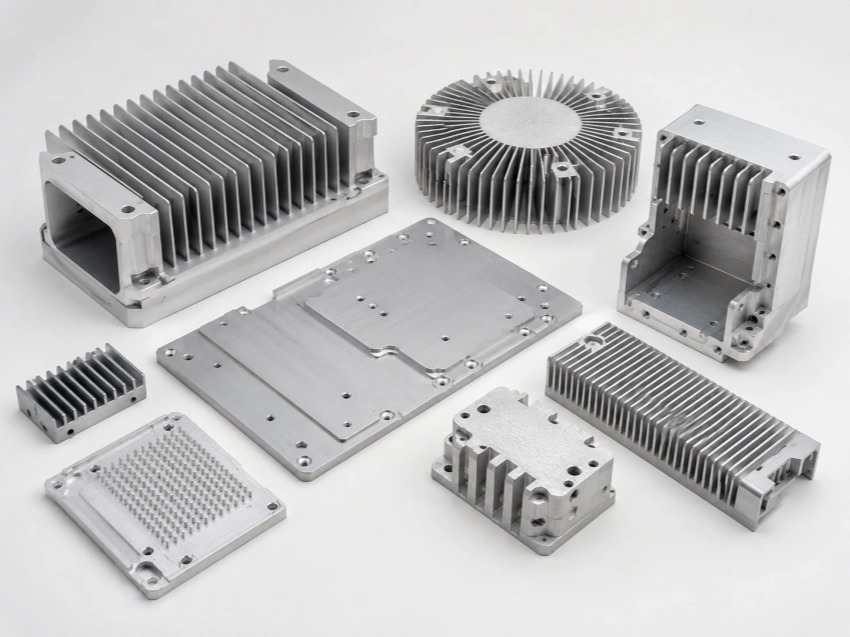
Where Custom Aluminum Heat Sinks Are Used
Aluminum heat sinks are used in equipment where stable heat dissipation, compact structure, and reliable assembly are important. These parts may work as a simple thermal base, a finned cooling block, or a complete housing that combines mechanical protection and heat transfer.
Power Electronics
Heat sink bases, finned blocks, and mounting plates for power supplies, inverters, converters, motor drivers, and control modules.
LED Lighting
Aluminum lamp body heat sinks, LED cooling bases, optical lighting housings, and machined thermal parts for industrial lighting assemblies.
EV Charging Equipment
Cooling housings, power module heat sinks, connector support parts, and aluminum thermal components used in charging equipment.
Communication Equipment
Heat dissipation housings, RF module cooling parts, enclosure heat sinks, and compact aluminum parts for communication and network devices.
Industrial Automation
Controller heat sinks, servo driver cooling plates, sensor housings, machined brackets, and thermal management parts for automation systems.
Robotics & Sensor Systems
Small heat sinks, cooling bases, camera module housings, sensor mounting parts, and aluminum structures for compact electronic assemblies.
Why Precision Matters for Aluminum Heat Sink Components
A heat sink is not only judged by its outside shape. The thermal contact surface, fin thickness, hole position, thread quality, surface roughness, and anodizing consistency all affect how the part fits, transfers heat, and performs inside the final equipment.
Base Flatness
The mounting base often contacts a power module, LED board, chip, or thermal pad. If this surface is not flat enough, heat transfer and assembly stability can be affected.
Fin Thickness and Spacing
Thin fins and deep slots need controlled machining to keep the correct spacing, reduce deformation, and maintain consistent heat dissipation geometry.
Mounting Hole Position
Heat sinks are usually assembled with PCBs, modules, brackets, or housings. Accurate hole position helps avoid difficult assembly and uneven thermal contact.
Thread Quality
M2, M3, M4, M5, and other threaded holes must be clean and accurate, especially when the heat sink is repeatedly assembled with screws or inserts.
Burr Control Between Fins
Burrs inside narrow slots or around thin fins can affect appearance, airflow, assembly, and surface finishing. Deburring needs to be planned during the machining process.
Surface Finish Consistency
Clear anodizing, black anodizing, bead blasting, and hard anodizing require stable surface preparation, especially for visible heat sink housings and batch production.
Critical Features We Review Before Machining
For custom aluminum heat sinks, we review the functional areas first instead of only checking the outside dimensions. This helps reduce machining risk and avoid assembly problems after finishing.
- Thermal contact surface flatness and surface roughness
- Cooling fin thickness, spacing, height, and slot depth
- Module mounting holes, counterbores, and threaded holes
- Airflow direction, cable clearance, and installation space
- Thin-wall areas that may deform during machining or anodizing
- Cosmetic surfaces, masked areas, and laser marking position
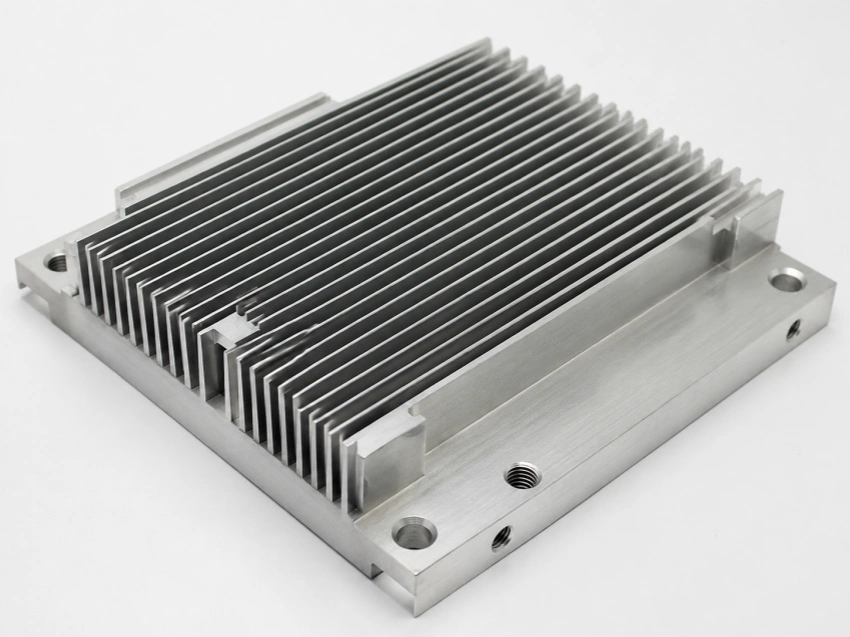
Good Thermal Performance Starts with the Contact Surface
Many heat sink problems do not come from the fins, but from the base. When the module mounting face is uneven, scratched, or not controlled to the required flatness, the thermal path can become unstable. That is why CNCTAL pays attention to the base surface, mounting holes, and finishing requirements before production.
Machining Challenges for Aluminum Heat Sink Components
Aluminum heat sinks often include thin fins, deep slots, flat thermal contact surfaces, threaded mounting holes, and visible anodized finishes. These features require more than basic milling. Tool selection, clamping, cutting sequence, deburring, and surface preparation all affect the final part quality.
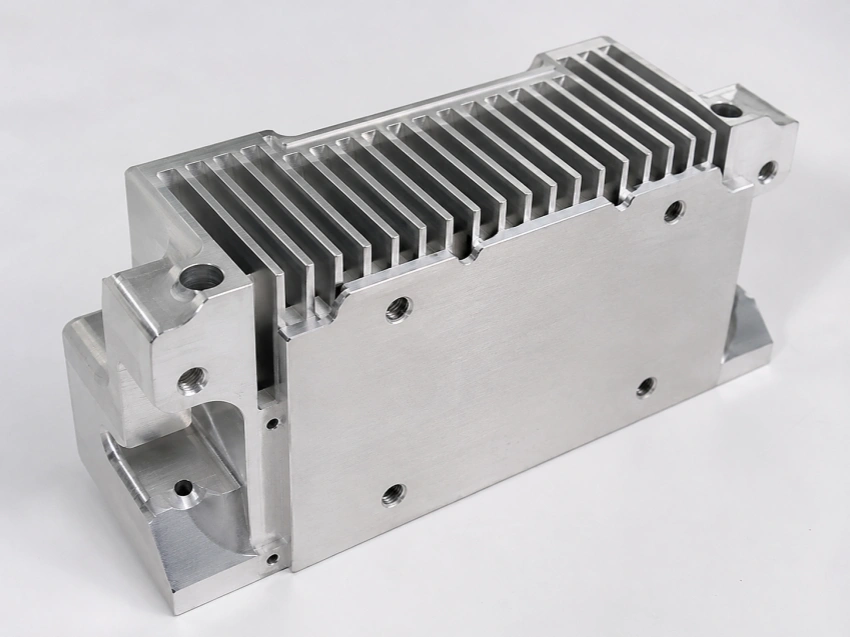
Heat Sink Machining Is Often Limited by the Details
The difficult areas are usually not the outside size, but the fin structure, slot depth, base flatness, burrs between fins, and how the part behaves after anodizing or surface finishing.
Thin Fin Deformation
Thin aluminum fins can vibrate, bend, or leave visible tool marks during machining. Cutting parameters and tool path planning must be controlled to keep fins stable.
Deep Slots Between Fins
Deep and narrow slots require suitable cutter length and chip evacuation. Poor tool access can create rough surfaces, burrs, uneven slot bottoms, or slower production.
Flatness of Thermal Base Surface
The bottom surface may contact a power module, LED board, chip, or thermal pad. Material stress, clamping, and machining sequence can affect the final flatness.
Threaded Holes and Mounting Features
Heat sinks often include small threaded holes, counterbores, locating holes, and module mounting patterns. Hole position and thread quality must match the assembly.
Burr Control Around Fins and Slots
Burrs between fins are difficult to remove after machining. Deburring must protect thin fins while keeping airflow gaps, edge quality, and surface appearance clean.
Surface Finish and Anodizing Consistency
Clear or black anodizing can show machining marks, scratches, and inconsistent surface preparation. Cosmetic areas and functional contact areas should be defined early.
Check Fin Geometry and Base Requirements
We review fin thickness, slot depth, base flatness, hole patterns, and thermal contact surfaces before confirming the machining route.
Control Clamping and Cutting Sequence
Thin fins and flat bases require careful clamping, stable tool paths, and suitable machining order to reduce deformation.
Review Burrs and Visible Surfaces
Edges, slots, threaded holes, cosmetic faces, and thermal surfaces are checked before anodizing, bead blasting, or laser marking.
CNCTAL Machining Capabilities for Aluminum Heat Sinks
Custom aluminum heat sinks require stable milling, thin-fin machining, drilling, tapping, surface preparation, and inspection. CNCTAL supports CNC machined heat sink prototypes, small batches, and repeat production for electronics, power equipment, lighting, automation, and thermal management applications.
CNC Milling for Heat Sink Bases
Machining for flat thermal bases, cooling plates, mounting faces, module contact surfaces, pockets, slots, and lightweight aluminum structures.
Thin Fin and Slot Machining
Milling support for straight fins, stepped fins, narrow slots, deep grooves, and custom fin structures where deformation and burr control are important.
Drilling, Tapping and Counterbores
Machining for M2, M3, M4, M5 and other threaded holes, counterbores, locating holes, cable openings, mounting patterns, and assembly features.
Multi-Side Machining
4-axis and 5-axis machining can be used for heat sink housings, side holes, angled features, connector openings, and complex thermal structures.
Surface Finishing Support
Clear anodizing, black anodizing, hard anodizing, bead blasting, sand blasting, powder coating, polishing, and laser marking can be arranged according to requirements.
Prototype and Batch Production
Support for one-off prototypes, engineering validation samples, small batches, and repeat production with stable dimensions and consistent finishing.
How We Plan Heat Sink Machining
Before machining, we review the heat sink as a functional part. The base surface, fin geometry, threaded holes, appearance surfaces, and finishing method are checked together.
We check the CAD file, 2D drawing, base flatness, thermal contact surface, fin dimensions, hole patterns, and surface finish notes.
We plan clamping, cutting sequence, tool access, and datum surfaces to reduce deformation and protect thin fins or flat bases.
Burrs around fins, slots, threaded holes, counterbores, and edges are reviewed before anodizing, blasting, coating, or laser marking.
We check critical dimensions such as base flatness, hole position, thread quality, fin spacing, overall height, and surface appearance.
Best for Custom Heat Sink Projects
CNC machining is suitable when the heat sink has special holes, pockets, threaded features, small batch demand, prototype changes, or geometry that standard extrusion cannot easily cover.
From Prototype Heat Sinks to Repeat Production
CNCTAL can machine early-stage heat sink prototypes for design testing, then support small batch or repeat production after the structure is confirmed. For cost comparison, you can send several quantity levels in one RFQ.
Send Heat Sink DrawingsMaterial and Finish Options for Aluminum Heat Sink Components
Material selection affects machining cost, thermal performance, surface finish, strength, weight, and corrosion resistance. For custom heat sinks, aluminum is the most common choice, while copper or engineering plastics may be used in special thermal or insulation-related designs.
Common Materials
CNCTAL can machine aluminum heat sinks, thermal plates, cooling housings, and related mounting parts from different material grades according to your drawing and application.
Surface Finishing Options
Heat sink finishes are selected for appearance, corrosion resistance, surface protection, marking, or assembly requirements. Functional contact areas and cosmetic surfaces should be clearly defined before finishing.
As Machined
Suitable for functional prototypes, internal parts, and thermal bases where no cosmetic finish is required.
Clear Anodizing
Common for aluminum heat sinks requiring corrosion resistance and a clean natural aluminum appearance.
Black Anodizing
Often used for visible aluminum heat sinks, power module parts, optical equipment, and electronics housings.
Hard Anodizing
Used when the heat sink or housing needs a more durable surface for selected functional applications.
Bead Blasting
Provides a matte surface before anodizing or as a consistent appearance finish for visible heat sink components.
Sand Blasting
Used for stronger matte texture or surface preparation before anodizing, coating, or other finishing processes.
Powder Coating
Suitable for selected housings, covers, and structural heat sink components that require protective coating or color.
Laser Marking
Used for part numbers, orientation marks, batch codes, logos, and assembly traceability information.
How to Choose a Heat Sink Material
The right material depends on the heat source, mounting structure, surface finish, mechanical load, and cost target. For many custom CNC heat sinks, Aluminum 6061 is the practical starting point, but some projects may need 6063, 7075, copper, or insulation materials.
- Use Aluminum 6061 for general machined heat sinks, bases, housings, and brackets.
- Use Aluminum 6063 when appearance, anodizing, or extrusion-related heat sink design matters.
- Use Aluminum 7075 when the thermal part also carries structural load.
- Use copper for selected high-conductivity thermal inserts or contact blocks.
- Use POM or PEEK when insulation or non-metallic positioning is required.
Finish Notes for Thermal Contact Areas
Heat sinks often have both visible surfaces and functional thermal surfaces. These areas may need different requirements. The thermal contact surface, screw holes, masked areas, and laser marking positions should be confirmed before finishing.
- Mark the thermal contact face if flatness or surface roughness is critical.
- Confirm whether the mounting base should be anodized, masked, or kept as machined.
- Define cosmetic surfaces separately from functional assembly surfaces.
- Specify clear anodizing, black anodizing, hard anodizing, or bead blasting when required.
Quality Control for Aluminum Heat Sink Components
Heat sink inspection should focus on the features that affect thermal contact, assembly, airflow, and appearance. CNCTAL checks base flatness, fin dimensions, hole positions, thread quality, burrs between fins, surface finish, and anodizing appearance according to your drawing requirements.
Inspection Workflow for Heat Sink Parts
Aluminum heat sinks often have both functional surfaces and visible surfaces. Before shipment, we check the dimensions that affect heat transfer, mounting accuracy, finishing quality, and repeat assembly.
Base Flatness
Thermal contact surfaces are checked when flatness affects module mounting, thermal pad contact, or heat transfer performance.
Fin Thickness
Thin fins are checked for thickness, height, deformation, and visible damage after machining and deburring.
Fin Spacing
Slot width and fin spacing are reviewed to keep airflow gaps, appearance, and heat dissipation geometry consistent.
Hole Position
Mounting holes, locating holes, counterbores, and module hole patterns are checked for correct assembly alignment.
Thread Quality
Internal threads, inserts, and screw holes are checked with thread gauges or practical assembly checks when required.
Surface Roughness
Thermal contact areas or marked functional surfaces can be checked according to the required Ra value on the drawing.
Burr Control
Burrs around fins, deep slots, side holes, threaded holes, and pockets are checked before finishing or shipment.
Anodizing Appearance
Clear, black, or hard anodized surfaces are checked for visible scratches, color inconsistency, stains, and handling damage.
Inspection Tools for Heat Sink Projects
Different heat sink designs need different inspection methods. For standard parts, practical dimensional checks are used. For critical thermal surfaces, hole patterns, or batch production, inspection reports can be arranged according to drawing requirements.
- CMM for hole position and critical dimensions
- 2D vision inspection for fins, profiles, holes, and small features
- Height gauge for step height, base thickness, and mounting surfaces
- Micrometer and caliper for standard dimensional checks
- Thread gauge for internal threads and screw holes
- Surface roughness tester when Ra value is specified
- Flatness inspection for thermal contact surfaces
- Visual inspection for burrs, scratches, anodizing, and laser marking
Drawing tip: If your aluminum heat sink has a critical thermal contact surface, please mark flatness, surface roughness, and any masked or non-anodized areas clearly on the drawing. This helps us set the right machining and inspection priorities.
What to Send for an Aluminum Heat Sink Quotation
A clear RFQ helps us understand the heat sink function before quoting. For custom aluminum heat sinks, the most important details are not only the outside size, but also the thermal contact surface, fin geometry, hole pattern, thread requirements, surface finish, and quantity.
Typical Heat Sink Projects We Support
CNCTAL supports custom aluminum heat sink projects for prototypes, engineering validation, small batch production, and repeat production. We can review your drawings and help quote based on the machining difficulty and functional requirements.
Recommended RFQ Information
Please send drawings and project details as clearly as possible. If your heat sink has a critical thermal contact area, please mark it on the drawing so we can review machining and inspection requirements correctly.
- 2D drawing with tolerances, flatness notes, surface roughness, and critical dimensions
- 3D CAD file such as STEP, STP, IGS, IGES, STL, or other common formats
- Material grade such as Aluminum 6061, 6063, 7075, copper, or other required material
- Quantity for prototype, low-volume batch, repeat production, or multiple price breaks
- Surface finish requirement such as as-machined, clear anodizing, black anodizing, or hard anodizing
- Base flatness requirement and thermal contact surface location
- Fin thickness, fin spacing, slot depth, overall height, and airflow direction if important
- Thread specifications, mounting hole pattern, counterbore sizes, and assembly notes
Mark the Contact Surface
If the base touches a power module, LED board, thermal pad, or chip, mark the contact surface and specify flatness or surface roughness requirements when needed.
Define Fin Geometry Clearly
Fin thickness, spacing, slot depth, and overall height affect tool selection, machining time, deformation control, and final cost.
Send Multiple Quantity Levels
Sending quantities such as 1 pc, 10 pcs, 50 pcs, 100 pcs, or 500 pcs helps compare prototype and batch production pricing more clearly.
Aluminum Heat Sink CNC Machining FAQs
Common questions about custom aluminum heat sink machining, thin fin structures, flat thermal bases, material selection, anodizing, prototype production, and RFQ requirements.
Can you machine custom aluminum heat sinks?
Yes. CNCTAL machines custom aluminum heat sinks based on 2D drawings and 3D CAD files. Typical parts include finned heat sinks, cooling plates, heat sink housings, LED heat sinks, power electronics heat sinks, thermal base plates, and custom thermal management components.
What aluminum grades are suitable for heat sink machining?
Aluminum 6061 is commonly used for CNC machined heat sinks, cooling plates, housings, and brackets. Aluminum 6063 is often selected when anodizing appearance or extrusion-related heat sink profiles are important. Aluminum 7075 can be used when the part also needs higher mechanical strength.
Can you machine thin fins and deep slots?
Yes. We can machine thin fins, narrow slots, stepped fins, deep grooves, and custom heat dissipation structures. The final feasibility depends on fin height, fin thickness, slot depth, material, cutter access, and quantity. For very thin or very deep fin structures, we will review the drawing before confirming the machining method.
Can you control the flatness of the heat sink base?
Yes. If the heat sink base contacts a power module, LED board, chip, or thermal pad, please mark the required flatness and surface roughness on the drawing. We will review the machining sequence, clamping method, and inspection plan according to the requirement.
Can you make black anodized aluminum heat sinks?
Yes. CNCTAL can arrange black anodizing, clear anodizing, hard anodizing, bead blasting, sand blasting, powder coating, polishing, and laser marking. For heat sinks, please confirm whether the thermal contact surface should be anodized, masked, or kept as machined.
Can you machine threaded holes and mounting features?
Yes. We can machine threaded holes, counterbores, locating holes, side holes, cable openings, mounting bosses, pockets, and module hole patterns. Common heat sink threads include M2, M3, M4, M5, and other standards based on the drawing.
Can you support prototype and batch production?
Yes. CNCTAL supports one-off prototypes, engineering validation samples, small batch production, and repeat production for approved aluminum heat sink designs. You can send multiple quantity levels in one RFQ, such as 1 pc, 10 pcs, 50 pcs, 100 pcs, or 500 pcs, so we can quote different price breaks together.
What files should I send for a heat sink quotation?
Please send a 2D drawing with tolerances and a 3D CAD file such as STEP, STP, IGS, IGES, STL, or other common formats. It is also helpful to include:
- Material grade, such as Aluminum 6061, 6063, or 7075
- Quantity and expected production stage
- Surface finish, such as black anodizing or clear anodizing
- Base flatness and surface roughness requirements
- Fin thickness, fin spacing, slot depth, and overall height
- Thread specifications, mounting hole positions, and assembly notes
Need Custom Aluminum Heat Sinks?
Send your drawings, CAD files, material grade, finish requirement, quantity, and thermal contact surface notes. Our engineering team will review the machining details and provide a practical quotation.