

CNC Machining in China: Precision, Cost & Supply Chain Advantage
Source precision CNC machined parts from Dongguan, Guangdong, at the heart of the Pearl River Delta manufacturing ecosystem. CNCTAL supports prototypes, volume production and repeat orders with machining, finishing, inspection and global delivery.
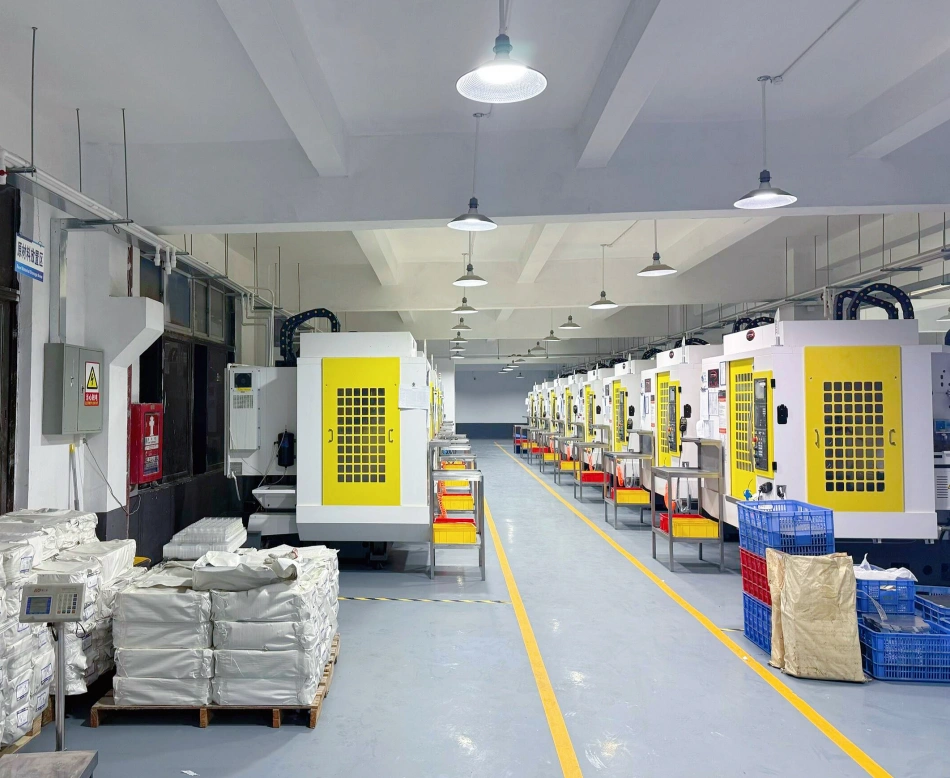
More Than Lower Cost. A Complete Manufacturing Ecosystem.
China’s advantage in CNC machining is not based on labor cost alone. The real strength comes from a highly developed network of machine shops, material suppliers, surface finishing partners, tooling specialists, inspection resources and international logistics. For global buyers, this integrated supply chain can simplify complex projects from prototype to repeat production.
In the Pearl River Delta, these manufacturing resources are concentrated within one of China’s most established industrial regions, helping reduce coordination time between machining, secondary processes and shipment.
Competitive Manufacturing Cost
Competitive machine rates, efficient production planning and a mature industrial supply network can reduce manufacturing costs, particularly for machining-intensive and repeat-production components.
Broad Material Availability
Common aluminum, stainless steel, carbon steel, copper, brass, titanium and engineering plastics are widely available, supporting both prototype projects and ongoing production.
Multiple Processes in One Supply Chain
CNC machining can be coordinated with heat treatment, anodizing, plating, grinding, EDM, polishing, laser marking and assembly without building a separate supplier network for every process.
Prototype to Production Scalability
The same manufacturing region can support one-off prototypes, low-volume batches and repeat production, making it easier to scale a part after design validation.
Fast Project Coordination
When machining, finishing, tooling and logistics partners are located within a concentrated industrial region, secondary processes can often be coordinated with fewer handoffs and less transportation between suppliers.
Established Export Infrastructure
Southern China is well connected to international express, air freight and ocean freight routes, helping manufacturers serve customers across North America, Europe and other global markets.
Why Dongguan & the Pearl River Delta Matter for CNC Buyers
CNCTAL is located in Dongguan, Guangdong, within one of China’s most developed manufacturing regions. For CNC buyers, this location means access to a concentrated network of machining, materials, secondary processes, engineering support and international logistics.
CNC Machining Works Better When the Supply Chain Is Close
Precision parts often require much more than milling or turning. A single project may involve raw material sourcing, heat treatment, anodizing, grinding, laser marking, inspection, assembly and export packaging. Being located inside the Pearl River Delta helps these processes stay connected.
Aluminum, stainless steel, tool steel, copper, brass, titanium and engineering plastics can be sourced through established regional supply channels.
Anodizing, plating, passivation, polishing, heat treatment, grinding, EDM and laser marking can be coordinated locally.
Dongguan is positioned close to major logistics infrastructure in Shenzhen, Guangzhou and Hong Kong, supporting express, air freight and ocean shipments.
When suppliers and supporting processes are located nearby, project communication, rework, finishing and final inspection can be coordinated more efficiently.
Electronics, automation, robotics, engineering and global logistics.
Industrial supply, materials, transportation and export infrastructure.
Metals, industrial manufacturing, machinery and supporting processes.
International trade connections, air cargo and global business access.
CNC Machining Cost: China vs USA
China often offers lower CNC machining costs, especially for parts with longer cycle times, multiple operations or repeat production. However, the quoted machining price is only one part of the sourcing decision. Buyers should compare the total landed cost of conforming parts delivered to their facility.
Indicative 2026 market ranges only. Actual rates vary by machine, tolerance, material, factory capability, certification and project complexity.
Indicative 2026 market ranges only. Rates vary significantly by state, machine platform, shop overhead, certification and scheduling demand.
| Cost Factor | China / Dongguan | USA | What It Means for Buyers |
|---|---|---|---|
| Machine Hour Cost | Generally lower | Generally higher | Greater savings on parts with long machining cycles or multiple operations. |
| Programming & Setup | Competitive | Higher labor overhead | Cost difference becomes more important on prototype and low-volume work. |
| Surface Finishing | Dense supplier network | Often higher outsourced cost | Anodizing, plating and polishing can often be bundled into one production project in China. |
| Material Cost | Competitive | Varies by alloy and source | Material savings may be smaller than machining savings, especially for globally traded metals. |
| Freight | International freight required | Domestic freight advantage | Heavy, bulky and low-value parts may lose part of the machining cost advantage during shipping. |
| Urgent Turnaround | International transit required | Best for immediate local demand | Domestic machining can be preferable for parts needed within one or two days. |
| Repeat Production | Strong cost scalability | Higher recurring machine cost | China becomes more attractive when setup and logistics can be spread across larger or recurring orders. |
Compare Total Landed Cost — Not Just Unit Price
A lower machine-hour rate does not automatically mean the lowest delivered cost. A professional sourcing comparison should include every cost required to receive usable, inspected parts.
Projects That Benefit Most from China Sourcing
The cost advantage is usually strongest where machining time, process complexity and repeat production make up a large share of the total part cost.
Very urgent one-off parts, extremely heavy components, low-value bulky parts or projects requiring domestic manufacturing may be better suited to a local supplier. The right decision depends on geometry, quantity, machining time, quality requirements, freight and delivery schedule.
Is CNC Machining Quality in China Reliable?
Yes — but quality depends far more on the supplier’s engineering capability, process control and inspection system than on the country where the parts are made. Buyers should evaluate how a CNC supplier reviews drawings, controls production and verifies critical dimensions before shipment.
A Low Price Means Little If the Parts Do Not Meet the Drawing
Precision CNC sourcing should not be based on price alone. Tolerances, material verification, surface finish, thread quality, cosmetic requirements and inspection documentation all affect whether the delivered parts can be used without additional sorting or rework.
The better question is: “Does this supplier have the engineering review, machining capability and inspection process required for my specific part?”
Review 2D drawings, STEP models, tolerances, GD&T, threads, surface requirements and critical features before manufacturing begins.
Confirm specified material grade and maintain supporting material documentation where required by the project.
Check critical dimensions during production before continuing with the full batch.
Use appropriate inspection equipment including calipers, micrometers, height gauges, thread gauges and CMM measurement when required.
Inspect anodizing, plating, polishing, laser marking, appearance and handling condition before packaging.
Inspection reports, material certificates or other quality documents can be prepared according to project requirements before shipment.
Before choosing a supplier, look beyond the quotation. These six areas provide a more useful indication of whether the manufacturer can consistently deliver engineering-grade parts.
Engineering Drawing Review
A capable supplier should understand 2D drawings, tolerances, GD&T, threads and critical-to-function dimensions before quoting or starting production.
Realistic Tolerance Capability
Reliable suppliers should distinguish between standard machining tolerances and genuinely tight features instead of claiming extreme tolerances on every dimension.
Inspection Equipment
Ask how critical dimensions are measured and whether the supplier has access to appropriate gauges, CMM inspection and documented measurement methods.
Material Traceability
For projects requiring certified material grades, confirm whether the supplier can provide material certificates or traceable purchasing documentation.
Process Control
Repeat production requires controlled setup, machining parameters, inspection checkpoints and clear handling of non-conforming parts.
Inspection Documentation
Inspection reports, dimensional records and project-specific documentation make it easier for buyers to verify quality before parts leave the factory.
A well-managed CNC manufacturer in China can provide stable quality, documented inspection and repeatable production — but buyers should always verify the supplier’s actual equipment, engineering process, quality controls and communication before placing important production orders.
From CNC Machining to Finished, Ready-to-Ship Parts
Many precision parts require far more than milling or turning. A complete project may include heat treatment, grinding, anodizing, plating, laser marking, inspection, assembly and protective packaging. One of the strengths of manufacturing in Dongguan and the Pearl River Delta is the ability to coordinate these processes through a connected industrial supply network.
Complex CNC Projects Often Depend on More Than the Machine Shop
A machined component may leave the CNC machine only halfway through its manufacturing route. Tight-tolerance steel parts may require heat treatment and grinding. Aluminum housings may require anodizing, laser marking and assembly. Stainless components may require passivation or polishing before final inspection.
When these operations are spread across unrelated suppliers, every handoff creates additional scheduling, transportation and communication risk. A mature regional supply chain can make the overall project easier to coordinate.
The real value is having one manufacturing partner coordinate machining, approved secondary processes, inspection and shipment around the same drawing requirements and delivery schedule.
CNC Machining
3-axis and 5-axis milling, CNC turning, turn-mill work and precision machining for prototypes through production batches.
Heat Treatment
Hardening, tempering, stress relief and other treatment routes can be coordinated when required by the material and drawing.
Grinding & EDM
Secondary precision processes can be used where machining alone cannot efficiently achieve the required geometry or final tolerance.
Surface Finishing
Anodizing, plating, passivation, polishing, blasting and laser marking can be coordinated to meet functional and cosmetic needs.
Inspection
Dimensional inspection, gauges, CMM measurement and project-specific reports can be integrated before the parts are released for shipment.
Assembly & Export Packaging
Hardware installation, simple assembly and protective export packaging can reduce handling work after the parts arrive.
What CNC Parts Are Best Suited for Sourcing from China?
China is not automatically the right sourcing location for every machined component. The strongest opportunities are usually projects where machining time, process complexity, production volume and secondary operations represent a meaningful share of the total delivered cost.
The Best Sourcing Projects Have More Than a Low Material Cost
If most of a part’s value comes from machining, programming, multiple setups, finishing and inspection, the manufacturing economics can make overseas sourcing attractive.
This is especially relevant for engineered components that are ordered repeatedly or require several manufacturing processes before they are ready for use.
Complex Milled Components
Parts with pockets, multiple faces, precision bores, compound geometry and longer CNC cycle times can benefit significantly from competitive machining costs.
Precision Turned Parts
Shafts, bushings, sleeves, pins, threaded components and turned parts with repeat quantities are well suited to efficient CNC turning and turn-mill production.
Aluminum Housings & Enclosures
Machined housings often combine substantial material removal, threaded features, cosmetic requirements and anodizing, making integrated production valuable.
Multi-Process Components
Parts requiring machining plus heat treatment, grinding, plating, passivation or other secondary operations can benefit from a concentrated manufacturing supply chain.
Repeat Production Parts
Once programming, fixtures and inspection methods are established, repeat orders can benefit from a stable production process and lower recurring setup impact.
Inspection-Critical Components
Engineering parts with defined tolerances, GD&T and documented inspection requirements can be sourced effectively when the supplier has appropriate quality controls.
There is no single ideal order quantity. Geometry, setup time, material, finishing and freight determine whether overseas manufacturing makes economic sense.
Suitable when the part is complex enough that machining cost outweighs international logistics.
Often a strong fit for custom machinery, automation and specialized equipment components.
Setup, programming and inspection costs can be distributed across a larger number of parts.
Process optimization, dedicated tooling and repeat scheduling can become increasingly important.
Ready to Source CNC Machined Parts from China?
Send CNCTAL your drawings and project requirements for an engineering review and manufacturing quotation. From prototypes to repeat production, we help international buyers turn CAD files into inspected, finished CNC machined parts.
From Your CAD Files to a Manufacturing Plan
You do not need to prepare a complicated sourcing package. Send the information you already have, and our team can review the project for machining feasibility, materials, tolerances, finishing requirements and production quantity.
Send STEP, STP, IGS, DWG, DXF, STL or PDF files together with the part quantity and material requirements.
We review geometry, tolerances, material, surface finish, critical features and the manufacturing route before quotation.
Get pricing, production lead time and manufacturing details based on your actual part requirements — not a generic machine-hour estimate.
Upload Your CAD Files
Tell us what you need to manufacture. Our engineering team will review the project and prepare a quotation based on your drawing, quantity and quality requirements.