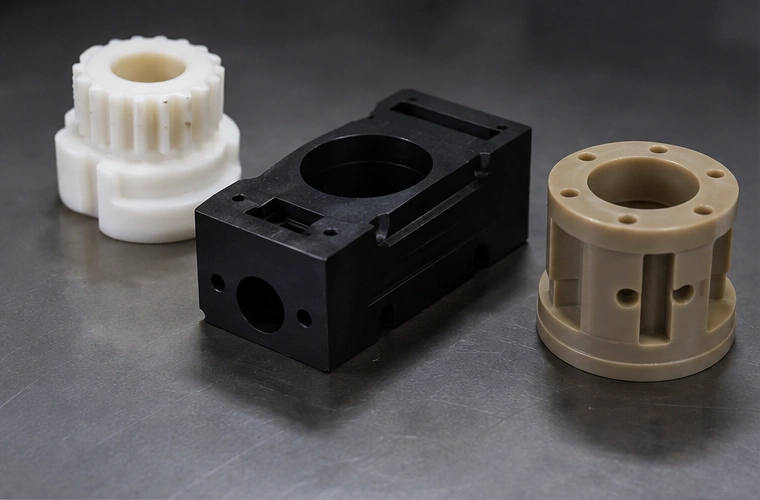

Surface Finishing Guide
Surface Finishing Options for Stainless Steel CNC Parts
Stainless steel CNC parts often need more than accurate machining. The right surface finish can improve appearance, corrosion resistance, cleanability, and long-term performance in industrial, medical, food, and marine applications.
Why Surface Finishing Matters for Stainless Steel Parts
Stainless steel is widely used in CNC machining because it offers strength, corrosion resistance, and a clean metallic appearance. However, machining alone does not always deliver the final surface condition required by the application.
A proper surface finish can reduce machining marks, improve corrosion resistance, make the part easier to clean, and create a more professional product appearance. For visible or high-performance parts, finishing is often just as important as machining accuracy.
Improves the visual quality of visible stainless steel parts.
Helps protect parts used in harsh or humid environments.
Supports medical, food-grade, and sanitary applications.
Makes the finished component look more professional.
1. As-Machined Finish
An as-machined finish is the most basic option. After CNC milling or turning, the part is cleaned and shipped without additional finishing. Tool marks may still be visible, but this is often acceptable for internal mechanical parts.
This finish is suitable for functional prototypes, fixtures, structural parts, and components where appearance is not a major requirement. It is also the fastest and most cost-effective option.
2. Brushed Finish
A brushed finish creates a uniform linear grain pattern on the stainless steel surface. It removes minor machining marks and gives the part a clean industrial appearance.
Brushed stainless steel is commonly used for equipment panels, machine housings, electronics enclosures, consumer products, and visible metal parts. It also helps hide small scratches during daily use.
3. Polished Finish
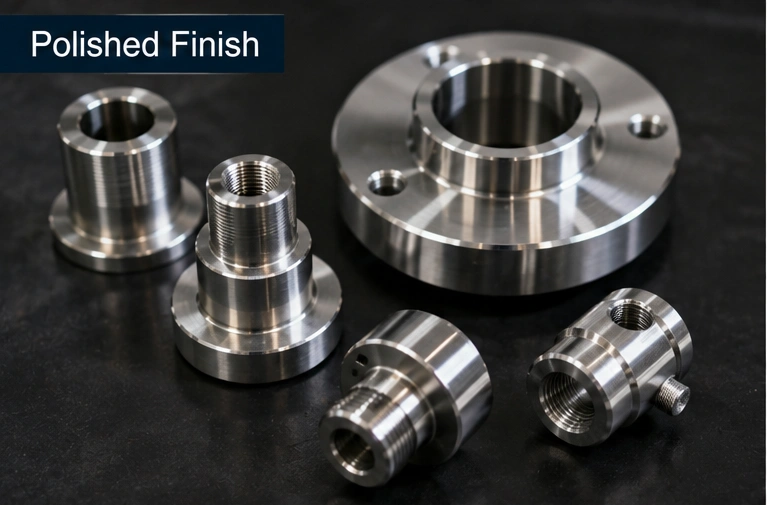
Polishing removes surface imperfections and creates a smoother, more reflective surface. Depending on the polishing level, the appearance can range from satin-like to bright and reflective.
Polished stainless steel is often used for medical equipment, food processing components, decorative hardware, and consumer products. It improves appearance and can make the surface easier to clean.
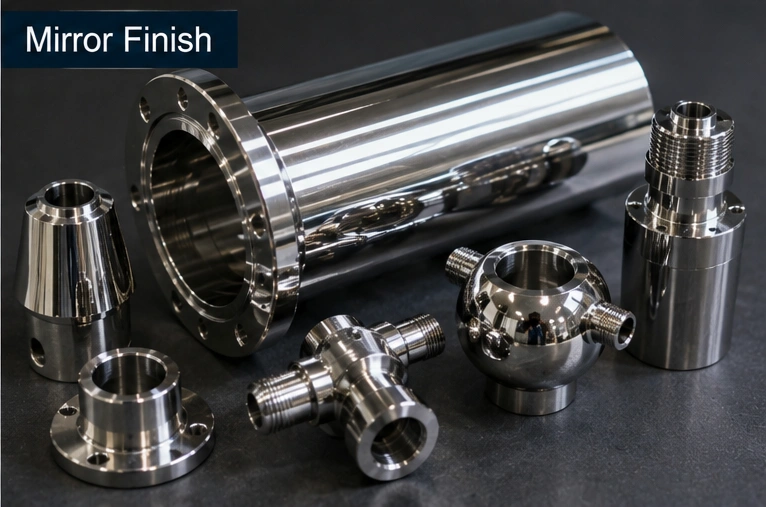
4. Mirror Polishing
Mirror polishing is a higher-level finishing process that creates an almost glass-like reflective surface. It normally requires multiple polishing stages and more manual work.
This finish is often selected for luxury products, pharmaceutical equipment, medical parts, and high-end visible components. It offers a premium appearance but is usually more expensive than standard polishing.
5. Bead Blasting
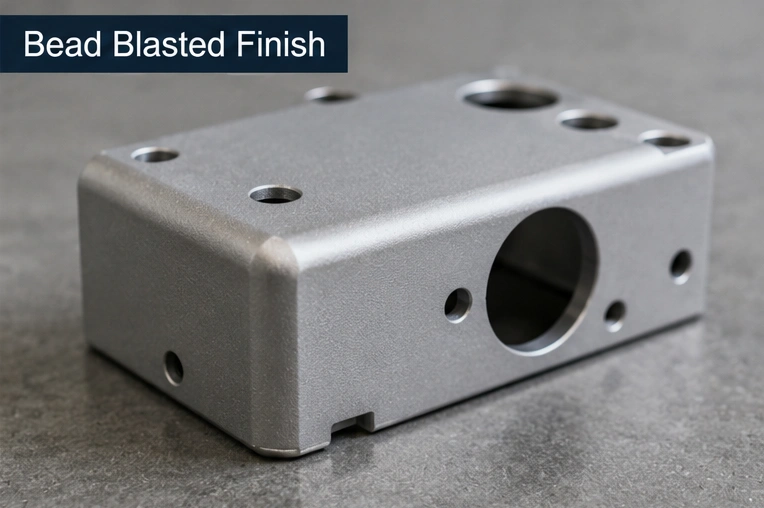
Bead blasting uses fine media to create a uniform matte texture. It removes sharp reflections and gives stainless steel a modern, non-reflective industrial look.
This process is widely used for robotics parts, automation equipment, electronics housings, aerospace components, and precision mechanical parts. It is a good choice when a clean matte surface is required.
6. Passivation
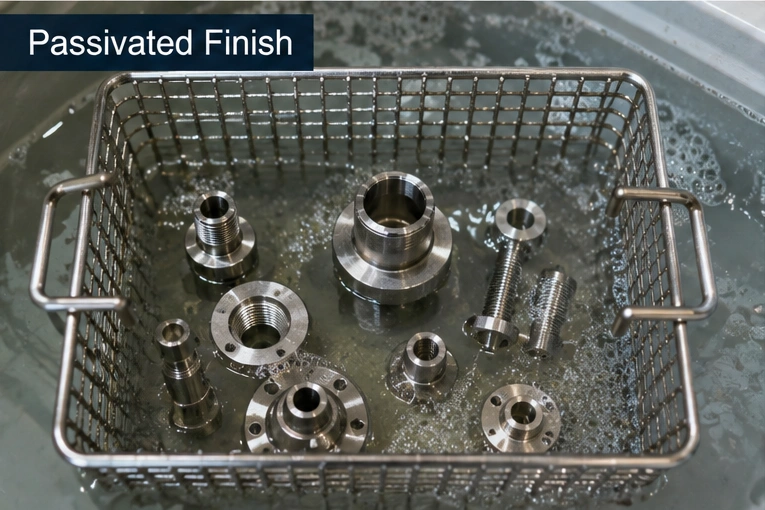
Passivation is one of the most important finishing processes for stainless steel CNC parts. Unlike polishing or blasting, passivation does not significantly change the appearance of the part.
The process chemically removes free iron contamination from the surface and helps strengthen the natural chromium oxide layer. This improves corrosion resistance and long-term durability.
Passivation is commonly used for medical components, aerospace parts, food equipment, and precision industrial applications.
7. Electropolishing
Electropolishing is an electrochemical finishing process that removes a very thin layer of material from the surface. It smooths the part, improves cleanliness, and enhances corrosion resistance.
This finish is often used for medical devices, pharmaceutical systems, food-grade equipment, semiconductor components, and other critical stainless steel parts. It is usually considered a premium finishing option.
Comparing Common Stainless Steel Finishes
| Finish | Appearance | Main Benefit | Typical Cost |
|---|---|---|---|
| As Machined | Visible tool marks | Fast and economical | Low |
| Brushed | Linear satin texture | Clean industrial look | Low-Medium |
| Polished | Smooth and reflective | Better appearance and cleaning | Medium |
| Mirror Polished | High gloss reflection | Premium surface quality | High |
| Bead Blasted | Uniform matte texture | Modern non-reflective finish | Medium |
| Passivated | Minimal visual change | Improved corrosion resistance | Low-Medium |
| Electropolished | Ultra-smooth bright surface | Cleanliness and corrosion resistance | High |
How to Choose the Right Finish
The best surface finish depends on how the stainless steel CNC part will be used. For internal machine components, an as-machined finish may be enough. For visible parts, brushed, polished, or bead blasted finishes usually look better.
For medical, food-grade, chemical, or outdoor applications, corrosion resistance and cleanability become more important. In these cases, passivation or electropolishing may be the better choice.
Quick Selection Guide
Choose as-machined or brushed finish.
Choose brushed, polished, or bead blasted finish.
Choose passivation or electropolishing.
Choose polishing, passivation, or electropolishing.
Final Thoughts
Surface finishing is more than a cosmetic decision. The right finish can improve appearance, durability, corrosion resistance, cleanliness, and overall product value.
For stainless steel CNC parts, common options include as-machined, brushed, polished, mirror polished, bead blasted, passivated, and electropolished surfaces. Selecting the right finish early helps avoid unnecessary cost while ensuring the final part performs as expected.
Need Stainless Steel CNC Parts?
CNCTAL manufactures custom stainless steel CNC parts in 303, 304, 316, 17-4PH, and other engineering grades. We support CNC turning, CNC milling, precision inspection, and surface finishing options including polishing, bead blasting, passivation, and electropolishing.
Request a QuoteFAQ
FAQ: Surface Finishing for Stainless Steel CNC Parts
What is the best surface finish for stainless steel CNC parts?
It depends on the application. For appearance, brushed, polished, or bead blasted finishes are common. For corrosion resistance, passivation or electropolishing is often recommended.
Does stainless steel need passivation after CNC machining?
Passivation is recommended for many stainless steel CNC parts, especially those used in medical, food, marine, or outdoor applications. It helps remove surface contamination and improves corrosion resistance.
What is the difference between polishing and electropolishing?
Polishing is a mechanical process that smooths the surface and improves appearance. Electropolishing is an electrochemical process that removes a very thin layer of metal, improving smoothness, cleanliness, and corrosion resistance.
Can stainless steel CNC parts be bead blasted?
Yes. Bead blasting is commonly used on stainless steel CNC parts to create a uniform matte surface. It is often used for robotics components, automation parts, electronics housings, and visible industrial parts.
Which finish is best for food-grade or medical stainless steel parts?
Food-grade and medical stainless steel parts often use polishing, passivation, or electropolishing. These finishes can improve cleanability, corrosion resistance, and surface consistency.