
Industry Applications
CNC Machining for Medical Device Components
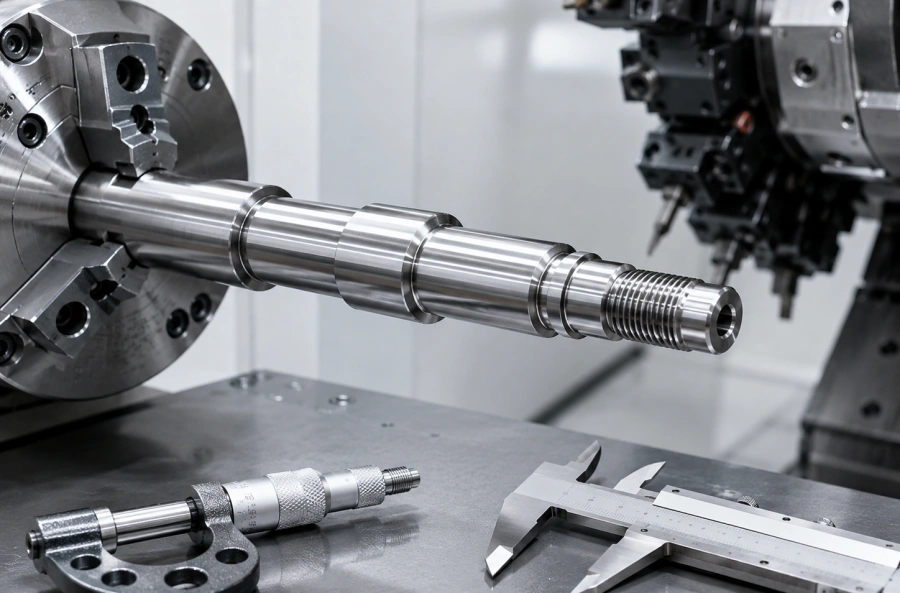
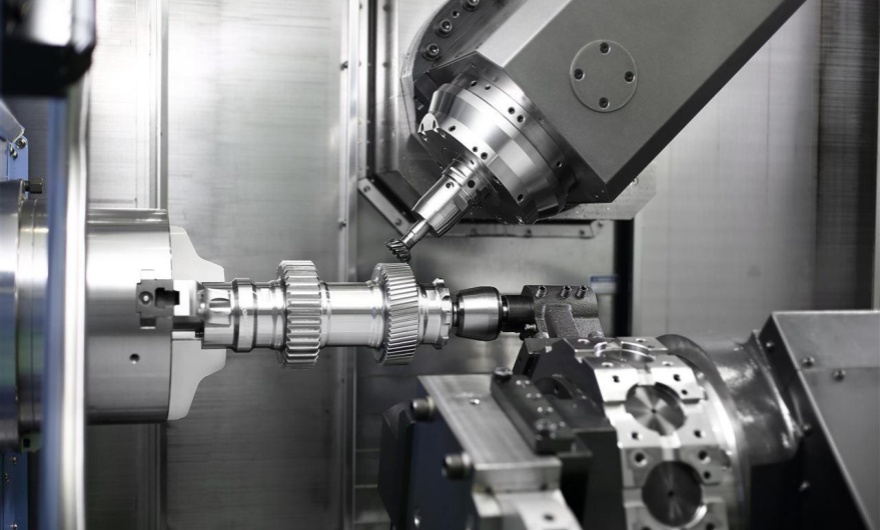
Medical equipment requires precision, consistency, and reliable manufacturing. CNC machining helps produce high-quality components for diagnostic systems, laboratory instruments, surgical equipment, and medical machinery.
Why CNC Machining Matters in Medical Equipment Manufacturing
Medical device components often need more than basic dimensional accuracy. They must support stable performance, reliable assembly, clean surfaces, and long-term durability.
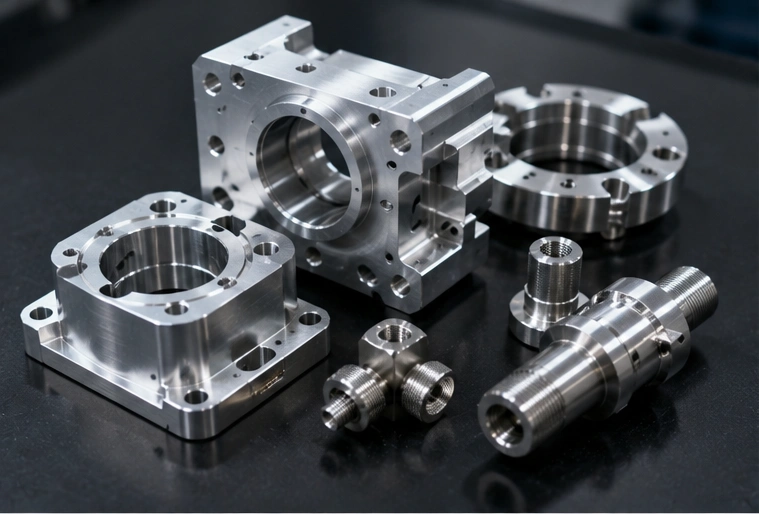
For diagnostic machines, laboratory systems, imaging equipment, and surgical devices, even a small machining error can affect fit, function, or equipment reliability. CNC machining is widely used because it can produce complex geometries with repeatable precision.
Precision machining for critical features and mating parts.
Stainless steel, aluminum, titanium, PEEK, POM, PC, and more.
Stable processes from prototype to production runs.
Polishing, passivation, bead blasting, anodizing, and more.
Common Medical Device Components Made by CNC Machining
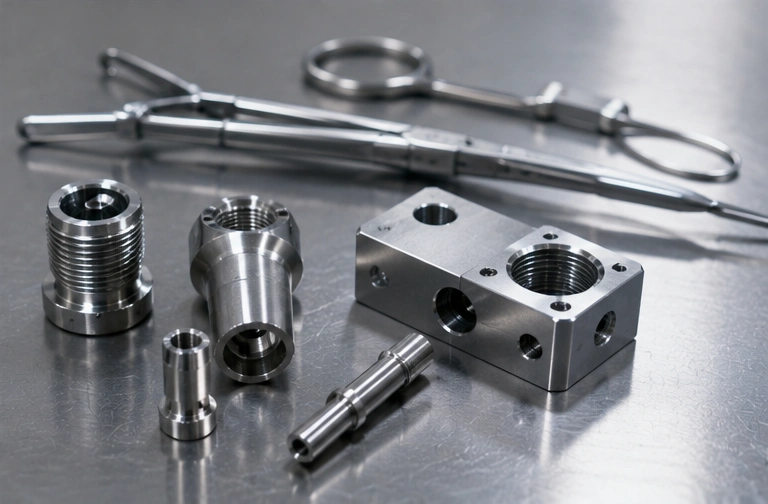
CNC machining is suitable for many non-implantable medical equipment components. These parts are often used inside machines, assemblies, housings, fixtures, and precision mechanical systems.
Diagnostic Equipment Components
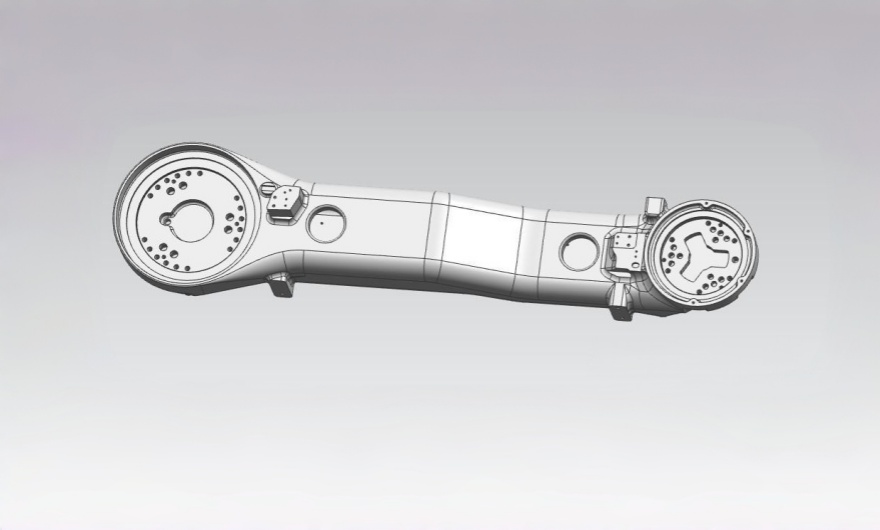
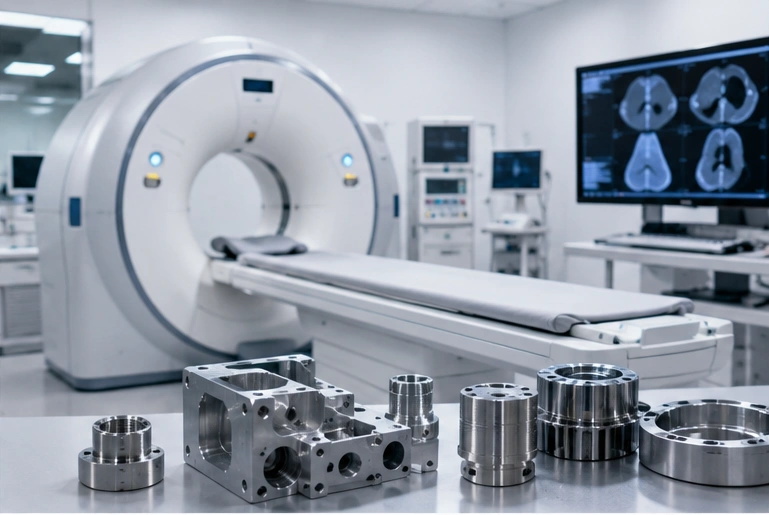
MRI brackets, CT scanner structural parts, X-ray equipment housings, sensor mounts, and support frames.
Surgical Equipment Components
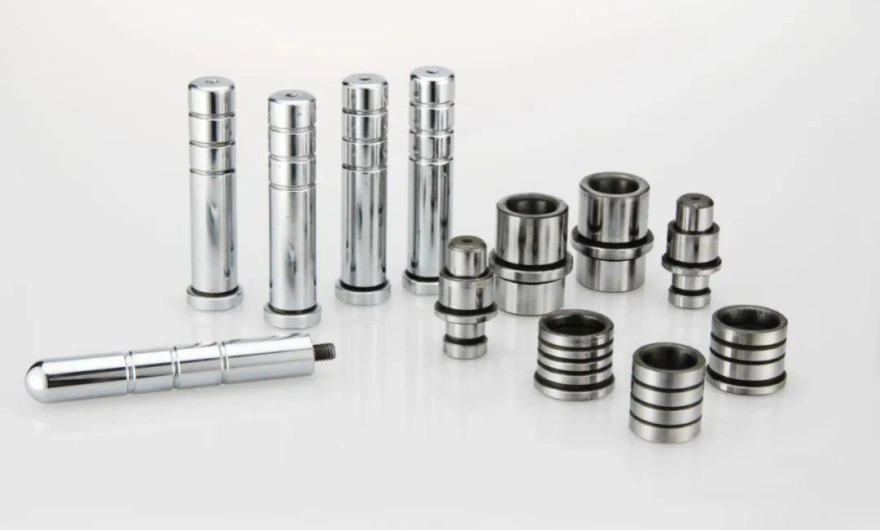
Instrument handles, positioning fixtures, equipment supports, mechanical assemblies, and precision hardware.
Laboratory Equipment Parts
Sample holders, fluid control components, analytical instrument parts, custom test fixtures, and housings.
Medical Equipment Enclosures
Aluminum housings, stainless steel covers, electronic equipment frames, and control system components.
Materials Used for Medical CNC Machining
Material selection depends on strength, corrosion resistance, weight, surface cleanliness, and application environment. Medical equipment components often use stainless steel, aluminum, titanium, and engineering plastics.
| Material | Common Grades | Key Benefits | Typical Applications |
|---|---|---|---|
| Stainless Steel | 304, 316, 17-4PH | Corrosion resistance, strength, cleanability | Equipment parts, surgical tools, laboratory components |
| Aluminum | 6061, 7075 | Lightweight, machinable, good strength-to-weight ratio | Housings, frames, portable equipment parts |
| Titanium | Grade 2, Grade 5 | High strength, low weight, excellent corrosion resistance | Specialized precision medical equipment parts |
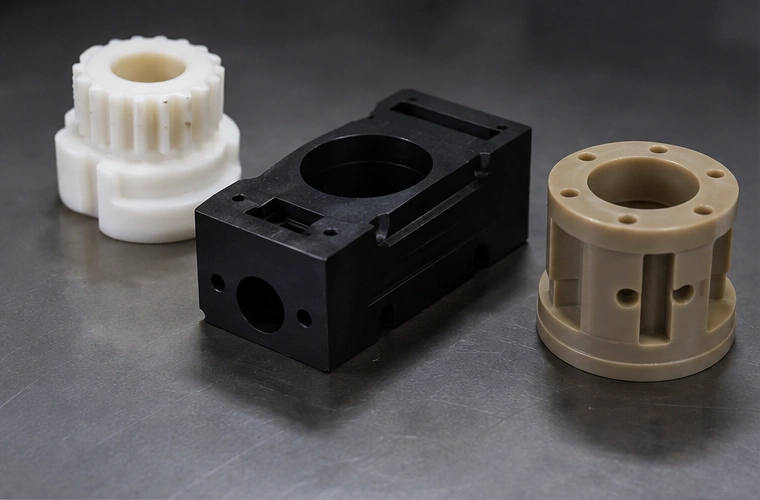
| Engineering Plastics | PEEK, POM, PC, Nylon | Lightweight, insulation, chemical resistance | Test devices, laboratory systems, equipment components |
Tight Tolerances and Dimensional Control
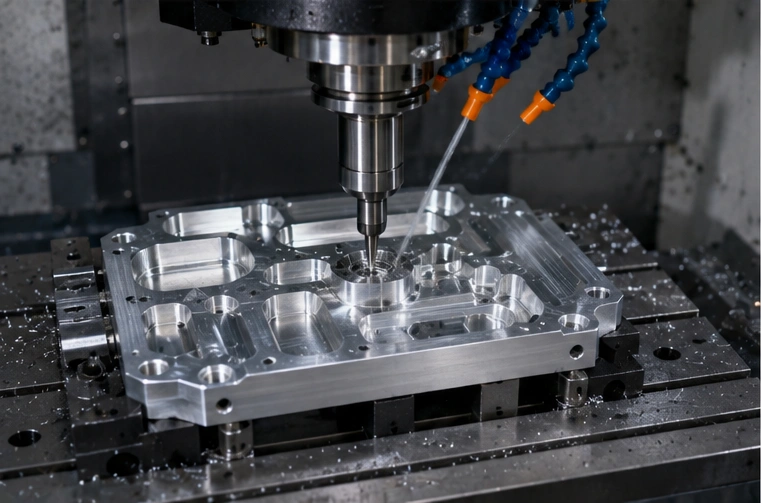
Medical equipment often requires tighter tolerances than standard industrial products. Precision mating surfaces, sensor mounts, moving assemblies, and fluid-related components may all require careful dimensional control.
Typical CNC machining requirements may include ±0.01 mm general precision, controlled surface roughness, precise hole positions, and stable repeatability across production batches.
Surface Finishing for Medical Device Components
Surface quality is important for many medical equipment parts. A proper finish can improve appearance, cleanability, corrosion resistance, and overall product value.
- Polishing: creates smoother surfaces and improves cleanability.
- Passivation: improves corrosion resistance for stainless steel components.
- Electropolishing: provides a very smooth surface for demanding applications.
- Bead Blasting: creates a uniform matte appearance for visible equipment parts.
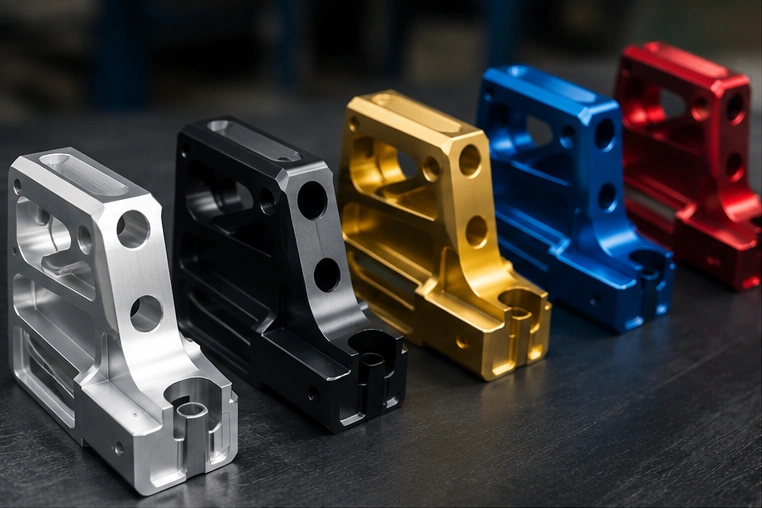
- Anodizing: improves appearance and surface protection for aluminum parts.
Quality Control in Medical CNC Machining
A reliable machining supplier should not only produce parts, but also control quality throughout the full process. This includes material verification, in-process checks, final inspection, and documentation when required.
Material verification and preparation
CNC machining with controlled process parameters
In-process dimensional checks
Surface finishing and cleaning
Final inspection and packaging
Prototype to Production Manufacturing
Medical equipment projects often start with prototypes before moving into small-batch or production manufacturing. CNC machining is suitable for all stages because it does not require expensive tooling and can support design revisions quickly.
For production runs, stable machining processes and repeatable inspection standards help ensure consistent part quality.
Choosing the Right CNC Machining Partner
Medical equipment manufacturers should look beyond unit price when selecting a CNC machining supplier. Precision capability, material knowledge, inspection equipment, finishing support, and engineering communication all matter.
A good supplier helps reduce manufacturing risk, improve reliability, and support faster product development.
Need Precision CNC Machined Medical Device Components?
CNCTAL manufactures custom CNC machined components for medical equipment, laboratory instruments, diagnostic systems, and precision industrial applications. We support CNC milling, CNC turning, stainless steel machining, aluminum machining, engineering plastics, surface finishing, and precision inspection.
Request a QuoteFAQ
FAQ: CNC Machining for Medical Device Components
Why is CNC machining used for medical device components?
CNC machining is used for medical device components because it can produce precise, repeatable, and complex parts from materials such as stainless steel, aluminum, titanium, and engineering plastics.
What medical components can be made by CNC machining?
CNC machining can produce diagnostic equipment parts, laboratory instrument components, surgical equipment parts, medical equipment housings, sensor mounts, brackets, fixtures, and precision mechanical assemblies.
What materials are commonly used for medical CNC machined parts?
Common materials include 304 stainless steel, 316 stainless steel, 17-4PH stainless steel, 6061 aluminum, 7075 aluminum, titanium, PEEK, POM, polycarbonate, and nylon.
What tolerances can CNC machining achieve for medical components?
For precision medical equipment components, CNC machining can commonly achieve tolerances around ±0.01 mm, depending on material, part geometry, feature size, and inspection requirements.
What surface finishes are used for medical CNC parts?
Common surface finishes include polishing, passivation, electropolishing, bead blasting, anodizing, and standard as-machined finishes. The best option depends on cleanliness, corrosion resistance, appearance, and application requirements.