
AI Cooling Manufacturing Guide
AI Liquid Cooling Connectors: Materials, Design and Manufacturing Guide
As AI servers and high-performance computing systems generate more heat, liquid cooling connectors have become critical components for reliable thermal management. Material selection, sealing design, CNC machining accuracy, and quality control all directly affect connector performance.
Why Liquid Cooling Connectors Matter in AI Infrastructure
Modern AI servers use powerful GPUs and high-density computing hardware that generate significant heat during operation. For many systems, traditional air cooling is no longer enough, so liquid cooling is becoming an important solution for improving thermal performance.
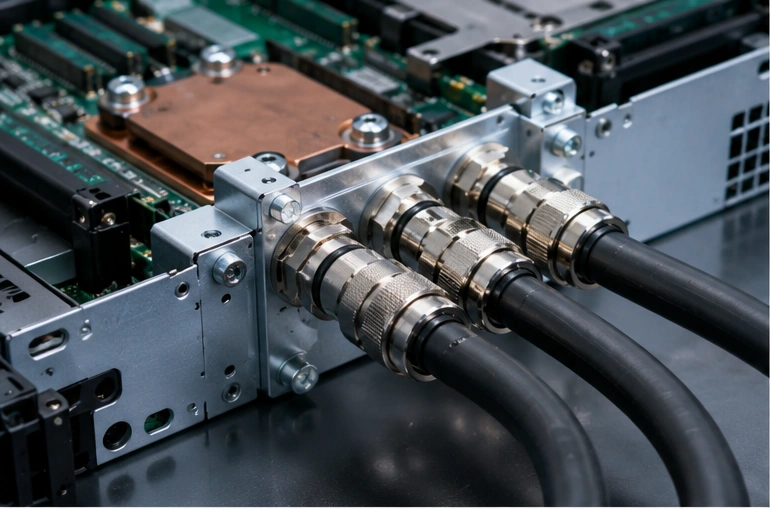
Liquid cooling connectors may look like small parts, but they are critical to system reliability. A poorly manufactured connector can cause leakage, pressure loss, cooling failure, downtime, or even equipment damage.
O-ring grooves, threads, and mating surfaces must be machined with stable precision.
Smooth internal channels help reduce pressure drop and support cooling performance.
Aluminum, brass, stainless steel, and plastics must match coolant and environment requirements.
Consistent inspection and process control are essential for production connector parts.
Common Applications of AI Liquid Cooling Connectors
AI liquid cooling connectors are used throughout the cooling loop, from server-level systems to rack-level coolant distribution networks. Different applications require different connector sizes, sealing structures, and materials.
Direct-to-Chip Cooling
Connectors transfer coolant between manifolds and cold plates mounted directly on CPUs, GPUs, and AI accelerators.
Cold Plate Assemblies
Precision connector parts are integrated into cold plates to maintain stable coolant flow and sealing performance.
AI Server Racks
Quick-disconnect connectors help support serviceability, maintenance, and system upgrades in rack-level cooling.
Data Center Cooling Networks
Large-scale systems rely on many connector points for coolant distribution and thermal management reliability.
Materials Used for Liquid Cooling Connectors
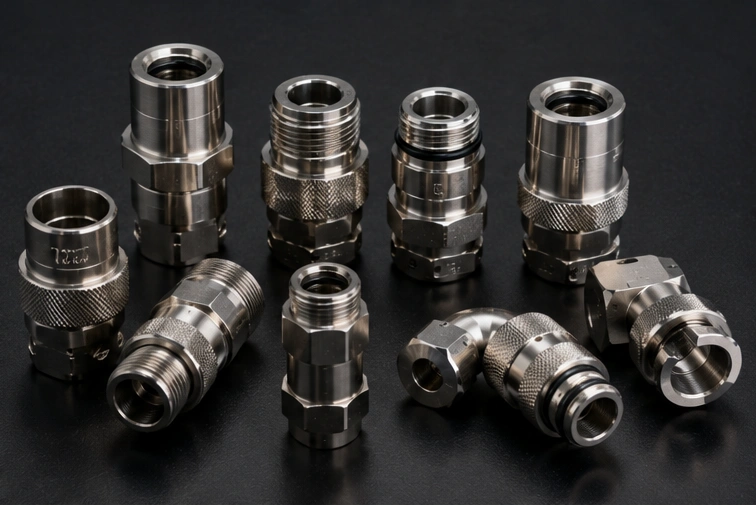
Material selection directly affects corrosion resistance, sealing reliability, weight, machinability, and total manufacturing cost. Common materials include aluminum, brass, stainless steel, and engineering plastics.
| Material | Common Grades | Main Benefits | Typical Applications |
|---|---|---|---|
| Aluminum | 6061, 6063 | Lightweight, good machinability, cost-effective | Connector housings, manifolds, cooling assemblies |
| Brass | C360, H59, H62 | Excellent machinability, good sealing, stable threads | Fluid fittings, threaded connector bodies, quick-connect parts |
| Stainless Steel | 304, 316 | High strength, corrosion resistance, long service life | Harsh environments, industrial cooling, corrosion-sensitive systems |
| Engineering Plastics | PEEK, PPS, POM, Nylon | Lightweight, insulation, chemical resistance | Inserts, retainers, secondary sealing components |
Key Design Considerations
Designing an AI liquid cooling connector is not only about creating a fluid passage. The connector must control leakage risk, maintain stable flow, handle pressure, and allow reliable assembly.
Sealing Structure
O-rings, double O-ring systems, radial seals, and face seals are commonly used. Groove geometry and surface finish must be controlled carefully to prevent leakage.
Internal Flow Path
Bore diameter, transitions, radii, and internal surface quality can affect pressure drop and coolant flow efficiency.
Quick Disconnect Function
Many AI cooling systems require connectors that support maintenance, replacement, and upgrades without draining the full loop.
Pressure Resistance
Connectors must withstand operating pressure and pressure spikes. Pressure testing and leak testing are often required.
CNC Machining Requirements for Liquid Cooling Connectors
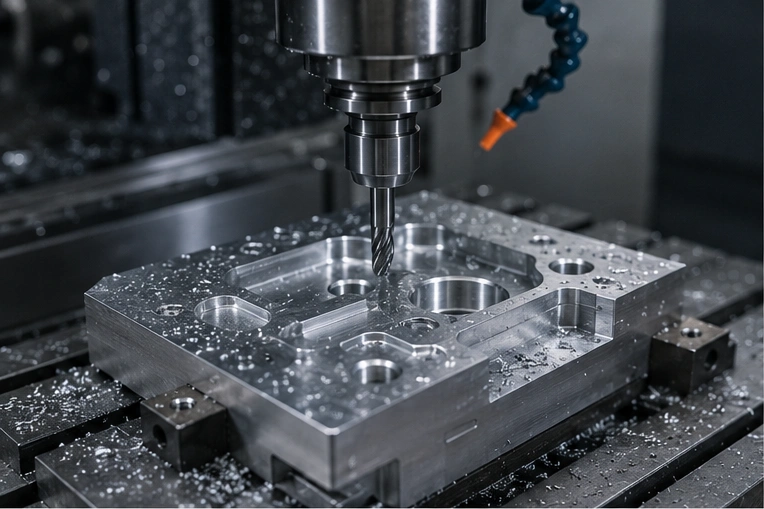
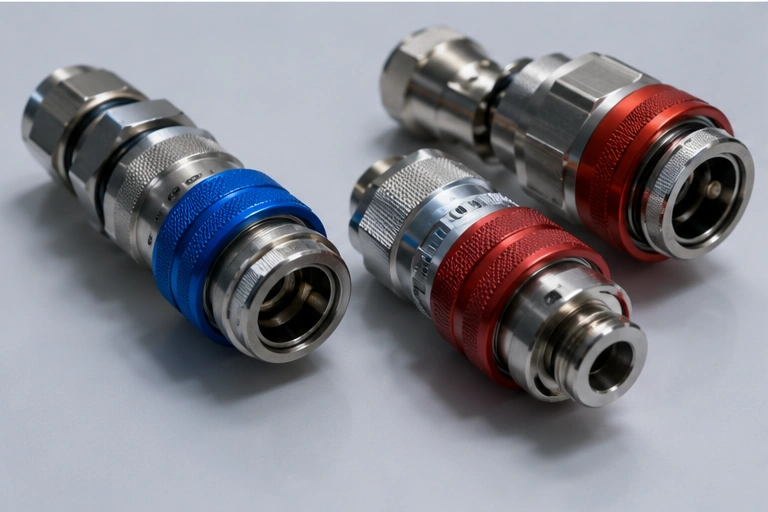
High-performance liquid cooling connectors often require CNC turning, CNC milling, drilling, threading, and multi-axis machining. Manufacturing accuracy directly affects sealing reliability and assembly performance.
- Precision Threads: BSPP, BSPT, NPT, and metric threads must be clean and consistent.
- O-Ring Grooves: Groove width, depth, surface finish, and edge quality must be controlled.
- Internal Flow Channels: Smooth internal passages help reduce pressure loss and support cooling efficiency.
- Concentricity Control: Connector mating features should align properly for reliable assembly.
- Surface Finish: Sealing areas and fluid contact surfaces often require better surface quality.
Surface Finishing Options
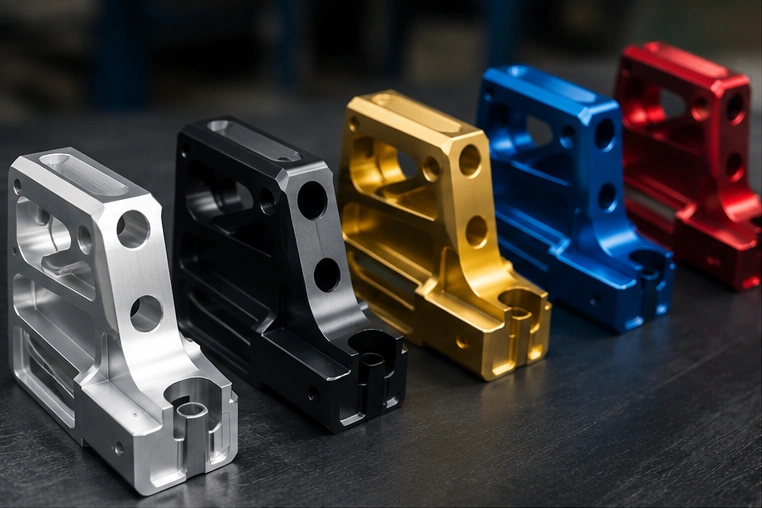
Surface treatment can improve corrosion resistance, wear resistance, appearance, and long-term durability. The right finish depends on material, coolant chemistry, and operating environment.
Anodizing: commonly used for aluminum connector housings and manifolds.
Nickel Plating: improves corrosion resistance and surface durability for metal fittings.
Passivation: recommended for stainless steel connectors to improve corrosion resistance.
Bead Blasting: creates a uniform matte finish before anodizing or plating.
Quality Control and Testing
AI liquid cooling systems demand reliable connector performance. For production connector parts, inspection should focus not only on general dimensions, but also on sealing areas, threads, internal passages, and surface quality.
Checks critical bores, lengths, grooves, and mating dimensions.
Confirms thread quality and assembly compatibility.
Verifies sealing reliability under specified conditions.
Confirms connector performance under operating pressure requirements.

Future Trends in AI Liquid Cooling Connectors
As AI computing power increases, liquid cooling systems are becoming more complex. Connector designs are moving toward higher flow rates, better sealing structures, faster quick-disconnect mechanisms, lightweight bodies, and integrated manifold solutions.
For manufacturers, this means tighter machining requirements, better process control, and stronger collaboration with thermal management engineers.
Final Thoughts
AI liquid cooling connectors may appear simple, but they are critical components in modern thermal management systems. Material selection, sealing design, machining precision, surface finishing, and testing all influence long-term reliability.
As AI data centers continue to expand, demand for precision-manufactured liquid cooling components will continue to grow.
Need Precision CNC Machined Liquid Cooling Components?
CNCTAL manufactures custom CNC machined liquid cooling components including connector bodies, manifolds, fittings, valve housings, cold plate parts, and thermal management assemblies. We support CNC turning, CNC milling, 5-axis machining, aluminum, brass, stainless steel, engineering plastics, precision inspection, and surface finishing.
Request a QuoteFAQ
FAQ: AI Liquid Cooling Connectors
What are AI liquid cooling connectors used for?
AI liquid cooling connectors are used to transfer coolant between cold plates, manifolds, server racks, and data center cooling systems. They help support reliable thermal management for high-power AI servers and computing hardware.
What materials are commonly used for liquid cooling connectors?
Common materials include aluminum, brass, stainless steel, and engineering plastics such as PEEK, PPS, POM, and nylon. The right material depends on coolant compatibility, corrosion resistance, pressure requirements, weight, and cost.
Why is CNC machining important for liquid cooling connectors?
CNC machining is important because liquid cooling connectors require precise threads, O-ring grooves, internal flow channels, sealing surfaces, and tight mating dimensions to reduce leakage risk and ensure reliable assembly.
What surface finishes are used for liquid cooling connector parts?
Common finishing options include anodizing for aluminum parts, nickel plating for metal fittings, passivation for stainless steel, and bead blasting for a uniform cosmetic surface before coating or plating.
What quality checks are important for AI liquid cooling connectors?
Important quality checks include dimensional inspection, thread inspection, O-ring groove verification, surface finish inspection, leak testing, and pressure testing based on the connector design and application requirements.