
CNC Machining for AI Liquid Cooling Components: Challenges and Solutions
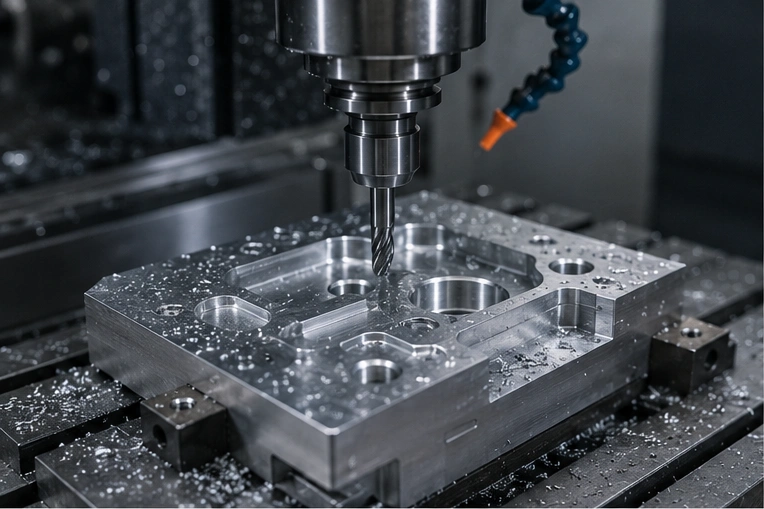
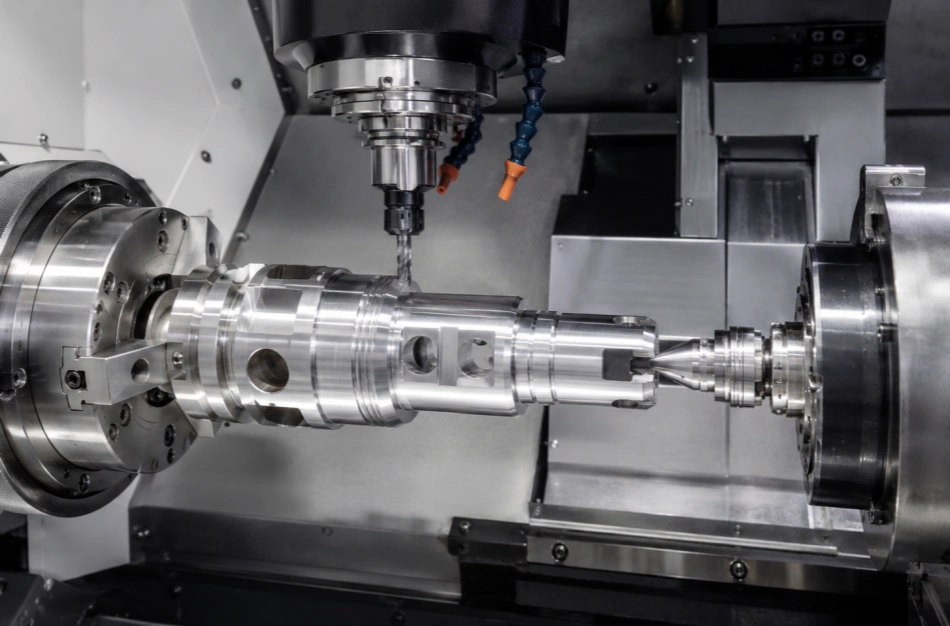
As AI servers and high-performance data centers move toward liquid cooling, precision CNC machining plays a critical role in producing reliable connectors, manifolds, cold plate housings, and leak-critical cooling components.
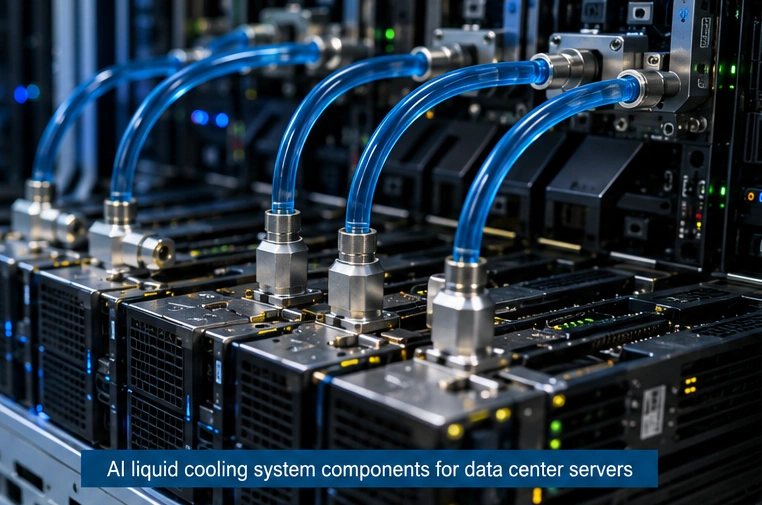
The rapid growth of artificial intelligence is changing the way data centers are designed. High-density GPUs generate far more heat than traditional air cooling systems can handle efficiently, so liquid cooling has become an important solution for modern AI infrastructure.
Behind each liquid cooling system are small but highly demanding mechanical parts. Liquid cooling connectors, quick-disconnect couplings, valve bodies, manifolds, and cold plate components must be machined with excellent accuracy, surface quality, and sealing reliability.
For CNC manufacturers, these parts are not easy. They combine tight tolerances, complex internal channels, thread accuracy, leak prevention, and strict cleanliness requirements. This article explains the main challenges and practical CNC machining solutions for AI liquid cooling components.
Why Precision Matters in AI Liquid Cooling Systems
Liquid cooling components are directly connected to thermal performance and system safety. A small defect on a sealing surface or thread may cause leakage, pressure loss, or unstable coolant flow.
In AI data centers, reliability is extremely important because cooling failure can affect expensive GPU servers and reduce system uptime. This is why liquid cooling hardware requires more than basic machining. It needs controlled process planning, stable CNC equipment, proper inspection, and clean post-processing.
Common AI Liquid Cooling Components Made by CNC Machining
AI liquid cooling systems use many precision-machined metal parts. Some are simple external fittings, while others require multi-axis machining, deep drilling, or high-precision sealing features.
Liquid Cooling Connectors
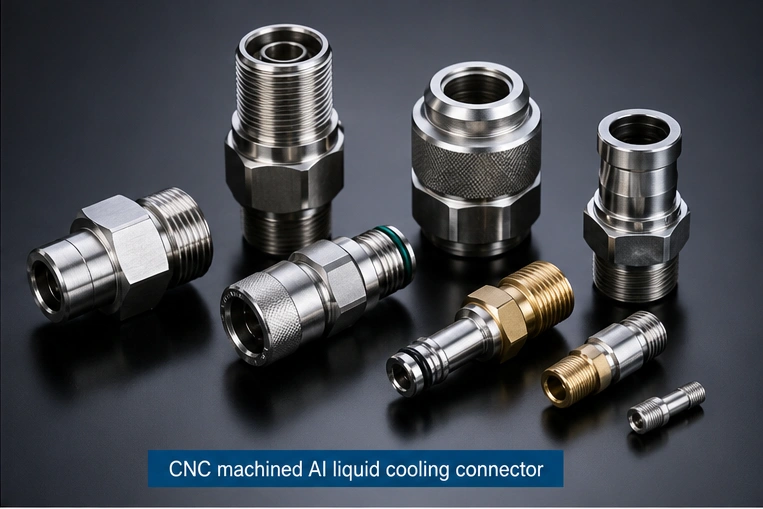
Used to connect coolant lines between servers, manifolds, and cooling distribution units. These parts often require precision threads, O-ring grooves, and smooth sealing surfaces.
Quick-Disconnect Couplings
Quick-disconnect components allow service without draining the whole cooling loop. Valve seats, internal bores, and concentricity are especially important.
Cold Plate Housings
Cold plates transfer heat from CPUs or GPUs to coolant. Flatness, internal flow paths, and sealing groove accuracy are key manufacturing points.
Cooling Manifolds
Manifolds distribute coolant to multiple channels or racks. They usually include multiple threaded ports, cross holes, and deep internal passages.
Challenge 1: Leak-Free Sealing Surfaces
The most important requirement for liquid cooling components is preventing coolant leakage. Many parts include O-ring grooves, face seals, tapered sealing areas, compression features, or precision mating surfaces.
If the groove depth, width, or surface finish is not controlled properly, the seal may fail during pressure testing or long-term use.
CNC Machining Solution
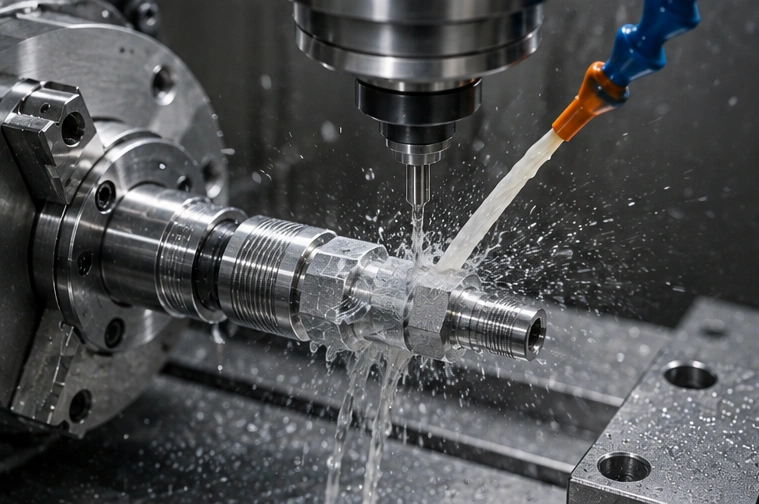
- Use precision CNC turning and milling for sealing features.
- Control O-ring groove depth, width, and corner radius carefully.
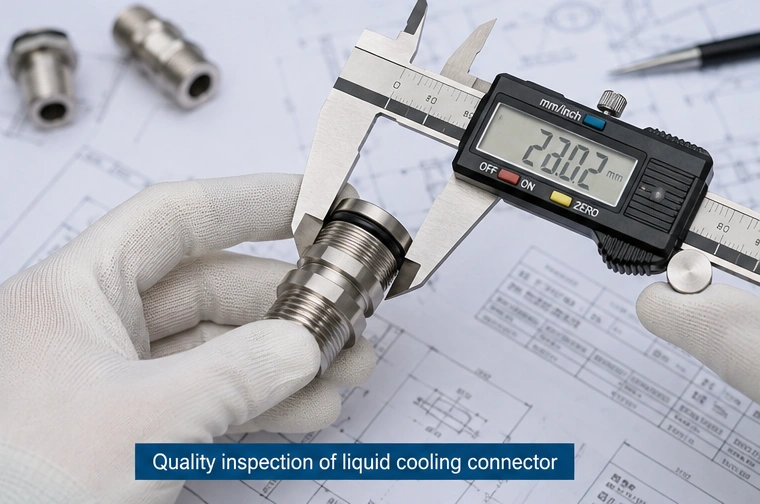
- Use CMM or optical inspection for critical dimensions.
- Apply fine finishing passes on sealing surfaces.
- Inspect sealing areas separately before shipment.
Challenge 2: Complex Internal Flow Channels
Many cooling components include internal coolant passages, cross holes, deep drilled channels, or flow cavities. These features are difficult because they must balance flow efficiency, strength, and manufacturability.
Poorly machined internal channels may create pressure drop, turbulence, burrs, or blocked flow paths.
CNC Machining Solution
- Use 3-axis, 4-axis, or 5-axis machining depending on part geometry.
- Plan drilling sequences carefully to avoid misalignment.
- Use proper tool length and rigid fixturing for deep holes.
- Apply deburring and flushing processes after machining.
- Optimize sharp internal corners during DFM review.
Challenge 3: Surface Finish and Flow Performance
Surface quality affects both sealing and coolant flow. Rough internal surfaces can increase resistance, trap particles, and reduce cooling efficiency.
For critical liquid cooling parts, surface finish is not only about appearance. It directly affects function.
CNC Machining Solution
- Use sharp cutting tools and stable cutting parameters.
- Apply fine finishing toolpaths on sealing and flow areas.
- Use reaming, boring, or polishing when required.
- Remove burrs from cross holes and internal passages.
- Control surface finish such as Ra 0.8–1.6 μm for critical areas when specified.
Challenge 4: Material Selection for Liquid Cooling Parts
Material selection depends on coolant type, pressure, weight, corrosion resistance, strength, and cost. Aluminum, brass, and stainless steel are common choices for AI liquid cooling components.
| Material | Main Advantages | Typical Applications |
|---|---|---|
| Aluminum 6061 | Lightweight, good machinability, cost-effective | Cold plate housings, cooling blocks, manifolds |
| Aluminum 7075 | Higher strength, good dimensional stability | High-strength structural cooling parts |
| Brass | Good sealing performance and corrosion resistance | Fittings, connectors, valve bodies |
| Stainless Steel 304 | Good corrosion resistance and durability | Industrial cooling connectors and adapters |
| Stainless Steel 316L | Better chemical and corrosion resistance | High-end liquid cooling systems |
Challenge 5: Thread Accuracy and Port Connections
Liquid cooling components often use BSPP, BSPT, NPT, G thread, or metric threads. Thread quality directly affects assembly, sealing, and service life.
Incorrect thread depth, poor surface finish, or wrong thread angle may cause leakage or installation problems.
CNC Machining Solution
- Use thread turning or thread milling according to part structure.
- Inspect threads with Go/No-Go gauges.
- Control thread concentricity with sealing surfaces.
- Avoid burrs at thread starts and cross-hole intersections.
- Confirm thread standard clearly before production.
Challenge 6: Burr Control and Cleanliness
Small metal chips or burrs inside a liquid cooling component can cause serious problems. They may block microchannels, damage pumps, or reduce coolant flow.
For AI liquid cooling parts, cleaning is part of the manufacturing process, not just a final appearance step.
CNC Machining Solution
- Manual and mechanical deburring after machining.
- Special attention to cross holes and internal passages.
- Ultrasonic cleaning or high-pressure flushing when required.
- Visual inspection of internal channels where possible.
- Clean packaging to reduce contamination before assembly.
How CNCTAL Supports AI Liquid Cooling Component Projects
At CNCTAL, we provide precision CNC machining services for custom metal and plastic components used in demanding industrial applications, including AI liquid cooling systems.
Our team can support prototype development, small batch production, and volume manufacturing for liquid cooling connectors, manifolds, cold plate parts, fittings, valve bodies, and other precision components.
Manufacturing Capabilities
- CNC turning
- CNC milling
- 4-axis and 5-axis machining
- Thread machining
- O-ring groove machining
Material Capabilities
- Aluminum 6061 / 7075
- Brass
- Copper
- Stainless Steel 304 / 316L
- Engineering plastics
Design Tips for Better CNC Machined Liquid Cooling Parts
Engineers can reduce cost and improve reliability by considering manufacturability early in the design stage.
- Avoid unnecessary sharp internal corners.
- Leave enough wall thickness around coolant channels.
- Clearly define sealing surface finish requirements.
- Specify thread standards and inspection requirements.
- Confirm pressure testing requirements before production.
- Use standard O-ring groove dimensions when possible.
- Provide 3D STEP files and 2D drawings for accurate quotation.
Conclusion
AI liquid cooling components require more than ordinary CNC machining. Leak prevention, surface finish, internal channel quality, thread accuracy, material compatibility, and cleanliness all affect final performance.
With the right machining strategy and quality control process, CNC manufacturers can produce reliable liquid cooling components for AI servers, data centers, and next-generation thermal management systems.
As AI hardware continues to become more powerful, precision CNC machining will remain an important part of the liquid cooling supply chain.
Need Custom AI Liquid Cooling Components?
Send us your 3D files, 2D drawings, material requirements, and quantity. CNCTAL engineers will review your project and provide feedback within 24 hours.
FAQ: CNC Machining for AI Liquid Cooling Components
What materials are commonly used for AI liquid cooling components?
Aluminum 6061, aluminum 7075, brass, stainless steel 304, and stainless steel 316L are commonly used. The best material depends on strength, weight, corrosion resistance, coolant compatibility, and cost.
Why are O-ring grooves important in liquid cooling connectors?
O-ring grooves directly affect sealing performance. If the groove depth, width, or surface finish is not accurate, the connector may leak under pressure.
Can CNC machining produce complex internal flow channels?
Yes. CNC milling, turning, deep-hole drilling, and 5-axis machining can produce many internal flow features. For very complex geometries, DFM review is recommended before production.
What information is needed for a quotation?
A 3D STEP file, 2D drawing, material grade, surface finish, tolerance requirements, quantity, and any pressure or leak testing requirements will help us provide an accurate quotation.