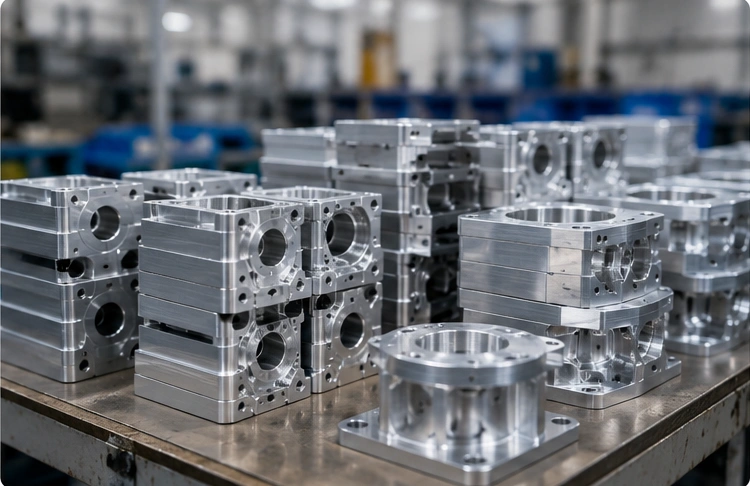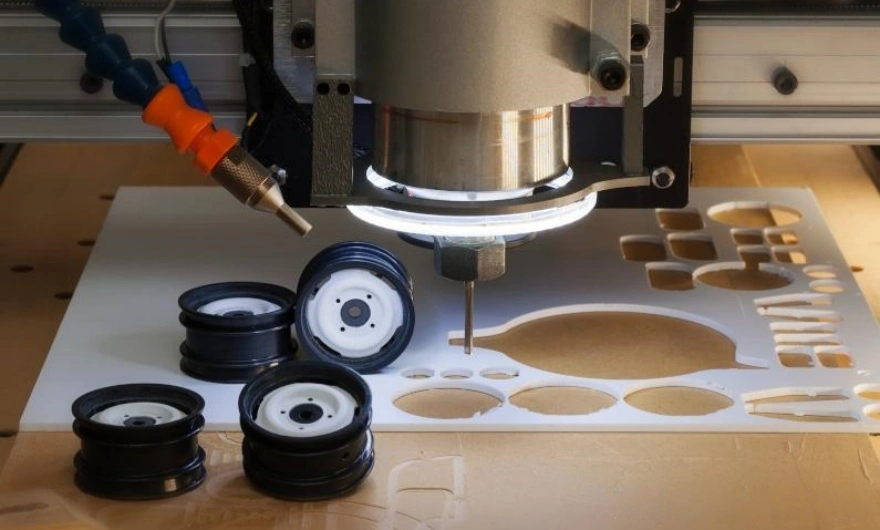

CNC Gear Machining: From Design to Quality Inspection
Gears are among the most important mechanical components in motion transmission systems. Whether used in robotics, automation equipment, gearboxes, industrial machinery, or precision instruments, a gear must transmit torque smoothly, accurately, and reliably.
At first glance, a gear may look like a simple round component with teeth. But in real manufacturing, gear machining is much more complex than cutting a tooth profile. Gear performance depends on design accuracy, material selection, machining strategy, heat treatment, and final inspection.
CNC gear machining is not only about producing the gear shape. It is a complete manufacturing process involving design review, machining strategy, material behavior, heat treatment, tooth accuracy, and inspection control.
1. What Is CNC Gear Machining?
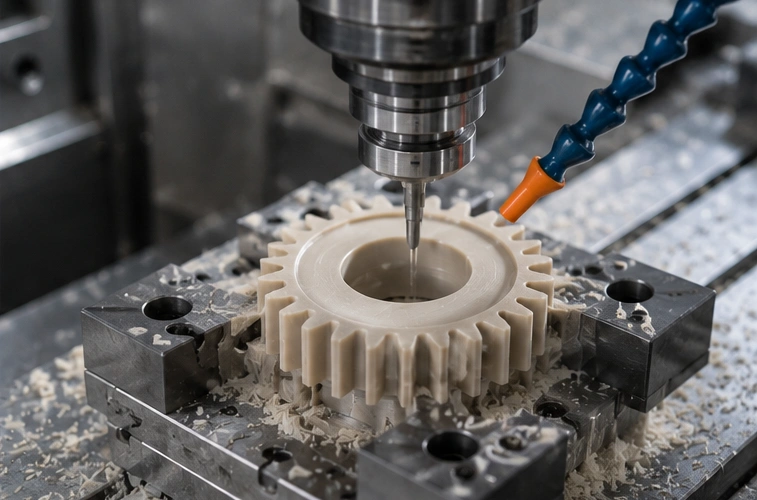
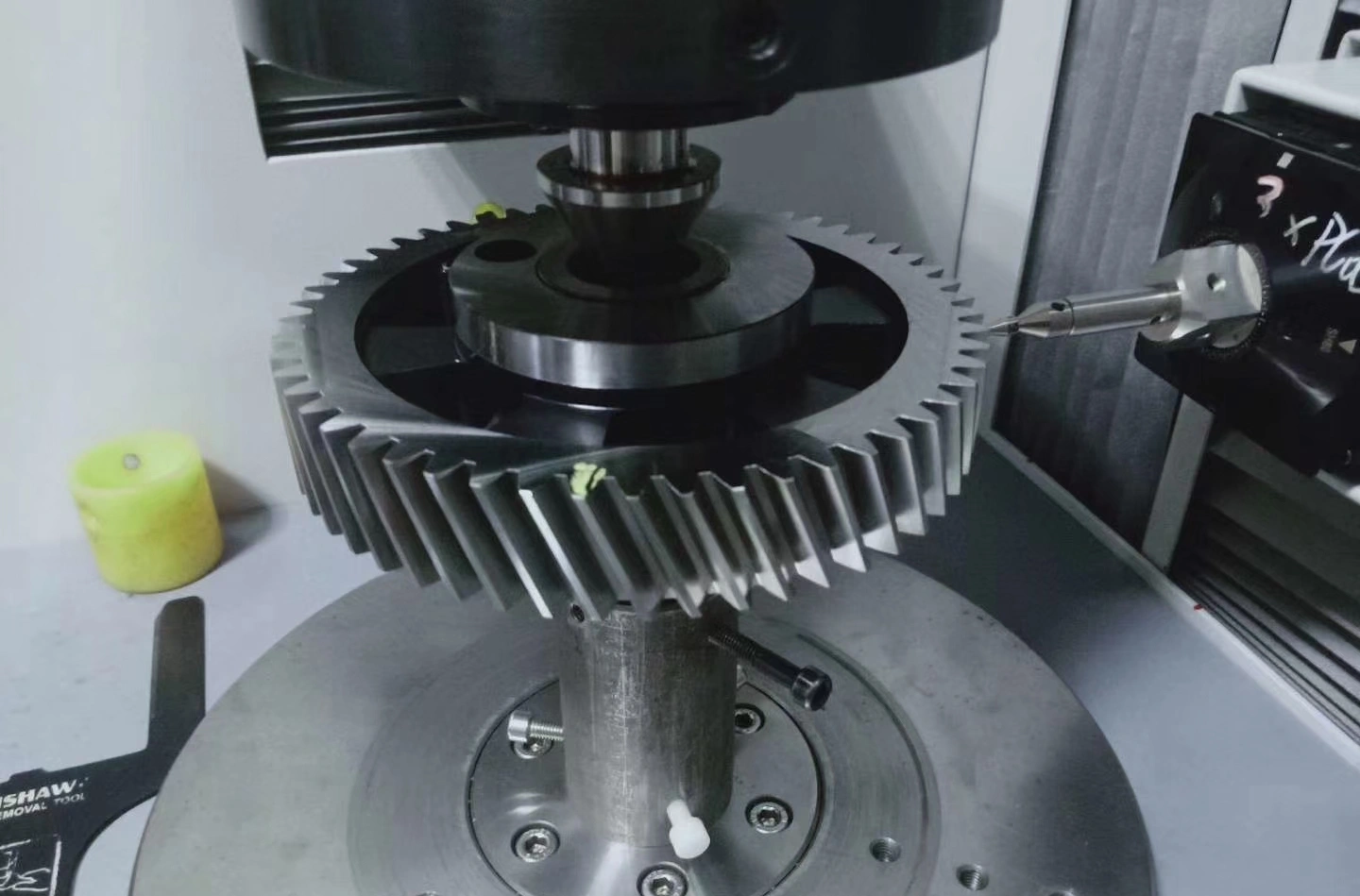
CNC gear machining refers to the use of computer-controlled machining processes to manufacture custom gears and gear-related components.
Depending on the gear type, production quantity, accuracy requirement, and material, the manufacturing process may include CNC turning, CNC milling, gear hobbing, gear shaping, gear skiving, wire EDM, or grinding.
For prototype and low-volume custom gears, CNC machining is often a flexible solution because it can produce non-standard geometries without requiring expensive dedicated tooling.
Common CNC machined gear types include:
- Spur gears
- Helical gears
- Bevel gears
- Worm gears
- Timing pulleys
- Internal gears
- Gear shafts
- Custom gear assemblies
2. Gear Design: The Foundation of Machining Quality
A good gear starts with a good design.
During the design stage, engineers need to define key gear parameters such as:
- Number of teeth
- Module or diametral pitch
- Pressure angle
- Pitch diameter
- Outside diameter
- Face width
- Helix angle for helical gears
- Bore size
- Keyway or spline requirements
- Backlash requirement
- Gear tolerance grade
These parameters directly affect how the gear meshes with other components. Incorrect backlash may cause noise, vibration, or premature wear. Poor concentricity between the bore and tooth profile can create runout during rotation.
Before production, an experienced CNC machining supplier should carefully review the drawing and confirm critical features, especially tooth geometry, bore tolerance, keyway position, and mounting requirements.
3. Material Selection for CNC Machined Gears
Material selection is one of the most important decisions in gear manufacturing. Different gear applications require different combinations of strength, wear resistance, machinability, corrosion resistance, and cost.
Carbon Steel
Carbon steel is often used for general mechanical gears where cost and strength must be balanced.
Alloy Steel
Alloy steels such as 4140, 20CrMnTi, or SCM materials are commonly used for gears requiring higher strength and wear resistance.
Stainless Steel
Stainless steel gears are suitable for applications requiring corrosion resistance, such as food equipment, medical devices, marine equipment, or special industrial environments.
Aluminum
Aluminum gears are lightweight and easy to machine, making them suitable for low-load applications, prototypes, robotics, and lightweight assemblies.
Brass and Bronze
Brass and bronze gears offer good wear properties and are often used in worm gears, instruments, and low-noise applications.
Engineering Plastics
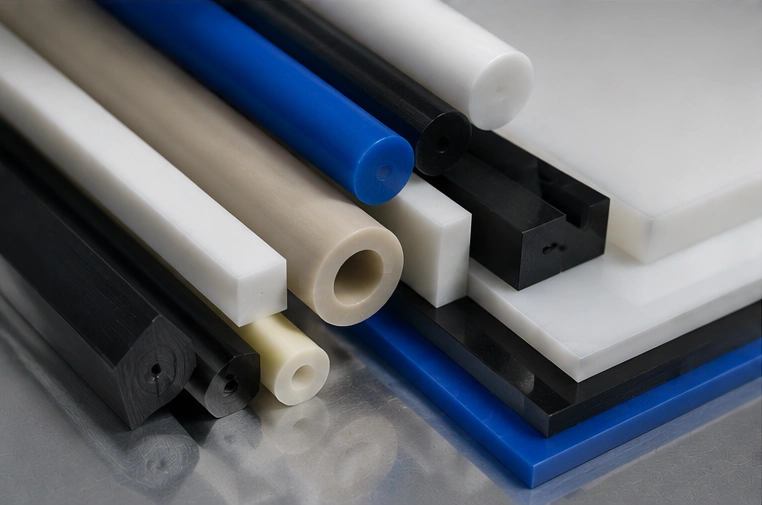
POM, Nylon, PEEK, and other plastics can be used for lightweight, low-noise, or non-metallic gear applications.
4. Heat Treatment: A Critical Step for Gear Performance
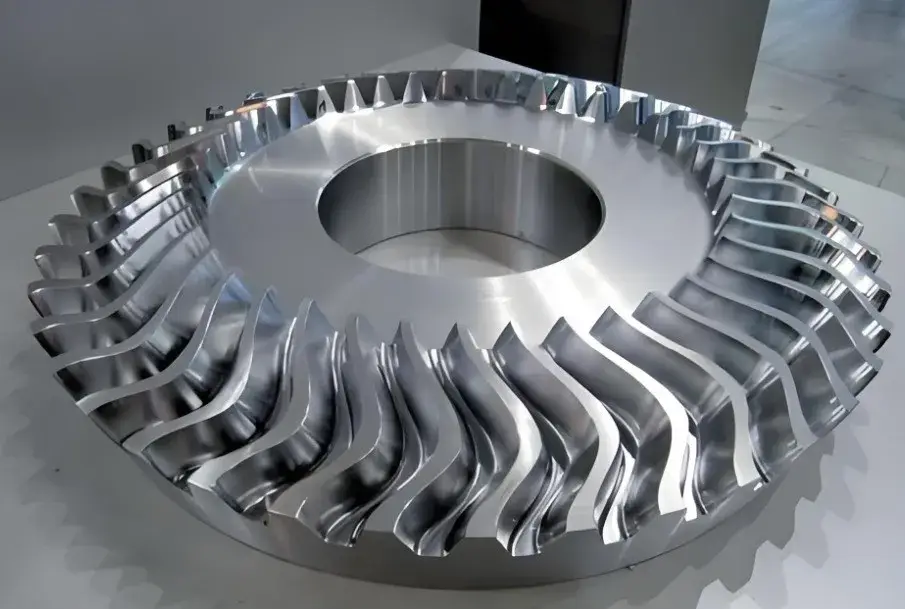
For many metal gears, machining alone is not enough. Heat treatment is often required to improve hardness, wear resistance, and fatigue strength.
Common heat treatment processes include:
- Quenching and tempering
- Carburizing
- Induction hardening
- Nitriding
- Stress relief treatment
For example, a gear may be rough machined first, then heat treated, and finally finish machined or ground to achieve the required accuracy.
This process is important because heat treatment can cause dimensional changes. If the supplier does not consider distortion after heat treatment, the final gear may fail to meet tolerance requirements.
5. CNC Programming and Machining Simulation
After the gear design is confirmed, CNC programming converts the CAD model or technical drawing into machining instructions.
For custom gears, programming must consider:
- Tooth profile accuracy
- Tool path strategy
- Cutter selection
- Machining allowance
- Clamping method
- Cutting sequence
- Burr control
- Surface finish requirements
Machining simulation is also useful for checking tool interference, reducing programming errors, and improving production reliability before actual cutting begins.
6. Machining Process Control
During CNC gear machining, process control directly affects final quality.
Important machining factors include:
- Cutting tool selection
- Cutting speed and feed rate
- Coolant usage
- Fixture rigidity
- Workpiece clamping
- Tool wear control
- Machine stability
For gear parts, maintaining the relationship between the tooth profile, bore, and mounting surfaces is critical. If the bore and tooth profile are not concentric, the gear may rotate unevenly. If the tooth surface is rough or inconsistent, noise and wear may increase during operation.
7. Secondary Operations After Gear Machining
Many gears require secondary operations after the main machining process.
These may include:
- Deburring
- Chamfering
- Keyway machining
- Surface grinding
- Bore finishing
- Heat treatment
- Surface finishing
- Black oxide
- Plating
- Anodizing for aluminum gears
Deburring is especially important for gears. Small burrs on tooth edges can affect meshing performance, create noise, or damage mating parts.
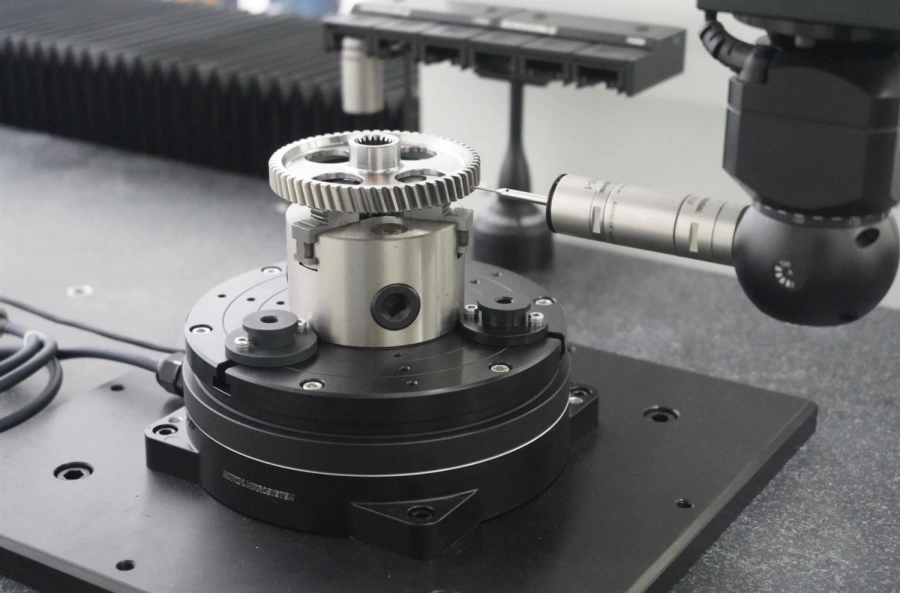
8. Gear Quality Inspection
Quality inspection is a critical part of gear manufacturing.
Basic dimensional inspection is not enough for precision gears. Depending on the requirement, gear inspection may include:
- Tooth profile inspection
- Lead inspection
- Pitch error measurement
- Runout inspection
- Bore concentricity inspection
- Surface roughness measurement
- Hardness testing
- CMM inspection
- Visual inspection for burrs and surface defects
For gear assemblies, functional testing or meshing inspection may also be required. A gear may look correct visually, but if the tooth profile, runout, or bore accuracy is not controlled, it may create vibration, noise, or premature wear in real operation.
9. Common Challenges in CNC Gear Machining
Maintaining Tooth Accuracy
The tooth profile must be manufactured accurately to ensure smooth meshing and torque transmission.
Controlling Runout
Runout between the bore and tooth profile can directly affect rotation accuracy.
Managing Heat Treatment Distortion
Heat treatment improves gear performance but can also change dimensions.
Reducing Burrs
Gear teeth often create burrs after machining, especially in small modules or fine-pitch gears.
Balancing Cost and Accuracy
Not every gear requires the highest precision level. Choosing the correct tolerance level can reduce cost without sacrificing performance.
10. Applications of CNC Machined Gears
CNC machined gears are widely used in many industries, including:
- Robotics
- Automation equipment
- Industrial machinery
- Medical devices
- Precision instruments
- Automotive systems
- Aerospace equipment
- Packaging machinery
- Marine equipment
- Custom mechanical assemblies
CNC Gear Machining at CNCTAL
CNCTAL is a precision CNC machining supplier located in Dongguan, Guangdong, China.
We support international customers with custom gear machining and precision mechanical components for prototypes, low-volume production, and custom assemblies.
Our capabilities include:
- CNC milling and CNC turning
- Custom spur gears and gear shafts
- Gear-related mechanical components
- Keyway, bore, and shaft machining
- Aluminum, stainless steel, steel, brass, bronze, and plastic machining
- Surface finishing and heat treatment coordination
- Precision inspection support
For custom gear projects, our engineering team can review drawings, evaluate machining feasibility, and provide practical manufacturing suggestions before production.
Final Thoughts
CNC gear machining is not only about cutting teeth. It is a complete manufacturing process involving design review, material selection, machining strategy, heat treatment, secondary operations, and final inspection.
A high-quality gear must not only meet dimensional requirements on paper. It must also run smoothly, transmit torque reliably, and perform consistently in real mechanical systems.
For engineers and buyers sourcing custom gears, choosing an experienced CNC machining supplier can reduce production risk and improve the reliability of the final product.
Need Custom CNC Machined Gears?
Send your gear drawings, CAD files, or technical requirements to CNCTAL. Our engineering team will review your project and provide practical CNC machining suggestions and quotation.
Get a CNC Gear Machining QuoteCNCTAL | Precision CNC Machining Supplier in Dongguan, China