
Why Is Small-Batch Medical Parts Machining So Difficult?
Small-batch medical parts are some of the most challenging projects in precision CNC machining. At first, the quantity may look simple: 1 piece, 5 pieces, 20 pieces, or perhaps 100 pieces for prototype testing or early-stage validation. But in real production, low quantity does not mean low difficulty.
For medical device engineers, these parts often support product development, functional testing, design verification, or pilot production. The parts may be small, complex, and made from difficult materials. They may also require tight tolerances, clean surfaces, detailed inspection, and fast turnaround.
Small-batch medical CNC machining is not just a smaller version of mass production. It is a different manufacturing challenge that combines precision, flexibility, and strict process control.
1. Small Quantity Does Not Mean Simple Production
Many people assume that small-batch machining should be easy because the quantity is low. In reality, the opposite is often true.
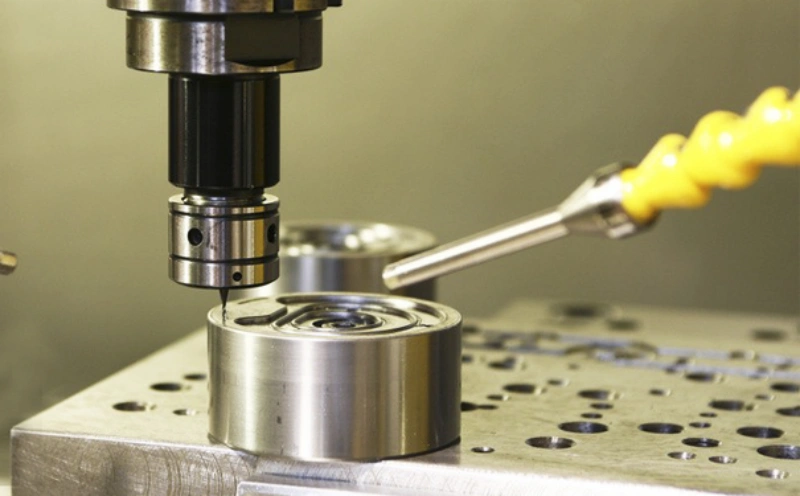
For a batch of 5 or 10 medical components, the supplier still needs to complete almost the same preparation work as a larger order:
- Drawing review
- Material selection
- CNC programming
- Fixture planning
- Tool preparation
- First article inspection
- Final quality inspection
- Packaging and documentation
The setup time does not disappear just because the quantity is small. This is why many large factories are not interested in small-batch medical projects.
2. Medical Parts Often Require Difficult Materials
Medical device components are commonly made from materials that are more demanding than standard aluminum or mild steel.
Common materials include:
- 316L stainless steel
- 17-4PH stainless steel
- Titanium Grade 2
- Titanium Grade 5
- PEEK
- POM
- PTFE
- Medical-grade aluminum for non-implant applications
Each material behaves differently during machining. Stainless steel can work harden, titanium generates heat quickly, and engineering plastics may deform if clamping and cutting conditions are not controlled properly.
3. Tight Tolerances Are Not the Only Challenge
Medical parts often include precision dimensions, but tolerance alone is not the whole story. The real difficulty is usually a combination of:
- Small features
- Thin walls
- Deep holes
- Complex profiles
- Fine threads
- Smooth surfaces
- Stable dimensions across all pieces
A surgical or diagnostic component may need a precise slot, a smooth contact surface, and accurate hole position at the same time. If one feature is correct but another is slightly off, the part may still fail assembly or functional testing.
In small-batch medical machining, the challenge is not only making one good part. It is making every part usable, repeatable, and suitable for testing or assembly.
4. Surface Finish Can Be as Important as Dimensions
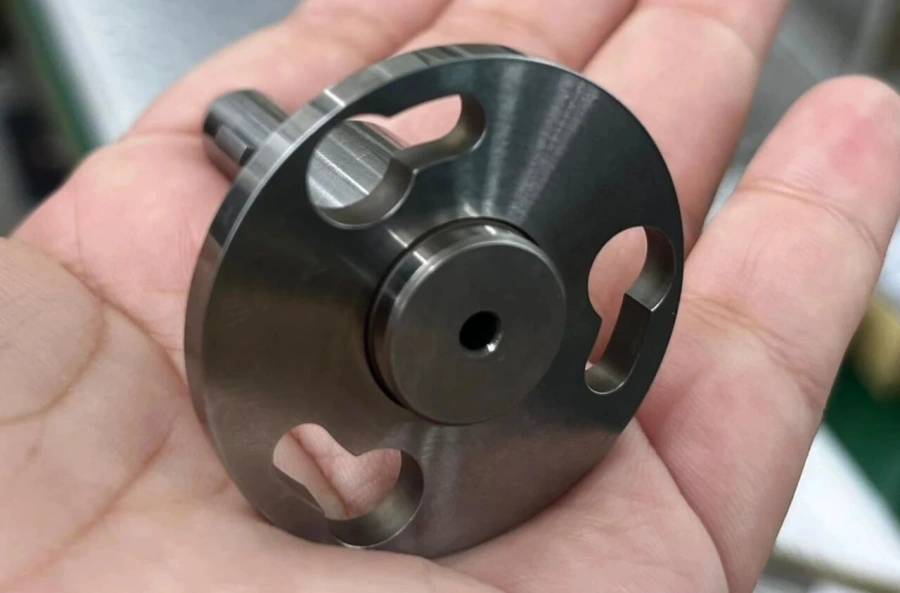
For medical components, surface quality is often very important. Sharp edges, burrs, rough tool marks, or poor polishing can create serious problems during assembly, cleaning, or functional testing.
Depending on the application, medical parts may require:
- Deburring
- Fine machining marks control
- Polishing
- Passivation
- Bead blasting
- Anodizing
- Electropolishing by qualified partners
Even for non-implant parts, a clean and controlled surface finish can affect product reliability and user experience.
5. Medical R&D Projects Often Change Quickly
Medical product development is rarely a straight line. Engineers may test one design, find a problem, revise the drawing, and request another small batch within a short time.
This creates a very different requirement from normal production. A suitable CNC supplier must be able to support fast quotation, design revisions, practical DFM feedback, short lead times, and stable repeat production of updated parts.
6. Inspection Requirements Are Higher Than Normal Industrial Parts
Medical parts require stronger inspection discipline than many ordinary industrial components. Even for prototype or small-batch orders, customers may need:
- Material certificates
- Dimensional inspection reports
- Critical dimension checks
- Surface inspection
- First article inspection
- Traceable production records
A reliable supplier should have inspection tools and quality procedures in place, not just CNC machines.
7. Why MOQ Becomes a Real Problem
Many medical startups and R&D teams only need a few parts at the beginning. But many machining suppliers prefer larger orders because small batches are less efficient to schedule.
This creates a common problem: the customer needs 3–10 pieces for testing, but the supplier wants 100 pieces or more. For medical device development, this can slow down the entire project.
8. Why Stable Small-Batch Production Is Harder Than It Looks
Producing one good sample is not enough. For medical parts, the supplier must produce every piece with consistent quality, even when the quantity is small.
Common risks include:
- Tool wear affecting small features
- Material stress causing deformation
- Manual deburring inconsistency
- Repeated setup errors
- Surface finish variation
- Inspection differences between operators
This is why process control is important. A professional supplier does not only inspect parts at the end. They control the process from material preparation to final inspection.
9. What Engineers Should Check Before Choosing a Supplier
When choosing a CNC machining supplier for small-batch medical parts, engineers should look beyond price. Important questions include:
- Has the supplier worked with stainless steel, titanium, PEEK, or other medical-related materials?
- Can they handle prototype and low-volume production?
- Do they review drawings before quoting?
- Can they provide DFM suggestions?
- What inspection equipment do they use?
- Can they control burrs and surface quality?
- Can they support design revisions quickly?
- Do they understand tight tolerance and critical dimension control?
10. CNC Machining for Small-Batch Medical Parts at CNCTAL
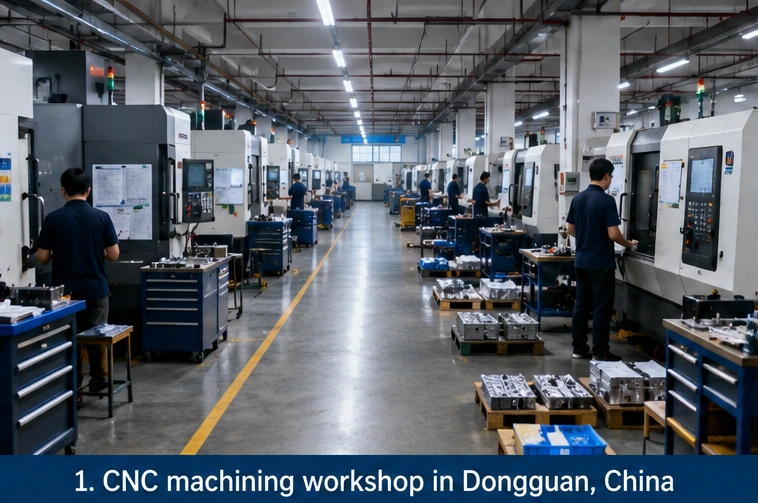
CNCTAL is a precision CNC machining supplier located in Dongguan, Guangdong, China.
We support medical device companies, engineering teams, and product developers with custom CNC machining services for prototypes and small-batch production.
Our capabilities include:
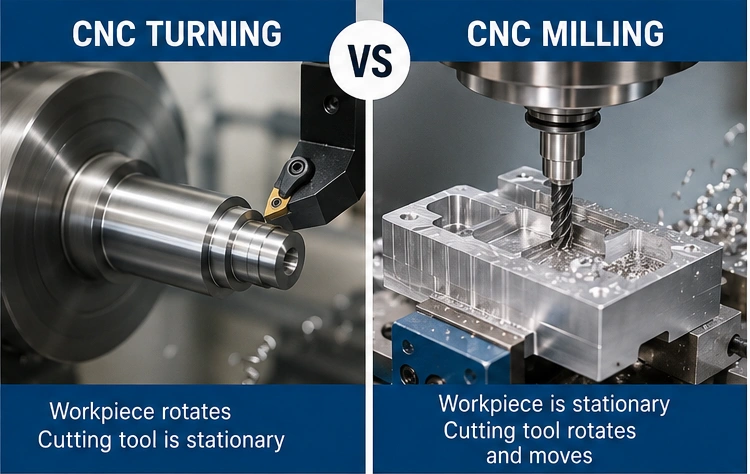
- CNC milling and CNC turning
- 5-axis CNC machining
- Stainless steel, titanium, aluminum, and engineering plastic machining
- Prototype and low-volume production
- Precision inspection support
- Surface finishing coordination
- DFM feedback before production
We understand that medical-related parts often require careful communication, stable machining processes, and strict inspection. Whether you need one prototype, a small test batch, or repeat low-volume production, our team can review your drawings and help you choose a practical machining solution.
Final Thoughts
Small-batch medical parts are difficult because they combine low quantity with high technical requirements. The challenge is not only machining the shape. It is about controlling materials, tolerances, surface quality, inspection, lead time, and design changes at the same time.
For medical device engineers, choosing the right CNC machining supplier can save weeks of development time and reduce the risk of failed prototypes.
Need Small-Batch CNC Machining for Medical Parts?
Send your 2D drawings or 3D files to CNCTAL. Our engineering team will review your project and provide fast feedback for prototype and low-volume production.
Get a CNC QuoteCNCTAL | Precision CNC Machining Supplier in Dongguan, China