
CNC Machining Guide for ABS Plastic Material
ABS plastic is one of the most widely used engineering plastics for CNC machining. It offers a good balance of toughness, impact resistance, machinability, chemical resistance, and cost-effectiveness, making it suitable for prototypes and functional plastic parts.
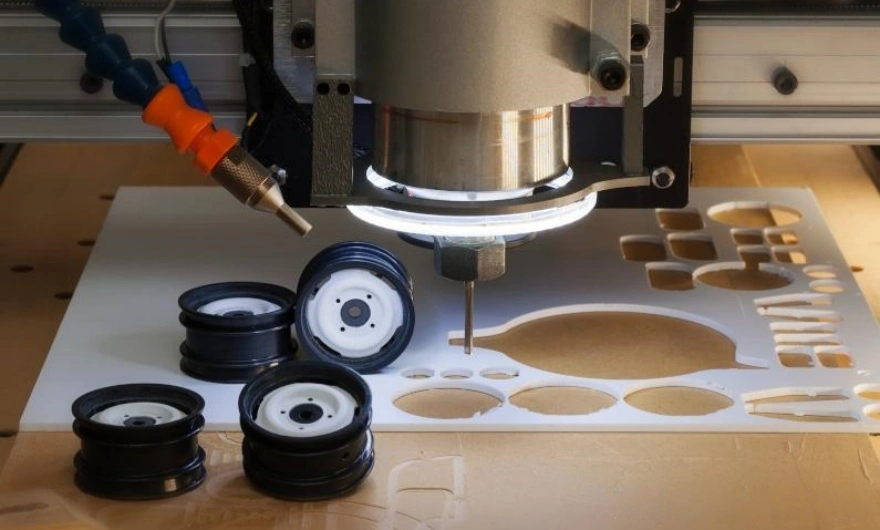
ABS plastic is commonly used for CNC machined prototypes, housings, covers, brackets, and functional plastic components.
What Is ABS Plastic?
Acrylonitrile Butadiene Styrene, commonly known as ABS, is a thermoplastic polymer known for its excellent balance of material properties. It provides good toughness, impact strength, chemical resistance, and electrical insulation performance.
ABS plastic is made from three main monomer components: acrylonitrile, butadiene, and styrene. Depending on the formulation and additives used, ABS can be modified to improve properties such as UV resistance, transparency, color options, or processing performance.
ABS raw material can be processed by injection molding, extrusion, 3D printing, or CNC machining. For precision machined parts with strict quality requirements and tight tolerances, machine-grade ABS plastic is usually recommended.
Precision machining ABS is a good choice for functional prototypes and end-use plastic parts that require stable dimensions, good toughness, and a clean surface finish.
Advantages of ABS Plastic for CNC Machining
ABS plastic is widely used because it provides a practical combination of mechanical performance, machinability, and cost efficiency. Manufacturers often choose machined ABS plastic for prototypes, product testing, and finished components.
- Good impact strength
- High toughness
- Good chemical resistance
- Good electrical resistance
- Available in multiple colors
- Good machinability
- Good relative heat resistance compared with many plastics
Because ABS has good relative heat resistance without requiring an excessively high melting temperature, it also offers excellent manufacturability. In some cases, additives can be used to improve UV resistance, adjust color, or modify material performance for specific applications.
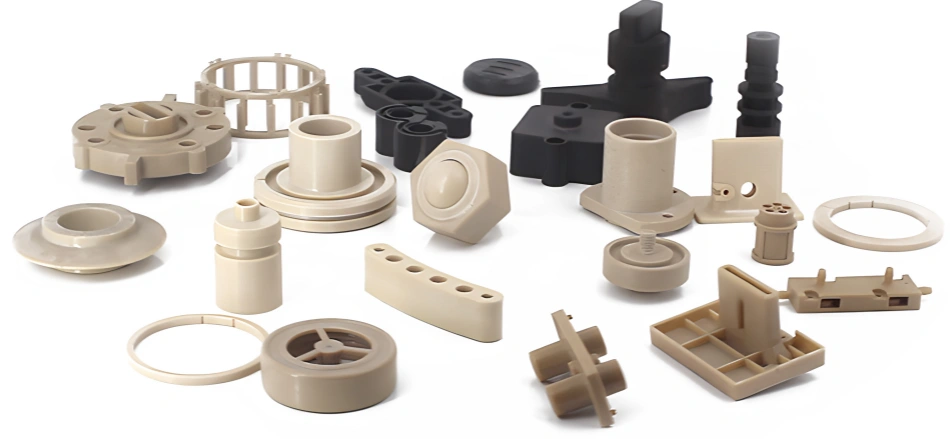
Using proper tools, cutting parameters, and cooling methods helps improve the quality of CNC machined ABS parts.
Challenges of CNC Machining ABS Plastic
Although ABS is a valuable engineering plastic, machining high-quality ABS parts requires proper equipment, tooling, and experience. If the machining process is not well controlled, ABS parts may be damaged during cutting.
Two common issues in ABS machining are deformation and poor surface finish. Plastic parts with machining marks, scratches, or chatter lines may not meet surface quality requirements. For transparent or sealing-related ABS parts, these defects may cause appearance problems or even functional failure.
Several factors can negatively affect the surface quality of ABS plastic parts, including incorrect cutting tools, unsuitable cutting parameters, excessive heat buildup, and poor workholding.
Compared with commonly machined metals, ABS plastic has more obvious thermal expansion when heated. If too much heat builds up during machining, the material may soften, expand, or deform. After cooling, the final part may shrink and fall outside tolerance.
5 Tips for CNC Machining ABS Plastic
To achieve better results when machining ABS plastic, manufacturers usually need to control material selection, tool condition, cutting parameters, cooling, and internal stress.
1. Use Machine-Grade ABS Plastic
ABS is available in different grades designed for extrusion, casting, molding, or machining. For milling, turning, drilling, and precision part production, machine-grade ABS should be used to achieve better chip formation and surface quality.
2. Use the Correct Cutting Tools
Cutting tools designed for hardened steel or titanium are not ideal for ABS plastic. Tools for plastic machining should be sharp and suitable for producing clean chips without tearing or melting the material.
3. Optimize Cutting Parameters
Cutting too deep or too shallow may cause part deformation or machining chatter. Incorrect spindle speed or feed rate may generate excessive heat and lead to warping. Secure workholding is also important, but the ABS part should not be over-compressed.
4. Use Proper Coolant
Without cooling, ABS may overheat during machining. However, not all coolants are suitable for plastic materials. Non-aromatic water-soluble coolants, air jets, mist cooling, or flowing liquid coolant may be used depending on the part design and machining conditions.
5. Anneal ABS Plastic Before Machining
Unannealed plastic materials may contain internal stresses. If the part is heated during machining or use, these stresses may cause deformation. Annealing ABS before machining can help relieve internal stress and improve dimensional stability.
Conclusion
ABS plastic is an excellent material for CNC machining because it combines toughness, machinability, chemical resistance, electrical insulation, and cost-effectiveness. It is suitable for prototypes, housings, brackets, covers, fixtures, and many functional plastic components.
However, successful ABS machining requires careful control of cutting tools, machining parameters, cooling methods, workholding, and material stress. With the right process, CNC machined ABS parts can achieve good surface finish, stable dimensions, and reliable performance.
Need Custom CNC Machined ABS Parts?
CNCTAL provides custom CNC machining services for ABS, PEEK, POM, Nylon, Acrylic, PC, and other engineering plastics. Send us your CAD files or drawings for a fast engineering review and quotation.
Request a QuoteFAQ About CNC Machining ABS Plastic
Is ABS plastic good for CNC machining?
Yes. ABS is a good material for CNC machining because it offers good toughness, machinability, impact resistance, and dimensional performance for prototypes and functional parts.
What are common applications of CNC machined ABS parts?
CNC machined ABS parts are commonly used for housings, covers, brackets, fixtures, prototypes, electronic enclosures, and functional plastic components.
What is the main challenge when machining ABS plastic?
The main challenges are heat buildup, deformation, warping, and poor surface finish. Proper tooling, cutting parameters, cooling, and workholding are important.
Should ABS plastic be annealed before CNC machining?
For precision parts or complex parts, annealing can help relieve internal stress and reduce the risk of deformation during or after machining.