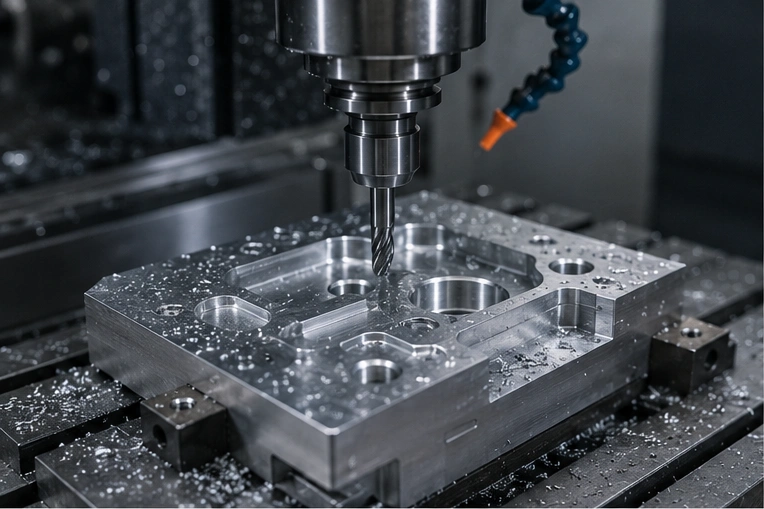

CNC Machining Copper Alloy Electrodes for Sinker EDM
Learn how copper, copper tungsten, and other conductive materials are CNC machined into accurate sinker EDM electrodes for complex mold cavities, narrow ribs, deep slots, and precision tooling components.
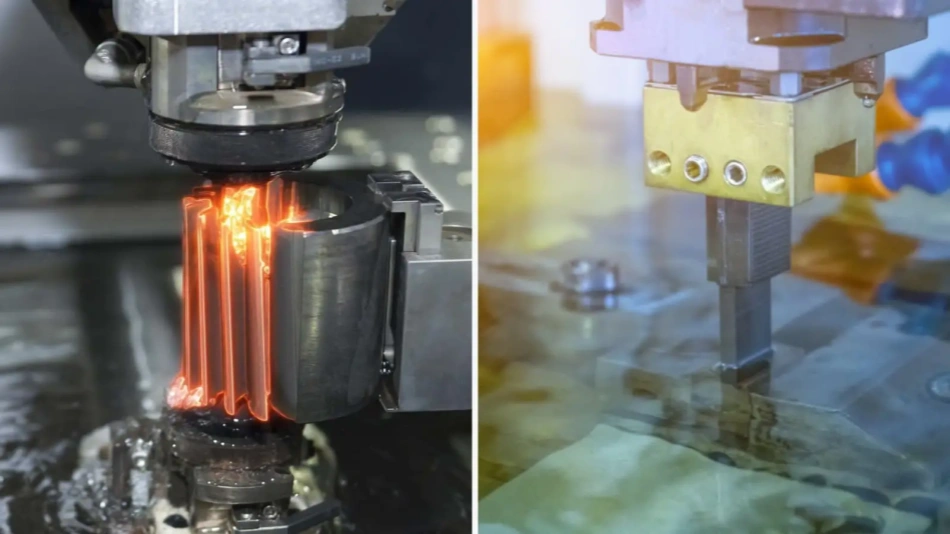
Electrical discharge machining, commonly known as EDM, is a highly effective manufacturing process for producing intricate features, deep cavities, sharp internal details, and precision components from electrically conductive materials.
Unlike conventional cutting processes, EDM removes material through a series of controlled electrical discharges between an electrode and a conductive workpiece. Because the electrode does not physically cut the workpiece, EDM can machine hardened steels, tungsten carbide, titanium alloys, and other difficult-to-machine materials with minimal mechanical cutting force.
For sinker EDM applications, the accuracy and surface condition of the finished cavity depend heavily on the quality of the electrode. Copper and copper-alloy electrodes are widely used when dimensional accuracy, fine details, and high-quality surface finishes are required.
Understanding the EDM Process
EDM is a non-contact electrothermal machining process. Both the workpiece and the electrode must be electrically conductive.
During machining, the electrode and workpiece are separated by a very small spark gap and submerged in, or surrounded by, a dielectric fluid. A controlled electrical discharge passes through the gap, generating localized heat that melts or vaporizes a small amount of material from the workpiece.
The dielectric fluid cools the machining area and flushes away the removed particles. Thousands of controlled discharges occur every second, gradually producing the required geometry.
The three main categories of EDM are:
- Wire EDM
- Sinker EDM
- Small-hole EDM
For CNC-machined copper electrodes, sinker EDM is the most relevant process.
Wire EDM vs. Sinker EDM
Wire EDM
In wire EDM, a continuously moving metal wire acts as the electrode. The wire is commonly made from brass or coated brass.
Electrical discharges occur between the wire and the conductive workpiece, removing material along a programmed cutting path. The wire does not physically contact the component.
Common applications:- Precision profiles
- Punches and dies
- Narrow slots
- Gears and splines
- Hardened tooling components
- Tight-tolerance through-features
Sinker EDM
Sinker EDM, also called ram EDM or die-sinking EDM, uses a shaped electrode that represents the inverse geometry of the cavity being produced.
The electrode is gradually fed toward the workpiece while electrical discharges remove material and reproduce its geometry inside the workpiece.
Common applications:- Mold cavities
- Blind recesses
- Deep ribs
- Internal corners
- Narrow internal slots
- Complex 3D cavities
A controlled spark gap must be maintained between the electrode and the workpiece. Therefore, the finished cavity is slightly larger than the physical electrode. This dimensional difference is generally called overcut or spark-gap allowance.
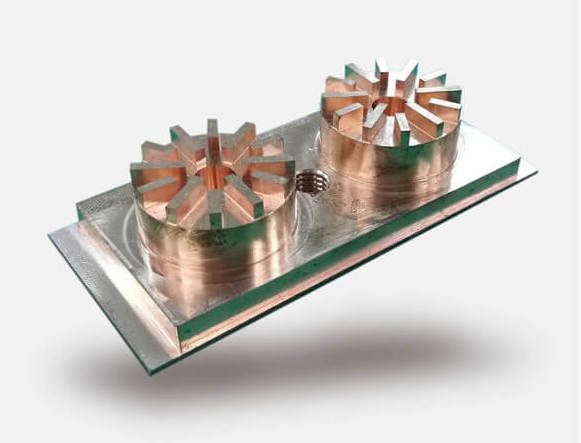
Because sinker EDM electrodes gradually wear during machining, several electrodes may be required for roughing, semi-finishing, and final finishing operations.
Selecting Materials for Sinker EDM Electrodes
Electrode material has a direct influence on machining speed, electrode wear, dimensional accuracy, surface finish, and overall manufacturing cost.
Common sinker EDM electrode materials include:
- Copper
- Graphite
- Copper tungsten
- Tungsten
- Specialized copper alloys
There is no single material that is best for every EDM application. The correct selection depends on the workpiece material, cavity geometry, surface-finish requirement, electrode size, discharge parameters, and production volume.
Copper Electrodes
Copper is widely used for precision sinker EDM electrodes because it provides excellent electrical conductivity and can support fine surface finishes.
- High electrical conductivity
- Good dimensional stability
- Fine surface-finish capability
- Suitable for small and detailed cavities
- Easy dimensional inspection
Pure copper is relatively soft and ductile. Sharp cutting tools, rigid workholding, stable parameters, and effective chip evacuation are important for controlling burrs and material smearing.
Graphite Electrodes
Graphite is lightweight and can often provide efficient material removal with relatively low electrode wear.
- Suitable for large cavities
- Commonly used for roughing
- Easy to machine into complex geometry
- Lower electrode weight
- Good resistance to high discharge energy
Graphite machining creates abrasive dust, so suitable extraction systems and machine protection are required.
Copper-Tungsten Electrodes
Copper tungsten combines the electrical conductivity of copper with the heat resistance and wear resistance of tungsten.
- Small and delicate electrode features
- Deep narrow slots
- Fine ribs
- Carbide EDM applications
- Applications requiring low electrode wear
Copper tungsten is more expensive and more difficult to machine than pure copper, so it is normally selected for demanding applications.
Is Brass Suitable?
Brass may be used for simple electrodes or less demanding applications, but it is generally not the first choice for precision sinker EDM electrodes.
Brass typically has lower conductivity and higher wear than pure copper. It is much more commonly used as the electrode wire in wire EDM machines.
Copper, graphite, or copper tungsten usually provides better overall performance for precision sinker EDM cavities.
Why CNC Machining Is Used to Manufacture Copper EDM Electrodes
CNC machining is one of the most effective methods for manufacturing copper EDM electrodes. It can produce accurate, repeatable, and complex electrode geometries within relatively short production times.
CNC milling and turning can manufacture features such as:
- Three-dimensional contours
- Thin ribs
- Deep pockets
- Narrow slots
- Cylindrical electrodes
- Threaded mounting features
- Reference surfaces and datums
- Locating and clamping details
CNC machining also provides repeatability. If an electrode becomes worn or damaged, the original CNC program and inspection requirements can be used to manufacture a replacement.
The Five-Step Process for Manufacturing CNC-Machined EDM Electrodes
Electrode Design
The process begins with designing the electrode according to the inverse geometry of the required cavity. However, the electrode should not simply be an exact negative copy of the finished feature.
The designer should consider:
- EDM spark gap and overcut
- Electrode wear
- Roughing and finishing allowances
- Flushing conditions
- Electrode reach
- Rib thickness
- Relief areas
- Mounting and alignment
- The number of required electrodes
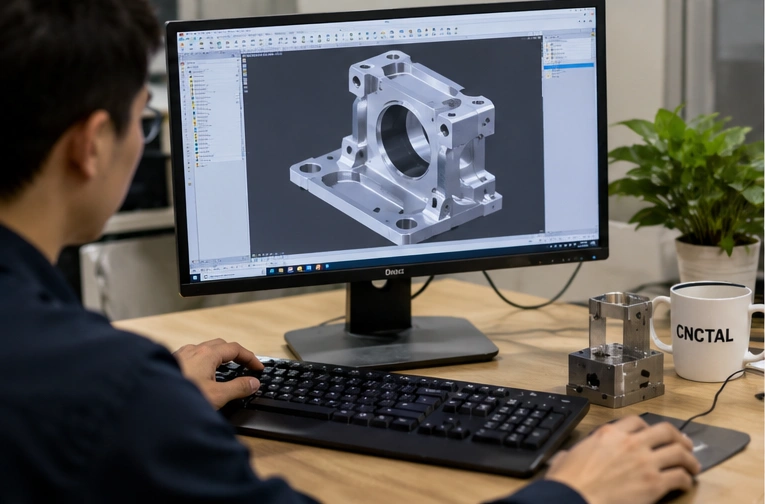
Complete 3D models, clearly defined datums, and accurate GD&T help the CNC machining supplier manufacture and inspect the electrode correctly.
Quotation and Manufacturing Review
After receiving the CAD files and technical drawings, the machining supplier reviews the electrode for manufacturability.
The review normally covers:
- Electrode material
- Overall dimensions
- Minimum feature sizes
- Required tolerances
- Surface-finish requirements
- Tool accessibility
- Workholding method
- Inspection requirements
- Quantity and delivery schedule
Small electrodes may have a relatively high unit cost because programming, setup, inspection, and fixture preparation are still required even when material consumption is low.
CNC Machining
After the design and quotation are approved, the manufacturing team prepares the machining process.
This stage may include:
- Raw-material preparation
- Fixture design
- CAM programming
- Cutting-tool selection
- Rough machining
- Semi-finishing
- Finish machining
- In-process dimensional inspection
Copper machining requires sharp cutting tools and stable machining conditions. Tools with polished cutting edges and suitable geometry can help reduce built-up edge, burr formation, and material smearing.
Thin ribs and small details must be machined carefully because copper can bend or deform under excessive cutting pressure.
Deburring and Surface Preparation
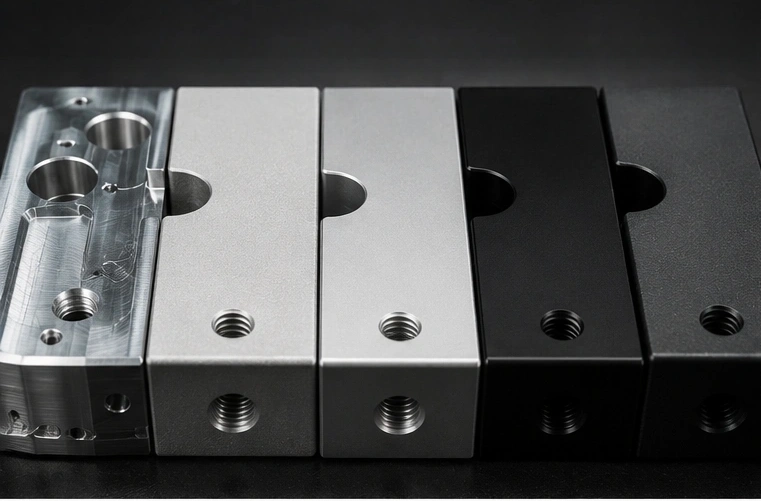
CNC-machined copper electrodes normally require only limited post-processing.
Typical operations include:
- Removing burrs
- Cleaning chips and cutting-fluid residue
- Lightly polishing selected surfaces
- Carefully breaking non-functional sharp edges
- Cleaning threaded and mounting features
Critical EDM surfaces should not be aggressively sandblasted, polished, or rounded unless specifically required. Uncontrolled finishing may alter the electrode geometry and affect the final cavity dimensions.
Inspection and Delivery
The finished electrode must be inspected to verify compliance with the drawing and three-dimensional CAD model.
Inspection equipment may include:
- Micrometers
- Calipers
- Height gauges
- Optical measuring systems
- Profile projectors
- Coordinate measuring machines
- Surface roughness testers
Inspection should focus on critical dimensions, electrode offsets, datum surfaces, mounting features, and fine details that directly influence the finished EDM cavity.
Important Design Considerations for Copper EDM Electrodes
Spark-Gap Compensation
The cavity produced by EDM is larger than the electrode because a spark gap is required for electrical discharge.
The required dimensional offset depends on:
- Electrode material
- Workpiece material
- EDM machine capabilities
- Discharge energy
- Roughing or finishing settings
- Required surface finish
The electrode dimensions should therefore be coordinated with the EDM operator or mold manufacturer before CNC machining begins.
Electrode Wear
Electrodes gradually wear during sinker EDM. Wear can occur on the front surface, corners, edges, and sidewalls.
Sharp corners and thin features may wear faster than larger surfaces. Multiple electrodes may therefore be required to maintain dimensional accuracy throughout the process.
Dielectric Flushing
Dielectric fluid must remove eroded particles from the spark gap. Poor flushing can cause unstable discharges, lower machining speed, excessive electrode wear, and surface defects.
Electrode design may include flushing holes, relief areas, or segmented geometry to improve fluid circulation.
Mounting and Datum Control
The electrode must be mounted accurately and repeatably in the EDM machine. A clearly defined datum structure, mounting shank, threaded connection, or compatible electrode holder can reduce setup time and alignment errors.
Electrode Surface Finish
The surface condition of the electrode can influence the appearance of the finished EDM cavity. Tool marks, scratches, burrs, or polishing defects may be transferred to the workpiece during finishing operations.
Electrode surfaces should therefore be machined, cleaned, inspected, and handled according to the final cavity requirements.
Applications of CNC-Machined Copper EDM Electrodes
Copper and copper-alloy electrodes are used across many manufacturing industries.
- Plastic injection molds
- Die-casting molds
- Medical-device tooling
- Automotive tooling
- Aerospace components
- Electronics manufacturing
- Connector molds
- Stamping dies
- Optical component molds
- Precision cavities
- Carbide tooling
- Deep rib features
These electrodes are especially valuable when conventional milling tools cannot reach the required feature or when a cavity contains narrow ribs, deep recesses, small internal details, or internal corners that cannot be produced using a rotating cutting tool.
Conclusion
CNC machining provides an accurate, repeatable, and efficient method for manufacturing copper and copper-alloy electrodes for sinker EDM.
Copper offers excellent electrical conductivity and fine surface-finish capability. Copper tungsten provides additional wear resistance for demanding applications, while graphite remains a strong alternative for large cavities and high material-removal requirements.
The success of an EDM electrode depends not only on material selection but also on spark-gap compensation, electrode-wear planning, flushing design, CNC machining quality, surface preparation, and dimensional inspection.
By combining professional electrode design with precision CNC machining, manufacturers can produce reliable electrodes for complex molds, tooling components, and high-precision EDM applications.
Need Custom Copper EDM Electrodes?
CNCTAL manufactures precision copper and copper-alloy electrodes from your CAD files and technical drawings. We support prototypes, replacement electrodes, roughing and finishing electrode sets, and low-volume production.
Request a CNC Machining Quote