

Custom Energy Equipment Parts CNC Machining
Precision CNC machined components for battery energy storage systems, liquid cooling equipment, solar equipment, power electronics, fluid control systems, and industrial energy applications. CNCTAL supports custom housings, brackets, connectors, manifolds, cooling plates, and functional hardware from prototype to batch production.
Send your 2D drawings, 3D CAD files, material grade, finish requirement, and quantity. If the part includes sealing faces, O-ring grooves, fluid channels, or threaded ports, please mark these areas clearly on the drawing.
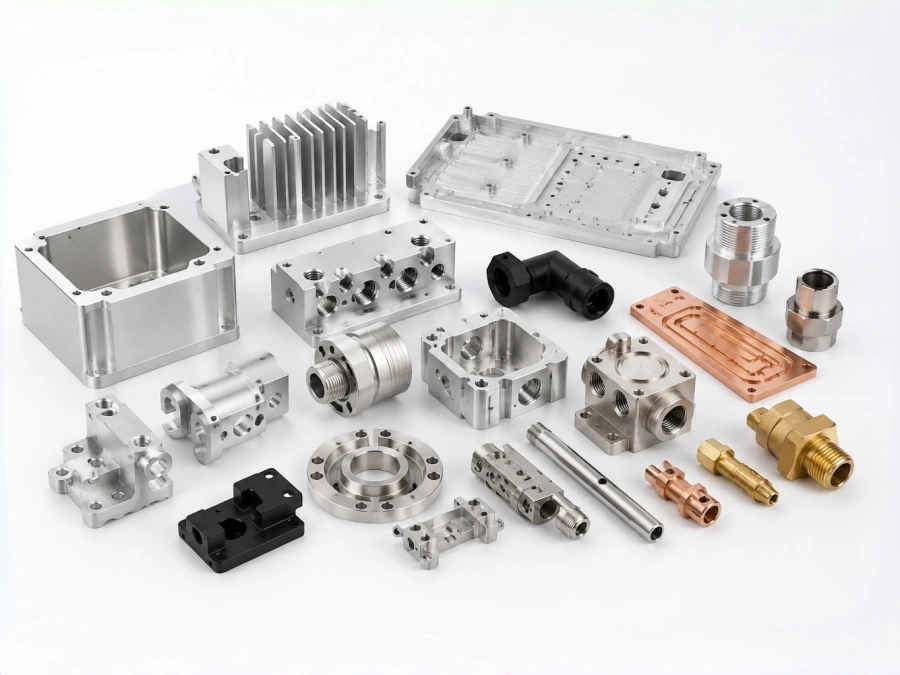
Energy Equipment Parts We Commonly Machine
Energy equipment components are usually functional parts rather than simple appearance parts. Many projects involve sealing areas, threaded ports, fluid channels, cooling structures, corrosion-resistant materials, or stable batch assembly requirements. CNCTAL machines custom parts according to drawings, CAD files, material requirements, and real working conditions.
Liquid Cooling Components
Custom cooling plates, manifolds, connectors, fittings, and fluid channel parts for battery systems, power modules, charging equipment, and thermal management assemblies.
Battery Energy Storage Parts
CNC machined housings, mounting plates, brackets, spacers, positioning blocks, and structural hardware used in battery energy storage systems and related equipment.
Power Electronics Housings
Aluminum controller housings, power module covers, heat dissipation enclosures, and machined structures for industrial power electronics and charging equipment.
Solar Equipment Components
Custom aluminum brackets, connection blocks, adjustment parts, support plates, and precision hardware used in solar equipment, testing devices, and installation systems.
Valve Bodies & Manifolds
Stainless steel, aluminum, or brass valve bodies, manifolds, threaded ports, sealing grooves, and flow path components for fluid control and cooling-related applications.
Mounting Brackets & Fixtures
Mounting brackets, locating blocks, assembly fixtures, test fixtures, and custom machined hardware used during energy equipment assembly, testing, and inspection.
Engineering note: For energy equipment parts, please mark sealing faces, O-ring grooves, threaded ports, fluid contact areas, insulation requirements, and critical mounting holes clearly on the drawing. These details help us choose the correct material, machining process, finishing method, and inspection plan.
Built Around Functional Requirements
Energy equipment parts often work inside thermal, electrical, or fluid-related systems. Before quotation, we review how the part is used, not only its outside shape. This helps reduce machining risk and avoid problems during assembly.
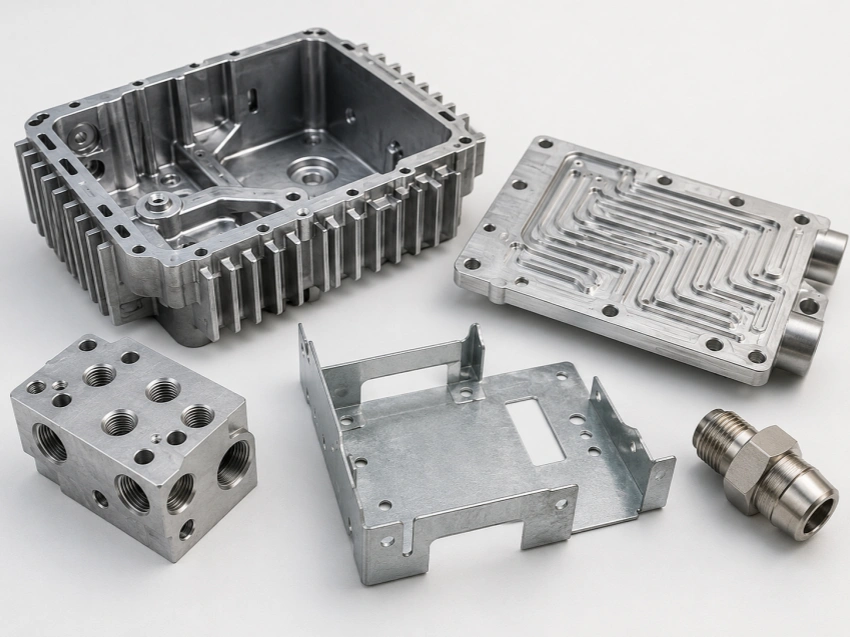
Where CNC Machined Energy Equipment Parts Are Used
Energy equipment parts are used in systems that need stable installation, thermal control, corrosion resistance, sealing reliability, and repeatable assembly. These components may support battery modules, liquid cooling loops, power electronics, solar equipment, or fluid control hardware.
Battery Energy Storage Systems
Mounting plates, brackets, spacers, housings, liquid cooling parts, and positioning components used in battery storage modules and cabinet assemblies.
Liquid Cooling Systems
Cooling plates, manifolds, fittings, fluid connectors, sealing grooves, and flow channel components for thermal management applications.
EV Charging Equipment
Aluminum housings, connector-related hardware, heat dissipation parts, brackets, and custom machined components for charging modules.
Solar Power Equipment
Mounting blocks, adjustment brackets, connection plates, structural hardware, and corrosion-resistant components for solar equipment assemblies.
Power Distribution Equipment
Enclosures, insulating spacers, copper or brass components, mounting hardware, and support parts used in electrical and power control systems.
Fluid Control & Hydrogen Equipment
Valve bodies, manifolds, threaded ports, stainless fittings, sealing faces, and precision components for selected fluid control applications.
Why Precision Matters for Energy Equipment Parts
Energy equipment parts often work inside thermal, electrical, or fluid-related systems. A small machining error on a sealing face, threaded port, mounting surface, or flow channel can affect assembly, leakage control, heat transfer, or long-term equipment reliability.
Sealing Surface Accuracy
Liquid cooling parts, manifolds, valve bodies, and fittings often depend on flat sealing faces or O-ring grooves. Surface quality and groove dimensions need to match the drawing.
Thread and Port Quality
Threaded ports, pipe interfaces, inserts, and mounting holes must be machined cleanly to reduce assembly problems and improve connection reliability.
Flatness of Mounting Faces
Power electronics housings, cooling plates, and battery system brackets often require stable mounting faces for assembly, heat transfer, or equipment alignment.
Thermal Management Features
Cooling fins, pockets, fluid channels, and heat transfer surfaces need careful machining so the part can support the required cooling or heat dissipation function.
Corrosion Resistance
Stainless steel, aluminum, brass, and copper parts may require passivation, anodizing, nickel plating, or other finishes based on the working environment.
Batch Assembly Consistency
Energy equipment often uses repeated brackets, plates, connectors, and spacers. Consistent hole positions and critical dimensions help reduce assembly variation.
Functional Features We Review First
Before quoting or machining, we identify which features affect sealing, cooling, mounting, insulation, or fluid connection. This helps us select the correct machining process, inspection method, and surface treatment.
- O-ring grooves, sealing faces, and gasket contact areas
- Threaded ports, pipe interfaces, inserts, and connector features
- Cooling channels, cross holes, manifolds, and flow paths
- Flat mounting faces for heat transfer or assembly alignment
- Corrosion-resistant or electrically insulating surface requirements
- Critical hole patterns for repeatable batch assembly
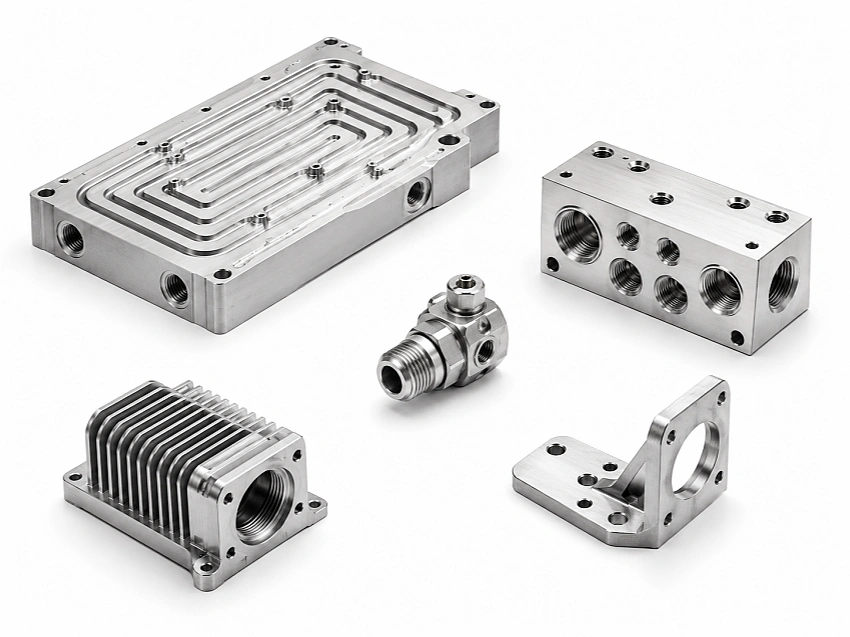
Energy Parts Are Machined for Function, Not Only Shape
A cooling plate, valve body, power module housing, or battery storage bracket may look simple from the outside, but its working areas are often hidden in grooves, threads, internal channels, and mounting surfaces. That is why CNCTAL reviews the functional requirements before choosing the machining route.
Machining Challenges for Energy Equipment Components
Energy equipment parts often combine machining accuracy with functional requirements such as sealing, heat transfer, fluid flow, corrosion resistance, and repeatable assembly. These parts may look simple on the outside, but the difficult areas are often hidden in grooves, ports, internal channels, thin walls, and finished surfaces.
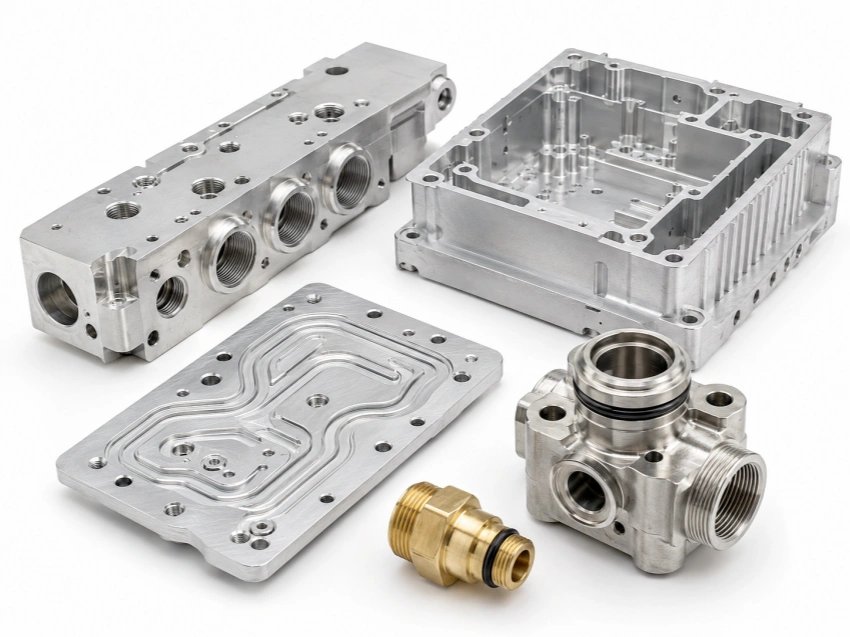
Function Comes Before the Machining Route
Before machining energy equipment parts, we review sealing areas, threaded interfaces, internal channels, heat dissipation structures, surface treatment requirements, and inspection points. This helps reduce risk before material is cut.
Sealing and Fluid Contact Surfaces
Liquid cooling parts, valve bodies, fittings, and manifolds often include sealing faces, O-ring grooves, gasket areas, or fluid contact surfaces. Groove dimensions, surface roughness, and flatness need careful control.
Deep Holes and Internal Channels
Cooling plates, manifolds, and flow path components may require deep holes, cross holes, or internal channels. Tool access, burr removal, hole alignment, and cleaning are important for these features.
Threaded Ports and Connection Accuracy
Pipe ports, threaded inserts, connector interfaces, and mounting holes need clean machining. Incorrect thread depth, burrs, or misalignment can create assembly and sealing problems.
Thin Walls and Heat Dissipation Features
Power electronics housings, cooling plates, and aluminum enclosures often include pockets, fins, lightweight areas, or thin walls. Machining sequence and clamping must be planned to reduce deformation.
Surface Treatment Compatibility
Anodizing, hard anodizing, nickel plating, passivation, powder coating, or laser marking should match the working environment. Sealing areas, electrical contact areas, and masked surfaces should be defined before finishing.
Review Sealing and Port Features
We check grooves, sealing faces, threads, ports, cross holes, and fluid contact areas before confirming the machining method.
Control Setup and Cutting Sequence
Thin-wall housings, cooling plates, and parts with multiple interfaces need proper clamping, tool access, and machining order.
Check Burrs and Functional Surfaces
We review burrs, sharp edges, threads, sealing areas, and cosmetic surfaces before parts move to anodizing, plating, or passivation.
CNCTAL Machining Capabilities for Energy Equipment Parts
Energy equipment parts may require milling, turning, drilling, tapping, grooving, internal channel machining, deburring, surface finishing, and inspection. CNCTAL supports custom machined parts for liquid cooling systems, battery storage equipment, power electronics, solar equipment, and industrial energy assemblies.
CNC Milling for Housings & Plates
Machining for aluminum housings, mounting plates, cooling plates, power module covers, brackets, pockets, slots, and flat assembly surfaces.
CNC Turning for Connectors & Fittings
Turning for round connectors, bushings, threaded fittings, sleeves, pins, plugs, and fluid or electrical connection-related components.
4-Axis & 5-Axis Machining
Multi-side machining for valve bodies, manifolds, complex brackets, side ports, angled holes, and parts with several critical faces.
Threading, Tapping & Port Machining
Internal threads, external threads, pipe ports, mounting holes, inserts, connector interfaces, and threaded features according to drawing requirements.
Grooving, Drilling & Channel Features
O-ring grooves, sealing grooves, cross holes, deep holes, flow paths, cable openings, and functional channels for energy and cooling applications.
Surface Finishing Support
Anodizing, hard anodizing, nickel plating, passivation, bead blasting, black oxide, powder coating, polishing, and laser marking can be arranged when required.
From Drawing Review to Finished Components
For energy equipment projects, we review the functional areas first. This helps us understand which surfaces, threads, grooves, holes, and finishes are critical before production starts.
We check material grade, sealing surfaces, threaded ports, O-ring grooves, fluid channels, mounting holes, surface finish, and tolerance notes.
We choose turning, milling, drilling, tapping, 4-axis, or 5-axis machining based on part geometry, tolerance, material, and functional features.
Burrs around threads, ports, holes, sealing areas, and internal channels are reviewed before surface finishing or final inspection.
Critical dimensions, flatness, threads, port positions, O-ring grooves, sealing faces, and surface finish are checked according to the drawing.
Prototype to Batch Production
CNCTAL supports one-off prototype parts, engineering validation batches, and repeat production for approved energy equipment components. Multiple quantity levels can be quoted together for easier cost comparison.
Best for RFQ: Please send 2D drawings and 3D CAD files together if possible. For energy equipment parts, details such as sealing requirements, threaded port standards, material grade, surface finish, and working environment can greatly affect the machining route.
Upload Energy Part DrawingsMaterial and Finish Options for Energy Equipment Components
Energy equipment parts may work near heat, moisture, coolant, electrical assemblies, outdoor structures, or fluid systems. Material and surface finish should be selected based on strength, corrosion resistance, sealing requirements, thermal performance, insulation, and long-term assembly stability.
Common Materials
CNCTAL can machine metals and engineering plastics for different energy equipment applications. If the drawing does not specify material clearly, we can review the function and suggest a practical machining option.
Surface Finishing Options
Surface finish should match the working environment. Some energy parts need corrosion resistance, some need electrical insulation, and others need stable sealing or clean appearance after machining.
Anodizing
Common for aluminum housings, brackets, cooling parts, and mounting plates requiring corrosion resistance and clean appearance.
Hard Anodizing
Used for selected aluminum parts requiring better wear resistance or a more durable surface in functional assemblies.
Nickel Plating
Can be used for selected components needing additional surface protection, appearance, or specific functional requirements.
Passivation
Suitable for stainless steel fittings, valve bodies, pins, and fluid-related parts requiring better corrosion resistance.
Bead Blasting
Provides a matte and consistent surface before anodizing or as a cosmetic finish for aluminum energy equipment parts.
Powder Coating
Used for selected housings, covers, and structural parts requiring protective coating or specific color requirements.
Black Oxide
Applied to selected steel components when a dark finish or specific functional surface requirement is needed.
Laser Marking
Used for part numbers, batch codes, assembly orientation marks, or traceability requirements.
How to Choose the Right Material
The best material depends on how the part works inside the equipment. A cooling plate, an electrical spacer, a stainless fitting, and a power module housing all have different requirements, even if the outside size is similar.
- Use aluminum when lightweight structure, heat dissipation, and anodizing are important.
- Use stainless steel when corrosion resistance or fluid contact is the main concern.
- Use brass or copper when conductivity, threaded fittings, or thermal function is needed.
- Use POM or PEEK when insulation, low weight, or non-metallic positioning is required.
Finish Notes for Functional Areas
For energy equipment parts, not every surface should be treated the same way. Some areas may need masking, some sealing faces may require a specific roughness, and some electrical contact areas may need to remain conductive.
- Mark sealing faces, O-ring grooves, and gasket contact surfaces clearly.
- Confirm whether threaded ports require masking before coating or plating.
- Define cosmetic surfaces and functional surfaces separately on the drawing.
- Tell us if the part contacts coolant, outdoor air, moisture, or electrical assemblies.
Quality Control for Energy Equipment Components
For energy equipment parts, inspection must focus on the features that affect real use: sealing faces, threaded ports, O-ring grooves, hole positions, flatness, surface finish, burr control, and assembly fit. CNCTAL checks critical dimensions according to your drawing requirements before shipment.
Inspection Workflow for Functional Parts
Energy equipment components often include hidden functional details. Before final packing, we review machining quality, finishing requirements, and the dimensions that may affect sealing, mounting, cooling, or electrical assembly.
Thread Accuracy
Internal threads, external threads, pipe ports, inserts, and connector interfaces are checked according to drawing callouts.
Hole Position
Mounting holes, port holes, cross holes, and locating holes are checked for assembly consistency and proper alignment.
Flatness
Mounting faces, cooling contact surfaces, and housing reference faces are checked when flatness affects assembly or heat transfer.
Sealing Surfaces
Gasket areas, O-ring grooves, sealing faces, and fluid contact areas are reviewed for dimensions, burrs, and surface condition.
Surface Roughness
Sealing areas, sliding areas, or heat transfer surfaces can be checked according to the required Ra value on the drawing.
Burr Control
Edges around ports, deep holes, pockets, flow channels, and threaded areas are checked to reduce assembly and sealing problems.
O-Ring Groove Dimensions
Groove width, depth, diameter, position, and edge condition are checked when the part uses O-rings or sealing elements.
Surface Finish Appearance
Anodized, plated, passivated, blasted, coated, or marked surfaces are checked for obvious scratches, stains, color issues, or damaged areas.
Inspection Tools We Commonly Use
Different energy equipment parts require different inspection methods. For standard machined components, we use practical tools during production and final inspection. For critical parts, inspection reports can be arranged according to drawing requirements.
- CMM for critical dimensions and complex hole positions
- 2D vision inspection for profiles, holes, and small features
- Thread gauge for internal and external threads
- Plug gauge or pin gauge for selected holes and ports
- Micrometer and caliper for standard dimensional checks
- Height gauge for step height and mounting face checks
- Surface roughness tester when Ra value is specified
- Visual inspection for burrs, finish, edges, and marking
Drawing tip: If your energy equipment part includes sealing faces, O-ring grooves, threaded ports, cooling channels, electrical contact areas, or critical mounting surfaces, please mark them clearly on the drawing. This helps us set the correct inspection priorities before production.
Energy Equipment Parts Machining FAQs
Common questions about CNC machined energy equipment components, liquid cooling parts, battery storage hardware, material selection, surface finishing, and quotation requirements.
Can you machine custom energy equipment parts from drawings?
Yes. CNCTAL machines custom energy equipment parts based on 2D drawings, 3D CAD files, or samples. Typical parts include liquid cooling components, power electronics housings, battery storage brackets, valve bodies, manifolds, fittings, mounting plates, and test fixtures.
What energy equipment components can you manufacture?
We can manufacture CNC machined housings, brackets, cooling plates, manifolds, threaded fittings, valve bodies, spacers, mounting blocks, connector-related parts, heat dissipation parts, and assembly fixtures for energy storage, solar, power electronics, and fluid control equipment.
Can you machine liquid cooling components?
Yes. We can machine liquid cooling parts such as cooling plates, manifolds, fittings, threaded ports, sealing grooves, and flow channel components. If the part has O-ring grooves, sealing faces, or internal fluid channels, please mark these features clearly on the drawing.
What materials are suitable for energy equipment parts?
Common materials include Aluminum 6061, Aluminum 7075, Stainless Steel 304/316, brass, copper, POM, and PEEK. Aluminum is often used for housings, brackets, and cooling parts. Stainless steel is suitable for corrosion-resistant or fluid-contact parts. Copper and brass are often used for conductive, thermal, or fitting-related components.
Can you make parts with threaded ports and sealing grooves?
Yes. CNCTAL can machine internal threads, external threads, pipe ports, O-ring grooves, sealing grooves, gasket contact faces, cross holes, and flow path features. Please include thread standards, groove dimensions, tolerance notes, and surface roughness requirements in your drawing.
What surface finishes are used for energy equipment components?
Common finishes include anodizing, hard anodizing, nickel plating, passivation, bead blasting, powder coating, black oxide, polishing, and laser marking. The best finish depends on the material, working environment, corrosion resistance, sealing requirement, and appearance needs.
Can you support prototype and batch production?
Yes. CNCTAL supports one-off prototypes, engineering validation batches, small batch production, and repeat batch orders. You can send multiple quantity levels in one RFQ, such as 1 pc, 10 pcs, 50 pcs, 100 pcs, or 500 pcs, so we can quote different price breaks together.
What files should I send for an energy equipment part quote?
Please send a 2D drawing with tolerances and a 3D CAD file such as STEP, STP, IGS, IGES, STL, or other common formats. Also include material grade, quantity, surface finish, working environment, sealing requirements, thread specifications, and any critical dimensions or inspection requirements.
Need Custom Energy Equipment Parts?
Send your drawings, CAD files, material grade, finish requirements, and quantity. Our engineering team will review the functional details and provide a practical quotation.