

CNC Machining a Motorcycle Triple Clamp from Solid 7075 Aluminum
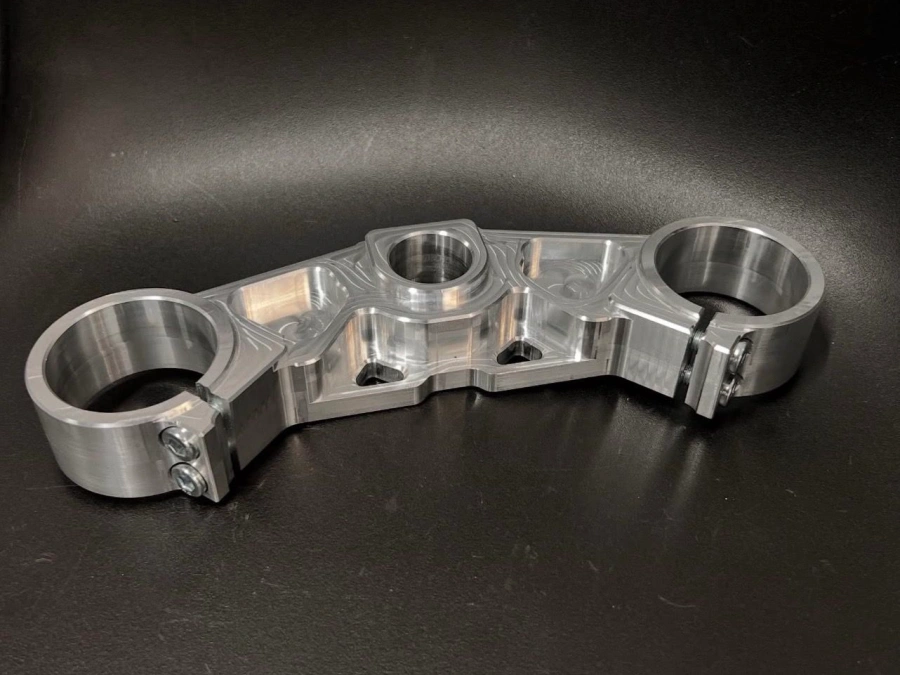
A custom motorcycle triple clamp CNC machined from a single block of 7075 aluminum alloy. The manufacturing process involved extensive material removal, complex pocket milling, precision machining of fork clamping bores and careful deburring to achieve a clean as-machined finish.
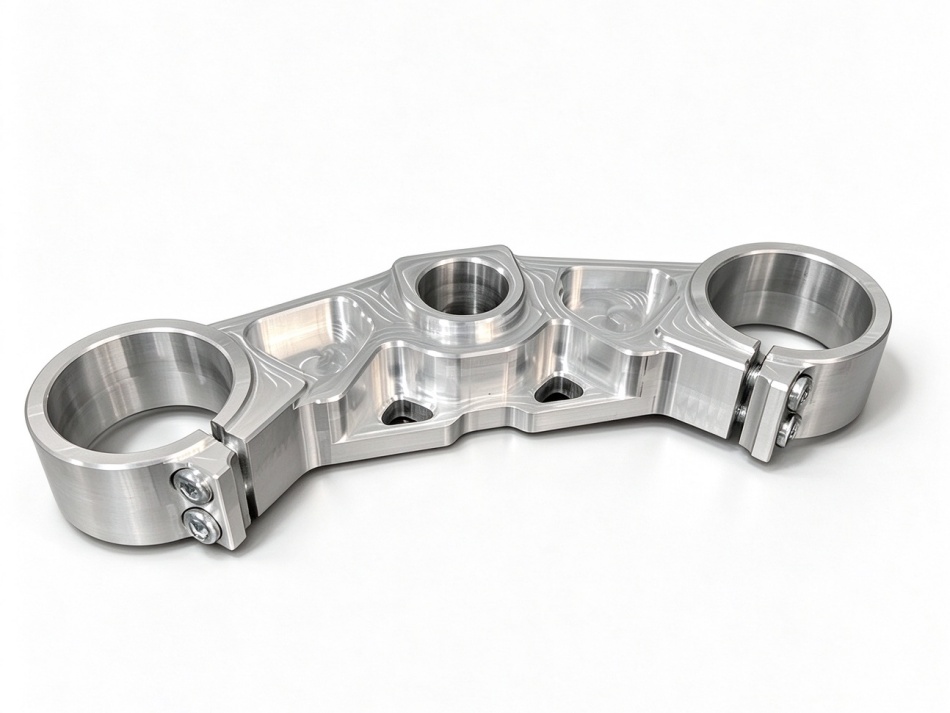
Machine the complex triple clamp geometry from a single 7075 aluminum billet while maintaining the required relationships between the fork clamping bores, central steering bore and split-clamp features. Complete the part with clean edges and carefully deburred surfaces.
Project Overview
The motorcycle triple clamp is an important structural component of the front suspension and steering assembly. It connects the fork tubes with the steering system and helps maintain their alignment during operation.
For this project, CNCTAL manufactured a custom triple clamp from solid 7075 aluminum alloy. Rather than assembling several individual components, the main structure was machined from a single aluminum billet.
The design combines multiple functional bores, integrated fork clamping sections, complex milled pockets and smooth connecting contours within one machined structure.
One-Piece Billet Construction
The main body is machined from a single aluminum block, eliminating welded joints within the structure.
Complex Lightweight Geometry
Milled pockets and carefully shaped contours remove unnecessary material while forming the required component geometry.
Integrated Clamping Features
Fork mounting bores, split-clamp sections and fastener features are incorporated into the machined part.
Project Objective
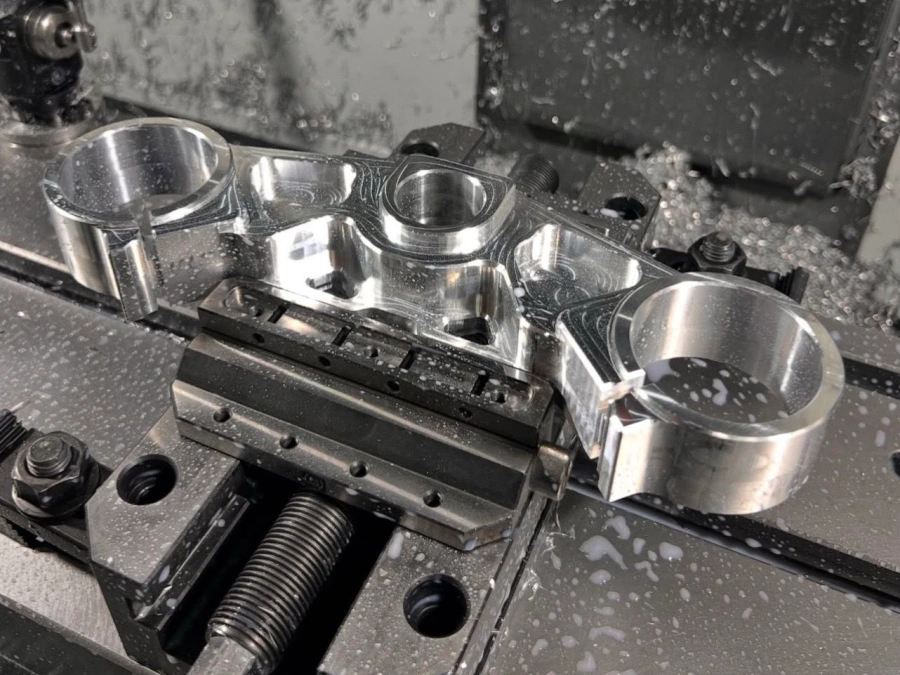
Manufacture a custom 7075 aluminum motorcycle triple clamp from solid billet material, accurately producing its functional bores, clamping structures and complex milled geometry while delivering a clean, deburred, as-machined component.
Key CNC Machining Challenges
Machining a motorcycle triple clamp from solid 7075 aluminum involves more than producing its external shape. The part combines large-volume material removal, complex milled features, functional bores and split-clamp structures that require careful process planning.
Extensive Material Removal
Starting from a solid aluminum billet requires removing a significant amount of material to form the final triple clamp profile. Efficient rough milling is important for controlling machining time, tool loading and material removal while retaining sufficient stock for finishing operations.
Complex 3D Pocket Milling
The component includes multiple recessed pockets, curved transitions and raised mounting areas. These features require appropriate toolpaths and cutting strategies to machine the complex geometry while maintaining clean surfaces and avoiding unwanted tool marks.
Precision Bore Alignment
The two fork clamping bores and central steering bore form key functional features of the triple clamp. Their dimensions and relative positions must follow the engineering drawing to support the intended assembly fit and alignment.
Split-Clamp & Edge Finishing
Split-clamp slots, fastening holes and internal edges create additional machining and finishing challenges. Burrs must be carefully removed, particularly around fork bores, clamping slots and mounting features, without damaging functional surfaces.
From Solid Billet to Complex Geometry
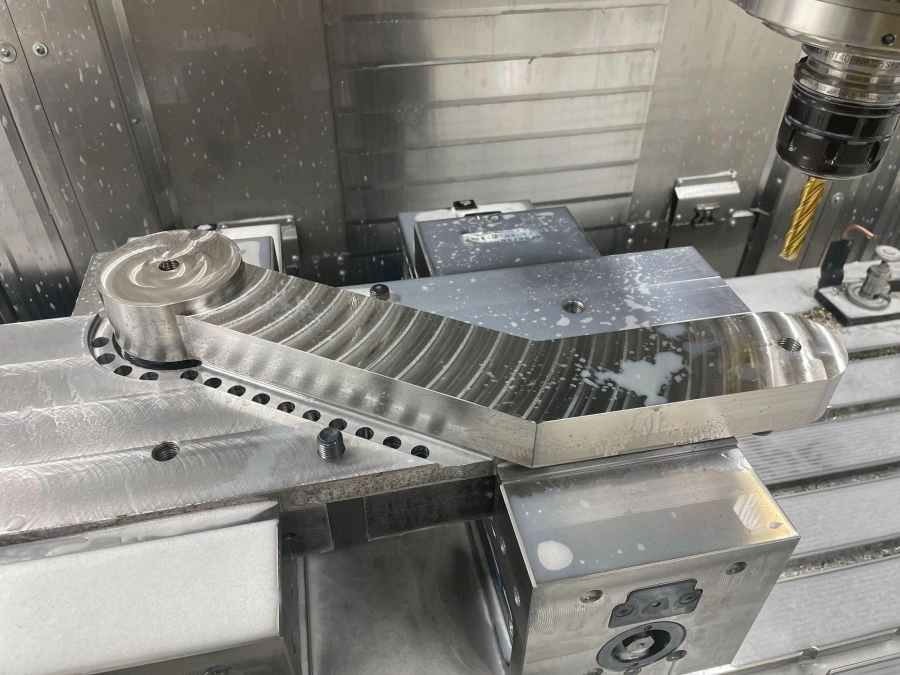
The machining process begins with a solid block of 7075 aluminum. CNC rough milling removes the bulk of the unwanted material, gradually forming the main structure and external contours of the triple clamp.
Subsequent machining operations develop the recessed pockets, mounting features and functional bores. Careful planning of machining sequences and workholding is essential when producing this type of complex component.
Our CNC Machining Process
Manufacturing this motorcycle triple clamp required a sequence of CNC machining and finishing operations. Starting with solid 7075 aluminum stock, the component was progressively machined to produce its external profile, recessed pockets, functional bores and clamping features.
Raw Material Preparation
Prepare a solid 7075 aluminum billet with sufficient stock allowance for machining and secure workholding.
CNC Rough Milling
Remove excess aluminum to establish the main external profile, mounting areas and structural geometry.
Precision CNC Machining
Machine the recessed pockets, fork clamping bores, central steering bore and detailed features.
Deburring & Edge Finishing
Remove machining burrs from slots, holes, pockets and external edges without damaging functional areas.
Final Inspection
Check critical dimensions, functional features and surface condition before final part acceptance.
Rough Milling & Material Removal
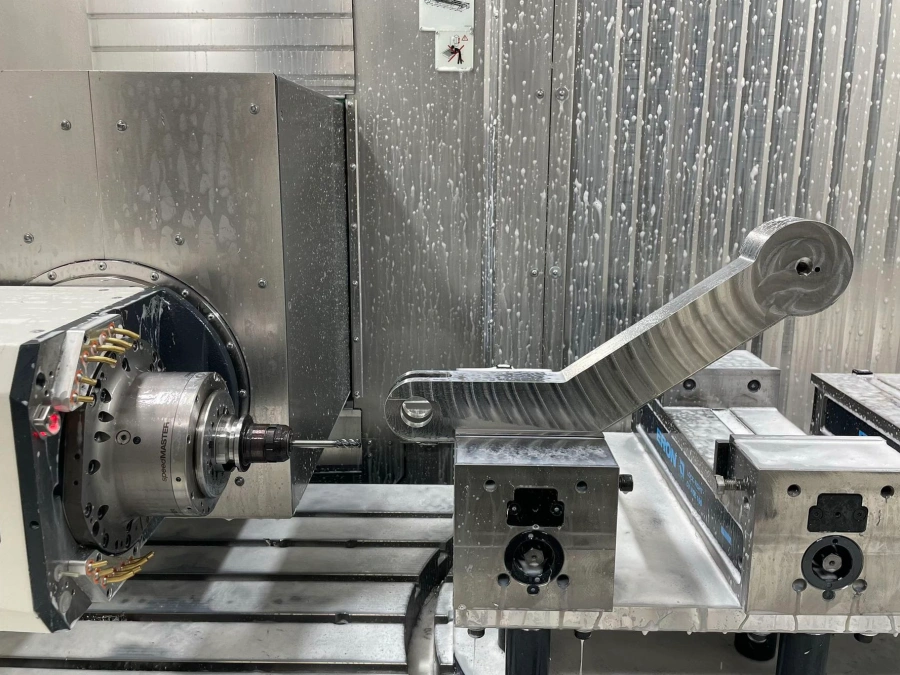
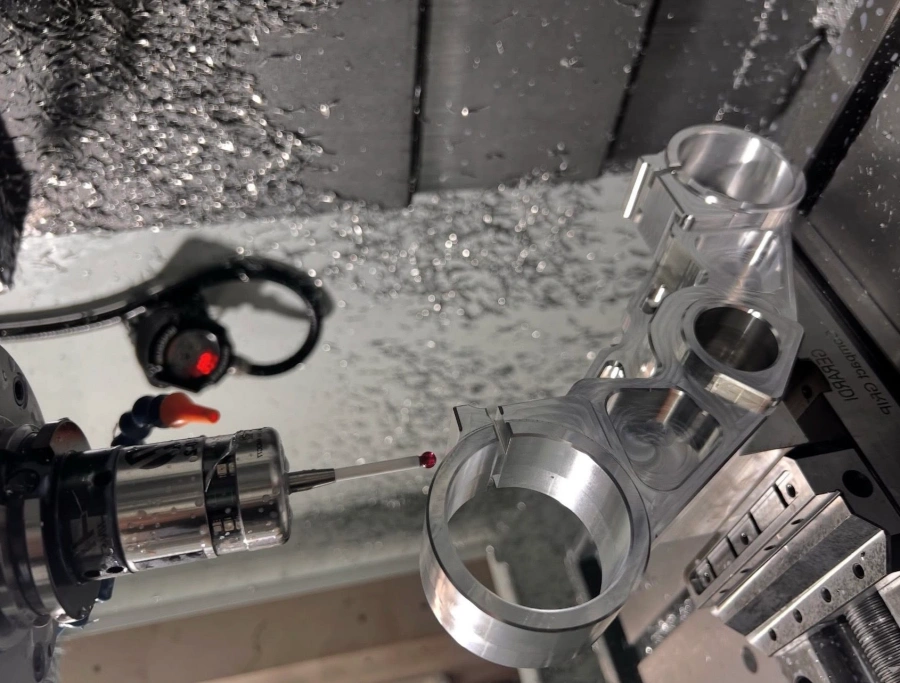
CNC roughing removes a large volume of aluminum from the billet, forming the general profile and preparing the workpiece for subsequent machining operations.
Detailed Features & Precision Machining
Additional machining operations develop the functional bores, split-clamp areas, recessed pockets and complex contours required by the part design.
Manufacturing Consideration
Machining a complex triple clamp from a single aluminum billet requires careful coordination of workholding, machining sequences and cutting strategies. Particular attention is given to the functional bore locations, clamping geometry and edges that require deburring.
Deburring & Quality Control
After CNC machining, the motorcycle triple clamp undergoes careful deburring and edge finishing to remove sharp edges and residual machining burrs.
Particular attention is given to the fork clamping bores, split-clamp slots, fastening holes and recessed pockets. These areas require clean edges without affecting the intended dimensions or functional surfaces.
Dimensional inspection focuses on critical features such as bore sizes, hole locations and the relationships between the fork mounting and steering connection features.
The component retains its natural as-machined aluminum finish, allowing the CNC machining details and surface texture to remain visible.
Finished 7075 aluminum triple clamp featuring clean machined contours, functional mounting bores and deburred edges.
Critical Bore Dimensions
Verify fork clamping bore sizes and central mounting features against the engineering drawing to support the required assembly fit.
Deburring & Edge Quality
Check the edges of clamping slots, holes and milled pockets to ensure residual machining burrs have been removed.
Visual Surface Inspection
Inspect the as-machined surfaces for unwanted scratches, damaged edges and visible machining defects before final delivery.
Finished Part Gallery & Project Results
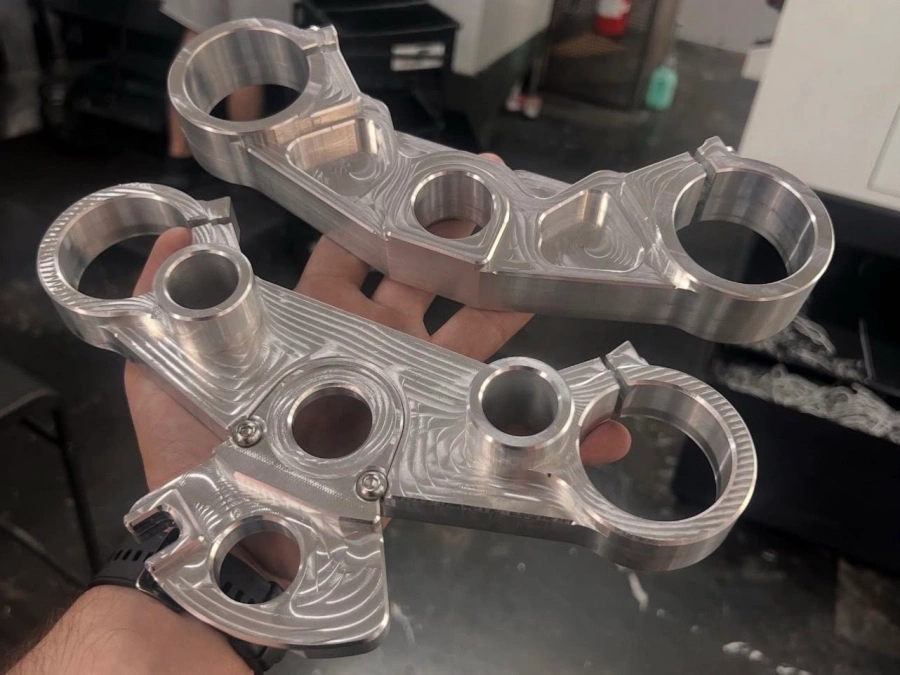
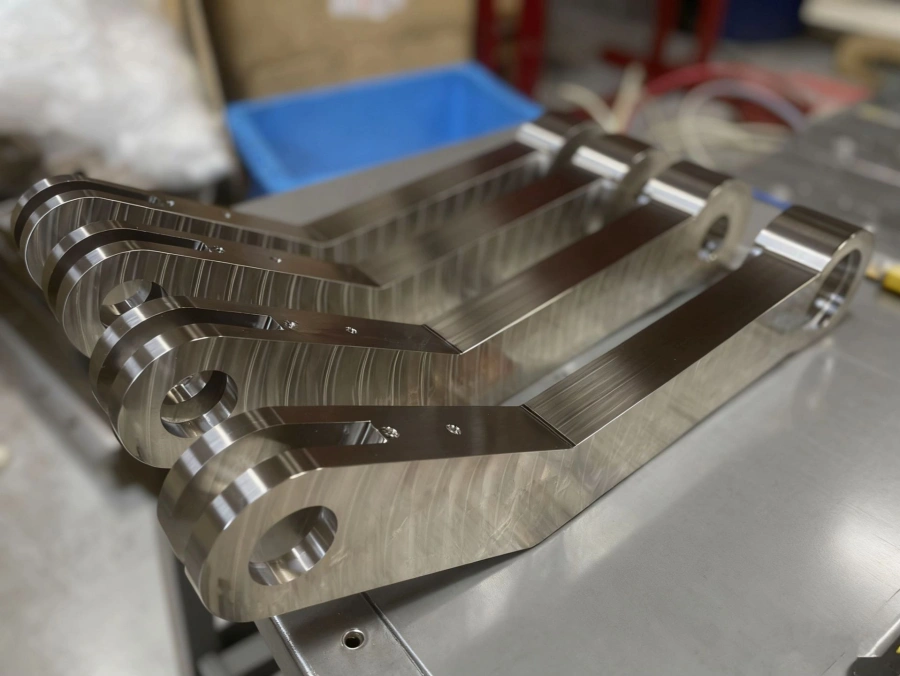
The completed 7075 aluminum motorcycle triple clamp demonstrates the transition from solid billet material to a complex CNC machined component. The finished part features integrated fork clamping sections, recessed pockets, detailed contours and a clean as-machined aluminum surface.
Project Results
This project highlights CNCTAL’s machining capabilities for complex custom aluminum components, particularly where multiple functional features must be integrated into a single part.
One-Piece Aluminum Construction
The main triple clamp body was produced from solid 7075 aluminum, incorporating mounting areas, connecting sections and recessed geometry into one machined component.
Complex Functional Geometry
CNC machining produced the fork mounting bores, split-clamp features, detailed pockets and curved contours required by the component design.
Clean As-Machined Finish
Deburring and edge finishing removed unwanted burrs while preserving the natural machined aluminum appearance and visible CNC surface details.
FAQ — Motorcycle Triple Clamp CNC Machining
Common questions about custom motorcycle triple clamps, 7075 aluminum machining, surface finishing and CNC manufacturing at CNCTAL.
Can CNCTAL manufacture custom motorcycle triple clamps?
Yes. CNCTAL provides custom CNC machining services for aluminum motorcycle components based on customer drawings and 3D CAD models. We can machine complex profiles, mounting bores, clamping features and other precision details.
Why is 7075 aluminum used for motorcycle triple clamps?
7075 aluminum offers a high strength-to-weight ratio and good machinability. It is often considered for structural components where strength, weight and precise machining are important design factors. Final material selection should follow engineering requirements.
Can motorcycle CNC parts receive anodizing or other finishes?
Yes. Depending on the aluminum alloy and application, surface finishing options may include anodizing, bead blasting and other specified treatments. The triple clamp in this case was completed with an as-machined finish and deburring.
What information is needed to request a CNC machining quote?
Please provide your 2D drawings or 3D CAD files, material requirements, quantities, tolerances and surface finish specifications. Our engineering team will review the details and prepare a quotation based on your project.
Need Custom CNC Machined Motorcycle Components?
From one-off prototypes to production quantities, CNCTAL manufactures custom aluminum and metal components based on your engineering drawings. Share your project requirements with our team for a quotation.