

Swiss CNC Machining Services
Precision Swiss CNC machining for small, complex and high-volume turned parts. Ideal for shafts, pins, screws, bushings, connectors and components requiring turning, milling, drilling and threading in a single setup.
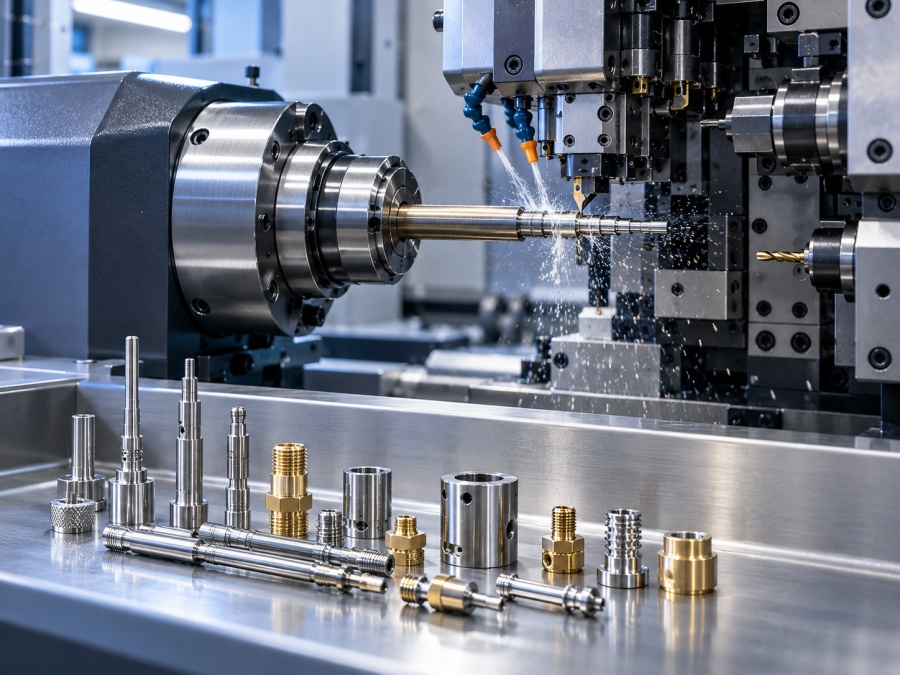
Swiss Machining Services We Provide
Choose the Swiss machining approach that matches your current project stage. Whether you need a small batch for design verification or repeat production of hundreds or thousands of precision parts, CNCTAL can support the project from initial samples through ongoing production.
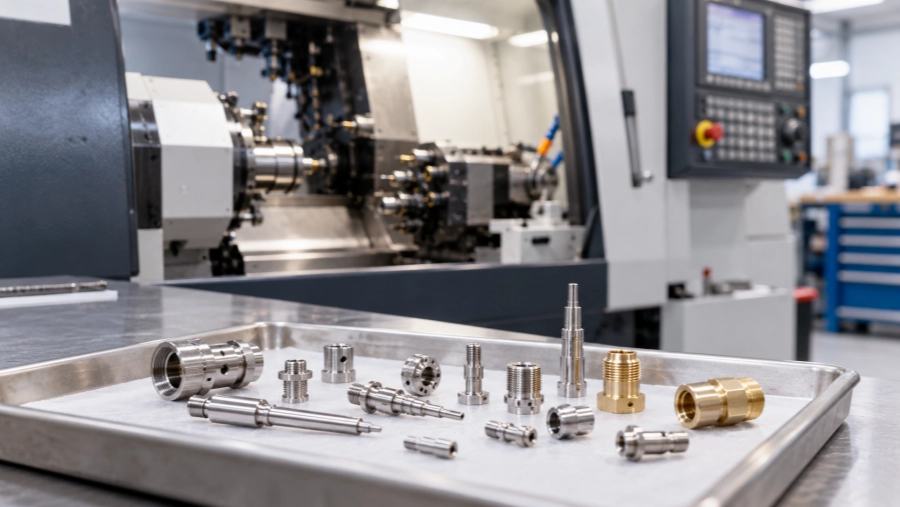
Prototype Swiss Machining
Produce functional Swiss machined parts in production-grade materials before committing to a larger order. Prototype and small-batch machining allows you to verify fit, assembly, dimensions and part performance using the same type of manufacturing process intended for production.
Test fit, assembly and function using real machined parts.
Confirm tolerances and important mating features before scaling.
Identify design or manufacturing issues before larger quantities.
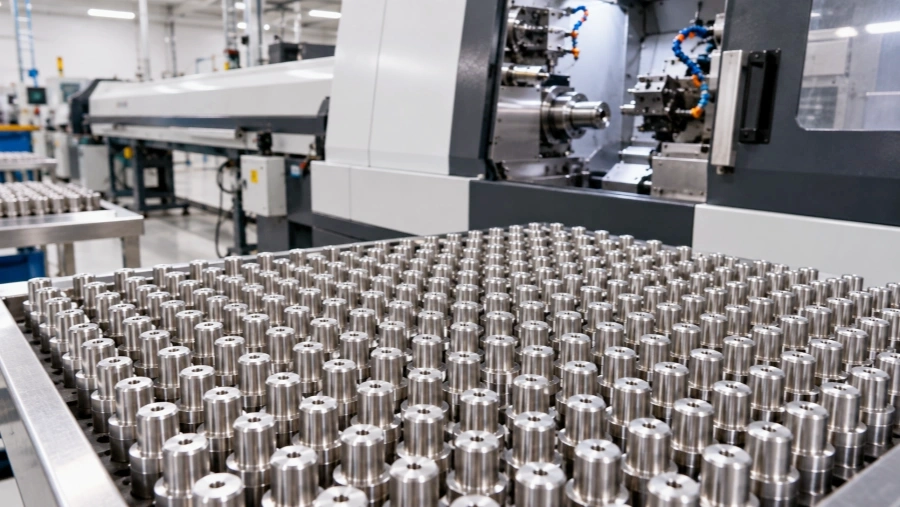
Volume Production Swiss Machining
Swiss CNC machining is particularly effective for repeat production of small and complex components. Automated bar feeding, optimized machining cycles and reduced secondary setups help maintain consistent dimensions while improving production efficiency as quantities increase.
Controlled processes help maintain dimensions across the full batch.
Bar-fed machining reduces manual loading and production interruptions.
Setup and programming costs are distributed across larger production runs.
We Can Review the Best Production Approach from Your Drawing
Quantity alone does not determine whether Swiss machining is economical. Part diameter, geometry, tolerances, material, setup complexity and repeat production requirements all affect the manufacturing strategy.
Swiss CNC Machining Capabilities
CNCTAL supports precision Swiss machining for small and complex components requiring multiple operations, tight dimensional control and consistent production quality. From simple turned parts to components combining turning, milling, drilling and threading, we can support prototype, low-volume and production requirements.
Precision Swiss Turning
Efficient machining of small-diameter shafts, pins, sleeves, bushings and other cylindrical components requiring stable dimensional control.
- OD and ID turning
- Facing and grooving
- Parting and chamfering
- Precision diameter control
Live-Tool Milling
Milling operations can be integrated directly into the Swiss machining cycle, reducing additional setups for parts with complex external features.
- Flats and milled surfaces
- Slots and key features
- Side milling
- Complex secondary geometry
Axial & Cross Drilling
Swiss-type machining is well suited for components requiring multiple holes in different orientations while maintaining accurate feature location.
- Axial drilling
- Cross-hole drilling
- Counterbores and recesses
- Precision hole positioning
Threading & Tapping
Internal and external threads can often be completed within the same machining cycle for screws, fittings, connectors and precision fasteners.
- External threads
- Internal threads
- Tapping
- Custom thread features
Main & Sub-Spindle Machining
Parts can be transferred between spindles so front-side and back-side features can be completed with fewer manual secondary operations.
- Front and back machining
- Reduced manual handling
- Improved concentricity
- More complete parts from one cycle
Production Swiss Machining
Automatic bar feeding and repeatable machining cycles make Swiss CNC especially effective for recurring production of small precision parts.
- Engineering samples
- Low-volume production
- Repeat production runs
- Thousands of precision parts
Reduce Secondary Operations for Complex Small Parts
Combining turning and live-tool operations in one machining cycle can reduce repositioning, shorten production time and improve consistency between critical features.
Swiss CNC Machining vs. Conventional CNC Turning
Both Swiss CNC machining and conventional CNC turning produce high-quality rotational parts, but they are optimized for different applications. Swiss machining is especially effective for small, slender and feature-rich components, while conventional CNC turning is often more economical for larger or simpler turned parts.
Swiss CNC Machining
Conventional CNC Turning
Particularly suitable for compact precision components and bar-fed production parts.
Suitable for a broader range of diameters, including larger shafts, housings, flanges and cylindrical components.
Guide-bushing support helps reduce deflection when machining long, thin components.
Long unsupported sections can be more susceptible to vibration or deflection during cutting.
Turning, milling, drilling, cross drilling and threading can often be completed in one machining cycle.
Complex parts may require additional setups, live tooling or separate machining operations.
Main and sub-spindle machining can complete both ends and multiple features with less manual handling.
More complex parts may require repositioning or secondary milling, drilling or finishing operations.
Automatic bar feeding and optimized cycle times are well suited to hundreds or thousands of identical parts.
Well suited for prototypes, low-volume jobs and production parts where Swiss machining advantages are not necessary.
Choose the Process Based on Your Part — Not Just the Machine
CNCTAL reviews your geometry, material, tolerances, quantity and required features before selecting the most suitable machining process. In some cases Swiss CNC is the best solution; in others, conventional CNC turning provides a simpler and more economical approach.
Typical Swiss Machined Parts We Produce
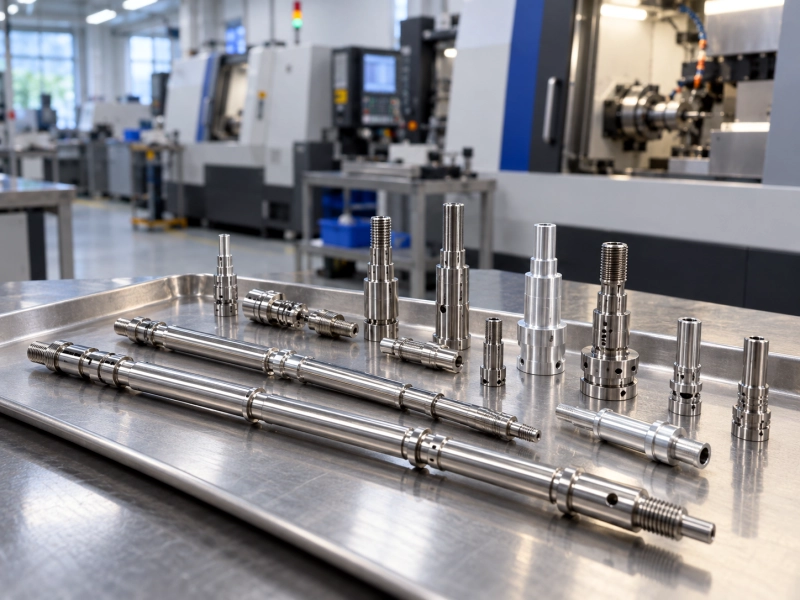
Swiss CNC machining is especially suitable for small, precise and feature-rich components. Below are some of the typical Swiss machined parts CNCTAL can produce based on customer drawings, materials and application requirements.
Precision Shafts
Small-diameter precision shafts with shoulders, grooves, threads, flats and other turned or milled features for mechanical assemblies.
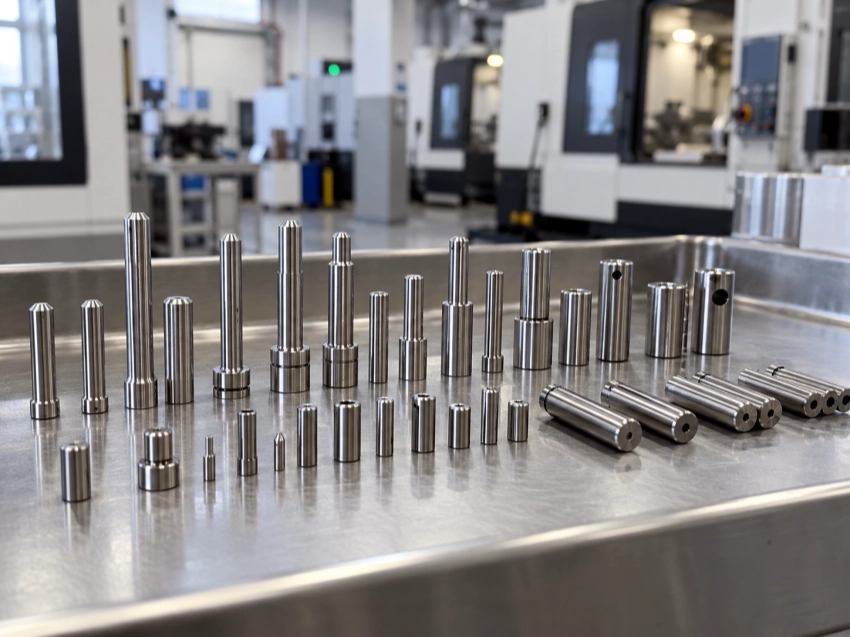
Pins & Dowels
Precision locating pins, pivot pins and custom dowels requiring stable diameter control, smooth finish and consistent batch quality.
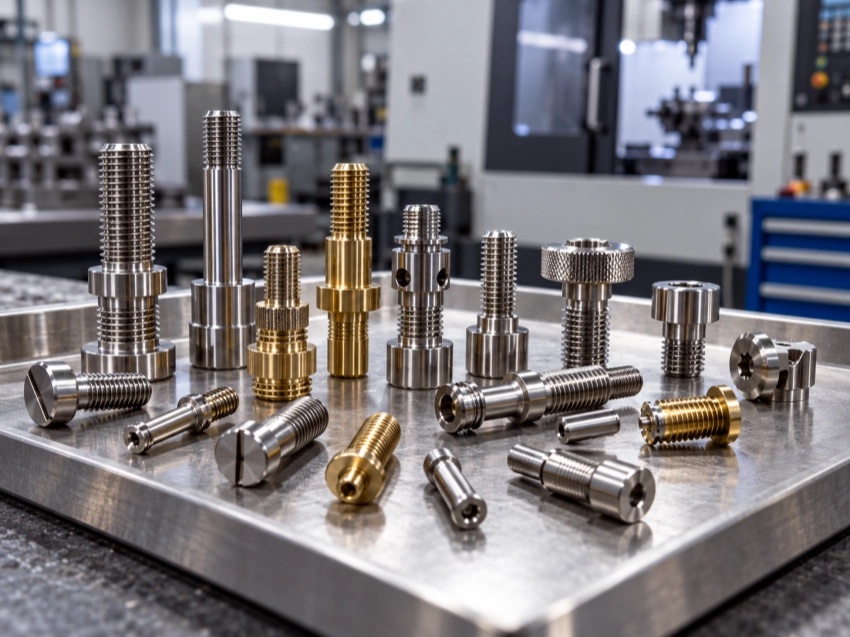
Custom Screws & Fasteners
Special screws, threaded studs and custom fasteners with non-standard heads, threads, grooves and other precision geometric features.
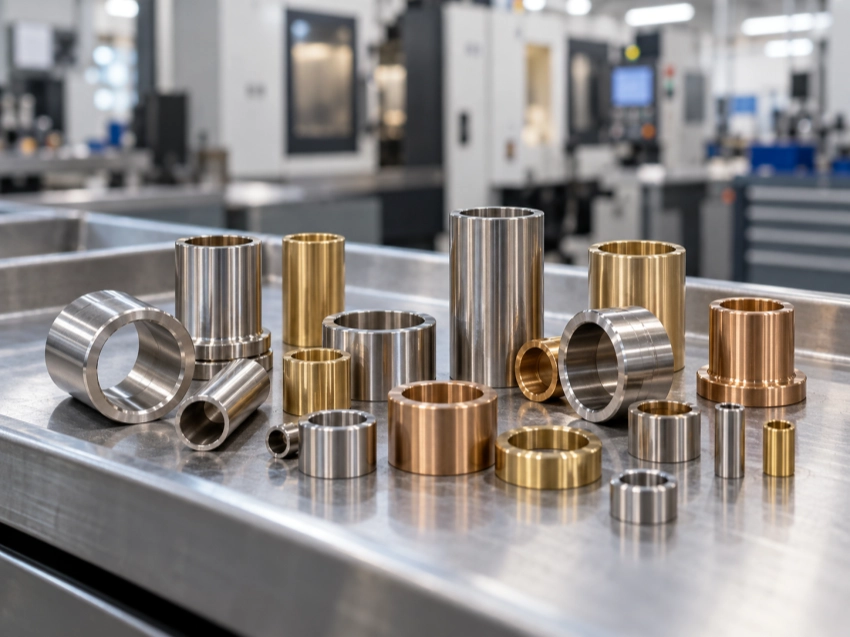
Bushings & Sleeves
Small precision bushings and sleeves with controlled ID, OD, wall thickness and concentricity for motion and support applications.
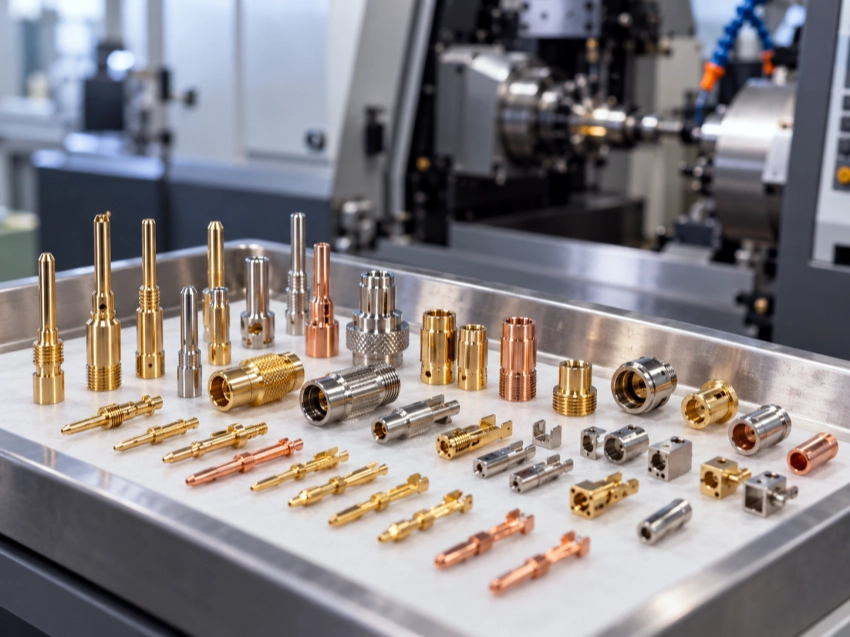
Connectors & Contacts
Small connector components and electrical contact parts requiring precision diameters, slots, threads, bores or conductive features.
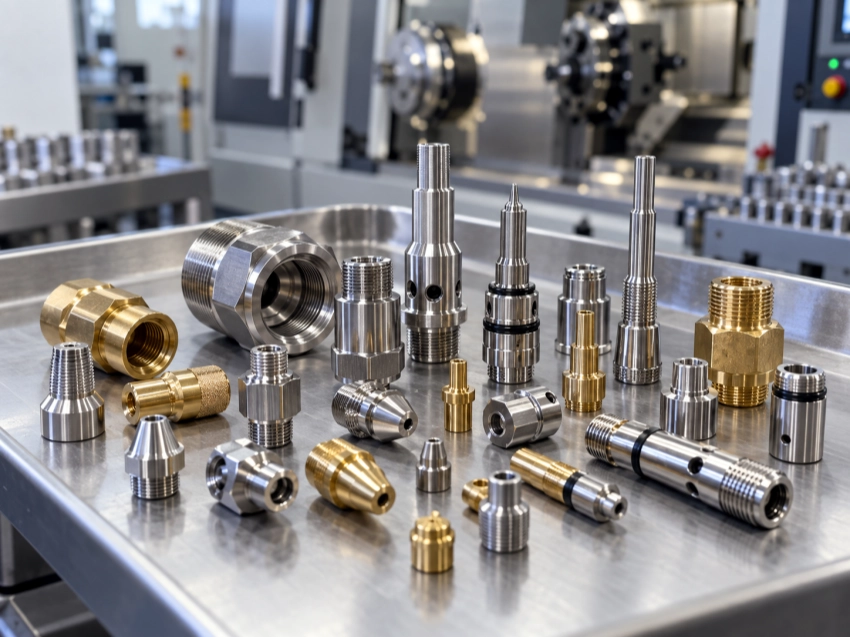
Fittings & Valve Components
Compact fittings, inserts, nozzles and valve-related parts with threads, bores and sealing features machined in one efficient cycle.
Swiss Machined Parts for Different Applications
The examples above represent common categories of Swiss machined components. If your part is small, slender, multi-featured or requires repeat production, CNCTAL can review the drawing and recommend the most suitable machining solution.
Materials for Swiss CNC Machining
CNCTAL machines a wide range of metals and engineering plastics for Swiss CNC components. Material selection affects machinability, cycle time, tool wear, dimensional stability and final part performance, so we review both your drawing and application requirements before production.
Aluminum
Excellent machinability and low weight make aluminum suitable for small shafts, spacers, fittings and precision mechanical components.
Stainless Steel
Widely used for precision pins, shafts, screws, fittings and valve components requiring strength, wear resistance and corrosion protection.
Brass
One of the most suitable materials for Swiss machining due to its excellent machinability, clean cutting behavior and good dimensional consistency.
Copper
Suitable for electrical contacts, connector pins, terminals and small precision components requiring high electrical or thermal conductivity.
Carbon & Alloy Steel
Suitable for high-strength shafts, pins, threaded parts, fasteners and mechanical components requiring durability and wear resistance.
Titanium
Used for lightweight, high-strength and corrosion-resistant precision components in aerospace, instrumentation and demanding industrial applications.
POM / Delrin
A dimensionally stable engineering plastic suitable for small bushings, spacers, rollers, sleeves and precision mechanical components.
PEEK
High-temperature and chemically resistant engineering plastic for demanding precision bushings, insulators, fittings and instrument components.
Industries Using Swiss CNC Machined Parts
Swiss CNC machining is widely used where components are small, precise, feature-rich and produced with consistent repeatability. CNCTAL supports custom Swiss machined parts for industrial, electronic, automation and high-performance applications based on your drawings and specifications.
Electronics
Precision conductive and mechanical components for electronic equipment, connectors, terminals and compact assemblies.
- Connector pins
- Electrical contacts
- Threaded inserts
- Small metal terminals
Automation & Machinery
Small repeatable components used in automated equipment, production systems, motion assemblies and precision machinery.
- Guide pins
- Miniature shafts
- Spacers
- Precision fittings
Medical Equipment
Precision components for non-implant medical devices, diagnostic equipment and laboratory-related mechanisms.
- Instrument components
- Small shafts
- Threaded components
- Precision bushings
Automotive
High-repeatability turned components for automotive systems, sensors, valves, assemblies and mechanical subsystems.
- Sensor components
- Valve parts
- Special fasteners
- Precision pins
Aerospace
Small, high-precision components where dimensional consistency, material performance and traceability are important.
- Precision pins
- Small fittings
- Fastener components
- Instrument parts
Scientific & Instrumentation
Precision miniature components for laboratory equipment, measurement systems and technical instruments.
- Sensor housings
- Adjustment screws
- Miniature fittings
- Instrument shafts
Robotics
Compact mechanical components for robotic joints, actuators, grippers, sensors and motion-control systems.
- Pivot pins
- Actuator shafts
- Threaded inserts
- Precision spacers
Fluid & Pneumatic Control
Swiss machining is well suited for compact fluid-control components requiring threads, bores, sealing features and accurate concentricity.
- Nozzles
- Valve stems
- Orifices
- Miniature fittings
Different Industries Require Different Priorities
A brass connector pin, stainless valve stem and titanium instrument component may all be suitable for Swiss machining, but their material, tolerance, surface finish, inspection and production requirements can be very different. CNCTAL reviews each project according to its actual application rather than using one standard machining approach.
Part diameter, length and feature complexity
Critical dimensions, runout and concentricity
Machinability, strength and application environment
Sample, pilot run or repeat production
Swiss CNC Precision, Tolerances & Quality Control
Precision Swiss machined parts often contain small diameters, close-fitting features, threads and multiple critical relationships in a compact geometry. CNCTAL controls these features through process planning, in-process checks and final inspection based on your drawing requirements.
Dimensional Tolerance
Typical CNC machining tolerances can reach ±0.01 mm depending on material, geometry and feature size. Tighter tolerances are reviewed individually before quotation and production.
Concentricity & Runout
For shafts, bushings, fittings and rotational components, we pay close attention to concentricity, coaxial relationships and runout between critical turned features.
Threads & Functional Features
Internal and external threads can be verified using thread gauges, mating components or dimensional inspection according to the drawing and functional requirement.
Surface Finish & Burr Control
Small Swiss machined parts often require careful burr control, clean edges and stable surface finish, especially around cross holes, grooves, threads and miniature features.
Inspection from First Part to Final Batch
Critical dimensions, tolerances, materials and inspection requirements are reviewed before machining.
Initial parts are measured before full production continues.
Key dimensions are monitored during production to maintain consistency across the batch.
Finished parts are checked against drawing requirements before packing and shipment.
Measurement Tools for Precision Swiss Machined Parts
Tighter Tolerances Require Drawing-Specific Review
Tolerance capability depends on part diameter, feature size, length, material, wall thickness, geometry and measurement method. For critical dimensions below standard machining tolerances, please identify them clearly on the drawing so we can evaluate feasibility and cost before production.
Why Choose CNCTAL for Swiss CNC Machining?
Swiss machining projects are not only about machine capability. Successful production also depends on process planning, material selection, inspection, secondary finishing and reliable communication. CNCTAL coordinates these requirements from quotation through final delivery.
Engineering Review Before Production
We review your geometry, tolerances, material, quantity and critical features before selecting the most suitable Swiss machining process.
- DFM review
- Critical tolerance evaluation
- Process selection
- Cost optimization suggestions
Prototype to Production
CNCTAL can support engineering samples, pilot runs and repeat production, allowing you to validate the design before moving into larger quantities.
- Prototype parts
- Low-volume batches
- Repeat orders
- Production scaling
ISO 9001 Quality System
Quality control procedures support dimensional consistency, traceability and inspection requirements throughout the machining process.
- Incoming material checks
- First article inspection
- In-process measurement
- Final inspection
Wide Material Support
We machine common Swiss CNC materials including stainless steel, brass, aluminum, copper, alloy steel, titanium and engineering plastics.
- Metals and plastics
- Material sourcing support
- Equivalent grade review
- Material certificates on request
Machining + Secondary Finishing
CNCTAL can coordinate machining, deburring, surface finishing, marking and other secondary processes through one project workflow.
- Anodizing
- Passivation
- Black oxide
- Laser marking
Fast & Clear Communication
International CNC projects require fast engineering feedback and clear commercial communication. We aim to keep the quotation and production process straightforward.
- Fast quote response
- English engineering communication
- Drawing revision tracking
- Production updates