

CNC Machining
Polyethylene (PE)
Custom CNC machining for polyethylene parts, including HDPE and UHMW-PE. PE offers excellent impact resistance, low friction, good chemical resistance and very low moisture absorption for a wide range of industrial applications.
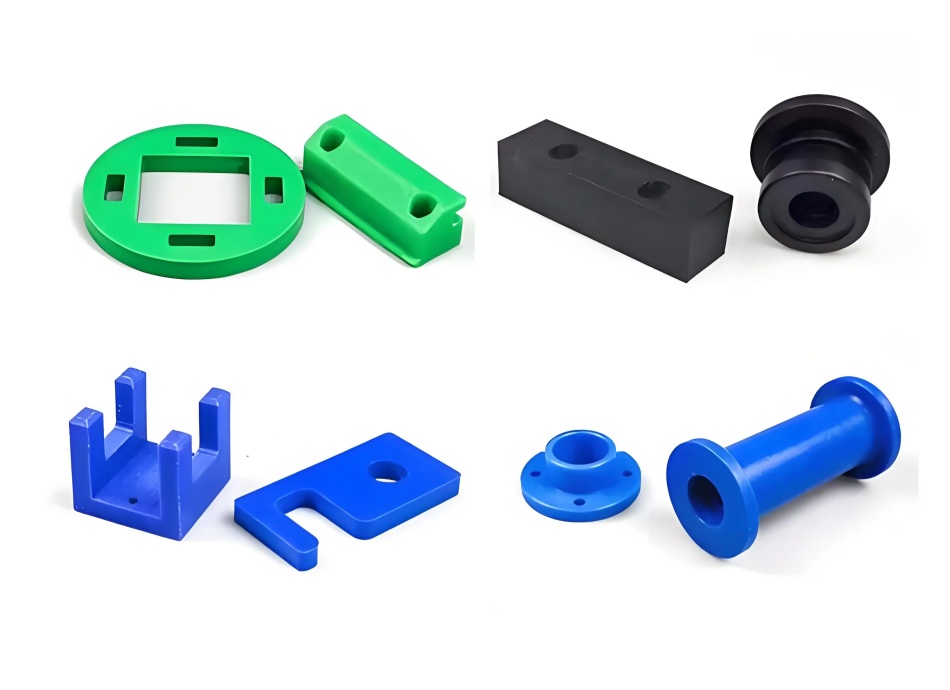
Why Choose PE for CNC Machining?
Polyethylene is a lightweight and durable plastic with good impact resistance, low friction and strong resistance to moisture and many chemicals. HDPE and UHMW-PE are commonly machined into custom industrial components.
Excellent Impact Resistance
PE performs well under impact and repeated mechanical contact, making it suitable for guards, guides and other components exposed to handling or shock.
Low Friction
Especially in UHMW-PE, low friction helps reduce sliding resistance in wear strips, guides, liners and moving mechanical components.
Good Wear Resistance
UHMW-PE offers strong wear performance and is commonly used in parts that experience continuous sliding, rubbing or abrasive contact.
Chemical & Moisture Resistance
PE absorbs very little moisture and resists many chemicals, making it useful for wet environments, fluid systems and chemical-handling applications.
Polyethylene (PE) Material Properties
Polyethylene is a lightweight thermoplastic with low moisture absorption, good chemical resistance and strong impact performance. HDPE and UHMW-PE are commonly selected for CNC machined industrial parts.
| Property | Typical PE Characteristic |
|---|---|
| Density | Approximately 0.93–0.96 g/cm³ depending on grade |
| Water Absorption | Very low |
| Chemical Resistance | Good resistance to many acids, alkalis and chemical solutions |
| Impact Resistance | Very good, especially for tough industrial applications |
| Friction | Low, with UHMW-PE offering particularly good sliding performance |
| Wear Resistance | Good to excellent depending on grade, especially UHMW-PE |
| Machinability | Good, although PE is relatively soft and flexible |
| Electrical Insulation | Good electrical insulating properties |
Common Machining Grades
The two most common polyethylene grades used for CNC machining are HDPE and UHMW-PE, each offering different mechanical characteristics.
- HDPE: more rigid and generally easier to machine to stable dimensions.
- UHMW-PE: lower friction and better wear resistance for sliding and high-wear components.
- Both grades offer very low moisture absorption and good chemical resistance.
- Final grade selection should consider stiffness, wear, friction and tolerance requirements.
Applications for CNC Machined PE Parts
HDPE and UHMW-PE are widely used for machined components that require low friction, good wear resistance, impact strength and reliable performance in wet or chemically exposed environments.
Wear Strips & Guide Rails
UHMW-PE is commonly machined into wear strips and guide rails for conveyors, automation systems and sliding mechanical assemblies.
Rollers & Bushings
Low friction and good impact resistance make PE suitable for rollers, bushings, spacers and other moving or supporting components.
Food Equipment Components
Suitable PE grades are often used for guides, blocks and machine components in food-processing and packaging equipment.
Chemical Handling Parts
HDPE can be used for custom components exposed to moisture, chemical solutions and corrosive industrial environments.
Fluid Handling Components
PE is suitable for custom blocks, supports, fittings and other non-metallic components used around water and fluid systems.
Industrial Machine Parts
PE can be machined into custom pads, plates, guards, supports and other lightweight parts for industrial equipment.
CNCTAL PE Machining Capability
CNCTAL machines custom polyethylene components from HDPE and UHMW-PE stock materials based on customer drawings and 3D CAD models. We support CNC milling, turning and secondary machining for a wide range of industrial part geometries.
CNC Milling
Machining HDPE and UHMW-PE plates, blocks and custom shapes with pockets, holes, slots, profiles and other drawing-defined features.
CNC Turning
Production of PE rollers, sleeves, bushings, spacers, rings and other cylindrical or rotationally symmetric components.
Custom Features
Machining of grooves, counterbores, pockets, holes, slots, mounting features and other custom geometry from engineering drawings.
Prototype & Production Parts
Support for engineering prototypes, functional parts and repeat production based on approved drawings and material specifications.
Dimensional Inspection
Critical dimensions can be checked according to customer drawings using suitable measurement methods before shipment.
HDPE & UHMW-PE Material Support
Material selection can be reviewed according to stiffness, wear resistance, friction, impact and dimensional requirements.
From Your Drawing to Finished Parts
A straightforward process for custom CNC parts, from project review through machining, inspection and delivery.
Send Your Files
Share your CAD files or drawings together with the main project requirements.
Review & Quote
We review manufacturability and provide pricing, lead time and production details.
Machine & Inspect
Parts are produced to the approved requirements and checked during production.
Pack & Deliver
Finished parts are securely packed and shipped to your specified destination.
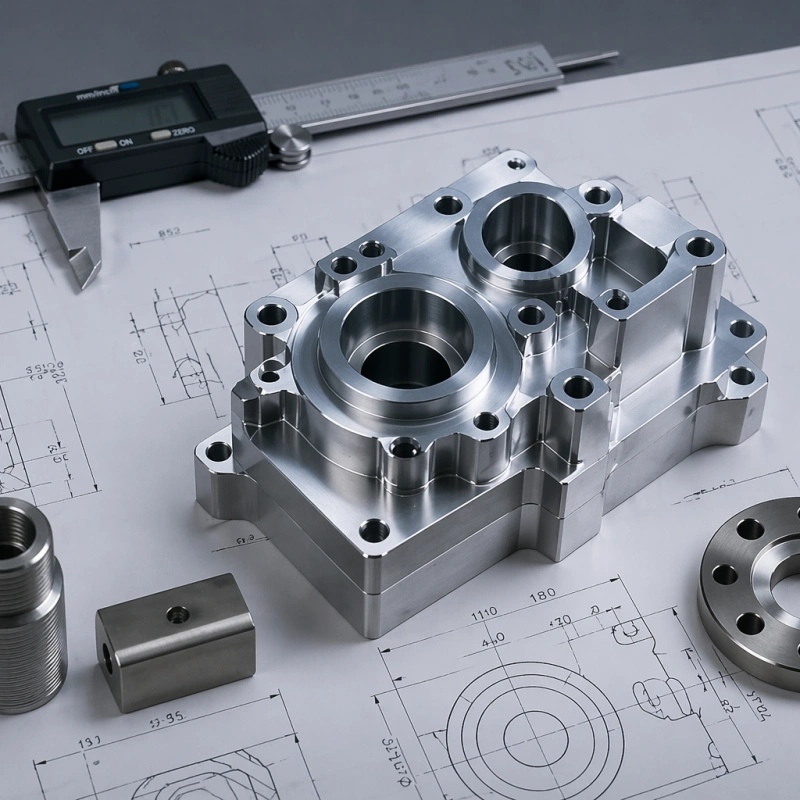
How We Control Part Quality
Quality control is built into every stage of our CNC machining workflow — from drawing review and material verification to in-process inspection and final shipment checks.
Drawing Review
We check drawings, tolerances, materials, finishes, and critical features before production.
Material Inspection
Raw materials are verified to confirm specification, grade, and project requirements.
In-Process Control
Critical dimensions are monitored during machining to maintain accuracy and repeatability.
Final Inspection
Finished parts are checked for dimensions, appearance, surface finish, and packaging condition.
Up to ±0.01 mm Tolerance
Support for precision CNC parts with tight dimensional requirements and stable repeatability.
Reliable Measurement Tools
Inspection with standard measuring tools, 2D vision inspection, and CMM support when required.
ISO-Based Process Control
Structured workflow for material control, machining inspection, documentation, and final verification.