
CNC Milling vs. CNC Turning: What’s the Difference?
CNC milling and CNC turning are two of the most widely used machining processes for producing precision metal and plastic parts.
Both processes use computer-controlled machine tools to remove material from a workpiece, but the way the cutting happens is quite different. This difference affects the types of parts each process can produce, machining efficiency, cost, and even how a part should be designed.
Understanding the basic differences between CNC milling and turning can help engineers and buyers choose a more suitable manufacturing method before requesting a quotation.
What Is CNC Milling?
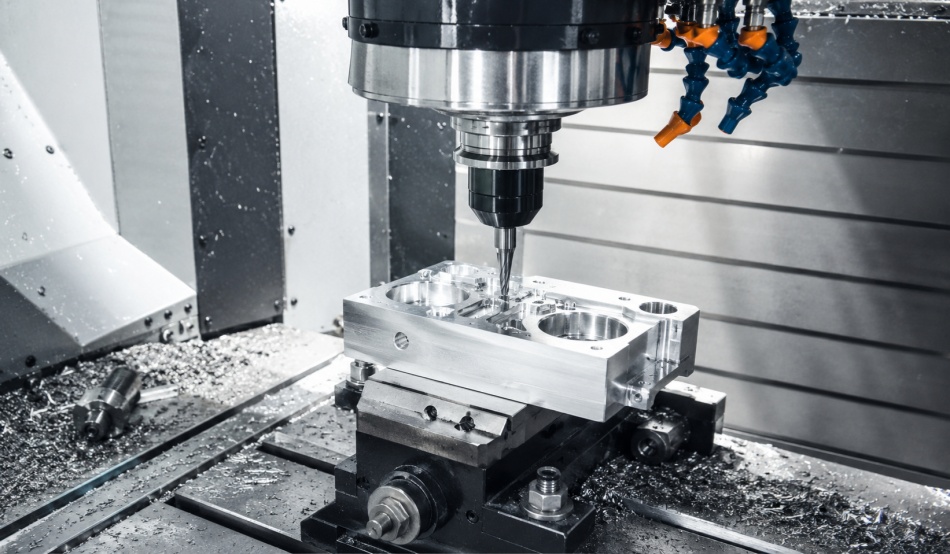
CNC milling is a machining process in which the cutting tool rotates while the workpiece is held in position.
The machine moves the cutting tool or workpiece along multiple axes to remove material and create the required geometry.
Modern CNC milling machines can range from simple 3-axis machines to 4-axis and 5-axis machining centers. Five-axis machining is especially useful for parts with complex surfaces or features that would otherwise require several setups.
CNC milling is commonly used for parts such as:
- Machine brackets
- Aluminum housings
- Electronic enclosures
- Heat sinks
- Manifolds
- Mounting plates
- Fixtures
- Mold components
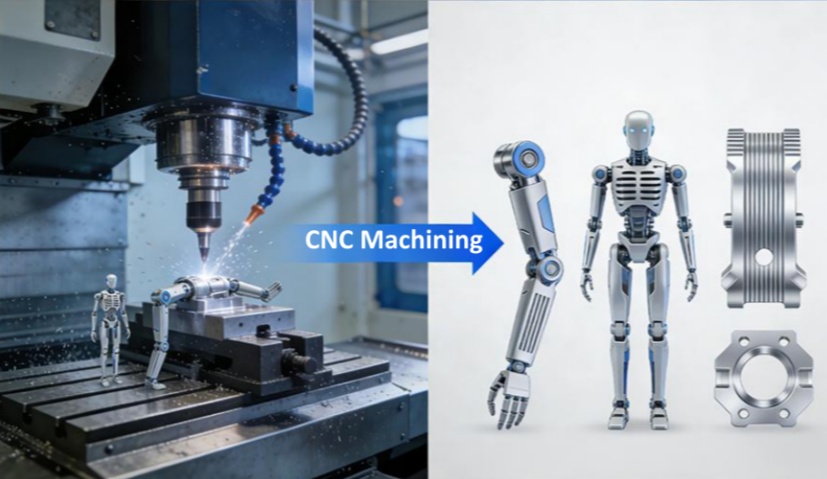
- Robotic components
- Aerospace structural parts
In simple terms, if a component contains flat surfaces, pockets, slots, irregular profiles, or holes located on several faces, CNC milling is often the more suitable process.
What Is CNC Turning?
CNC turning works differently.
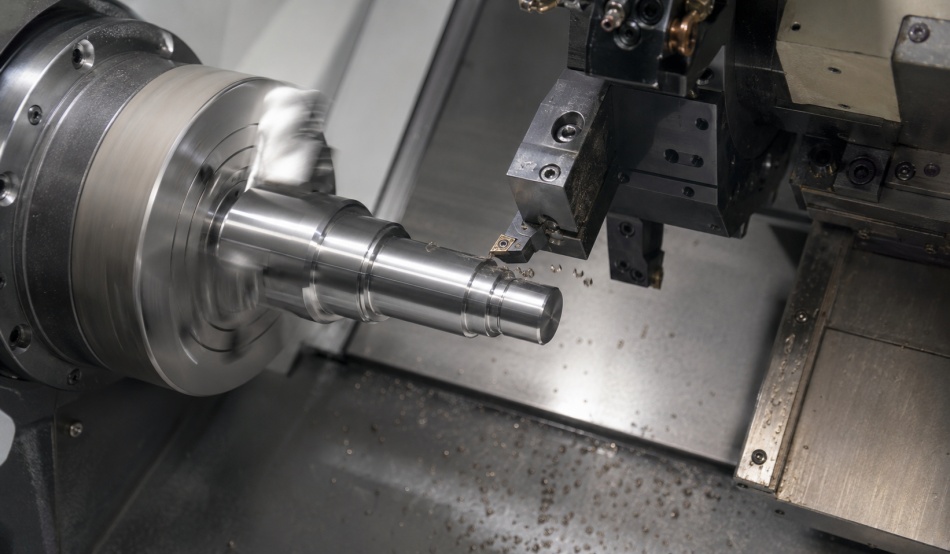
During turning, the workpiece rotates while a cutting tool removes material from it.
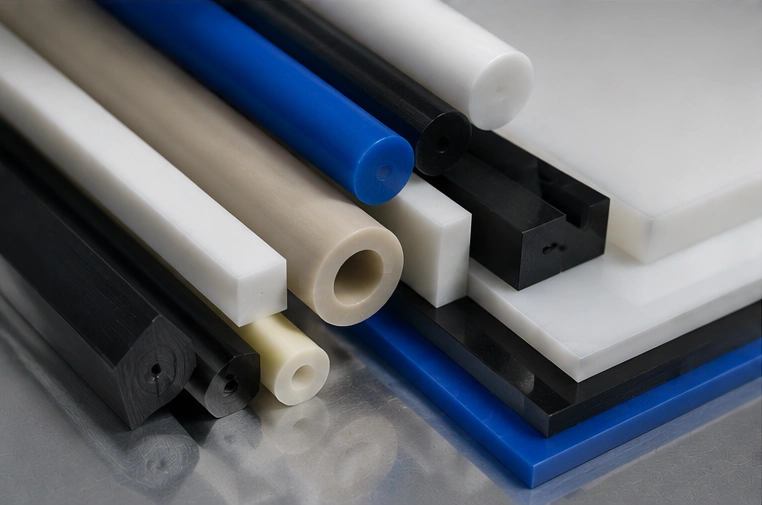
The raw material is normally round bar stock held in a chuck or collet. As the material rotates, the cutting tool moves along the diameter and length of the part to create the required shape.
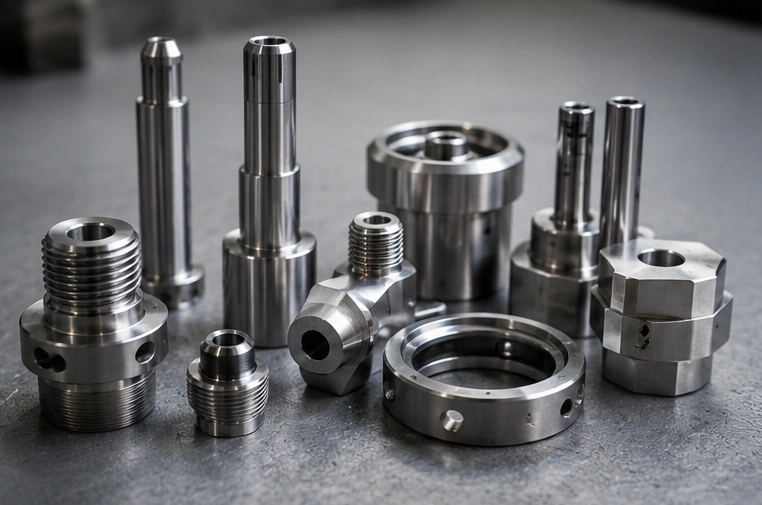
CNC turning is particularly efficient for rotationally symmetrical components.
Typical CNC turned parts include:
- Shafts
- Pins
- Bushings
- Spacers
- Sleeves
- Threaded fittings
- Nozzles
- Connectors
- Rollers
- Hydraulic components
Features such as outside diameters, inside diameters, grooves, tapers and threads can usually be produced efficiently on a CNC lathe.
For a simple round part, turning is normally faster and more economical than trying to machine the same geometry entirely on a milling machine.
CNC Milling vs. Turning: The Main Difference
The easiest way to understand the difference is to look at what rotates during machining.
| CNC Milling | CNC Turning |
|---|---|
| Cutting tool rotates | Workpiece rotates |
| Suitable for non-round and complex shapes | Best for round and cylindrical parts |
| Commonly uses 3, 4 or 5 axes | Mainly works around the centerline of the part |
| Good for pockets, slots and multiple faces | Good for diameters, grooves and threads |
| Common for housings, brackets and plates | Common for shafts, pins and fittings |
Neither process is necessarily more precise or more advanced than the other. The right choice depends mainly on the geometry of the component.
Advantages of CNC Milling
One of the biggest advantages of CNC milling is its flexibility.
A milling machine can create many different features within the same setup, including holes, pockets, threads, angled surfaces and complex contours.
Complex Part Geometry
Multi-axis CNC milling makes it possible to machine complex components that cannot be efficiently produced on a conventional lathe.
This is especially useful for aerospace, robotics, automation and precision equipment components.
Multiple Features in One Setup
With 4-axis or 5-axis machining, several sides of a component can often be machined without repeatedly removing and repositioning the workpiece.
Reducing setups can improve dimensional consistency and reduce machining time.
Wide Material Compatibility
CNC milling can process a wide range of engineering materials, including:
- Aluminum
- Stainless steel
- Carbon and alloy steels
- Brass
- Copper
- Titanium
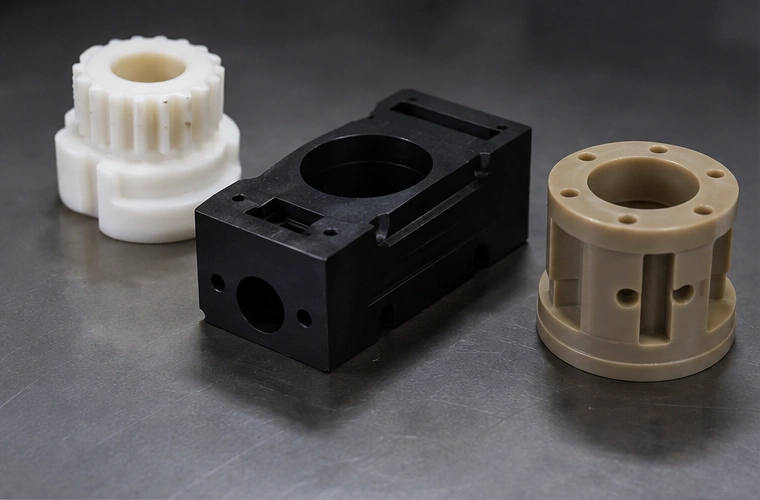
- POM
- Nylon
- PEEK
- PMMA and other engineering plastics
Advantages of CNC Turning
For round components, CNC turning can be extremely productive.
Fast Material Removal
Because the workpiece continuously rotates against the cutting tool, cylindrical surfaces can often be machined quickly.
This makes turning suitable for both prototypes and larger production quantities.
Good Concentricity
Features manufactured in the same turning setup naturally share the same rotational centerline.
This makes CNC turning well suited for components requiring controlled concentricity between internal and external diameters.
Efficient Production from Bar Stock
Many small and medium-sized turned parts can be produced directly from standard round bar.
Automatic bar feeders and Swiss-type CNC lathes can further improve efficiency for larger quantities of small precision parts.
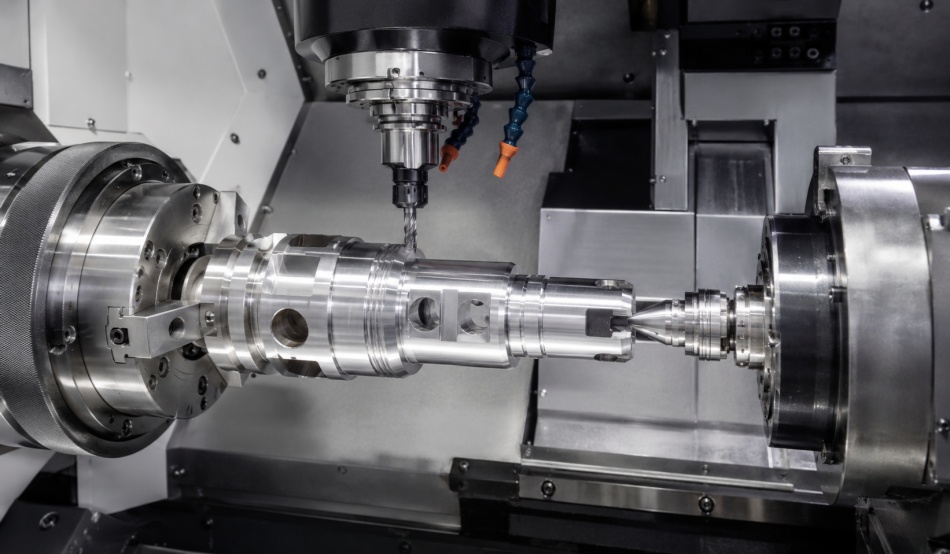
What About Mill-Turn Machining?
Not every component is purely a milling part or a turning part.
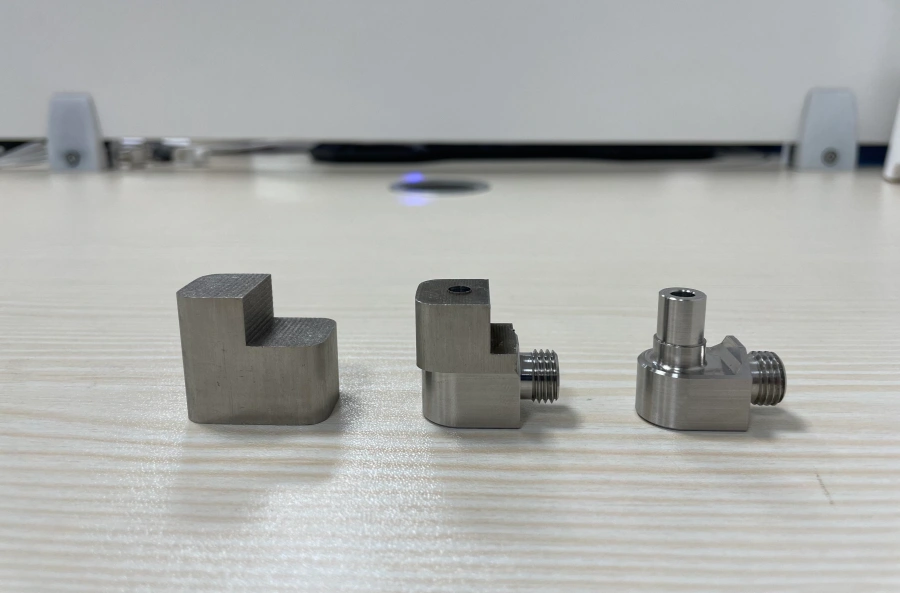
Some components may have a mostly cylindrical body but also require flats, cross holes, slots or off-center features.
In this situation, a CNC mill-turn machine can be useful.
Mill-turn machines combine turning and milling functions in one machine. For example, a shaft can first be turned to its required diameters and then have flats or cross holes milled without moving the component to another machine.
This can reduce:
- Additional setups
- Re-clamping errors
- Production time
- Work-in-process handling
However, mill-turn machining is not automatically the cheapest solution for every part. For simple geometries or small quantities, separate milling and turning operations may still be more economical.
How to Choose Between CNC Milling and Turning
A useful starting point is the basic shape of the part.
If most of the component is rotationally symmetrical, CNC turning should normally be considered first.
If the component is rectangular, irregular or contains features on several different faces, CNC milling will usually be more appropriate.
A round shaft with several diameters and an external thread:
CNC turning is the natural choice.
An aluminum enclosure with a large internal pocket and mounting holes:
CNC milling is more suitable.
A cylindrical connector with wrench flats and side holes:
Turning combined with milling may be the most efficient solution.
An experienced CNC supplier will often decide the final machining route after reviewing the 3D model and 2D drawing.
Design Considerations for CNC Milling
Good part design can significantly reduce CNC milling time and cost.
Avoid Unnecessarily Deep Pockets
Deep and narrow pockets require long cutting tools.
Long tools are less rigid and can create vibration, slower cutting conditions and poorer surface finish.
Whenever possible, avoid extremely large depth-to-width ratios.
Add Internal Corner Radii
A rotating milling cutter cannot produce a perfectly sharp internal corner. Internal corners therefore require a radius.
Larger corner radii usually allow larger and more rigid tools to be used, which can improve machining efficiency.
Specifying very small internal radii where they are not functionally necessary can increase machining time.
Avoid Very Thin Walls
Thin walls can flex during machining, particularly in aluminum and engineering plastics.
This may make it difficult to maintain dimensional tolerances and surface quality.
Increasing wall thickness where possible can make the component easier and less expensive to manufacture.
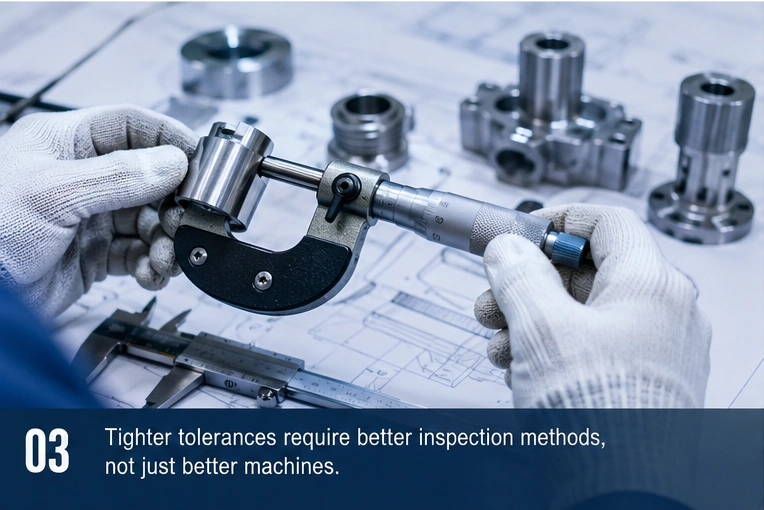
Use Tight Tolerances Only Where Necessary
A general CNC machined component does not need every dimension to have extremely tight tolerances.
Tighter tolerances may require slower machining, additional setups and more inspection.
Apply critical tolerances mainly to functional features such as:
- Bearing seats
- Locating surfaces
- Precision holes
- Mating features
This usually provides better cost control without affecting part performance.
Design Considerations for CNC Turning
Turning also has several design considerations.
Consider Available Bar Sizes
If the maximum diameter of the component is close to a standard bar-stock diameter, material usage can be efficient.
If the design requires machining away a large amount of material from oversized stock, material and machining costs increase.
Watch Long, Thin Parts
Long shafts with small diameters can bend or vibrate during turning.
Additional support such as a tailstock, steady rest or Swiss-type machining method may be necessary.
The length-to-diameter ratio should therefore be considered during the design stage.
Reduce Unnecessary Grooves and Special Threads
Very narrow grooves, deep internal features or unusual thread specifications may require special tooling.
Standard thread sizes and practical groove geometries are normally easier and less expensive to manufacture.
Avoid Sharp Internal Transitions
Small radii are often present at shoulders because turning inserts have a defined tool nose radius.
If two surfaces must meet with a specific sharp condition, this requirement should be clearly indicated on the drawing.
Which Process Is More Expensive?
There is no fixed answer.
For a simple round component, CNC turning is generally faster and therefore less expensive.
For a rectangular or complex part, CNC milling may be the only practical choice.
Cost is influenced by many factors beyond the machining process itself:
- Material
- Part size
- Geometry
- Quantity
- Tolerance requirements
- Surface finish
- Number of setups
- Inspection requirements
- Special tooling
The most important factor is choosing a machining strategy that matches the geometry of the part.
Trying to produce a turning-style component mainly by milling, or a milling-style component with unnecessary turning operations, usually adds cost without improving the final part.
Can a Part Require Both Milling and Turning?
Yes, and this is very common.
Many precision mechanical components combine rotational features with milled features.
For example, a component may require:
- CNC turning to produce the main outside diameter, bore and thread.
- CNC milling to produce flats, slots or side holes.
- Deburring and surface finishing.
- Final dimensional inspection.
Depending on the geometry, these operations can be completed using separate machines or a CNC mill-turn machining center.
The best manufacturing route depends on production quantity, tolerance requirements and available equipment.
Final Thoughts
CNC milling and CNC turning are not competing technologies. They are complementary machining processes designed for different types of geometry.
A simple rule is:
Round, rotational parts → consider CNC turning first.
Prismatic, irregular or multi-face parts → consider CNC milling first.
For components that contain both types of features, a combination of milling and turning may provide the best result.
Good CNC part design is equally important. Practical tolerances, reasonable wall thicknesses, suitable internal radii and standard features can make parts easier to machine while reducing unnecessary manufacturing costs.
If you are unsure which machining process is suitable for your component, providing your supplier with a STEP file and a 2D drawing is usually the best starting point. An experienced CNC machining team can then evaluate the geometry and recommend an appropriate manufacturing method.