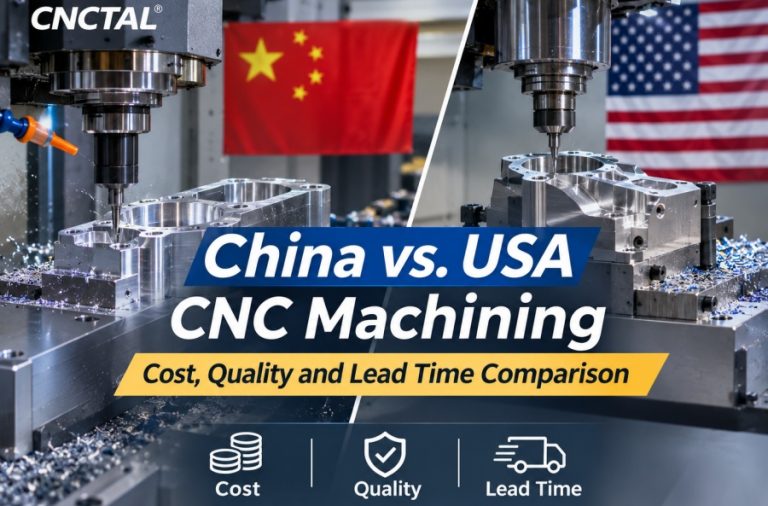

How to Compare CNC Machining Quotes from Different Suppliers
When purchasing custom CNC machined parts, it is common to receive very different quotations from different suppliers.
One supplier may quote $25 per part, while another quotes $40 or even $60.
The lowest price is not always the best choice.
For purchasing teams, the real goal is to find a supplier that provides the right balance of price, quality, lead time, communication, technical capability, and delivery reliability.
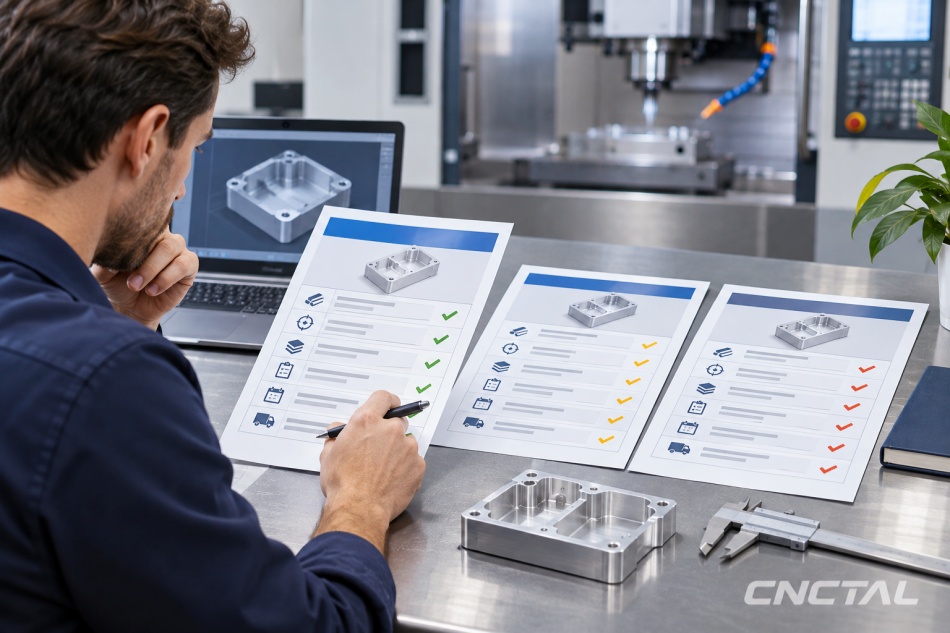
1. Compare the Same Scope
Before comparing prices, make sure all suppliers are quoting the same requirements.
Check that each quotation uses the same:
- Material
- Quantity
- Tolerance
- Surface finish
- Heat treatment
- Inspection requirement
- Shipping term
- Packaging requirement
A quotation can look cheaper simply because one supplier has excluded something.
For example, one quote may include machining only, while another includes anodizing, inspection reports, and packaging.
2. Check the Material Specification
Material can create a large price difference.
For example, 6061 aluminum, 7075 aluminum, 304 stainless steel, 316 stainless steel, titanium, and PEEK all have different raw material and machining costs.
Also check whether the quotation includes:
- Exact material grade
- Material certificate
- Heat treatment condition
- Equivalent material or exact specification
If the drawing requires 7075-T6, make sure the supplier is not quoting a lower-cost substitute.
3. Review Tolerances Carefully
Tolerances have a major effect on CNC machining cost.
A part with general tolerances is usually much easier to produce than a part requiring ±0.01 mm on many features.
When comparing quotations, ask:
- Are all drawing tolerances included?
- Are critical fits understood?
- Are GD&T requirements included?
- Is CMM inspection required?
A very low quotation may sometimes indicate that the supplier has not fully understood the drawing or inspection requirements.
4. Compare Machining Process and Setup
Two suppliers may use different manufacturing methods for the same part.
For example:
- 3-axis milling with several setups
- 3+2 machining
- 5-axis machining
- Turning plus milling
- Mill-turn machining
The process affects both price and quality.
A supplier with suitable equipment may complete the part with fewer setups, reducing handling, alignment errors, cycle time, and inspection risk.
5. Look at Surface Finish
Do not assume that every quotation includes the same finish quality.
Check whether the supplier includes:
- As-machined finish
- Bead blasting
- Anodizing
- Hard anodizing
- Passivation
- Black oxide
- Powder coating
- Polishing
- Plating
For cosmetic parts, also confirm color, texture, visible surface, scratch, and dent requirements.
6. Compare Inspection and Quality Control
A good CNC quotation should match the inspection level required by the part.
Ask what is included:
- Basic dimensional inspection
- CMM inspection
- Thread gauges
- Surface roughness inspection
- First Article Inspection
- Full dimensional report
- Material certificate
For simple parts, basic inspection may be enough.
For critical components, more detailed inspection may be necessary.
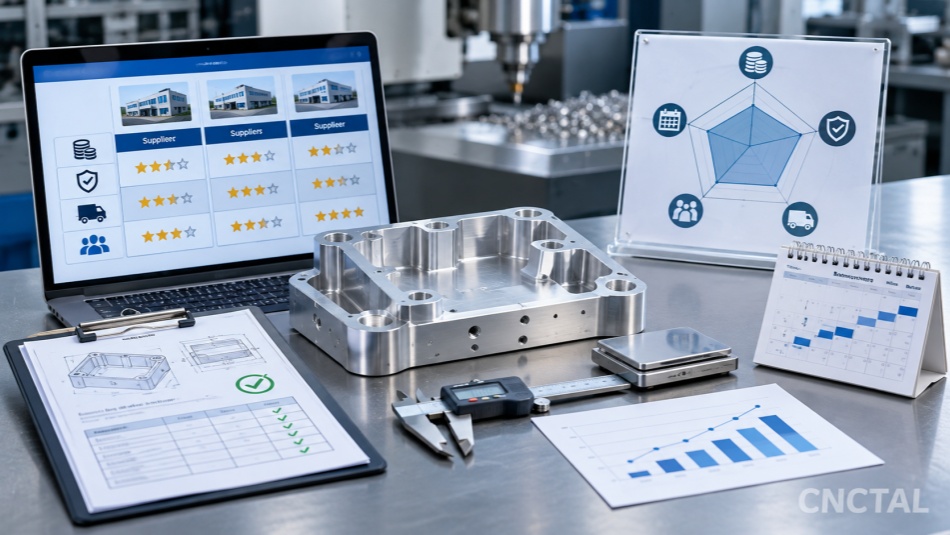
7. Check Whether Tooling or Fixture Costs Are Included
Some CNC parts require:
- Soft jaws
- Custom fixtures
- Special cutters
- Form tools
- Inspection fixtures
One supplier may include these costs in the unit price, while another may list them separately.
Make sure you understand whether the quoted price includes all setup and tooling charges.
8. Compare Unit Price at Different Quantities
Do not compare only one quantity.
If possible, ask suppliers to quote several levels:
- 10 pcs
- 50 pcs
- 100 pcs
- 500 pcs
This helps you understand how efficiently each supplier can scale production.
A supplier may be competitive for 10 prototypes but expensive at 500 pieces.
Another supplier may have a higher prototype price but much better production pricing.
9. Review Lead Time
Price is only one part of purchasing cost.
Compare:
- Sample lead time
- Production lead time
- Surface finishing time
- Inspection time
- Shipping time
Also ask whether the quoted lead time starts from purchase order, payment, drawing approval, or material arrival.
10. Consider Shipping Terms
A CNC quotation may be:
- EXW
- FCA
- FOB
- DAP
- DDP
These terms can make quotations look very different.
Purchasing teams should compare total landed cost, not only the factory unit price.
11. Evaluate Communication Quality
Communication is an important part of supplier selection.
A good CNC supplier should be able to:
- Understand engineering drawings
- Identify unclear requirements
- Ask useful technical questions
- Respond quickly
- Explain manufacturing risks
- Suggest practical alternatives
If a supplier simply sends a very low price without asking any questions on a difficult drawing, that can be a warning sign.
12. Look for Engineering Feedback
The best CNC suppliers do more than quote a price.
They can identify design features that may create problems, such as:
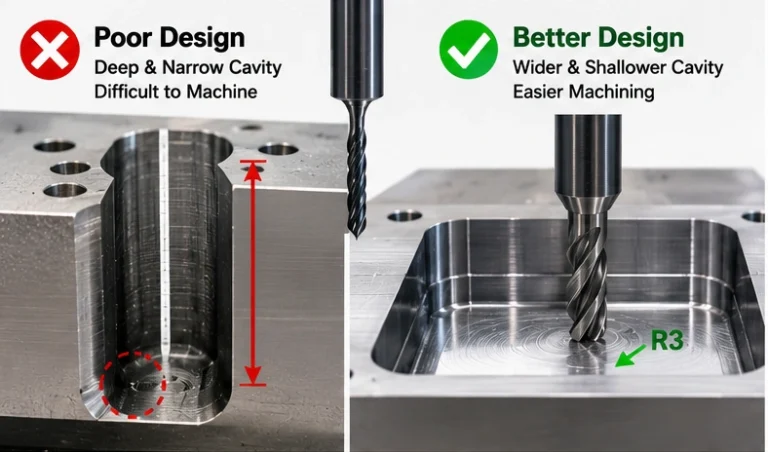
- Thin walls
- Deep pockets
- Small internal radii
- Difficult tolerances
- Tool-access problems
- Warping risks
- Surface-treatment issues
For example, a supplier may recommend increasing an internal radius or changing a tolerance to reduce machining cost.
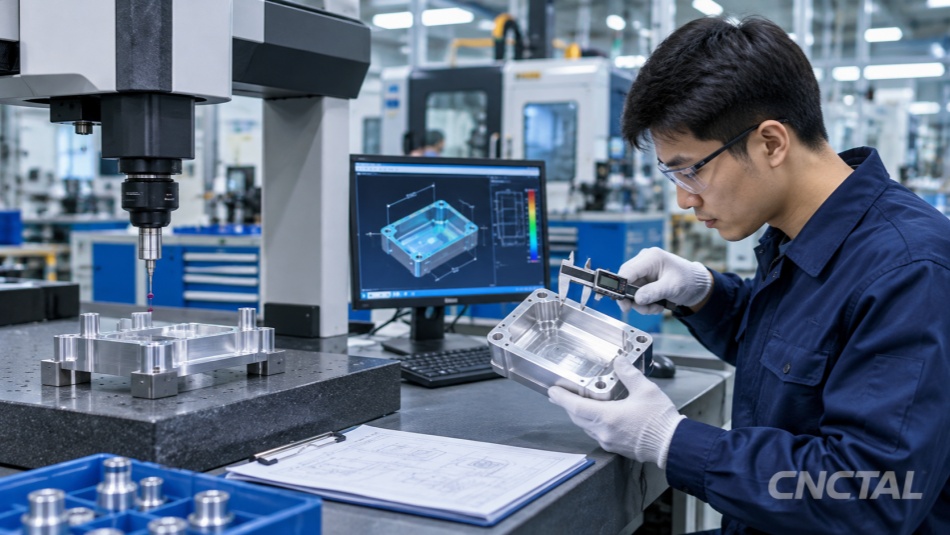
13. Check Similar Part Experience
A supplier does not need to have made the exact same part before, but relevant experience is useful.
Ask whether they regularly machine:
- Similar materials
- Similar part sizes
- Similar tolerances
- Similar geometries
- Similar industries
A supplier experienced with aluminum housings may be a better choice for a complex enclosure than a shop focused mainly on simple turned parts.
14. Consider Repeatability for Future Orders
For purchasing teams, one successful sample is not enough.
If the project will repeat, ask whether the supplier can maintain:
- Material consistency
- Dimensions
- Surface finish
- Color
- Inspection method
- Lead time
15. Be Careful With Extremely Low Quotes
A very low CNC quotation deserves additional review.
Possible reasons include:
- Missing surface treatment
- Wrong material assumption
- Incomplete tolerance review
- Limited inspection
- Underestimated machining time
- Different shipping terms
This does not mean the cheapest supplier is always wrong.
It simply means the quotation should be checked carefully before placing the order.
16. Compare Total Value, Not Only Unit Price
| Comparison | Supplier A | Supplier B |
|---|---|---|
| Unit Price | Lower | Slightly higher |
| Engineering Feedback | Limited | Detailed |
| Inspection | Extra charge | Included |
| Lead Time | Longer | Shorter |
| Repeat Production | Unknown | Established process |
Supplier B may provide better total value even if the unit price is higher.
Why Many Global Manufacturers Source CNC Parts from Dongguan, China
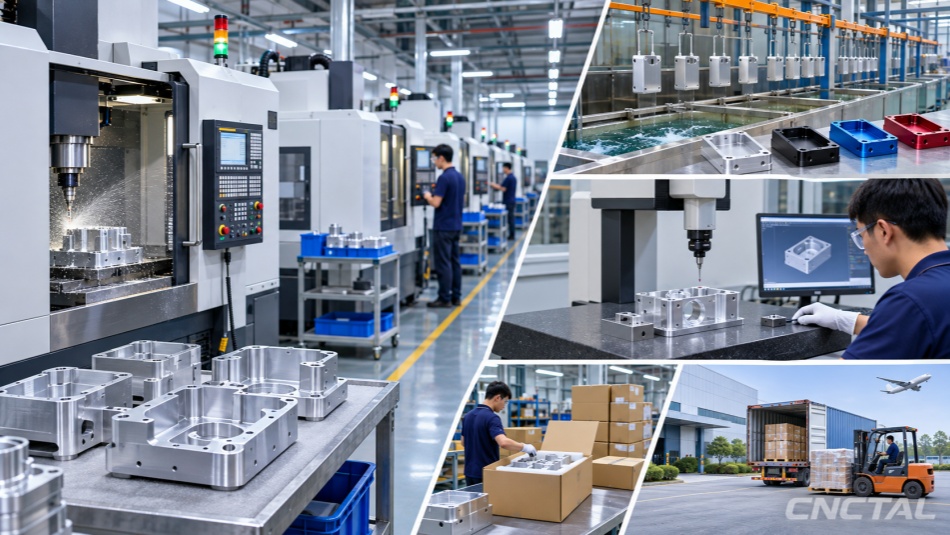
Dongguan, Guangdong is one of China’s major manufacturing centers.
Many international companies source components from this region because it has a dense manufacturing supply chain covering:
- CNC machining
- Tooling
- Raw materials
- Heat treatment
- Anodizing and plating
- Sheet metal
- Injection molding
- Assembly
- Export logistics
The advantage is not simply lower labor cost.
The bigger advantage is often the combination of manufacturing capacity, supplier density, technical experience, and fast access to supporting processes.
A Simple CNC Quote Comparison Checklist
- Material specification
- Quantity
- Tolerances
- Machining process
- Surface finish
- Inspection level
- Tooling and fixture charges
- Lead time
- Shipping terms
- Engineering support
- Similar part experience
- Repeat production capability
Final Thoughts
Comparing CNC machining quotations is not only about finding the lowest unit price.
The best supplier is usually the one that offers the best balance of:
- Correct technical understanding
- Reliable quality
- Competitive pricing
- Reasonable lead time
- Good communication
- Stable repeat production
A slightly higher quotation can often be the safer and more economical choice if it reduces rework, delays, and quality problems.
For purchasing teams, the best approach is to send the same RFQ package to each supplier and compare the full manufacturing scope.
Need a CNC Machining Quote for Comparison?
CNCTAL manufactures custom CNC parts from prototypes to repeat production and supports customers with material review, manufacturability feedback, inspection, and surface finishing.
Send us your STEP file, drawing, material, quantity, and finishing requirements for review.
Request a CNC Machining Quote