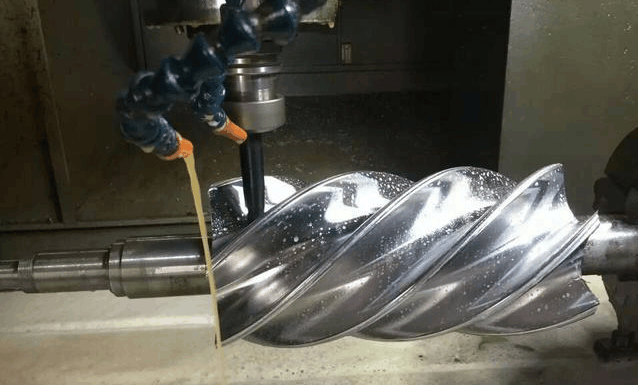

What to Check Before Ordering CNC Machined Parts from China
Ordering CNC machined parts from China can be a practical way to reduce manufacturing cost and access a large precision machining supply base.
But a low quotation alone does not guarantee a successful project.
Before placing an order, buyers should confirm that the supplier understands the drawing, has the right machining capability, can control material and inspection, and clearly understands delivery and export requirements.
This guide explains the most important things to check before ordering CNC machined parts from China.
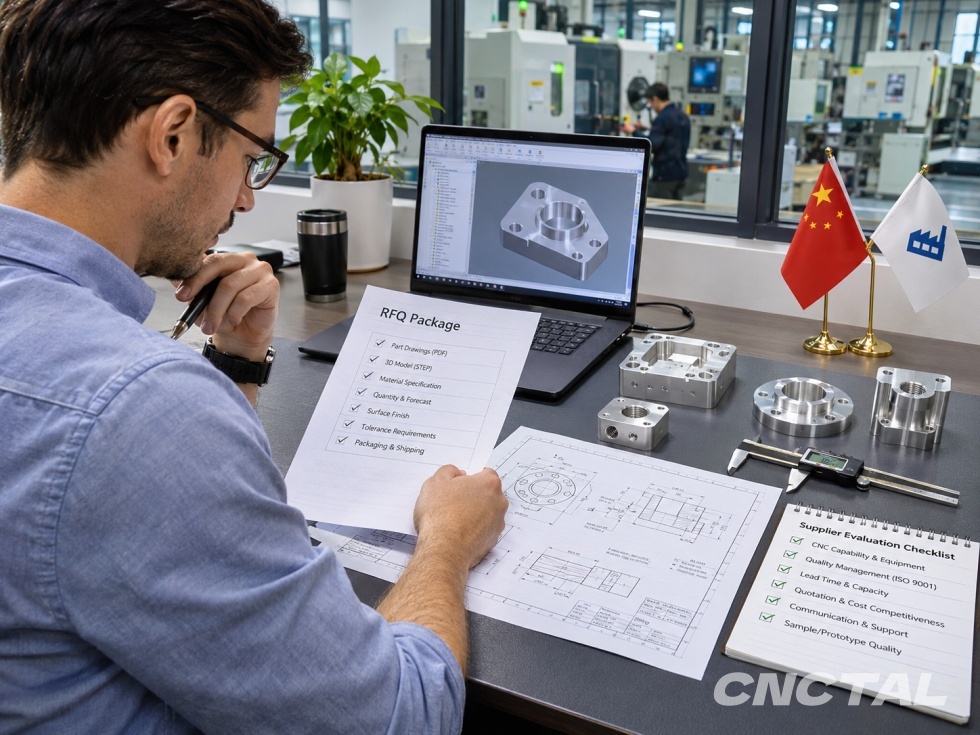
1. Send a Complete RFQ Package
The quality of the quotation depends heavily on the information you provide.
A good CNC machining RFQ should include:
- STEP or other 3D CAD file
- 2D engineering drawing
- Material grade
- Quantity
- Important tolerances
- Surface finish
- Heat treatment if required
- Inspection requirements
- Delivery destination
If you expect future production, also provide estimated annual volume.
Example:
Prototype: 5 pcs
First production batch: 100 pcs
Estimated annual demand: 1,000 pcs
This helps the supplier choose a more suitable manufacturing process and prepare realistic quantity pricing.
2. Confirm the Drawing Revision
One of the simplest sourcing mistakes is using the wrong drawing revision.
Before placing the purchase order, both buyer and supplier should confirm:
- Part number
- Drawing revision
- CAD revision
- Material
- Quantity
- Surface finish
The purchase order should clearly reference the approved drawing revision.
3. Check Whether the Supplier Can Actually Make Your Part
A factory may advertise many CNC machines, but machine quantity alone does not prove that it is suitable for your project.
The important question is whether the supplier has experience with your specific requirements.
Check:
- Part size
- Material
- Tolerance
- Geometry
- Required machining process
- Batch quantity
A supplier focused on simple turning may not be the right choice for a large 5-axis aluminum housing, while a prototype-focused shop may not be ideal for repeat production of thousands of parts.
4. Ask About the Actual Manufacturing Process
A professional supplier should be able to explain how the part will be produced.
Depending on the geometry, this may include:
- CNC turning
- 3-axis milling
- 4-axis machining
- 5-axis machining
- Mill-turn machining
- EDM
- Grinding
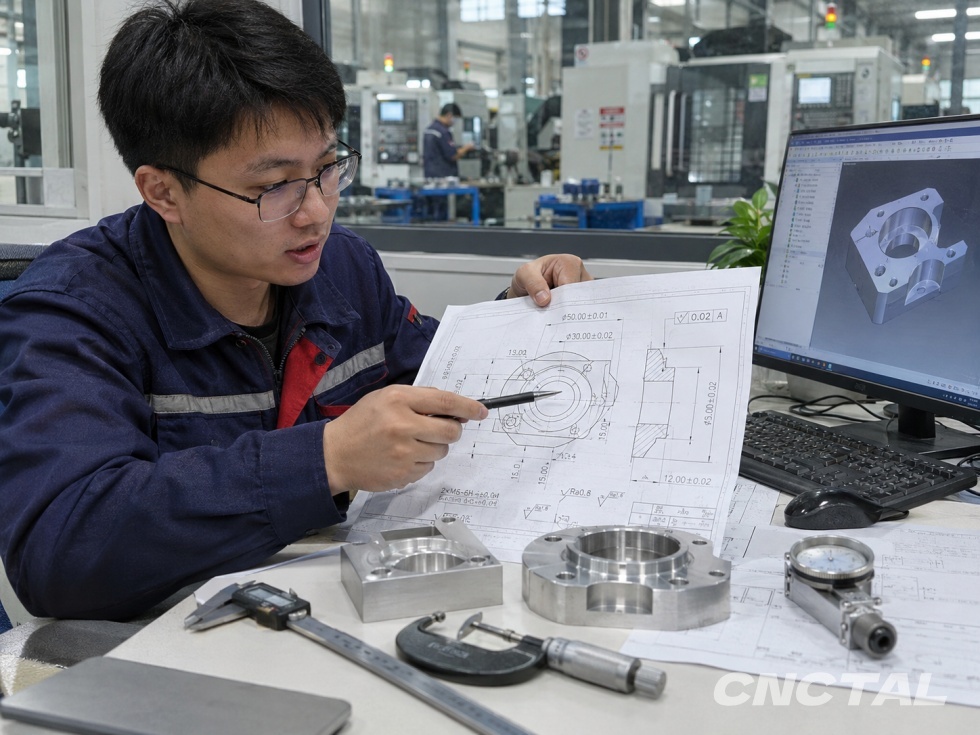
You do not need a detailed CAM program, but the supplier should understand the setups, difficult features, workholding, and critical tolerances.
5. Review Tolerance Requirements Carefully
Tight tolerances can significantly increase CNC machining cost and production risk.
Before ordering, identify:
- Critical dimensions
- Fits
- Hole positions
- Flatness
- Parallelism
- Concentricity
- GD&T requirements
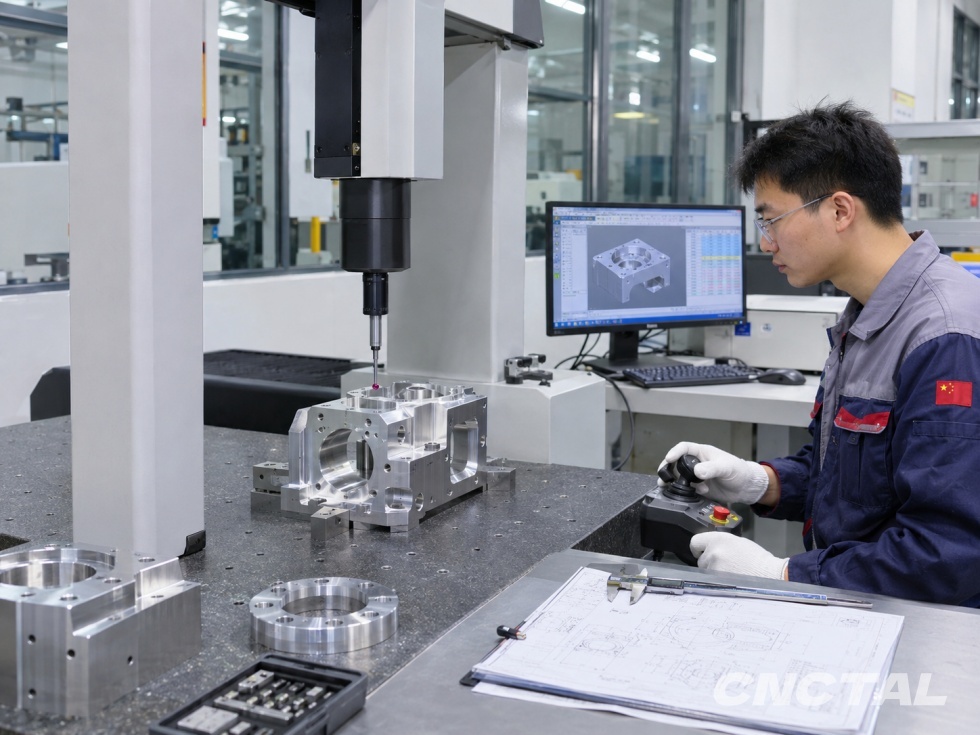
Ask the supplier how these features will be measured.
For critical dimensions, CMM or dedicated gauges may be more appropriate than basic caliper inspection.
6. Confirm the Exact Material
Material should be clearly defined before production begins.
For example:
- Aluminum 6061-T6
- Aluminum 7075-T6
- Stainless Steel 304
- Stainless Steel 316L
- C45 / 1.0503
- 42CrMo4
- POM-C
- PEEK
Do not rely only on general terms such as “aluminum” or “stainless steel.”
If an equivalent material is acceptable, define that before the order.
7. Verify the Supplier’s Quality System
A certificate is useful, but it should not be the only reason to approve a supplier.
More importantly, ask about the actual quality process.
A capable CNC supplier should normally have controls for:
- Incoming material
- First-piece inspection
- In-process inspection
- Final inspection
- Measuring equipment calibration
- Nonconforming parts
- Drawing revision control
8. Ask for Sample Inspection Reports
Before placing an important order, ask the supplier to show examples of inspection reports.
Useful evidence may include:
- CMM reports
- Dimensional inspection reports
- First Article Inspection reports
- Surface roughness measurements
- Thread gauge records
This helps buyers understand whether the supplier can provide real measurement data rather than simply saying:
“We can hold tight tolerance.”
9. Start With a Prototype or Small Batch
For a new supplier or a new complex part, it is usually safer not to start immediately with the full annual quantity.
A practical sourcing process is:
- Review quotation and DFM.
- Produce prototype or first article.
- Inspect the parts.
- Test assembly and function.
- Approve the process.
- Release production quantity.
This is especially important for tight-tolerance parts, new surface finishes, large production quantities, and high-value components.
10. Confirm What Prototype Approval Means
When you approve a prototype, be clear about what has actually been approved.
For example:
- Dimensions
- Material
- Appearance
- Anodizing color
- Assembly fit
- Surface finish
Also ask whether production will use the same material source, fixture concept, finishing supplier, and inspection method.
11. Check Which Processes Are Done In-House
Many CNC projects include secondary processes.
Examples include:
- Heat treatment
- Anodizing
- Plating
- Passivation
- Powder coating
- Grinding
- Laser marking
It is normal for CNC suppliers to subcontract some of these processes.
The important thing is transparency.
Ask:
- Which operations are in-house?
- Which operations are outsourced?
- How are subcontractors controlled?
- Who is responsible if finishing fails?
12. Define Surface Finish Requirements Clearly
Surface finishing is one of the most common causes of misunderstanding.
If your parts require anodizing, specify:
- Type II or Type III
- Color
- Cosmetic requirements
- Masking areas
- Thread protection
- Coating thickness if critical
For cosmetic parts, sending an approved physical sample or clearly defined appearance standard can reduce disputes.
13. Ask About Dimensional Change After Finishing
Some surface treatments change dimensions.
This can affect:
- Precision bores
- Threads
- Sliding fits
- Bearing seats
If dimensions are critical after finishing, make that clear on the drawing.
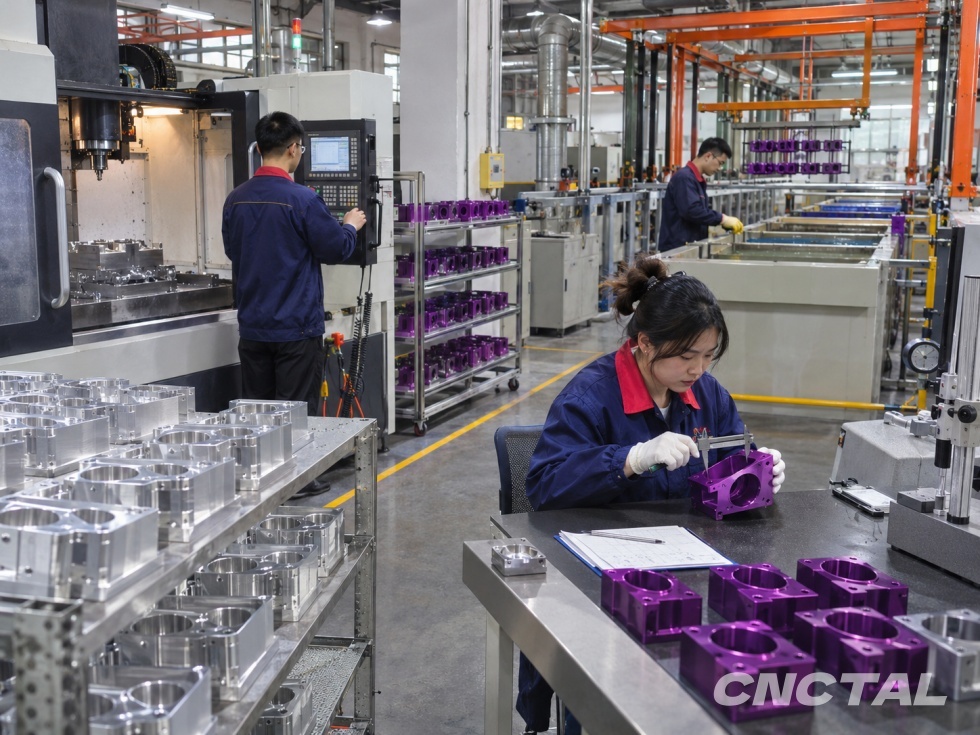
14. Agree on Inspection Requirements Before Production
Buyers should define what inspection documentation is actually required.
Possible requirements include:
- Standard inspection
- First Article Inspection
- CMM report
- Full dimensional report
- Sampling inspection
- 100% inspection of critical dimensions
More inspection usually means more cost.
The correct inspection level depends on the function and risk of the part.
15. Confirm Packaging Requirements
Packaging is especially important for international shipments.
Important packaging requirements may include:
- Individual bags
- Protective film
- Foam separators
- Plastic trays
- VCI corrosion protection for steel
- Edge protection
- Labels with part number and quantity
Finished aluminum parts should not rub against each other during transport if cosmetic surfaces are important.
16. Confirm the Incoterm
Before ordering from China, understand the shipping term in the quotation.
Common terms include:
- EXW
- FCA
- FOB
- DAP
- DDP
Do not compare two supplier quotations unless the shipping terms are equivalent.
17. Understand Import Duty and Tariffs
For international sourcing, the factory price is not always the final cost.
Depending on the destination and product classification, the buyer may also need to consider:
- Freight
- Customs brokerage
- Import duty
- Tariffs
- Local delivery
Total Landed Cost = Part Cost + Freight + Import Cost + Local Delivery
18. Compare Lead Time Correctly
A supplier may say:
“Production lead time: 10 days.”
But this does not necessarily mean the parts will arrive at your facility in 10 days.
The complete schedule may include:
- Drawing confirmation
- Material preparation
- Machining
- Surface finishing
- Inspection
- Packing
- International freight
- Customs clearance
19. Consider Chinese Holidays
China’s manufacturing calendar should also be considered.
Chinese New Year can significantly affect:
- Factory capacity
- Raw material supply
- Surface treatment suppliers
- Freight availability
Golden Week and other holidays may also affect production schedules.
20. Evaluate Communication Before You Order
Good communication is one of the most important parts of overseas sourcing.
Before placing an order, observe whether the supplier:
- Responds clearly
- Understands technical drawings
- Answers engineering questions
- Identifies unclear requirements
- Confirms changes in writing
- Provides realistic lead times
21. Use One Clear Communication Record
Email, WhatsApp, WeChat, and other tools are useful, but important production decisions should be easy to trace.
For important changes, record:
- Part number
- Revision
- Issue
- Agreed solution
- Responsible person
- Date
22. Check Payment Terms
Payment terms vary between suppliers and order sizes.
Typical arrangements may include:
- Full payment for small prototype orders
- Deposit plus balance before shipment
- Negotiated terms for established customers
Buyers should confirm:
- Payment currency
- Bank details
- Deposit
- Balance timing
- Tooling charges
- Shipping charges
23. Protect Confidential Drawings When Necessary
If your CAD files contain valuable intellectual property, discuss confidentiality before sending sensitive information.
Possible controls include:
- NDA
- Restricted drawing access
- Clear file identification
- Supplier confidentiality agreement
24. Agree on What Happens If Parts Fail Inspection
This is an important question to discuss before production.
Ask:
- What happens if parts are out of tolerance?
- Who pays for rework?
- Who pays for replacement parts?
- What if surface treatment fails?
- How are quality issues documented?
A professional supplier should have a clear method for handling nonconforming parts.
25. Do Not Choose Only by the Lowest Price
A low CNC machining quote can be attractive.
But before ordering, check whether the quote includes the same:
- Material
- Tolerance
- Finish
- Inspection
- Packaging
- Shipping terms
Sometimes a supplier is cheaper because it has a more efficient process. Sometimes it is cheaper because something has been missed.
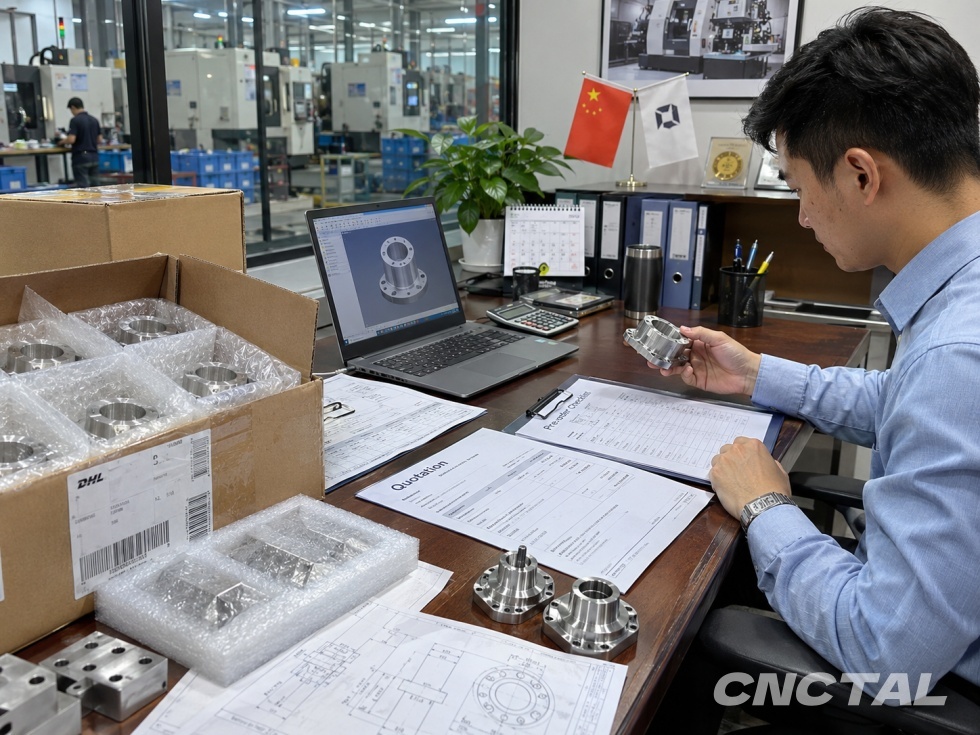
Red Flags to Watch For
Some warning signs deserve additional checking:
- Extremely low price compared with other quotes
- No technical questions on a difficult drawing
- Unclear company identity
- Refusal to show the factory or inspection capability
- Certification claims that cannot be verified
- No material traceability when required
- No clear answer about outsourced processes
- Unclear payment beneficiary
- Unrealistically short lead time
- Supplier agrees to every requirement without reviewing it
A Simple Pre-Order Checklist
- Correct STEP file and drawing revision
- Exact material grade
- Quantity
- Critical tolerances
- Surface finish
- Inspection requirements
- Prototype or first-article approval
- Production process
- Outsourced operations
- Material documentation
- Packaging
- Lead time
- Incoterm
- Freight responsibility
- Import cost
- Payment terms
- Quality issue responsibility
- Correct supplier legal and bank information
Should You Work With a Factory or a Trading Company?
Buyers often hear that they should only work directly with a factory.
The reality is more nuanced.
A good manufacturing service company or trading company can sometimes add value by coordinating several processes and suppliers.
The real problem is when a company presents itself as a factory but does not disclose who is actually producing the parts.
For CNC machining, buyers should understand:
- Who machines the parts
- Who performs inspection
- Who controls secondary processes
- Who takes responsibility for quality
Transparency is more important than the label.
Why Manufacturing Location Matters in China
China has several major manufacturing regions, and supplier ecosystems can differ significantly.
For CNC machining, regions with dense networks of:
- Machine shops
- Material suppliers
- Tooling companies
- Surface finishing
- Heat treatment
- Inspection
- Export logistics
can make multi-process projects easier to manage.
Dongguan and the wider Guangdong manufacturing region are strong examples of this type of supplier ecosystem.
Final Thoughts
Ordering CNC machined parts from China does not need to be complicated.
The biggest mistakes usually happen when buyers focus only on unit price and leave important technical or commercial details undefined.
Before ordering, make sure both sides agree on:
- Drawing revision
- Material
- Tolerances
- Surface finish
- Inspection
- Quantity
- Packaging
- Lead time
- Shipping
- Payment
For a new or technically difficult project, starting with a prototype or small batch is usually safer than immediately releasing full production.
A qualified CNC supplier should not only provide a price.
They should help clarify manufacturing requirements, identify risks, and make the production scope clear before the order begins.
Planning to Order CNC Machined Parts from China?
CNCTAL in Dongguan, Guangdong supports overseas CNC machining projects from prototypes to repeat production, including material review, machining, inspection, surface finishing, and export coordination.
Send us your STEP file, drawing, material, quantity, and finishing requirements for review.
Request a CNC Machining Quote