
CNC Design Guide: Recommended Wall Thickness for Machined Parts
Wall thickness is an important part of CNC component design.
A wall that looks perfectly acceptable in a CAD model may become difficult to machine once material starts to be removed. If the wall is too thin, cutting forces can cause it to vibrate, bend or deform.
This can lead to poor surface finish, dimensional variation and higher machining costs. Many of these problems can be avoided by using practical wall thicknesses during the design stage.
Why Does Wall Thickness Matter in CNC Machining?
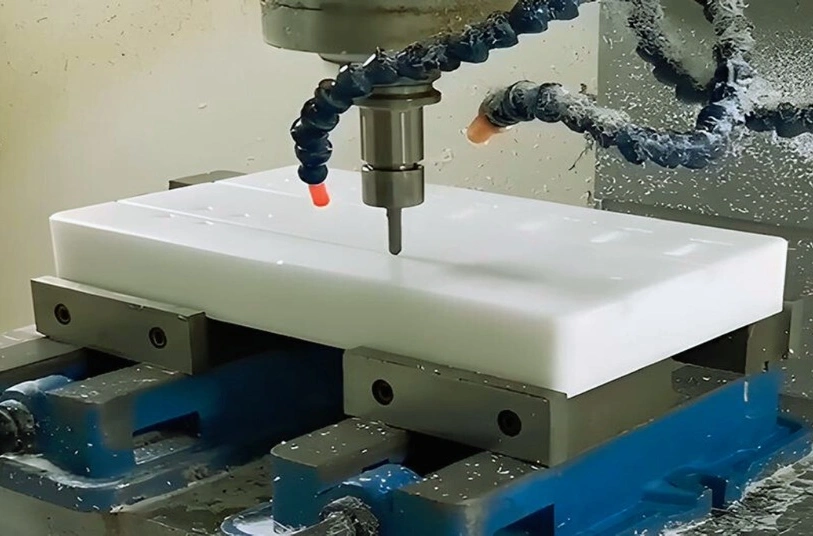
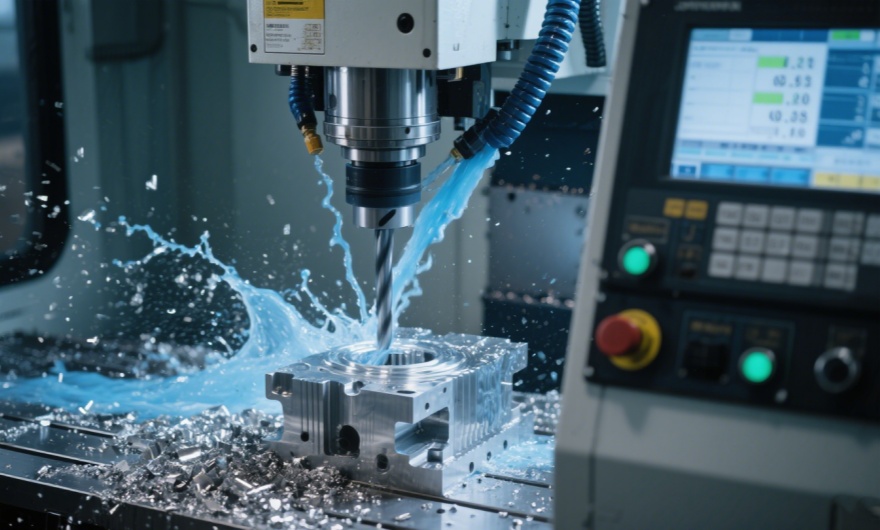
CNC machining removes material using cutting tools.
During this process, the cutting tool applies force to the workpiece. Thick sections remain relatively rigid, while thin walls can move slightly under the cutting force.
The thinner and taller the wall becomes, the easier it is for the wall to flex.
This can cause problems such as:
- Vibration during machining
- Chatter marks on the surface
- Dimensional variation
- Wall deformation
- Poor surface finish
- Difficulty holding tight tolerances
- Longer machining time
Very thin walls may also require slower cutting speeds, lighter cuts or special fixtures. That increases manufacturing cost.
Recommended Wall Thickness for Metal CNC Parts
For many general CNC machined metal parts, a wall thickness of around 0.8 mm to 1.0 mm or more is a practical starting point.
Whenever the design allows it, thicker walls are usually easier to machine.
| Material / Part Type | Practical Starting Point |
|---|---|
| Aluminum | 0.8–1.0 mm or thicker |
| Brass | Around 0.8–1.0 mm or thicker |
| Mild Steel | Around 1.0 mm or thicker |
| Stainless Steel | Around 1.0–1.5 mm or thicker |
| Titanium | Around 1.0–1.5 mm or thicker |
Important: These values are design guidelines, not absolute machining limits.
Small parts with short walls may sometimes be machined thinner, while large or tall walls may need to be considerably thicker.
Aluminum Thin Walls
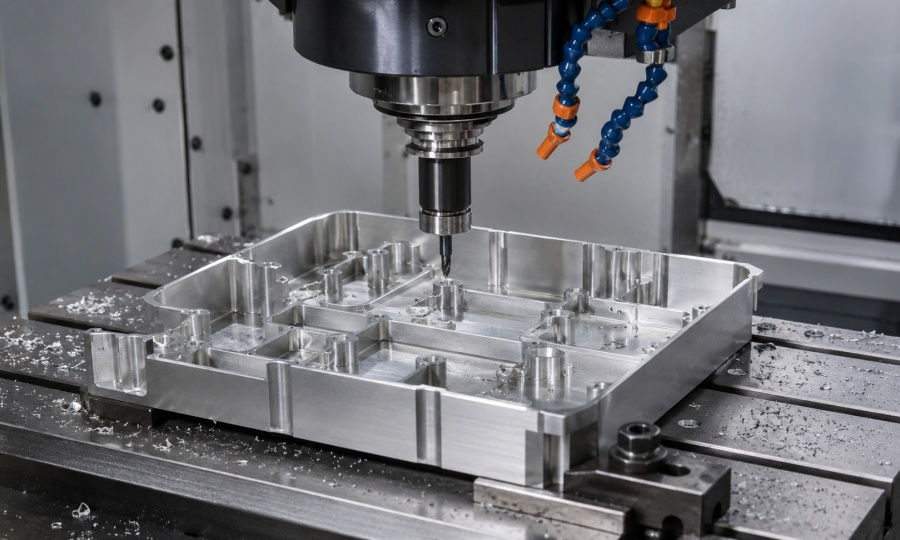
Aluminum is one of the most common materials used for CNC machining.
It machines easily and has good strength for its weight, but thin aluminum walls can still flex during milling.
For a small aluminum housing, a wall thickness of around 1 mm may be practical.
However, if the wall is:
- Very tall
- Very long
- Unsupported
- Surrounded by deep pockets
- Required to hold a tight flatness tolerance
then increasing the wall thickness to 1.5 mm, 2 mm or more can make production much easier.
A slightly thicker wall may also reduce machining time because the machinist can use more stable cutting parameters.
Stainless Steel and Titanium Walls
Stainless steel and titanium behave differently from aluminum during machining.
They generally require higher cutting forces and generate more heat.
For this reason, extremely thin walls can be more difficult to control.
If a stainless steel or titanium component does not require a very thin section for functional reasons, using a wall thickness of around 1.0–1.5 mm or more is usually a safer starting point.
For larger components or tall unsupported walls, additional thickness may be necessary.
Recommended Wall Thickness for Plastic CNC Parts
Plastics usually require more attention than metals when designing thin walls.
Many engineering plastics are softer and less rigid than metals. They can move during cutting and may also change shape due to heat or internal material stress.
For general CNC machined plastic components, a wall thickness of around 1.5 mm or more is a good starting point.
For larger parts, 2 mm or more is often preferable.
| Plastic | Practical Starting Point |
|---|---|
| POM / Acetal | 1.5 mm or thicker |
| Nylon | 1.5–2.0 mm or thicker |
| ABS | 1.5–2.0 mm or thicker |
| PMMA / Acrylic | Around 2.0 mm or thicker |
| PEEK | Around 1.5 mm or thicker |
| PTFE | 2.0 mm or thicker where possible |
Why Are Thin Plastic Walls More Difficult?
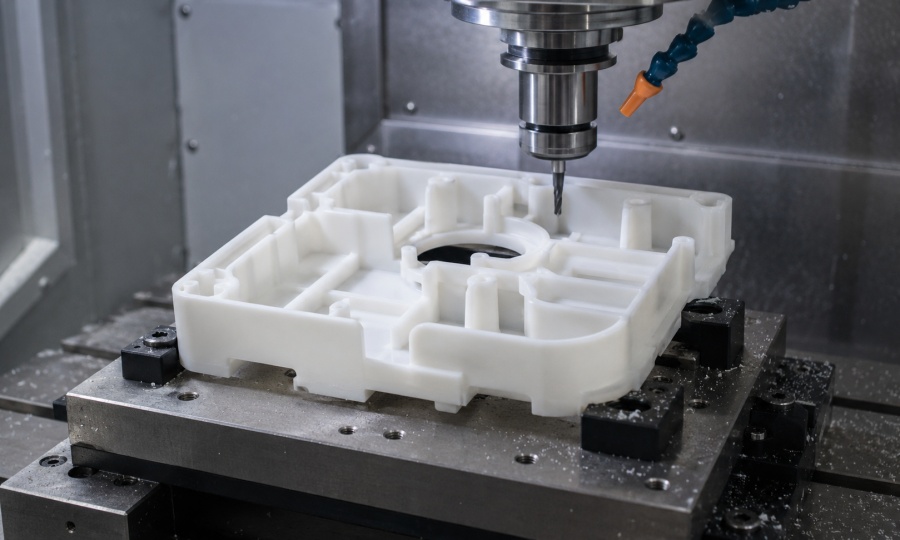
Plastic walls can flex away from the cutting tool.
This can make it difficult to maintain dimensions during machining.
Some plastics also react strongly to temperature.
Heat generated during machining can temporarily expand the material. After the part cools down, the dimensions may change slightly.
Materials such as nylon can also absorb moisture, while PTFE is naturally soft and flexible.
These characteristics make thin-wall plastic machining more difficult than simply copying the same wall thickness from an aluminum design.
Wall Height Is Just as Important as Wall Thickness
Wall thickness should not be considered alone.
A 1 mm wall that is only 5 mm tall is very different from a 1 mm wall that is 50 mm tall.
Tall, thin walls are much more likely to vibrate.
Short wall + thin section:
Often easier to machine.
Tall wall + thin section:
More likely to flex and chatter.
If a wall must be tall, increasing its thickness or adding supporting ribs can greatly improve machining stability.
Deep Pockets Can Create Thin-Wall Problems
Thin walls often appear around deep pockets.
As the pocket becomes deeper, more material is removed and the remaining walls lose rigidity.
Long cutting tools may also be required to reach the bottom of the pocket.
Long tools are less rigid and may create additional vibration.
For this reason, a deep enclosure with very thin walls can be considerably harder to manufacture than a shallow enclosure with the same nominal wall thickness.
Avoid Sudden Changes in Wall Thickness
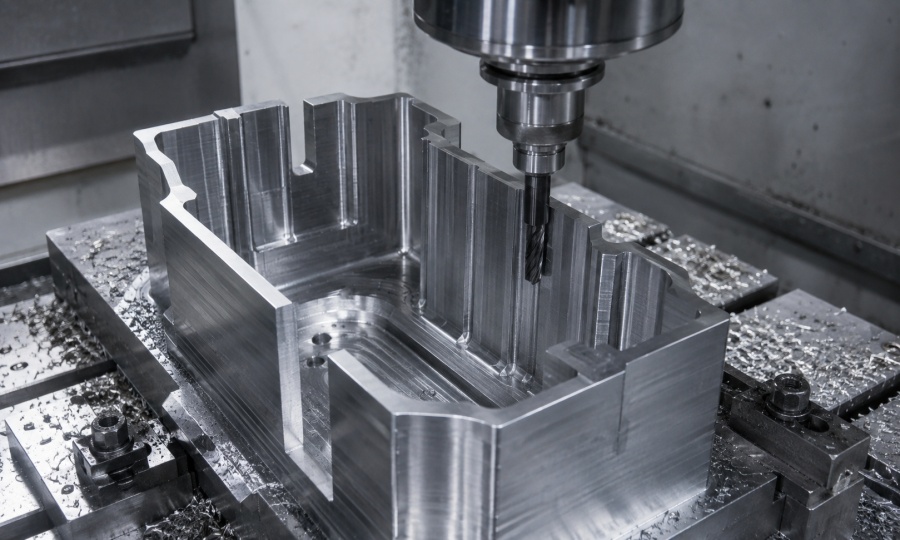
Where possible, keep wall thickness reasonably consistent throughout the component.
Large changes between very thick and very thin areas can increase deformation, especially in plastics and large aluminum parts.
Uniform wall thickness also makes the machining process easier to control.
This does not mean every wall must have exactly the same thickness, but unnecessary extreme changes should be avoided.
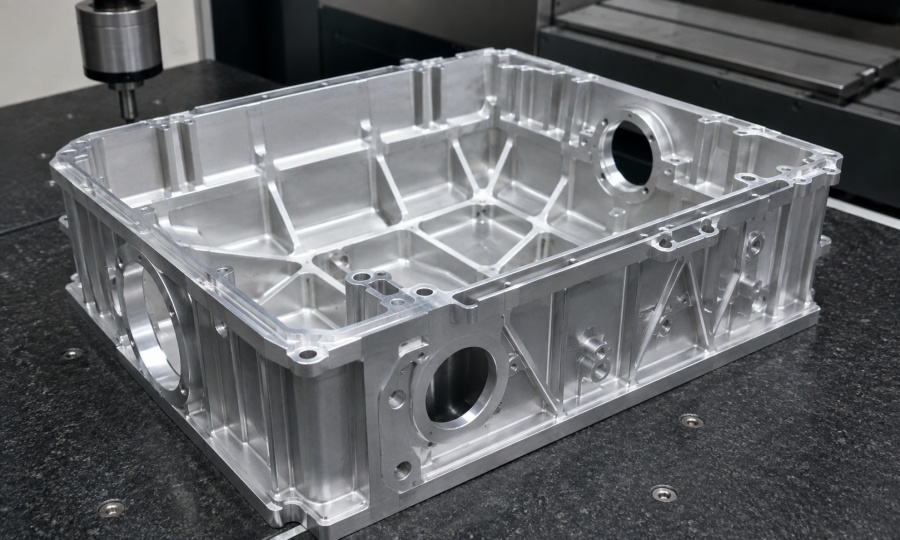
Add Ribs Instead of Making the Entire Wall Thicker
Sometimes a thin wall is necessary because of weight, space or product design requirements.
In that case, adding ribs can improve stiffness without making the entire component heavy.
Ribs can help support:
- Large flat walls
- Tall side walls
- Thin enclosure sections
- Areas around mounting points
However, ribs should also be designed with practical tool access and internal corner radii.
Tight Tolerances Make Thin Walls More Difficult
A thin wall may be physically machinable, but maintaining a very tight tolerance is another question.
For example, machining a thin aluminum wall may be possible, but holding an extremely tight thickness, flatness or parallelism tolerance can be difficult because the wall may move during and after cutting.
Therefore, tight tolerances should only be applied where they are functionally necessary.
This is particularly important for:
- Thin enclosure walls
- Large flat panels
- Plastic components
- Long unsupported sections
Can CNC Machines Produce Walls Thinner Than These Guidelines?
Yes.
Thin-wall machining is possible.
With suitable tooling, careful programming, light cutting passes and well-designed fixturing, walls thinner than the general recommendations can sometimes be produced successfully.
However, just because a feature can be machined does not mean it is the most economical design.
Very thin walls can require:
- Additional finishing passes
- Special workholding
- Reduced cutting speeds
- More inspection
- Higher scrap risk
For prototypes or low-volume production, these extra steps can noticeably increase the part price.
Simple Wall Thickness Design Rules
When designing CNC machined components, a few simple rules can prevent many manufacturing problems:
- Use around 0.8–1.0 mm or more for general metal walls where possible.
- Use around 1.5–2.0 mm or more for general plastic walls where possible.
- Increase thickness for tall or unsupported walls.
- Avoid very deep pockets next to extremely thin walls.
- Add ribs when additional stiffness is required.
- Keep wall thickness reasonably consistent.
- Avoid unnecessarily tight tolerances on thin sections.
- Ask your CNC supplier for a DFM review if thin walls are unavoidable.
Metal vs. Plastic: Quick Comparison
| Design Factor | Metal Parts | Plastic Parts |
|---|---|---|
| General wall rigidity | Higher | Lower |
| Typical practical wall thickness | Around 0.8–1.0 mm+ | Around 1.5–2.0 mm+ |
| Risk of cutting deformation | Moderate | Higher |
| Sensitivity to machining heat | Moderate | Often higher |
| Thin-wall machining difficulty | Depends on geometry | Often more difficult |
| Need for support / fixturing | Sometimes | More common |
Final Thoughts
There is no single minimum wall thickness that works for every CNC machined part.
Material, wall height, part size, pocket depth, tolerance, tool access and workholding all affect what can be machined reliably.
As a practical starting point, designers can usually use:
Metal parts: approximately 0.8–1.0 mm or thicker
Plastic parts: approximately 1.5–2.0 mm or thicker
If the wall is tall, large or unsupported, increasing the thickness is usually a good idea.
The goal is not simply to make a part machinable. A good CNC design should also be stable, repeatable and economical to manufacture.
If your design requires unusually thin walls, sending the STEP file and 2D drawing to your CNC supplier for a DFM review before production can help identify potential machining problems early.